 Shivaprasad T R
 Chief Minister M.K. Stalin’s campaign kick-off from the DMK patriarch’s birthplace seeks to reinforce ideological legacy and energise cadres ahead of a high-stakes Assembly election.
By Shivaprasad T R
Editorial and Opinion Writer
Zealandia News
March 31, 2026 — CHENNAI
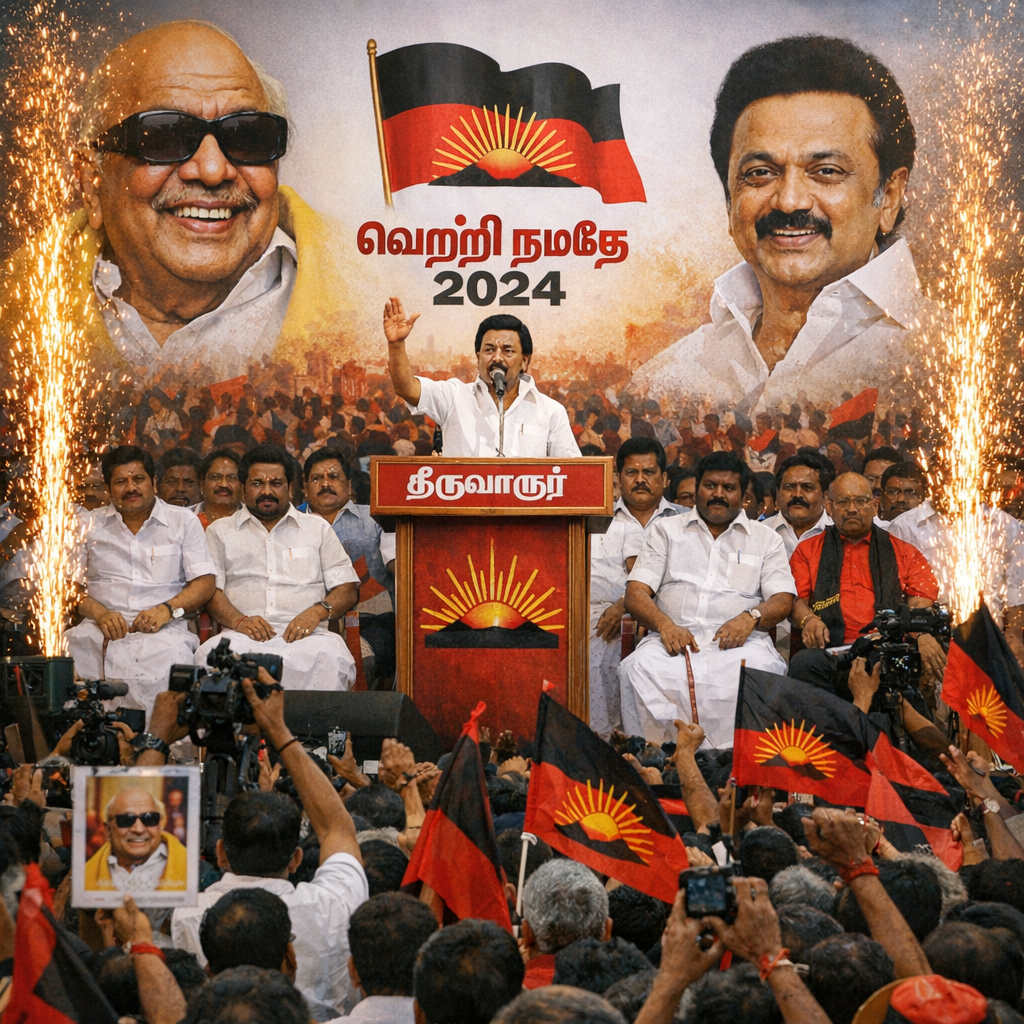
Tamil Nadu Chief Minister and Dravida Munnetra Kazhagam president M.K. Stalin will formally launch his party’s Assembly election campaign this evening from Tiruvarur, the birthplace of party patriarch M. Karunanidhi, in a move designed to reinforce the DMK’s ideological legacy and energise grassroots supporters ahead of the April 23 polls.
The campaign kick-off, scheduled for 5pm at South Ratha Street in Tiruvarur, comes just days after Stalin unveiled the DMK’s full list of candidates for the upcoming elections. The party has announced nominees for 164 constituencies while allocating the remaining 70 seats to its allies in the Secular Progressive Alliance, a coalition that includes the Congress, Left parties, and other regional partners .
Stalin described the candidate list as a carefully curated and “updated” selection, finalised after extensive consultations within the party and with alliance partners. The Chief Minister is expected to campaign extensively across Tamil Nadu in the coming weeks, focusing on highlighting the achievements of the DMK government, countering opposition narratives, and mobilising grassroots support in key constituencies .
Tiruvarur’s Deep Symbolic Significance
The choice of Tiruvarur as the campaign launch venue carries profound emotional and political weight for the DMK. The town is the birthplace of Karunanidhi, the party’s long-serving patriarch who led the DMK for nearly five decades until his death in 2018. Known affectionately as “Kalaignar” — the artist-scholar — Karunanidhi’s legacy remains central to the party’s identity, and by launching the campaign from his hometown, the DMK leadership is seeking to invoke that legacy and its enduring connection with the Tamil electorate.
Political analysts note that the decision also serves to remind voters of the party’s roots in the Dravidian movement, which reshaped Tamil Nadu’s political landscape in the mid-20th century and continues to define the state’s electoral dynamics. The DMK’s campaign is expected to emphasise continuity with Karunanidhi’s vision while presenting Stalin’s leadership as the natural successor to that tradition.
Alliance Dynamics and Opposition Challenge
The DMK-led Secular Progressive Alliance faces a formidable challenge from the opposition AIADMK-led front, which has been working to consolidate its own coalition ahead of the polls. Seat-sharing negotiations within the DMK alliance have at times triggered intense discussions and occasional friction among coalition partners, a common feature of pre-election coalition politics in Tamil Nadu .
Despite these challenges, the alliance has now moved into campaign mode, with senior leaders from partner parties expected to join Stalin at the Tiruvarur launch. The Congress, which remains a key ally, has been allocated a significant number of seats, while Left parties and smaller regional groups round out the coalition.
The opposition AIADMK, which has yet to formally launch its statewide campaign, is expected to counter with its own high-profile events in the coming days. The party, which has been regrouping after a period of internal leadership turbulence, is banking on anti-incumbency sentiment and its traditional strongholds in the western and southern districts of the state.
Key Issues Shaping the Election
Several issues are expected to dominate the campaign. The DMK government’s performance on social welfare schemes — including free bus travel for women, breakfast programmes in schools, and financial assistance to families — will form the centrepiece of its re-election pitch. Stalin has consistently highlighted these programmes as evidence of the government’s commitment to social justice and inclusive development.
The opposition, however, is likely to focus on issues of governance, corruption allegations, and the state’s fiscal position. The AIADMK has also signalled its intention to make the implementation of the National Education Policy a major campaign issue, arguing that the DMK’s resistance to the policy has disadvantaged Tamil Nadu’s students.
Economic issues, including the state’s debt burden and industrial development, will also feature prominently. Tamil Nadu remains one of India’s most industrialised states, with a strong manufacturing base and significant foreign investment, particularly in the automotive and electronics sectors. The DMK is expected to argue that its policies have maintained the state’s economic momentum, while the opposition will seek to portray the government as having failed to address unemployment and rising costs.
Election Schedule and Stakes
Tamil Nadu is scheduled to go to the polls on April 23, with counting set for May 4 . The election will determine the composition of the 234-member Legislative Assembly, with the party or coalition securing a majority set to form the next government.
The stakes are high for both major fronts. For Stalin, a victory would secure his position as the undisputed leader of the DMK and cement his legacy as the heir to Karunanidhi. It would also provide continuity at a time when the party faces questions about succession and the future of the Dravidian movement in an era of centralising national politics.
For the AIADMK, a return to power would mark a significant political revival after its defeat in the 2021 Assembly elections. The party has been working to project itself as a united alternative, though questions remain about its ability to match the DMK’s organisational machinery and grassroots presence.
In Brief
The DMK’s campaign launch from Tiruvarur today marks the formal beginning of what promises to be a closely contested Assembly election in Tamil Nadu. With Stalin seeking re-election on a platform of welfare governance and continuity, and the AIADMK preparing to mount a sustained challenge, the coming weeks will see intense campaigning across the state’s 234 constituencies. For the DMK, the choice of Karunanidhi’s birthplace as the launch venue is a deliberate invocation of legacy and a signal to voters that the party remains rooted in the Dravidian tradition that has shaped Tamil Nadu politics for generations.