 Dorothy Brown
 Auckland’s Kannada community gathered in celebration as the New Zealand Kannada Koota hosted its annual Yugadi 2026 cultural programme, drawing distinguished guests, a full evening of classical and contemporary performances, and a hall alive with the spirit of ನಾಡಿನ ಸೊಗಡು — the fragrance of the homeland — transplanted to the shores of Aotearoa.
By Zealandia News Correspondent | AucklandPublished: Sunday, 12 April 2026 | Photo Gallery: NZKK Yugadi 2026
The hall filled with colour and celebration as the New Zealand Kannada Koota marked Yugadi 2026 in Auckland on Saturday, 11 April 2026. Photo: NZKK
Saturday, 11 April 2026. A hall in Auckland hummed with the sound of the nadaswara, the clatter of children’s anklets, and the warm tumble of Kannada conversation. For the members of the New Zealand Kannada Koota (NZKK), this was no ordinary weekend gathering. It was ಯುಗಾದಿ — the Kannada new year, Shubhakrutha Samvatsara, come alive ten thousand kilometres from the banks of the Cauvery.
The evening’s programme was a testament to the depth of cultural energy that NZKK’s membership carries into its adopted home. From the solemnity of the national anthems through to the final vote of thanks, the event offered something rare in diaspora life: an unbroken thread connecting New Zealand-born children to the classical traditions, folk rhythms, and devotional poetry of Karnataka.

Opening ceremonies set a dignified tone for the evening’s festivities.

Distinguished guests and community members seated together — a hallmark of NZKK’s inclusive celebrations.
Distinguished Guests Grace the Occasion
The event was significantly elevated by the presence of the Consul General of India in Auckland along with his family, whose attendance underscored the enduring diplomatic and cultural ties between New Zealand and India. The CGI’s participation at a community cultural event of this scale is a mark of recognition that NZKK has steadily earned over its years of operation in Aotearoa.
Equally notable was the attendance of the Chairman of Bank of Baroda and his family, alongside the bank’s Country Managing Director for New Zealand and family. Bank of Baroda has long been a financial institution with deep roots in the Indian diaspora across the Pacific, and the presence of its senior leadership at a Kannada community event speaks to the growing economic and social stature of New Zealand’s South Indian communities. For the Koota, it was ಒಂದು ಹೆಮ್ಮೆಯ ಕ್ಷಣ — a moment of genuine pride.

The Consul General of India in Auckland and senior Bank of Baroda leadership joined the NZKK community in celebrating the Kannada new year. Photo: NZKK
Opening Notes: National Anthems, Naada Geethe, and the Spirit of Yugadi
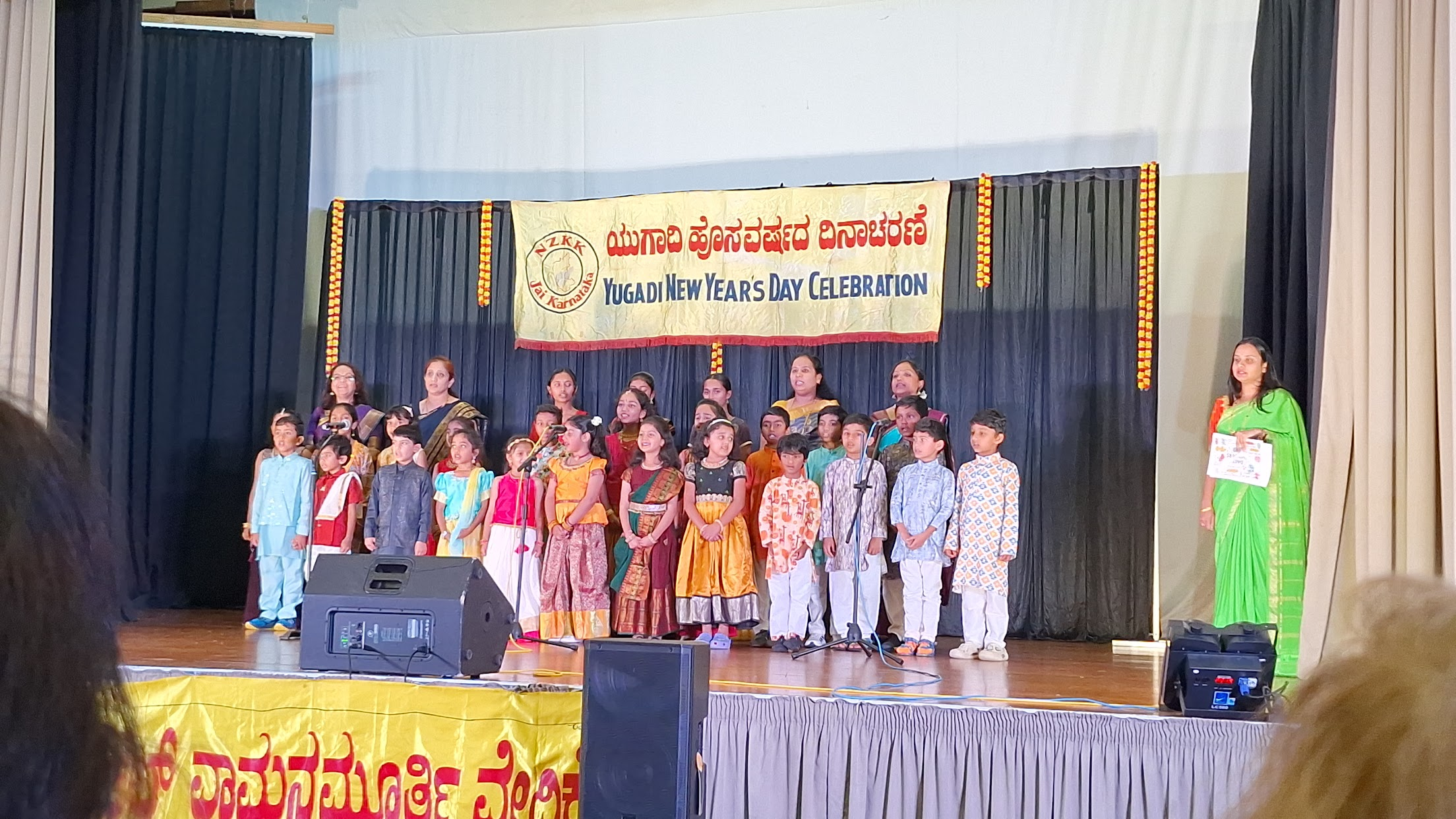
The programme opened with formality and feeling in equal measure. Students of the NZKK’s Kannada Shaale — the community’s cherished language school — performed the Indian and New Zealand national anthems, followed by the ನಾಡ ಗೀತೆ, the state anthem of Karnataka: “Jaya Bharata Jananiya Tanujate”. The sight of young children, many of them born in New Zealand, singing Karnataka’s state song with clear diction and evident pride moved many in the audience.
NZKK President Suhas formally welcomed guests and acknowledged the efforts of the Kannada Shaale teaching staff, presenting them with a token of appreciation from the Koota — a small but significant gesture that recognised the quiet, sustained labour that keeps language and heritage alive in a second-generation community. His address set a warm and reflective tone: Yugadi, he noted, is not merely a date on the calendar. It is a philosophical invitation. The word itself — ಯುಗ + ಆದಿ, meaning the beginning of a new age — carries within it a call to renewal, to ಷಡ್ರಸ, the six tastes of life: sweet, bitter, sour, pungent, astringent, and salty. Like the ritual bevu-bella eaten at dawn, life, the President reflected, is to be received in its entirety.
“ಯುಗಾದಿ ಎಂದರೆ ಕೇವಲ ಹಬ್�ವಲ್ಲ — ಅದೊಂದು ಹೊಸ ಆರಂಭದ ಆಹ್ವಾನ.
Yugadi is not merely a festival — it is an invitation to begin again.”

Kannada Shaale students delivered the national anthems and Naada Geethe with clarity and confidence.

An audience engaged and moved throughout the evening’s varied programme.
An Evening of Many Talents
What followed was a programme of remarkable range and quality, spanning classical Bharatanatyam, devotional compositions, folk dance, contemporary fusion, and oratory — a vivid illustration of the breadth of Karnataka’s cultural inheritance.
Young Chhavi Rajiv opened the vocal performances with a touching rendition of ಅಮ್ಮ ಅಮ್ಮ ಒಂದೇ ಒಂದು ಉಂಡೆ ಕೊಡ್ತಿಯಾ — a song about a child coaxing its mother for a morsel of sweets — accompanied by her own mother on stage. In a hall of immigrant families, the theme resonated with layers of meaning that no programme note could fully capture.
The evening’s most extended classical offering came from Shravya Sai Davasam, who delivered a nine-minute Bharatanatyam recital that drew sustained applause, and from Dhriti and Nidhi, who presented a ಜತಿಸ್ವರ in Raaga Arabhi, Taala Adi — a structurally demanding piece that tests both rhythmic precision and expressive grace. The jatiswara, as a form, is less commonly seen outside formal Bharatanatyam training contexts, and its presentation here was a marker of serious classical training among NZKK’s younger generation.

Shravya Sai Davasam in her Bharatanatyam recital.

Contemporary and classical dance brought the stage to life.

Group performers brought collective energy and precision to the stage.
Sahana Bharadwaj’s vocal rendition of the Haridasa composition ಬಾರಮ್ಮ ಯೇಳೆ ಮುದ್ದು by the great saint-poet Purandaradasa brought the hall to a moment of quiet reverence. Purandaradasa, the 16th-century composer widely regarded as the Pitamaha — grandfather — of Carnatic music, remains a living presence in the Kannada cultural consciousness; to hear his compositions performed in Auckland by a second-generation singer was to understand, viscerally, what cultural continuity means in a diaspora context.
The ‘Tapori Tarle’ Effect: When Toddlers Steal the Show
No community evening is complete without its moment of pure, uninhibited joy, and NZKK’s Yugadi delivered it abundantly. The “Tapori Tarle Tandadinda” troupe — a group of six children aged between three and five — took to the stage to perform to a fusion of Kannada mass entertainers including ಸೂಪರೋ ರಂಗ, ಟಗರು, and the irresistible ಡ್ಯಾಂಕ್ಸ್ ಆಂಥೆಮ್. Their performance — enthusiastic, wonderfully unsynchronised in the way only toddlers can be, and entirely captivating — drew the loudest cheers of the evening.

The “Tapori Tarle” toddlers — aged 3 to 5 — energised the hall with their fearless stage presence.

Young talents showcased a confident connection to Karnataka’s performing arts traditions.
Ishanvi Pobbathi followed with a spirited contemporary dance piece on a medley of energetic Kannada film songs, while Manaswin presented a solo Kannada retro fusion number that bridged different eras of Karnataka’s popular music. Nivaan’s rendition of the beloved ಕನ್ನಡಂತೆ ಮಾಯವಾಡನು was received warmly by an audience for whom the song carries deep nostalgic resonance.
Talking Tulu, Nuclear Energy, and the Range of Kannada Culture
The programme was not confined to performing arts. Dr Jyothsna Rao delivered a five-minute talk on the traditions and customs of Yugadi as celebrated in Tulu Nadu — the coastal Karnataka region whose distinct Tulu-speaking identity adds yet another dimension to the already richly layered Kannada cultural landscape. For many in the audience, it was a reminder that ಕನ್ನಡ ನಾಡು encompasses not merely a language but an entire civilisational region with its own internal pluralism.
In a moment that reflected NZKK’s commitment to intellectual breadth, Dr Vinay Karanam delivered a crisp three-minute presentation on India’s Prototype Fast Breeder Reactor (PFBR) and its significance for India’s long-term energy sovereignty — a subject that connects India’s scientific and strategic ambitions to the global conversation about nuclear energy’s role in a net-zero future. The inclusion of such a topic in a cultural programme signals a maturity in how NZKK frames its community role: not merely as custodians of folk dance and festival, but as a gathering of engaged, professionally distinguished citizens with a stake in the world’s future.
Watch: NZKK Yugadi 2026 — Cultural Performances
Video footage from the evening’s performances is available in the NZKK photo and video album.View Full Album on Google Photos
Dhee’s Trifold Tribute: From Tattvapadda to Tandava
The evening’s centrepiece group performance came from the “Dhee” troupe, a collective of ten dancers whose seven-minute presentation wove together three distinct registers of Karnataka’s artistic heritage. Opening with a ವಿಡಂಬನೆ (satirical commentary) inspired by the tattvapadda — devotional folk poetry — of Saint Shishunaala Sharifa, the group transitioned into the exuberant folk rhythmic energy of ತಂದಾನೋ, before concluding with the devotional intensity of ಕಂಡೆ ಪರಶಿವನ.
The three-part structure — social commentary, folk celebration, devotional surrender — mirrored the three gunas in its own way, and the dance itself was both technically accomplished and visually arresting. The ten performers — Aishwarya, Arpitha, Bhavana, Meghana, Poornima, Ranjana, Shraddha, Sneha, Soujanya, and Swetha — earned a warm and sustained reception.

The Dhee troupe presenting their trifold dance narrative spanning Shishunaala Sharifa’s tattvapadda to devotional dance.

Ensemble performances demonstrated both choreographic craft and community cohesion.
A Family Programme: Gallu Ghalenuta and the Voice of Three Generations
Among the most touching moments of the evening was a family vocal performance by Chandan Nazre together with his son Rachit and daughter Stuti, who sang the popular Kannada song ಗಳ್ಳು ಘಳೆನುತ — a lively, melodic piece that suits three voices well. To witness three members of a family, from different generations, share a microphone and a song before their community is to understand something that cannot be conveyed in policy reports about multicultural New Zealand: that culture is transmitted not only through institutions but through the living act of performance, together, in front of people you know.
Stuthi and Shashini rounded out the programme’s dance offerings with a fusion piece, while Ekta Kumar’s vocal performance of ಹಸಿರು ಗಜಿನ ಬಲೆಗಳೆ — a song that evokes Karnataka’s verdant landscape — brought a lyrical, evocative quality to the programme’s final stretch. NZKK President Suhas closed the performance segment with a Kannada film song, and the programme concluded with a vote of thanks.

Vocal performances ranged from classical Carnatic compositions to beloved Kannada film songs.

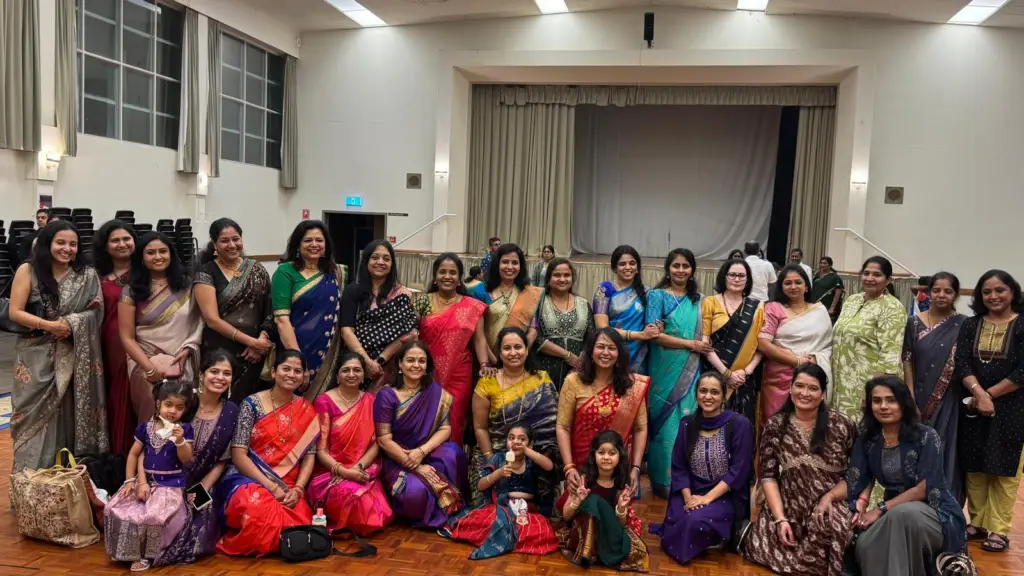
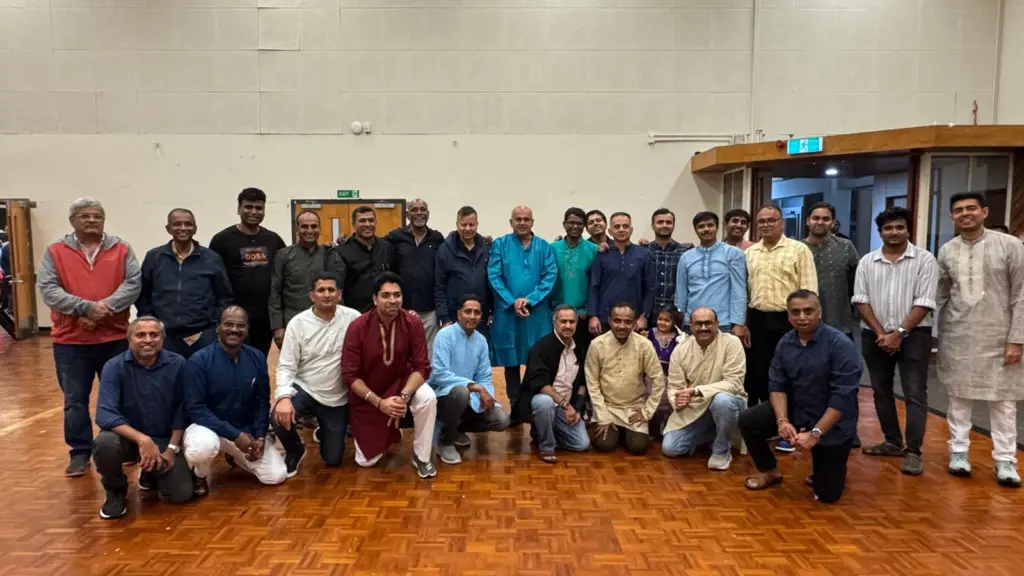
A community gathered: NZKK members across generations at Yugadi 2026.

The spirit of ಸಂಭ್ರಮ — joyful celebration — permeated the entire evening.
Programme of the Evening — NZKK Yugadi 2026 | Saturday, 11 April 2026
- India and New Zealand National Anthems & ನಾಡ ಗೀತೆ (Naada Geethe) — Kannada Shaale Students, led by Komala (15 min)
- Welcome Address & Kannada Shaale Teacher Recognition — Suhas, NZKK President (2 min)
- Solo Song: ಅಮ್ಮ ಅಮ್ಮ ಒಂದೇ ಒಂದು ಉಂಡೆ ಕೊಡ್ತಿಯಾ — Chhavi Rajiv (3.5 min)
- Talk: Yugadi Traditions in Tulu Nadu — Jyothsna Rao (5 min)
- Bharatanatyam — Shravya Sai Davasam (9 min)
- Vocal: ಬಾರಮ್ಮ ಯೇಳೆ ಮುದ್ದು (Purandaradasa) — Sahana Bharadwaj (5 min)
- Talk: India’s Prototype Fast Breeder Reactor & Energy Sovereignty — Dr Vinay Karanam (3 min)
- Bharatanatyam Jatiswara (Raga: Arabhi, Tala: Adi) — Dhriti and Nidhi (8 min)
- Contemporary Dance on Kannada Songs — Ishanvi Pobbathi (4 min)
- Song: ಕನ್ನಡಂತೆ ಮಾಯವಾಡನು — Nivaan (5 min)
- Solo Dance: Kannada Retro Fusion — Manaswin (4 min)
- Vocal: ಗಳ್ಳು ಘಳೆನುತ — Chandan Nazre, Rachit, Stuti (8 min)
- Tapori Tarle Tandadinda — ಸೂಪರೋ ರಂಗ | ಟಗರು | ಡ್ಯಾಂಕ್ಸ್ ಆಂಥೆಮ್ — Aanav, Om, Rishi, Saarth, Satvik & Vedaant (3 min)
- Song: ಹಸಿರು ಗಜಿನ ಬಲೆಗಳೆ — Ekta Kumar (4 min)
- Dance Fusion — Stuthi and Shashini (4 min)
- Group Dance: Tattvapadda | Thandano | Kande Parashivana — Dhee Ensemble (10 dancers) (7 min)
- Movie Song — Suhas (5 min)
- Vote of Thanks (2 min)
The Meaning of NZKK in Aotearoa
The New Zealand Kannada Koota is one of the oldest and most consistently active Indian-origin cultural associations in Auckland. Founded to serve the Kannada-speaking community of New Zealand — a community drawn primarily from Karnataka but encompassing also the Tulu, Kodava, and Konkani communities that form part of Karnataka’s pluralist mosaic — NZKK has long operated as more than a festival organiser. Its Kannada Shaale, which provided the opening performers of Saturday’s programme, is a language preservation project of lasting significance. In a nation where second-generation immigrants frequently experience linguistic disconnect from their ancestral heritage, the Shaale represents an active, community-funded counterforce.
Yugadi, as the Kannada new year, holds a special place in this mission. Unlike some other Indian festivals whose observance has become increasingly Bollywood-inflected and pan-Indian, Yugadi retains its distinctly Kannada-Deccan character. The ಪಂಚಾಂಗ ಶ್ರವಣ — the ritual recitation of the almanac for the coming year — the preparation of obbattu and bevu-bella, the donning of new clothes, the gathering of family: these are practices embedded in the agricultural and spiritual rhythms of the Deccan plateau, and they travel imperfectly but tenaciously across the world’s oceans.

From the national anthems to the final vote of thanks — NZKK’s Yugadi 2026 was an evening that honoured Karnataka’s cultural inheritance and its vibrant future in Aotearoa New Zealand. Photo: NZKK
Looking Ahead
NZKK’s Yugadi 2026 was, by any account, a programme of impressive scope and community depth. With over two and a half hours of performances, an audience that spanned toddlers and grandparents, and guests whose presence reflected both diplomatic recognition and private sector engagement with the community, the Koota has demonstrated once more that the Kannada community in New Zealand is no longer simply building roots — it is flourishing.
As the hall emptied and families gathered for photographs, conversations drifted easily between Kannada, English, and the odd phrase of Hindi — the natural polyphony of diaspora life. Outside, Auckland’s autumn evening was quiet. Inside, the memory of the ನಾಡ ಗೀತೆ sung by children who had perhaps heard of Karnataka only in their parents’ stories lingered in the air, warm and undiminished.
ಶುಭ ಯುಗಾದಿ — a blessed new year to all who celebrate. May Shubhakrutha Samvatsara bring health, prosperity, and the sweetness that makes the bitterness worthwhile.
Full photo and video gallery: NZKK Yugadi 2026 — Google Photos Album
Zealandia News covers events of significance to New Zealand’s Indian and South Asian communities. This article was produced from event materials and photographic records provided by NZKK. For community event submissions, contact the editorial team.