



 Dorothy Brown
 By Zealandia News Staff | Auckland, 16 May 2026
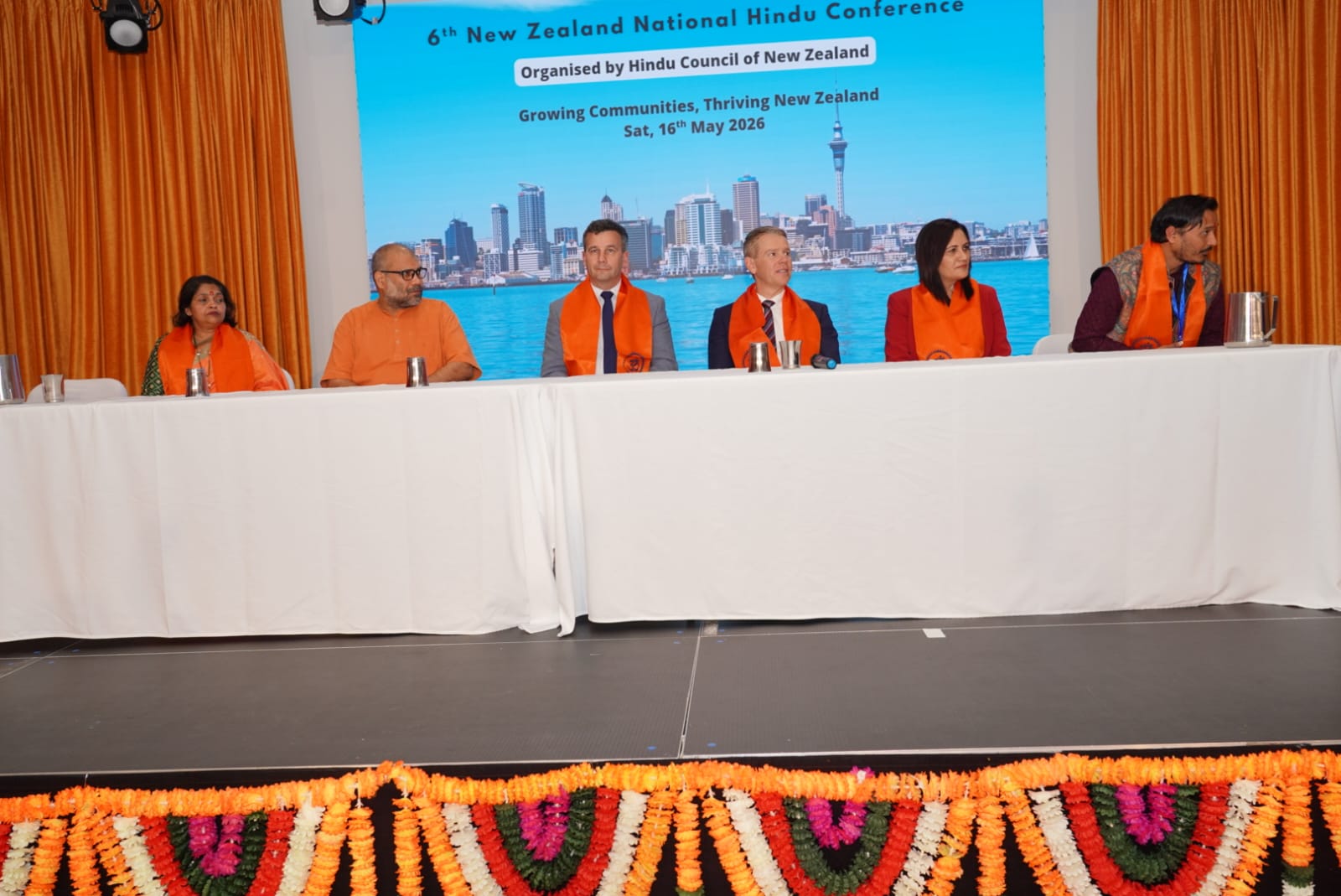
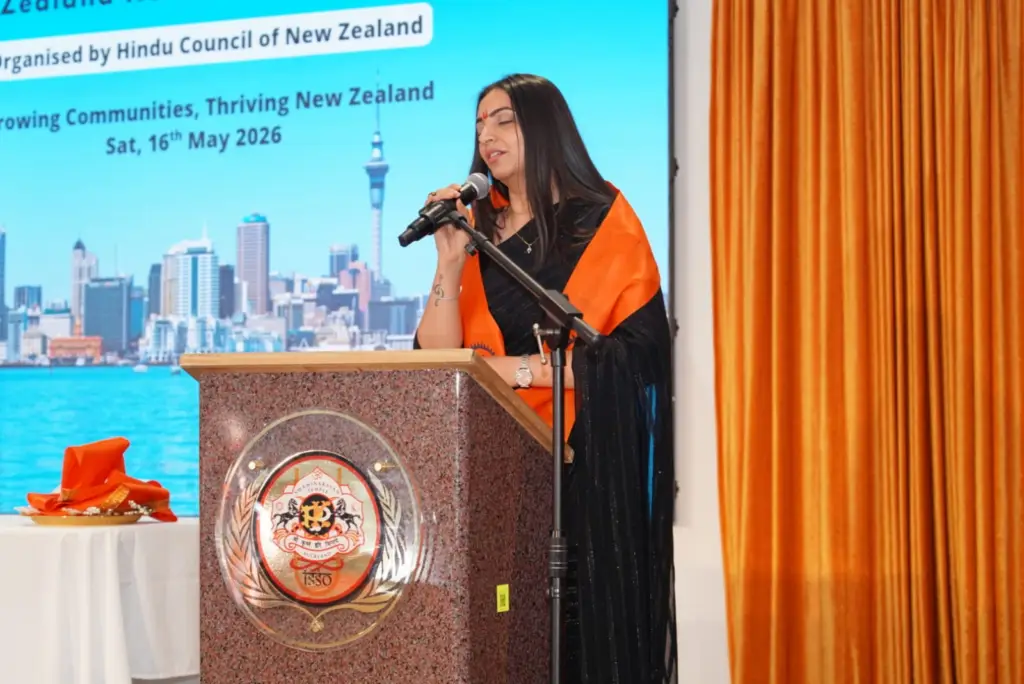
AUCKLAND — In a historic gathering that underscored the Hindu community’s growing influence and unwavering commitment to Aotearoa, the Hindu Council of New Zealand (HCNZ) successfully convened the 6th New Zealand National Hindu Conference on Saturday, 16 May 2026, at the ISSO Swaminarayan Complex in Papatoetoe.

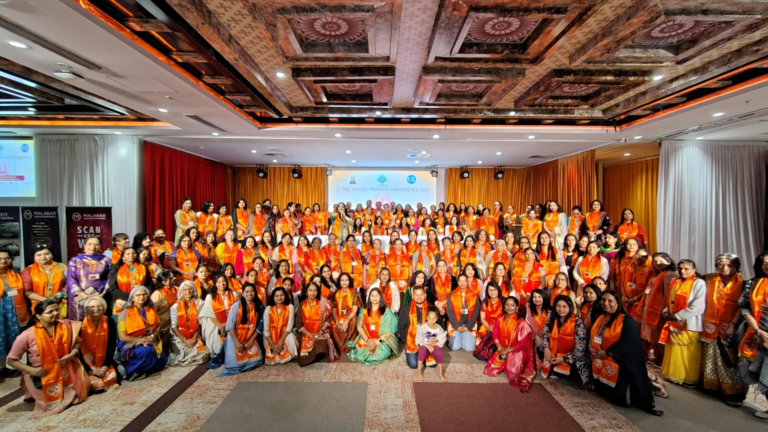
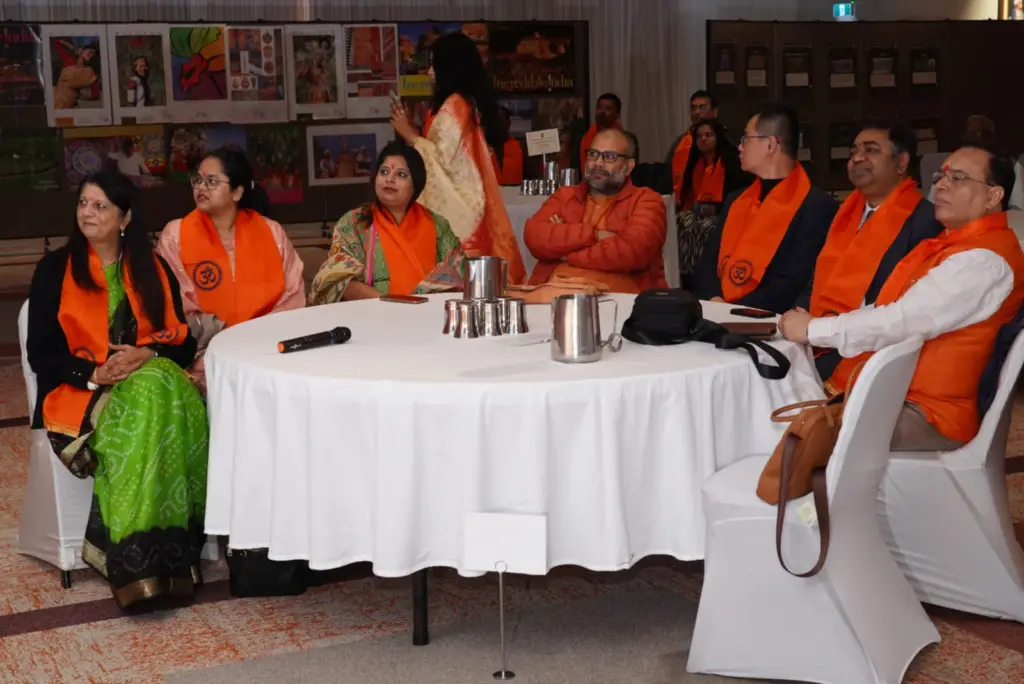
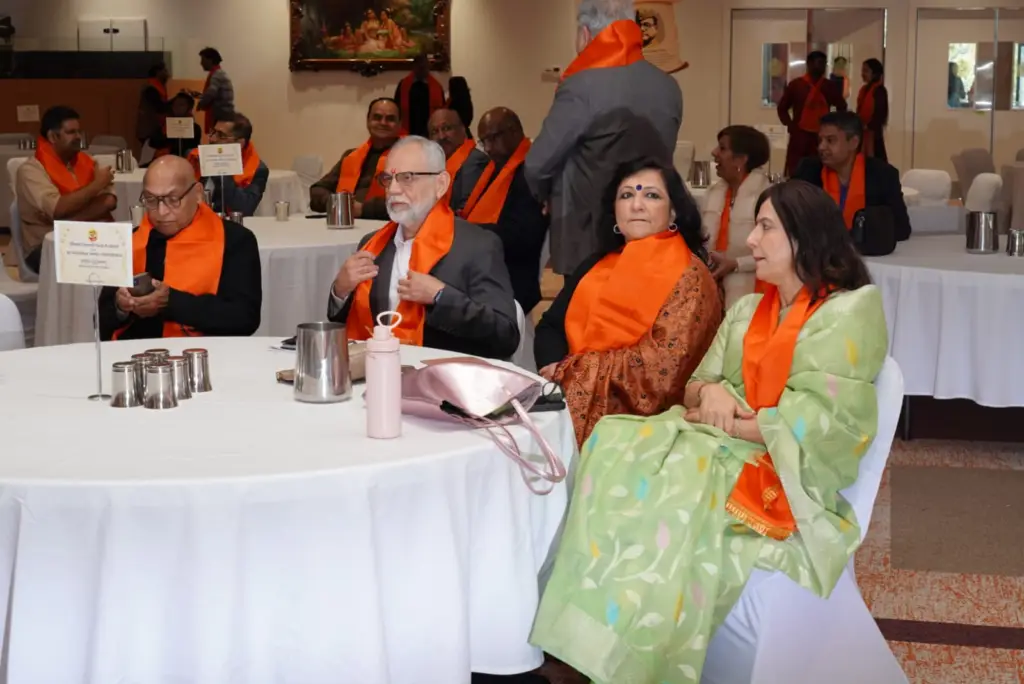
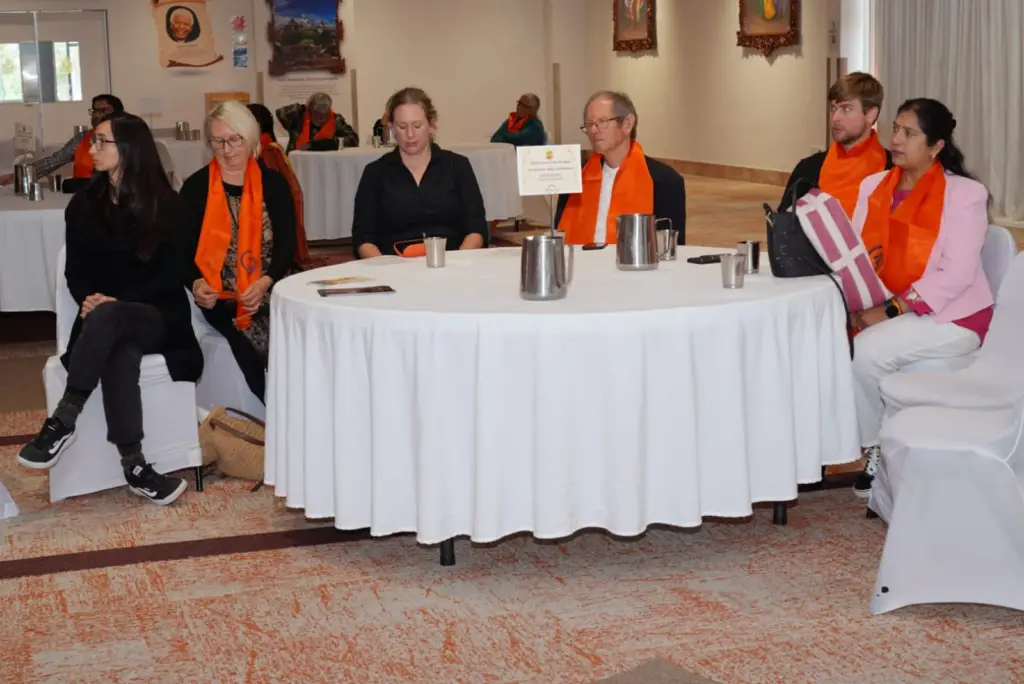
Held under the resonant theme “Growing Communities, Thriving New Zealand”, the conference brought together more than 200 delegates — including youth leaders, women representatives, academics, policymakers, temple trustees, professionals, and community volunteers — from across New Zealand and overseas. With nearly 50 per cent women and 20 per cent youth participation, the event reflected what HCNZ President Professor Guna Magesan described as “the inclusive and vibrant nature of our community”.
A Legacy of Leadership: Only National Hindu Conference Series in New Zealand
The Hindu Council of New Zealand, formally registered in 2006 and serving the community since 1996, remains the only national organisation to convene conferences dedicated to Hindu themes in New Zealand. The inaugural conference in 2007 was opened by the then Prime Minister Rt Hon Helen Clark; the second by the Māori King. Saturday’s gathering marked the sixth instalment in this distinguished series — a testament to HCNZ’s enduring role in strengthening Hindu identity, civic participation, and interfaith harmony.
“We began these conferences not just to strengthen our own community, but to highlight that we are a peace-loving, co-existing, and contributing part of New Zealand society,” Professor Magesan said in his welcome address. “Today, we gather as one united Hindu community — connected through shared values, culture, traditions, and commitment to service.”
He added: “The conferences provide an important platform to present the true narrative of Hindu society, develop leadership and volunteer skills among our youth and women, and build meaningful connections with government and funding agencies.”
The conference was fully supported by the HOTA Forum New Zealand and focused on key strategic areas including encouraging Hindu participation in public institutions, strengthening community collaboration, and the Safer Communities Project for temples and community facilities.

SESSION 1: Inaugural Session — Setting the Tone for Unity
The conference commenced promptly at 9:45 am with Master of Ceremonies Shri Ravi Grover of the Hindu Elder Foundation NZ and Smt Komal Sahani of Hindu Youth NZ establishing house rules before a packed hall.
Salutation to the Ancestors
Nishita Ganatra, a graduate law clerk at Pidgeon Judd and recent University of Auckland law graduate, led a solemn salutation to the ancestors. Ms Ganatra, who stood as a candidate in the 2025 local government elections for the Portage Licensing Trust and served as a Youth MP in 2019 speaking in Parliament on youth crime, brought a powerful youth perspective to the ceremonial opening.
Lighting of the Lamp and Hindu Prayer
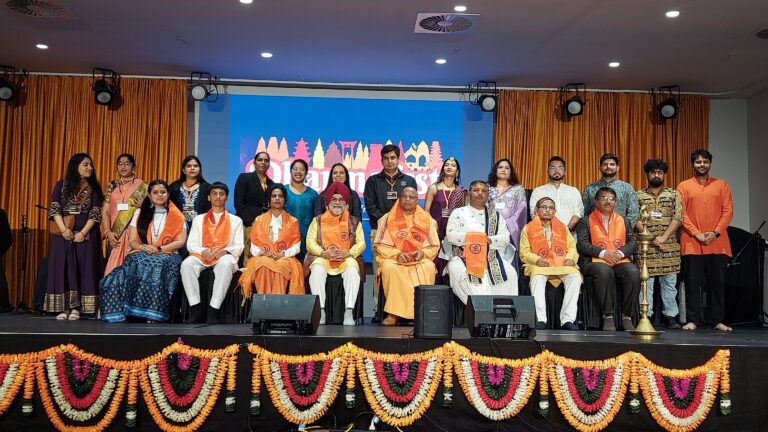
HOTA leaders performed the traditional lighting of the lamp ceremony, followed by a Hindu prayer led by Sakshi Vij Sekhon of Hindu Youth New Zealand. Vedic chants from Pandits of ISSO Swaminarayan Temple echoed the halls of the conference.
HE Dr. Madan Mohan Sethi, MP Dr. Carlos Cheung as well joined the lamp lighting.

Welcome Speech — Professor Guna Magesan
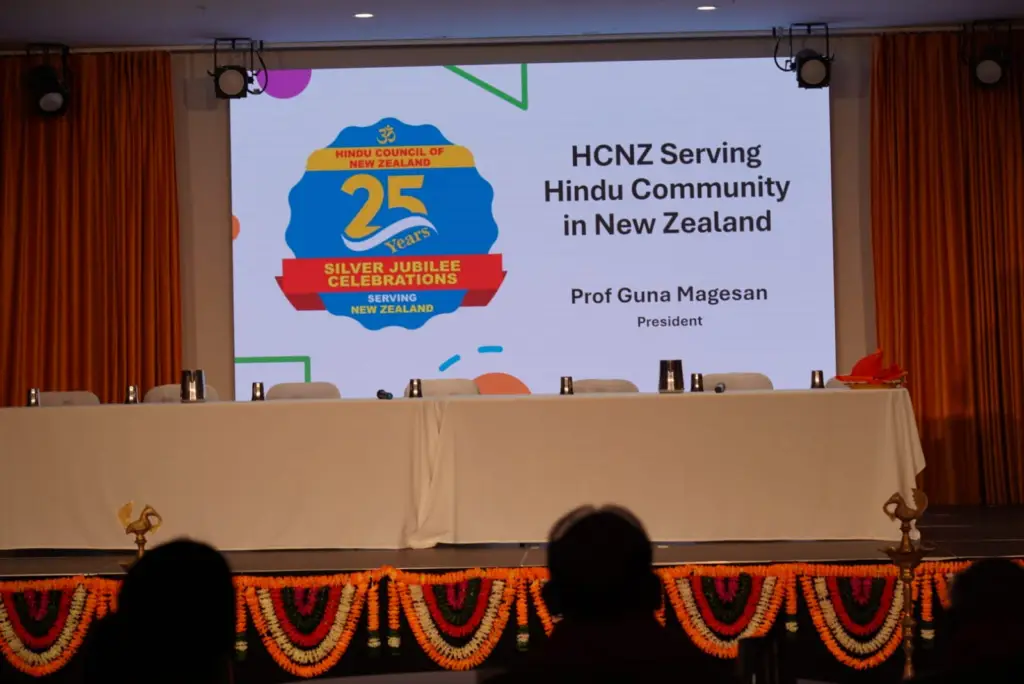
In his comprehensive welcome address, Professor Magesan reflected on HCNZ’s three-decade journey. “The Hindu Council of New Zealand has been serving the community since 1996. Over the past thirty years, the Council has worked tirelessly to promote Hindu values, support community wellbeing, encourage social harmony, and strengthen engagement with wider New Zealand society.”
He also revealed a significant development: “Earlier this week, Dr Vinay Karanam and I had a very constructive meeting with the Race Relations Commissioner regarding Religious Diversity, which reaffirmed the importance of continued engagement and cooperation in building a harmonious and inclusive society.”

Integrating Hindu Sanskar through an Indo-Kiwi School — Shri Manish Tanna
Shri Manish Tanna of ISSO presented a visionary proposal for the Shri Guru Shiksha Sanstha – Ako Wānanga, a permanent bicultural educational institution integrating Sanatan Dharma with Māori values. The project, seeking to establish a special character school and tertiary education provider, aims to serve all generations from tamariki to kaumātua.

“We envision a permanent institution that integrates the timeless wisdom of Sanatan Dharma with the indigenous values of Māori culture,” Mr Tanna explained. The proposed institution would be sustained by an endowment fund, ensuring financial independence and mission protection for generations.
Unity, Diversity and Continuity — Shri George (Vaurasaudha Das) Ormond
Mr Ormond, a devoted practitioner of Vaishnava Hinduism (Hindu Dharma) in the Brahma-Madhva-Gaudiya Sampradaya for over 50 years, brought decades of experience to the stage. Initiated by His Divine Grace Srila A. C. Bhaktivedanta Swami Prabhupada in 1975, he has actively promoted Kirtan and mantra meditation around New Zealand to thousands of Kiwis.
“I am deeply committed to ensuring that Vaishnava Hinduism (Hindu Dharma) is portrayed fairly and positively in the media,” he stated, drawing on his experience coordinating a robust response to Hinduphobic articles in the Sunday Star-Times in May 2015.
The Strategic Importance of Media — Dr Kumar Rakesh
Dr Kumar Rakesh, Editorial Chairman of Global Governance News Group and Samagra Bharat Media Group from New Delhi, delivered a powerful address on media strategy. Drawing from Swami Vigyananand’s recently published The Hindu Manifesto, he articulated eight guiding sutras for Hindutva.
“In the 21st century, the battle for civilisational survival is waged on the terrain of information and ideas,” Dr Rakesh declared. “We must strive for ‘Narrative Sovereignty’ — the right and ability to tell our own story, rooted in Vedic and Sanatan Hindu values.”
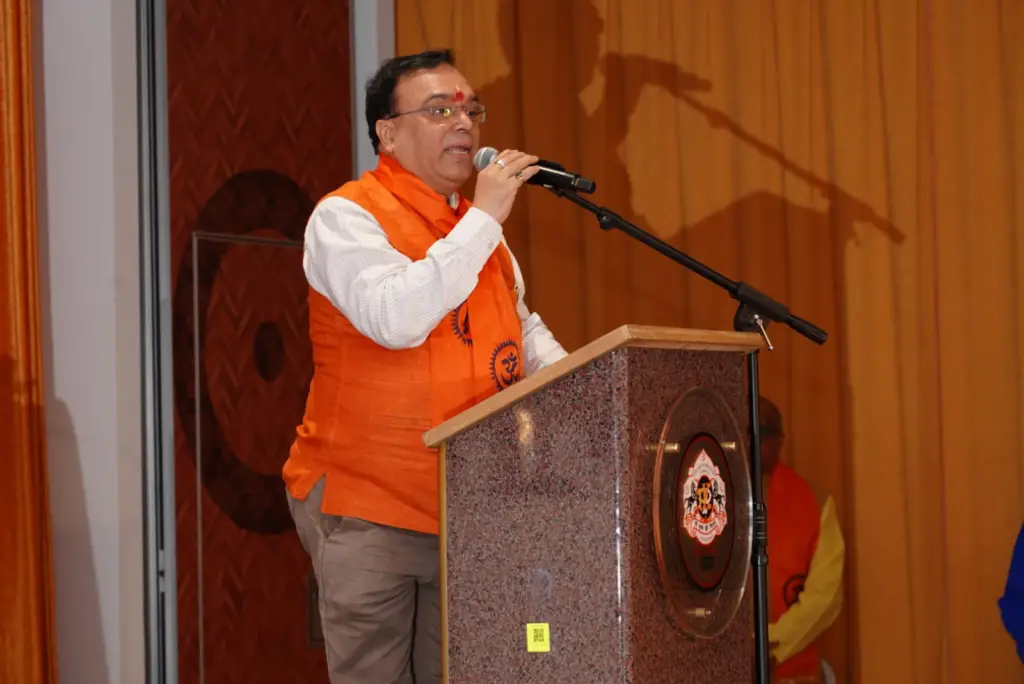
He outlined a vision for a Hindu media ecosystem in New Zealand: “Build an institutional framework — moving from scattered efforts to a collective Hindu Media presence. Nurture a culture of truth, balance, and service. Present the universal Hindu values of ‘Vasudhaiva Kutumbakam’ and ‘Sarve Bhavantu Sukhinah’.”
Blessings by Community Leaders
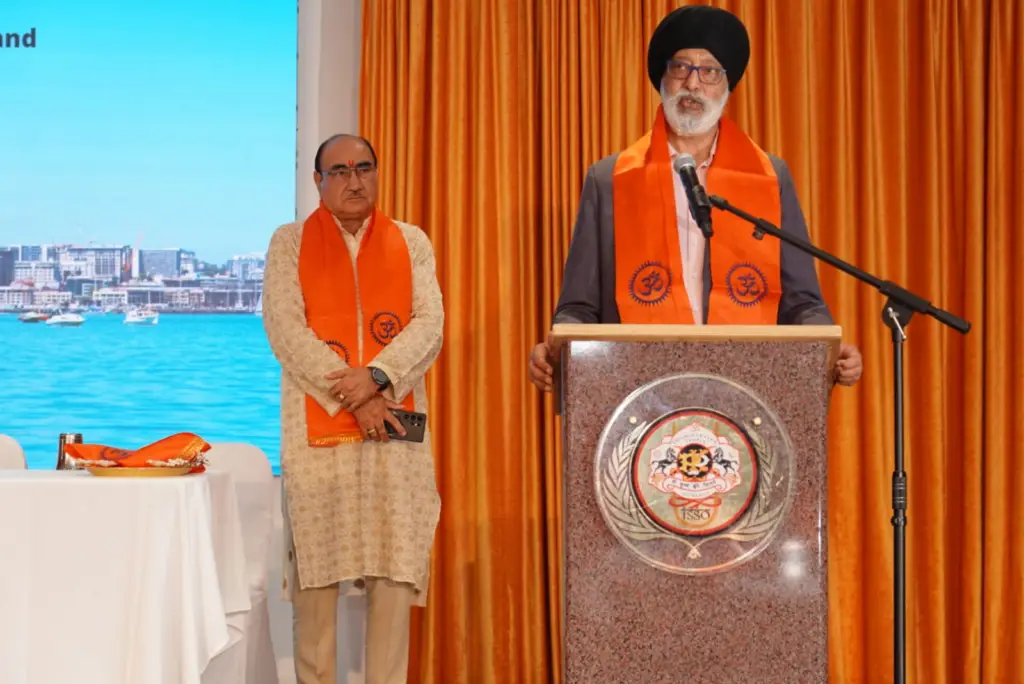
Shri Yatish Wadhera of the Hindu Elders Foundation (HEF) facilitated blessings from community leaders, honouring the senior members present who have shaped the community over decades. HE Dr Madan Mohan Sethi, Dame Ranjana Patel, Past MPs Shri Mahesh Bindra, Shri Kanwaljit Singh Bakshi, Tarun Ahuja from HEF blessed the event.
SESSION 2: Panel Discussion — Working with Government and Other Agencies
Moderated by Shri Sridhara Mysore and Smt Priya Sukumar of Shanti Niwas, this session brought together key institutional partners.
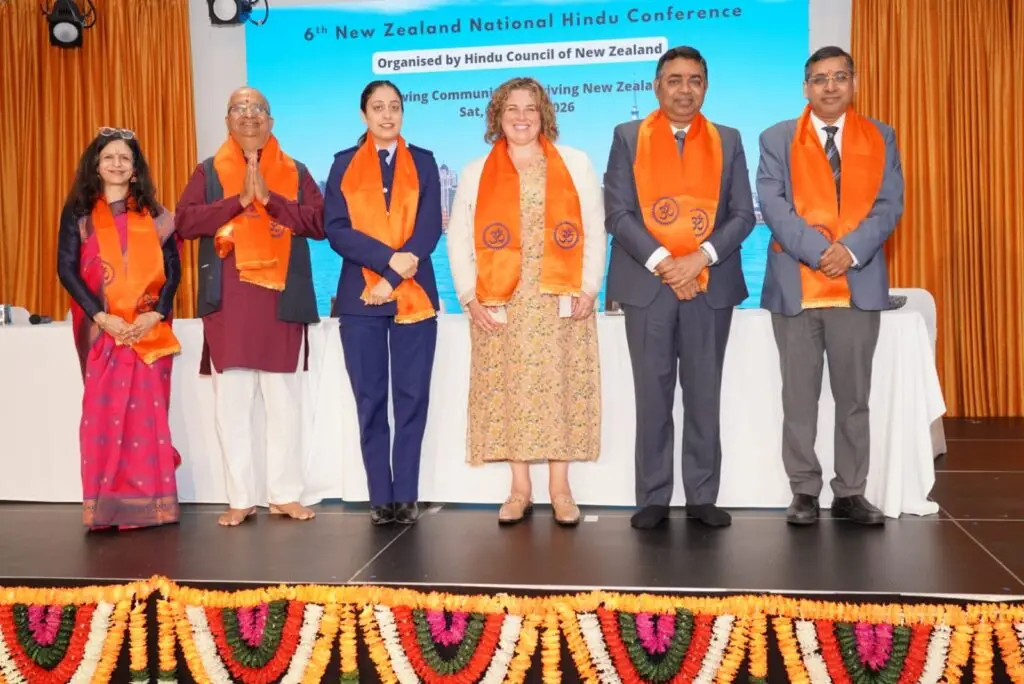
Consul General of Bharat — Dr Madan Mohan Sethi
HE Dr Sethi addressed the gathering, stating: “This conference beautifully showcases the rich heritage and the strong bridges built between India and New Zealand through people-to-people ties.”
Local Board — Smt Roseanne Hay
Ms Hay spoke to the importance of local civic engagement and the role of Hindu communities in neighbourhood-level decision-making.
New Zealand Police — Senior Sergeant Lavleen Kaur
Senior Sergeant Kaur affirmed: “From a policing perspective, our partnership with community groups like this is vital for building trust, ensuring community safety, and supporting practical local initiatives.”
She highlighted the Police’s commitment to culturally responsive approaches, noting previous collaboration with Australian Police on understanding Hindu family dynamics.
AUT — Dr Rahul Sen
Dr Sen, an academic at Auckland University of Technology, spoke to the role of educational institutions in fostering research partnerships and creating pathways for Hindu students into higher education and professional careers.
Questions and Answers
The floor opened for questions, with delegates raising issues around funding accessibility, police responsiveness to temple security concerns, and educational representation.
SESSION 3: Encouraging Hindu Participation in Public Institutions
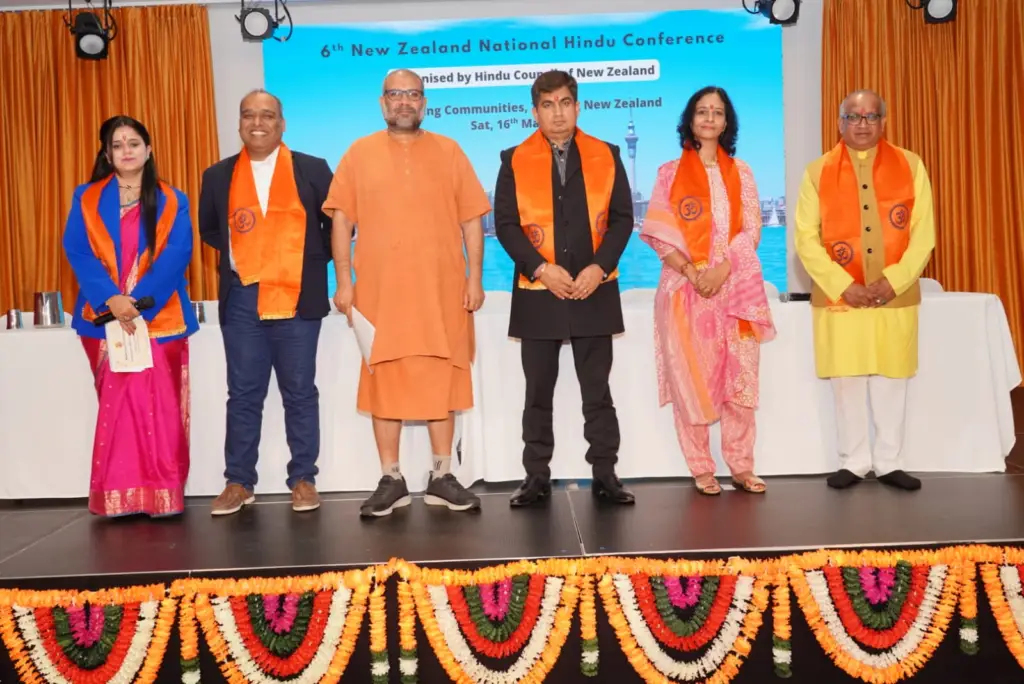
Moderated by Swami Vigyananand, this session focused on pathways, preparation, and contribution to politics, administration, and public service.
Panel Discussion
The panel featured:
Smt Archana Newaskar — A technology and leadership professional with over 20 years of experience at IBM and Infosys, now Senior Manager with Health New Zealand. Ms Newaskar shared her journey: “I am deeply passionate about community, mentoring, cultural engagement, and bringing people together. Over the years, I have actively contributed to initiatives that promote diversity, inclusion, women’s empowerment, and community wellbeing across New Zealand.”
She highlighted her work as founder of the Madhya Pradesh Association NZ (MPANZ) and her volunteer contributions to the Breast Cancer Foundation NZ, Cancer Society NZ, and Assistance Dogs New Zealand Trust.
Dr Sanjeev Kumar Arya — With more than 18 years of experience in healthcare, management, education, and training, Dr Arya spoke to the Hindu experience in Aotearoa. “I have a clear, logical mind with a practical approach to problem-solving and a drive to see things through to completion,” he told delegates, offering insights on bridging diaspora divides.
Shri Ashish Goyal — An executive coach and leadership educator, Mr Goyal works at the intersection of responsible leadership and values-based growth. “My work spans leadership development, parenting perspectives, and value-centred personal growth. Through coaching, teaching, and writing, I advocate for leaders who combine ambition with responsibility and societal impact.”
SESSION 4: Strengthening and Organising Hindus in NZ — HOTA Forum
Moderated by Swami Vigyananand, this session addressed the Hindu Organisations, Temples and Associations (HOTA) Forum — a unique operational model where Hindu organisations annually come together, work together, and collaborate for the larger benefit of the community.
Purpose and History of HOTA — Swami Vigyananand
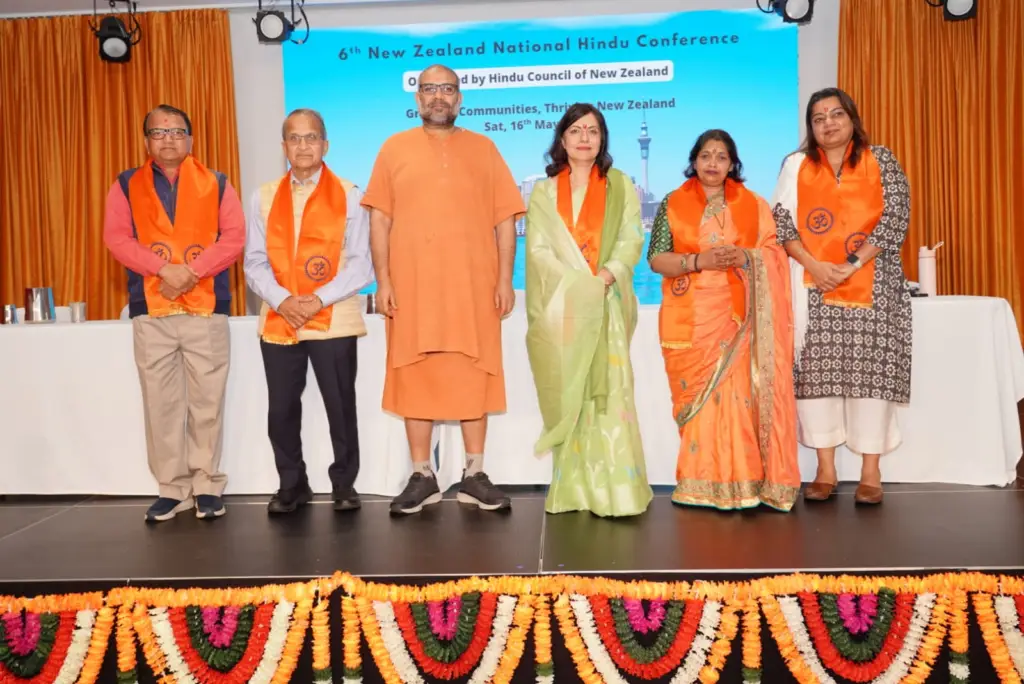
Swami Vigyananand, Founder of the World Hindu Congress, delivered a masterful exposition of HOTA’s philosophy, drawing on the powerful metaphor of the Kadak (Hard) Laddoo versus the Soft Laddoo.
“The Hindu society today, unfortunately, resembles a soft laddoo, easily broken into pieces and swallowed,” Swamiji explained. “When Hindu society loses its unity, fragments into smaller groups, and scatters, it becomes vulnerable — an easy prey for hostile forces threatening its very existence. This dangerous trend has persisted for centuries, leading to a decline in both population and territory.”
He continued: “A BIG HARD LADDOO is strongly bonded, cohesive, and cannot be broken into pieces. Hindu society must emulate this quality, becoming like a Big Hard Laddoo — extremely difficult to break. Only then will it be capable of defending itself against hostile forces.”
Swamiji told Zealandia News: “The core purpose is to bring the community together to reflect on how we can contribute more effectively to the progress of New Zealand. We look at education, economy, social well-being, and how sustainable growth can be achieved. It is about moving from basic integration to active leadership and contributing to the wider fabric of the nation.”
The Ekta Shankh (Conch) of Unity
The Ekta Shankh was presented as a symbol of unity, with hands supporting the Shankh signifying people of all ages and genders working together. The HOTA motto — “Sanghe Shakti Kaliyuge” (Organisation is Strength in this Age) — was displayed prominently.
Introduction of Core HOTA Representative Organisations
Individual representatives from each core HOTA organisation introduced themselves, demonstrating the breadth of the forum which includes temples, language-based groups, sampradayas (denominations), and cultural organisations from across New Zealand.
Swamiji clarified a common misconception: “There is a general impression among Hindus that Hindu society is not a united society, while others are united. But the reality is different. In reality, Hindu society is united but not organised.”
He explained the HOTA Forum’s two flagship annual activities:
- An annual forum held in February to discuss strengths, weaknesses, opportunities, and threats (SWOT analysis) through interactive workshops
- The Hindu festival of Raksha Bandhan, held in August, celebrating universal fellowship and respect for womanhood
The Raksha Bandhan celebration, noted for being meat-free, alcohol-free, and smoke-free, extends friendship to other Dharmic communities — Thai, Chinese, Korean, and Japanese — embodying the principle of Vasudhaiva Kutumbakam (the world is one family).
Swamiji noted that the HOTA Forum operates successfully in many countries, including Bharat, Australia (in several cities), Fiji, Thailand, the USA, Canada, the UK, Germany, Norway, South Africa, and New Zealand.
SESSION 5: One Hindu Community — Safer Communities Project
Moderated by Shri Bipan Bansal of the Manawatu Hindu Society, this session addressed a pressing reality: making the environment safe for Hindu Temples and Community Halls to operate safely in New Zealand, with focus on both premises and cybersecurity.

Details of the Safer Communities Project — Shri Srikant Bhave (HSS)
Mr Bhave outlined the project’s mission to strengthen security infrastructure for a safer and resilient community. He explained the role of the HOTA Forum, established in 2010, which works collaboratively with temples and Hindu organisations nationwide under HCNZ’s guidance.
“The HOTA Forum is a well-established and vibrant platform dedicated to fostering unity, collaboration, and progress among Hindu organisations, temples, and associations across New Zealand,” he said. “Each year, one Hindu organisation, temple, or association voluntarily hosts the HOTA Forum, holding the Ekta Shankh — a symbol of unity — serving as a ceremonial baton representing leadership.”
The Safer Communities Fund, he explained, would support eligible security projects including CCTV systems, access control, lighting upgrades, fencing, alarm systems, and security training for volunteers.
Importance of Cybersecurity in Hindu Organisations — Dr Vinay Karanam
Dr Vinay Karanam, PhD, of Kinetriq AI, delivered a compelling presentation on the escalating cyber threat landscape facing faith-based organisations.
He presented alarming statistics: New Zealand reported 1,369 cyber incidents with 7.8millioninlossesinQ12025alone,andafurther1,315incidentswith5.7 million in Q2 2025. The NCSC Consumer Cyber Behaviour Tracker 2026 found that 48 per cent of NZ adults experienced an online threat in the six months to 2025.
“Faith-based organisations hold significant digital assets — donation portals, membership databases, event registrations — yet often operate with limited IT resources,” Dr Karanam explained.
Case Study: Hawke’s Bay Indian Cultural Centre (2023)
Dr Karanam presented a sobering case study: “A targeted cybercrime campaign compromised social media accounts, breached a laptop, exposed the Wi-Fi network, and gave the attacker access to personal documents including passport and banking details. Thousands were spent on private cybersecurity expertise. Police were unable to identify the attacker. The couple described the ordeal as ‘draining, both financially and mentally’.”
The AI Threat Landscape
Dr Karanam highlighted how AI has fundamentally changed the attack timeline: “The average time an attacker needs to move through a compromised system is now just 29 minutes. With AI tools like WormGPT, attackers can generate working exploits within minutes of a CVE being published. Manual patch management is no longer viable.”
He cited CrowdStrike’s 2026 Global Threat Report: a 389 per cent increase in confirmed global ransomware victims in 2025, driven by WormGPT, FraudGPT, and BruteForceAI crime toolkits. The velocity gap — the widening disparity between attack speed and defence response — is the critical challenge.
Seven Practical Steps for Hindu Organisations
Dr Karanam outlined actionable measures:
- Enable Multi-Factor Authentication (MFA) — Must be 100 per cent for all organisational accounts, including email, social media, banking, and donation portals
- Adopt Password Managers — Use tools such as Bitwarden or 1Password for long, strong, unique passwords
- Move to Proactive Security Tools — Replace legacy antivirus with AI-driven EDR and consider RASP for online portals
- Conduct Regular Security Assessments — Vulnerability assessments, penetration testing, and phishing simulations
- Develop an Incident Response Plan — A documented plan for containment, eradication, recovery, and notification
- Train All Staff and Volunteers — Including temple priests, event coordinators, and financial officers
- Report Incidents Promptly — Only 56 per cent of New Zealanders report threats they experience
Resources for the Community
Dr Karanam highlighted that CERT NZ has added Hindi and Punjabi to its cyber safety website, recognising New Zealand’s South Asian community. He encouraged all member organisations to register with CERT NZ and access NCSC’s Own Your Online resources.
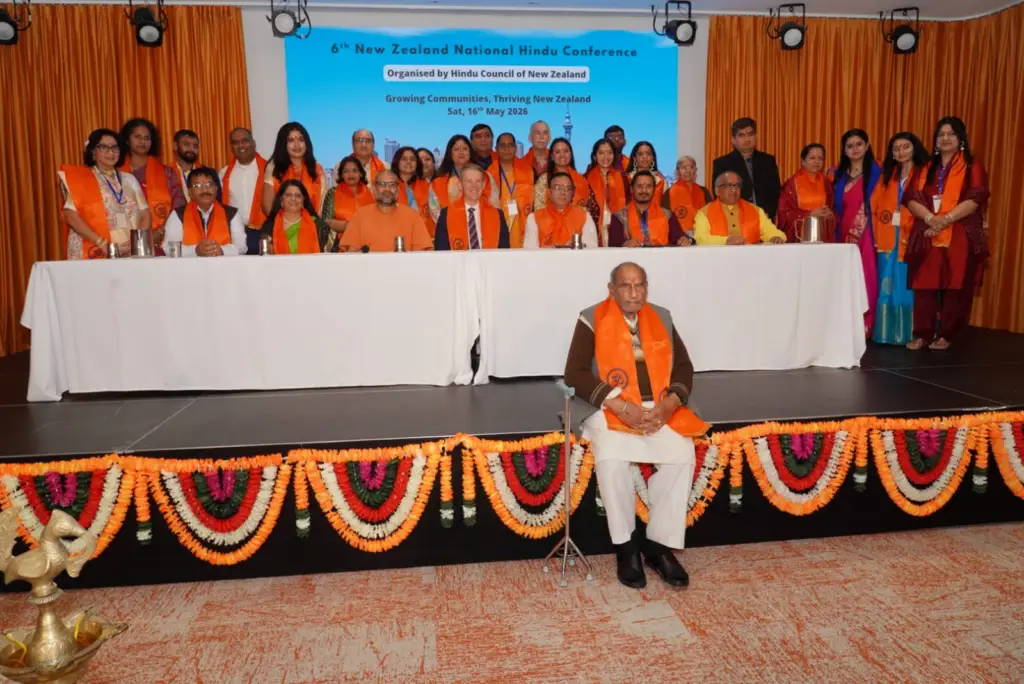
AFTERNOON TEA AND GROUP PHOTOGRAPHS
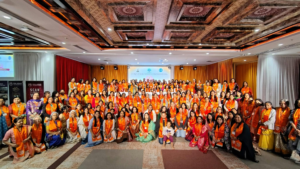
A brief refreshment break at 3:00 pm was followed by group photographs of the organising committee, volunteers, and all participants — capturing the unity and diversity of the gathering for posterity.
SESSION 6: Hindu Contribution to New Zealand — A Century of Data
This concluding session, introduced by HCNZ as the capstone of the conference, featured a comprehensive presentation by Dr Vinay Karanam, followed by dignitary addresses and the launch of three New Zealand-born initiatives.

The Vision and Contribution of Hindu New Zealanders — Dr Vinay Karanam
Dr Karanam presented a sweeping demographic and socioeconomic analysis spanning a century — from the 1926 census to 2026 projections.
Population Growth
The Hindu Dharma community population in New Zealand has grown from just 12 individuals recorded in the 1926 census to a projected 218,000 in 2026. Key 2023 census statistics revealed:
- Median age: 34 years (national average: 37.8)
- Gender ratio: 51 per cent female, 49 per cent male
- Tertiary qualified: 68.4 per cent
- Median income: NZD $118,200
- Professionals and managers: 58.2 per cent
Academic Excellence
Dr Karanam highlighted that the Hindu Dharma community leads all peer communities in bachelor’s degree attainment, with a 78.4 per cent NCEA Level 3 attainment rate. Advanced degree comparisons showed:
- Bachelor’s degree attainment: 12.7 percentage points above Christian community average and also above national average
- STEM graduates: 38.4 per cent of the Hindu Dharma tertiary cohort — more than double the national baseline of 18.2 per cent
Field-of-study breakdown for Hindu Dharma community graduates showed:
- Engineering and IT: 31 per cent — directly addressing NZ’s digital skills shortage
- Healthcare and medicine: 24 per cent — adding specialist capacity to Te Whatu Ora and regional health services
- Business and finance: 19 per cent — supporting commercial leadership and entrepreneurship
- Education: 14 per cent — strengthening teaching and research pipelines
Income Growth and Mobility
Median household income among Hindu New Zealanders increased by 43.6 per cent between 2013 and 2023. Generational analysis showed sustained upward mobility:
- First-generation median income: NZD $78,000
- Second-generation median income: NZD $96,500
- Third-generation/mixed-heritage: NZD $112,200 — a 58 per cent premium over the national average for established families
Concentrated Settlement
The Hindu Dharma community’s distribution across New Zealand shows 64 per cent in Auckland (138,000 community members), 14 per cent in the Wellington hub, with remaining populations in Christchurch, Hamilton, and other regional centres. Dr Karanam argued that proximity builds connected, resilient communities through mutual aid networks, festival co-location, graduate guidance, and civic representation.
Civic Honours and Executive Leadership
Dr Karanam traced civic honours from the first recorded recognition in 1926 through to the present. Post-1990 honours distribution showed 38 per cent in healthcare and research, 31 per cent in education and community, with 65 per cent of honours recipients holding Level 7+ qualifications.
Sample executive appointments included roles across public service, aviation, and healthcare. Boardroom data confirmed growing corporate leadership, with board readiness index reaching 52 per cent in 2026 — a 24-point rise since 2015.
Mentorship Outcomes
Mentored Hindu Dharma youth demonstrated an 84 per cent employment rate with median salary of NZD 68,500, compared to the national youth average of NZD52,000 — a 31.7 per cent premium for mentored graduates.
Dr Karanam concluded: “These are not just numbers. They represent a century of migration, settlement, education, and contribution. Hindu New Zealanders are helping to address skills shortages, strengthen our health system, drive innovation, and enrich our cultural landscape.”
Political Leaders Address the Conference
Deputy Prime Minister David Seymour
Deputy Prime Minister Seymour addressed delegates, commending the Hindu community’s contribution. Citing the data presented by Dr Karanam, he stated: “These aren’t just impressive statistics. They represent real contributions to New Zealand’s economy, healthcare system, technology sector, and social fabric.”
In a sideline interview with Zealandia News, Seymour reflected: “What I see is a community that is growing in confidence, growing in its organisational capacity, but above all, completely dedicated to the foundational values of New Zealand. People who want to work hard, people who care about family, people who care about community, and people who want to make tomorrow better than today. That is exactly what New Zealand needs more of.”

He concluded: “My message is simply: thank you. Thank you for the contribution you make to our economy, to our culture, and to our country. Continue to stand tall, continue to share your values, and continue to be a proud part of the New Zealand story, because New Zealand is a better place because the Hindu community is here.”
Leader of the Opposition Rt Hon Chris Hipkins
Mr Hipkins used his address to deliver a pointed rebuttal to recent controversial commentary by New Zealand First Deputy Leader Shane Jones, who had referred to prospective Indian migration under the India-New Zealand Free Trade Agreement as a “butter chicken tsunami” and a “curry fellows” reference.
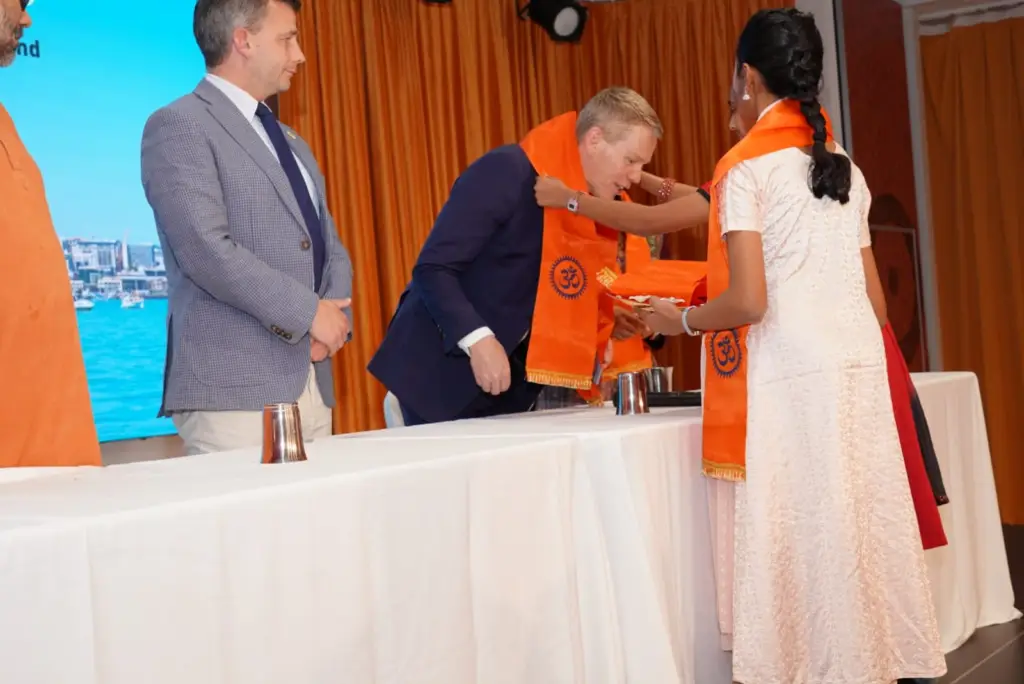
“New Zealanders of Hindu heritage are not ‘curry fellows’ — they are doctors, engineers, teachers, entrepreneurs, public servants, and neighbours,” Hipkins affirmed to applause. “They are leading the way in so many fields that matter to our country’s future. This conference shows a community that is organised, confident, and committed to Aotearoa.”
Hipkins acknowledged “the incredible work of the Hindu Council of New Zealand in fostering social cohesion, promoting diversity, and ensuring that diverse voices are heard at every level of decision-making.”
Hon Dr Parmjeet Parmar
List MP Parmjeet Parmar, a regular attendee of HCNZ events, expressed personal pride in the gathering and reflected on her long-standing connection to the conference.
“It is absolutely fantastic to see so many community leaders, academic experts, and young professionals gathered under one roof,” she told Zealandia News. “This conference has become an essential platform for addressing the opportunities and the unique challenges faced by the community.”
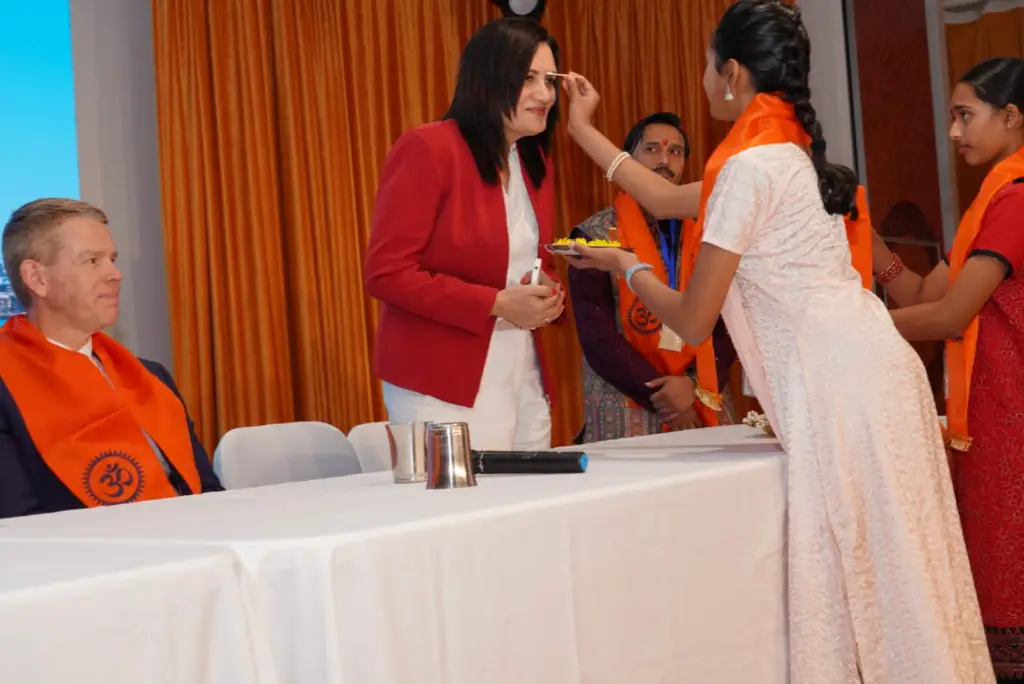
Dr Parmar added: “I am so happy to be back at the Hindu Conference — an event I have attended consistently over the years. As a proud Hindu and a proud New Zealander, I see in this community the very best of both worlds: deep cultural roots and unwavering commitment to our shared nation. The HCNZ model of national dialogue is something other communities could learn from.”
Reflecting on civic awareness, she noted: “We are seeing a much higher level of civic awareness. People aren’t just participating; they are demanding a say in policy, especially around education, law and order, and small business support. It shows a community that truly calls New Zealand home and wants to shape its future direction safely and successfully.”
Innovation Launch: Three New Zealand-Born Initiatives
A highlight of the closing session was the formal launch of three initiatives by Hindu entrepreneurs, conducted by Swami Vigyananand alongside political dignitaries:
1. Narada AI — Hindu’s own Large Language Model (LLM), developed with Hindu ethical frameworks, designed to serve community needs while respecting cultural values
2. PauaPay — A zero-convenience-fee payment gateway enabling fast, reliable transactions for both merchants and users, launched as a community-focused financial technology solution
3. Kinetriq AI — A comprehensive cybersecurity suite tailored for businesses of all sizes in New Zealand, described as “born in New Zealand, made for the world”
The launches underscored the community’s commitment to innovation, ethical technology, and economic contribution — aligning with HCNZ’s broader vision of empowering Hindu organisations to serve in an organised, impactful manner.

Concluding Remarks and Future Announcements
Where to From Here — Smt Vijeshni Rattan
Smt Vijeshni Rattan of the Hindu Women Forum NZ delivered concluding remarks, reflecting on the conference’s achievements and outlining pathways for continued engagement.
Vote of Thanks — Kumari Krupa Parajiya
Kumari Krupa Parajiya of Hindu Youth NZ delivered a heartfelt vote of thanks, acknowledging speakers, moderators, volunteers, delegates, and supporting organisations for their valuable contribution to the conference’s success.
Future Conferences Announced
Just before the conclusion, the following conferences were announced:
- 2nd New Zealand Hindu Women Conference — 30 August 2026
- 3rd New Zealand Hindu Elders Conference — 3 October 2026
- 5th New Zealand Hindu Youth Conference — 27 February 2027
- 7th New Zealand National Hindu Conference — 12 June 2027
Conference Outcomes and Strategic Significance
The 6th NZ National Hindu Conference achieved several significant outcomes:
- Safer Communities Project Launch — A concrete framework for temple and community hall security, both physical and cyber, with actionable steps and government resource connections
- HOTA Expansion — Strengthened commitment to the HOTA Forum model, with new organisations expressing interest in joining the collaborative platform
- Data-Driven Advocacy — Comprehensive demographic and economic data now available for policy engagement and public representation
- Youth and Women Leadership — Demonstrated intergenerational succession with 20 per cent youth and nearly 50 per cent women participants
- Innovation Showcase — Three New Zealand-born technology ventures launched, demonstrating Hindu entrepreneurial contribution
- Bipartisan Political Engagement — Strong messages of support from both government and opposition, alongside robust rebuttal of divisive rhetoric
A Century of Contribution: The Bigger Picture
The conference’s data presentation revealed a remarkable story of integration and achievement. From 12 individuals in 1926 to a projected 218,000 in 2026 — a century of growth that mirrors New Zealand’s evolution into a multicultural nation.
Early honours between 1926 and 1990 demonstrated sustained civic contribution before demographic scale was achieved, with recognitions in education and youth programmes, healthcare and social welfare, community mediation, and agricultural and trade advisory roles. This confirmed a community-first ethic that predated political visibility.
The post-1990 period, following immigration reforms that aligned with Hindu Dharma community pathways, saw sustained civic recognition across healthcare and research (38 per cent), education and community (31 per cent), and other sectors. Professional concentration in healthcare and education naturally aligned with national honours criteria, validating the community’s knowledge-economy positioning.
Master of Ceremonies and Conference Coordination
The conference was expertly emceed by Shri Ravi Grover of the Hindu Elder Foundation NZ and Smt Komal Sahani of Hindu Youth NZ, who maintained seamless flow throughout the packed programme.
The conference was coordinated by Dr Vinay Karanam, whose leadership helped encourage significant youth participation, including university students representing institutions from across New Zealand.
Professor Guna Magesan, President of HCNZ, expressed appreciation for the wide participation and strong support received from across the country: “I am especially pleased to note that around 20 per cent of our participants are youth, and nearly 50 per cent are women. This reflects the inclusive and vibrant nature of our community.”
Looking Ahead
In an era of political division and contested narratives around migration and trade, the conference sent a powerful message: the Hindu community of New Zealand is organised, aspirational, and unequivocally committed to the shared prosperity of all who call this nation home.
The conference provided an important platform for dialogue, networking, partnership building, and strengthening national collaboration among Hindu organisations and community groups. It reflected the Hindu community’s strong commitment to contributing positively to New Zealand’s multicultural society and to building an inclusive, harmonious, and thriving future for all New Zealanders.
As delegates departed Papatoetoe, the consensus was clear: the 6th NZ National Hindu Conference was not merely a gathering, but a milestone — affirming unity, advancing security, celebrating contribution, and charting a confident course for the Hindu community’s continued growth and service in Aotearoa.
Zealandia News is a community-focused publication covering civic, cultural, and social developments across New Zealand.
For media inquiries regarding the Hindu Council of New Zealand:
Professor Guna Magesan, President
Phone: 021 0345621
Email: hindu.nz@gmail.com or info@hcnz.org