 Dorothy Brown
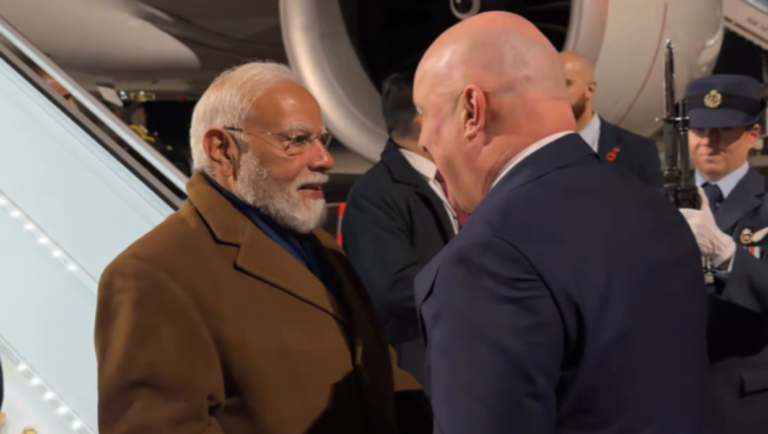
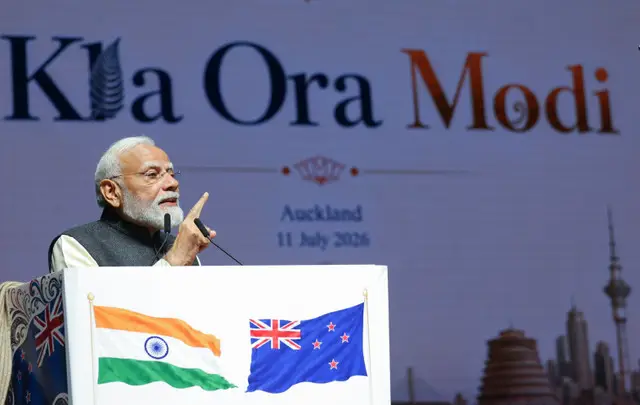
 Auckland — The air was electric. Thousands of Indian flags fluttered alongside the silver fern as Prime Minister Narendra Modi touched down in Auckland, marking the first visit by an Indian head of government to New Zealand in nearly forty years. The last Indian Prime Minister to set foot on New Zealand soil was Rajiv Gandhi in 1986. For the 330,000-strong Kiwi-Indian community, this was not merely a diplomatic event; it was a homecoming, a validation of their journey, and a celebration of a bond that has been quietly strengthening across the vast expanse of the Indo-Pacific.
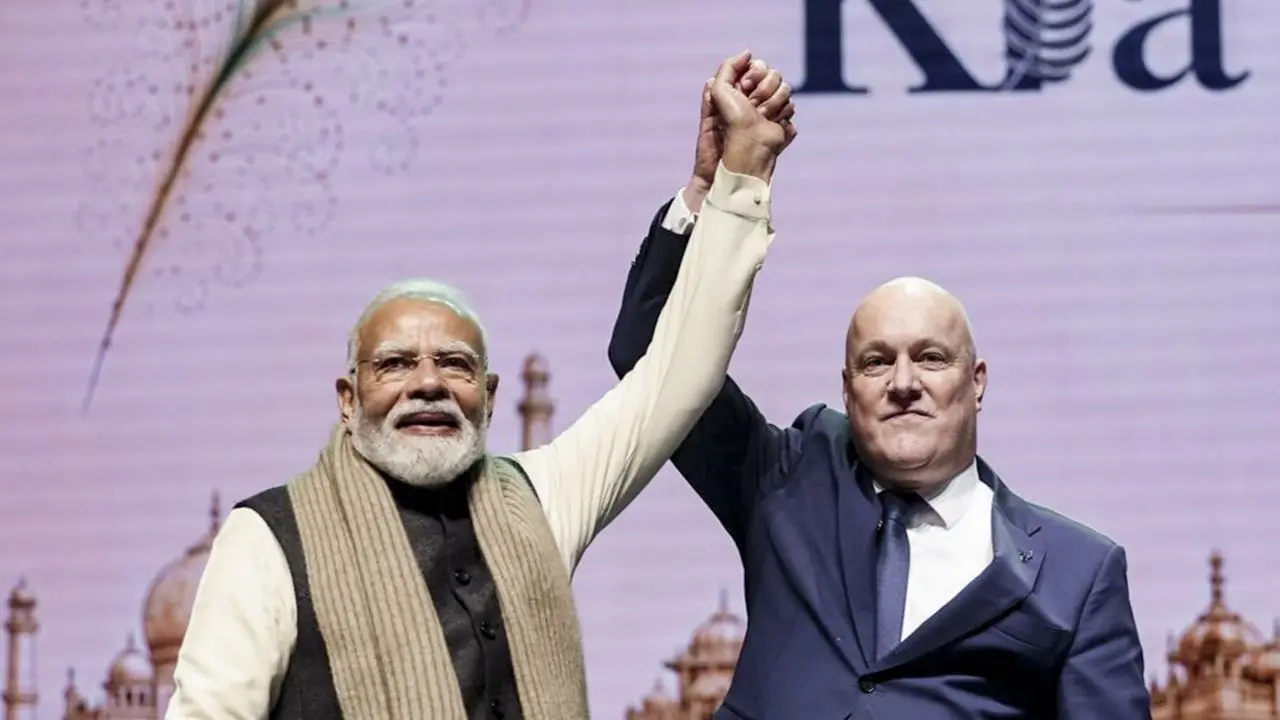
“Tonight, New Zealand makes history,” declared Prime Minister Christopher Luxon, welcoming his Indian counterpart. “For the first time in 40 years, an Indian Prime Minister stands on New Zealand soil… Prime Minister Modi, let me say on behalf of 5 million New Zealanders, you are worth the wait.” The two leaders embraced on the tarmac at Auckland Airport, a gesture that signalled the depth of the commitment both nations were placing on this historic occasion.
A Turning Point in Bilateral Ties
Prime Minister Modi’s arrival in New Zealand was the culmination of a productive three-nation tour that had already taken him through Indonesia and Australia. However, it was in Auckland that the relationship reached a new zenith. The leaders elevated bilateral ties to a Strategic Partnership, providing a broader framework for cooperation that extends well beyond the recently concluded Free Trade Agreement.
“This marks a historic milestone in our relationship, one that revitalises our ties and reaffirms our commitment to friendship,” PM Modi said during delegation-level talks. He recalled Luxon’s visit to India during the festival of Holi last year, noting that it had added “new colours” to the bilateral relationship. Describing the two nations as “natural partners,” Modi emphasised their shared democratic values and their roles as vibrant maritime nations in the Indo-Pacific.
The centrepiece of the visit was the announcement of a Roadmap to 2030, which commits both countries to deeper cooperation in defence, maritime security, trade, investment, education, technology, sport and tourism. A key target of this roadmap is to double two-way trade by 2030. The Strategic Partnership also includes a new Maritime Cooperation Arrangement between the two countries’ defence forces, reflecting shared concerns about stability in the Indo-Pacific.
PM Modi hailed the India-New Zealand FTA as a “historic milestone,” thanking Luxon and his team for concluding the pact in record time. “The way all of New Zealand united to bring the FTA to fruition in such a short time, perhaps a global first for such a swift success, is remarkable,” Modi said.
The Economic Powerhouse: Kiwi-Indians
If the diplomatic framework provided the architecture for the future, it was the human element that gave it soul. Prime Minister Luxon, addressing the packed Indian community event at Auckland’s Spark Arena, put the contributions of the Kiwi-Indian community into sharp perspective.
“Our 330,000-strong Kiwi Indian community now contributes $37 billion to our economy every year. That’s 9% of our GDP, and it supports 220,000 jobs,” Luxon announced. The figure, equivalent to 8.6% of total GDP in the year to March 2025, comes from a report by consultancy Infometrics, which found the community’s contribution supported more than 220,000 full-time equivalent jobs, with Indian businesses accounting for just under three-quarters of the total.
“You are successful in every stratum of New Zealand society,” Luxon told the gathering. He noted that Kiwi-Indians comprise around 6 percent of New Zealand’s population and are the largest source of skilled migrants and the second-largest source of international students. The community is also becoming more productive and better paid, with median personal incomes rising 47% between 2018 and 2023, compared with 31% for the total population.
Luxon praised India’s economic transformation under PM Modi’s leadership, noting that 250 million Indians had been lifted out of poverty in just the last decade. “India is not just a country we trade with; it is a country that we grow with. It is a country we trust,” Luxon said. He added: “The 21st century will be shaped by India, and New Zealand wants to help build that future with you.”
PM Modi, in turn, acknowledged the Indian community spread across every corner of New Zealand—from Auckland to Wellington, from Christchurch to Queenstown—as a vital part of the shared journey between the two nations. “India-New Zealand relations have memory, friendship, values and a commitment,” Modi said.
Prime Minister Christopher Luxon and Indian Prime Minister Narendra Modi both prominently referenced key data points from a landmark presentation delivered just a month earlier by Dr. Vinay Karanam at the 6th New Zealand National Hindu Conference. Dr. Karanam’s comprehensive presentation, “The Vision and Contribution of Hindu New Zealanders,” detailed the community’s remarkable trajectory, including its projected growth to 218,000 members, exceptional educational attainment with 68.4% holding tertiary qualifications, and a strategic occupational shift where 54% now work in professional and technical roles. The data also highlighted a 47% rise in median personal incomes between 2018 and 2023, with the community’s median household income reaching NZD $118,200, alongside significant contributions to STEM fields and the healthcare workforce.
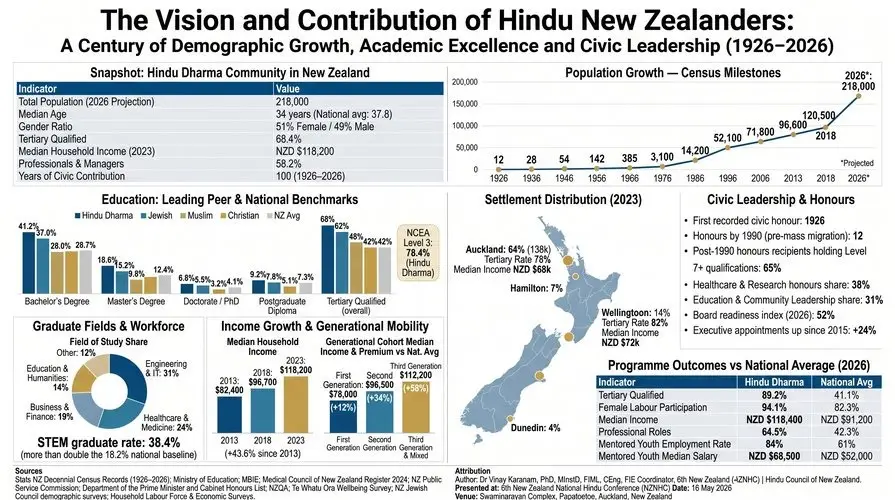
In his address, Prime Minister Luxon explicitly acknowledged these community achievements, noting that Kiwi-Indians comprise around 6% of New Zealand’s population and are the largest source of skilled migrants, while also highlighting the community’s growing productivity and the 47% income increase that Dr. Karanam had documented. Luxon further praised India’s economic transformation under PM Modi’s leadership, emphasizing that “the 21st century will be shaped by India.” PM Modi, in turn, recognized the Indian community spread across New Zealand as a vital part of the shared journey between the two nations, affirming that “India-New Zealand relations have memory, friendship, values and a commitment,” directly engaging with the community’s century-long contribution to Aotearoa that Dr. Karanam had meticulously chronicled.
Shared Indigenous Roots: Manaakitanga and Atithi Devo Bhava
Beyond trade and economics, the visit revealed a deep cultural resonance between two nations separated by geography but united by values. PM Modi drew powerful parallels between Māori culture and Indian traditions, highlighting the shared commitment to preserving and celebrating indigenous heritage.
“There is another very major similarity between India and New Zealand. This similarity is that of our indigenous culture. It is about celebrating and protecting indigenous culture,” Modi said.
The Prime Minister was accorded a traditional Māori pōwhiri—a ceremonial welcome—at Government House in Auckland, a gesture that reflected New Zealand’s rich indigenous heritage and cultural values. He spoke with deep respect about the Māori Haka, describing it not merely as a performance but as a window into the soul of a society. “I have not seen Haka only as a performance; I have seen the soul of a society in Haka. It has courage, self-respect, and faith in our ancestors,” Modi said.

Drawing comparisons between Māori customs and Indian traditions, Modi referred to the Māori concept of “Manaakitanga” —which means showing respect, giving love, and caring for something with all one’s heart. “In India, we also say ‘Atithi Devo Bhava’. The words are different, the environment is different, the attire is different, and the languages are different, but the feeling is exactly the same,” he said.
The Prime Minister also highlighted the Māori understanding of family—“Whanau” —noting its close resemblance to India’s traditional family system. “In India, we do not consider family just a social arrangement; for us, family is an institution,” he said. He spoke about “Kaitiakitanga” , the Māori principle of guardianship and protecting nature, drawing a parallel with the Indian belief, “Mata bhūmiḥ putroahaṃ pṛthvyaḥ”—“the Earth is my Mother, and I am her son.”
Echoes of India in New Zealand’s Landscape
The cultural connections between the two countries are not abstract; they are etched into the very geography of New Zealand. PM Modi himself noted the presence of Indian-inspired place names across the country, including Bombay Hills, Coromandel, Calcutta Street, Delhi Crescent, Amritsar Street and Khandala.
A deeper exploration reveals a rich tapestry of Indian nomenclature woven into New Zealand’s urban fabric. Wellington’s suburb of Khandallah—home to more than 30 roads reflecting Indian cities, rivers and personalities—includes Bombay Street, Delhi Crescent, Calcutta Street, Ganga Road, Indus Street and Kashmir Avenue. In Christchurch, one finds Delhi Place, Indira Lane, Rama Crescent, Shastri Terrace, Sita Way and Lakshmi Place, alongside Ganges Road and Indus Street.
The Bombay Hills that straddle the Auckland-Waikato border take their name from the English ship that brought settlers to the region in the 1860s—a ship named after the Indian city of Bombay (now Mumbai). Khyber Pass Road in Auckland’s Newmarket suburb is named after the strategic corridor that historical figures such as Alexander the Great traversed to enter India. Surat Bay at the bottom of the South Island was named after the shipwrecked immigrant ship of the same name, which was named after the prominent trading town in Gujarat.

These names—Delhi Street, Kolkata Crescent, Shastri Terrace, Amritsar Street—are not mere curiosities. They are living testaments to the centuries-old connections between India and New Zealand, connections that predate modern diplomacy and speak to a shared history that continues to resonate today.
Reaching for the Stars: Chandrayaan and Kiwi-Indian Brilliance
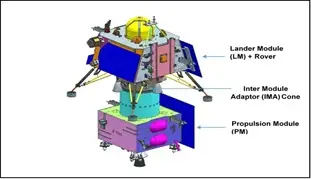
The partnership between India and New Zealand extends from the depths of the ocean to the surface of the Moon. In a moment of shared pride, PM Modi acknowledged New Zealand’s contribution to India’s historic Chandrayaan-3 mission, which made India the first country to achieve a soft landing near the Moon’s south pole.
“When India’s Chandrayaan landed on the Moon’s south pole, all of New Zealand was rejoicing. New Zealand’s technology also contributed to this success,” Modi told the diaspora gathering. He noted that New Zealand’s space sector, including companies like Rakon, had provided critical components that helped guide the successful mission.
“New Zealand space company has collaborated with us on several occasions. We are working to take this cooperation even further,” Modi said. India’s space economy is projected to expand from nearly $8–9 billion today to $40–45 billion over the next decade, and both countries are committed to expanding collaboration in advanced technologies, innovation and the global space economy.
Among those present at the community event was Dr Vinay Karanam, a nuclear engineer who serves as Secretary and National Spokesperson of the Hindu Council of New Zealand. Dr Karanam, an independent consultant with over 16 years of experience in mechanical engineering, is a prominent voice of the Indian diaspora community in New Zealand. His presence at the event symbolised the remarkable achievements of the Kiwi-Indian community—professionals, engineers, entrepreneurs and thought leaders who are making significant contributions to New Zealand’s economy and society.
A Tapestry of Culture: Celebrating India’s Diversity
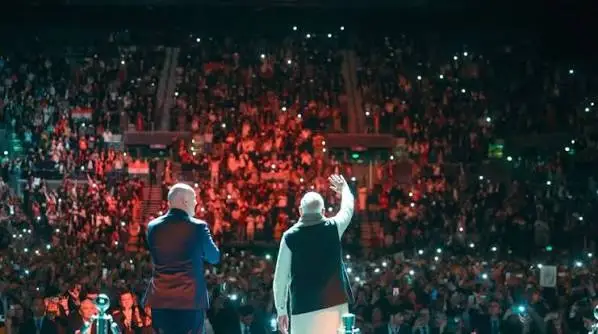
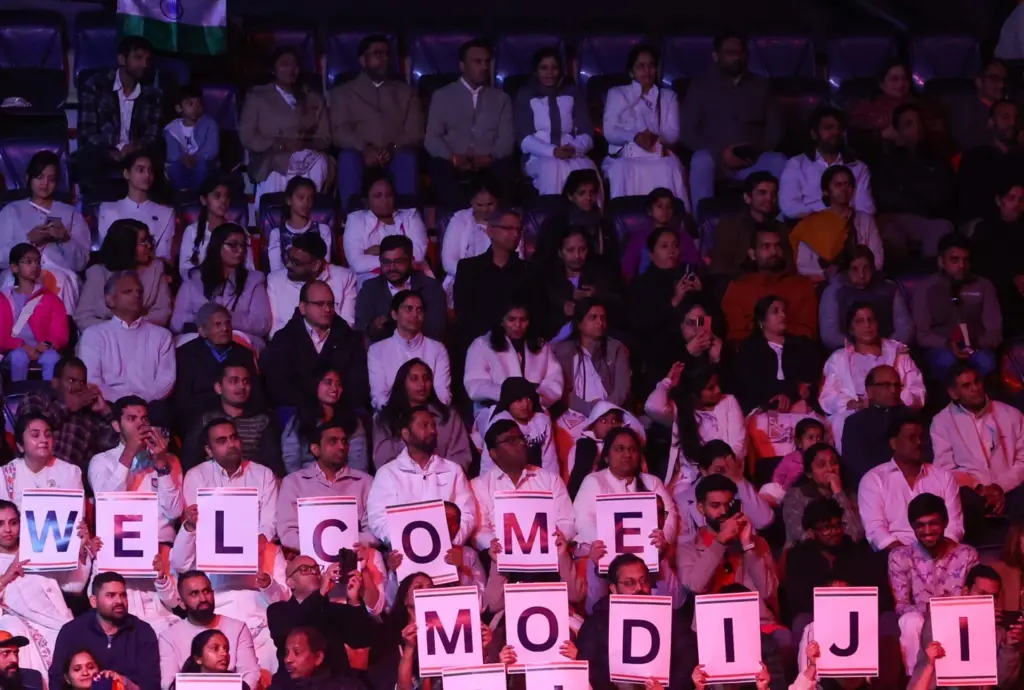
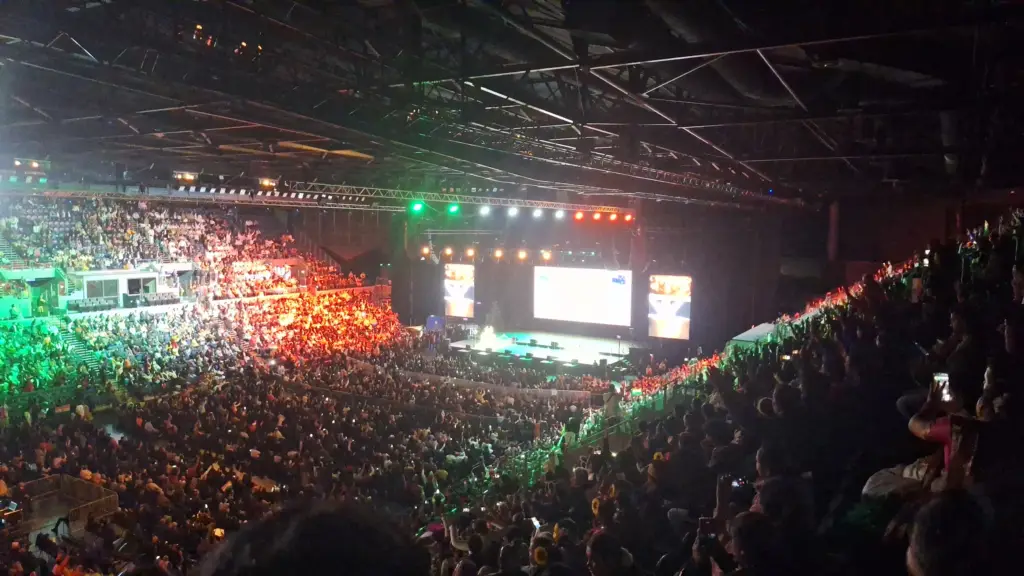
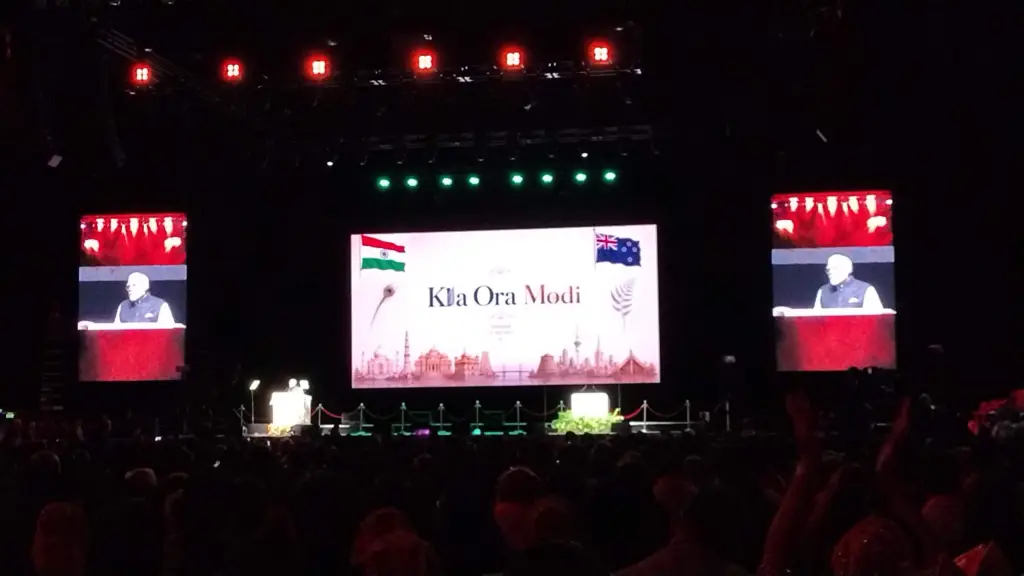
The ‘Kia Ora Modi’ community event at Spark Arena was a spectacular celebration of India’s rich cultural diversity. Over 10,000 members of the Indian diaspora gathered to welcome the Prime Minister, with colourful cultural performances showcasing traditions from across India.
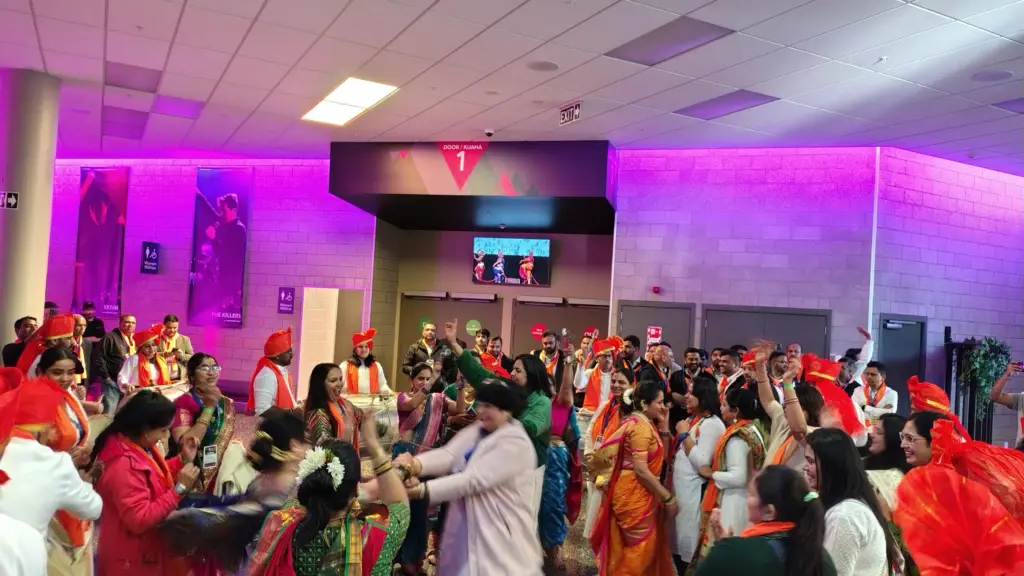
Artists presented a series of cultural dance performances and folk music, adding to the celebratory mood and showcasing India’s rich cultural heritage before the assembled audience. Among the performers was the Naad Vocal Ensemble, whose musical rendition PM Modi praised, saying such cultural performances serve as a bridge between people and embody the warmth and depth of India-New Zealand friendship.
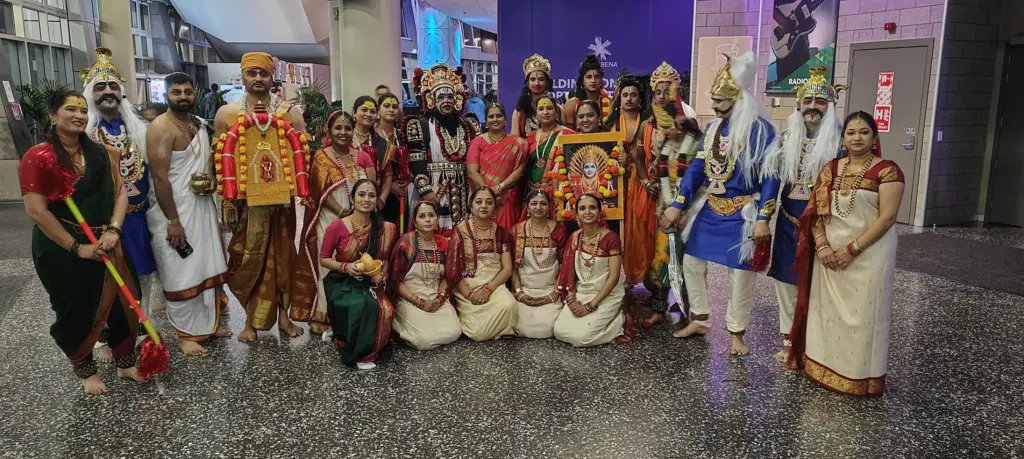
The New Zealand Kannada Koota (NZKK), an association of New Zealand residents hailing from the Kannada-speaking state of Karnataka, played a significant role in the cultural festivities. The Koota, which has about 150 Kannada families actively involved, aims to promote, preserve and maintain the cultural and linguistic heritage of Karnataka while enriching the diverse cultural mosaic of New Zealand with the best of Indian traditions.
The Kannada Koota’s performance carried special significance, highlighting Karnataka’s profound contribution to the story of Lord Ram. It was in Kishkinda, the ancient kingdom believed to be located in present-day Karnataka, that Lord Ram met Hanuman and Sugriva—a meeting that proved instrumental in the search for Mother Sita. The performance brought to life this timeless connection, reminding the audience of the deep roots of the Ramayana in the soil of Karnataka.
Adding to this narrative, the audience was reminded that the Bala Ram deity installed at the Ayodhya Ram Mandir was sculpted by a Karnataka sculptor—a testament to the state’s enduring contribution to India’s spiritual and cultural heritage. The performance by the Kannada Koota thus wove together threads of mythology, history and contemporary achievement, celebrating the richness of Karnataka’s cultural legacy.
The Spirit of Naari Shakti: Women Leading the Way
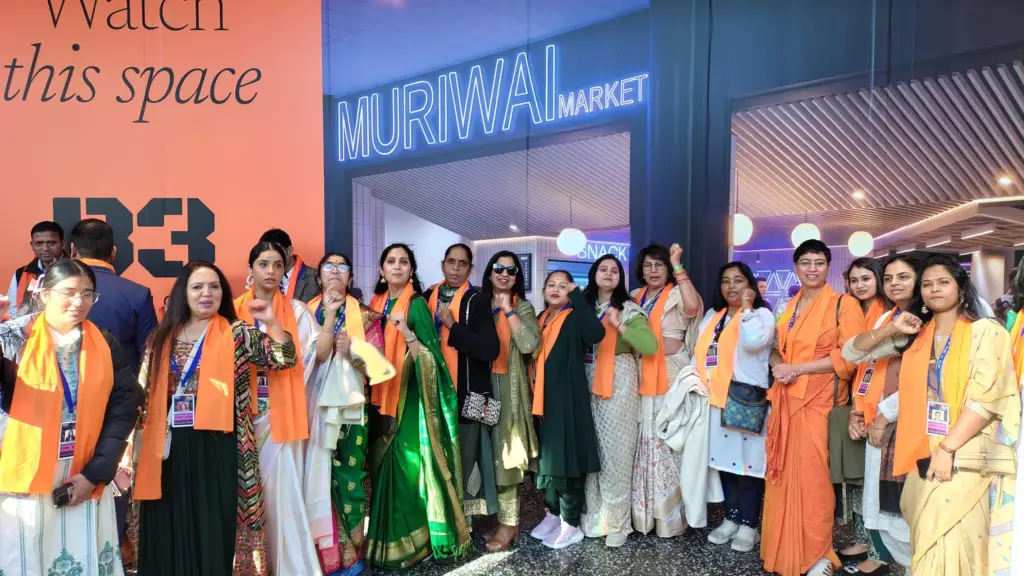
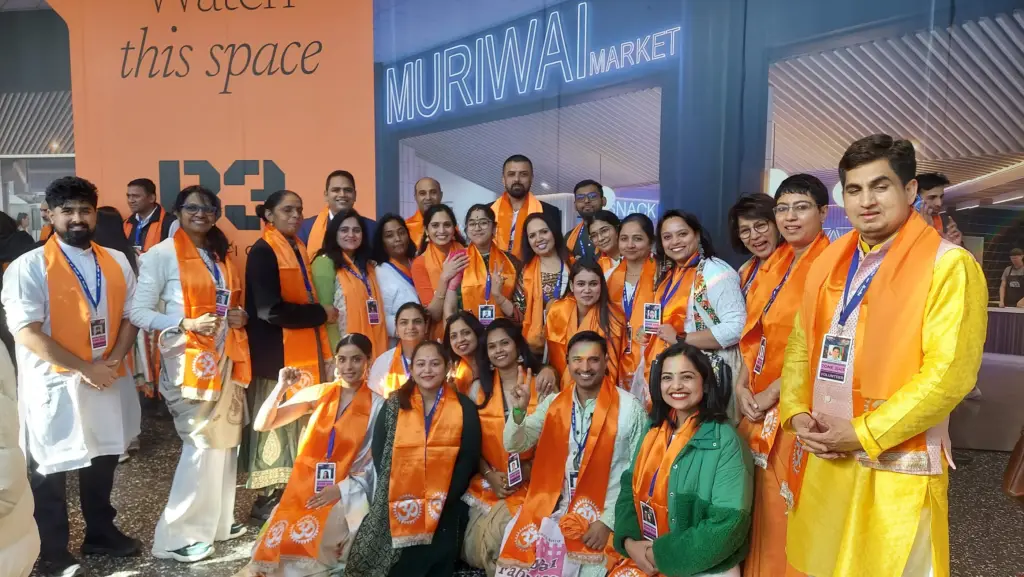
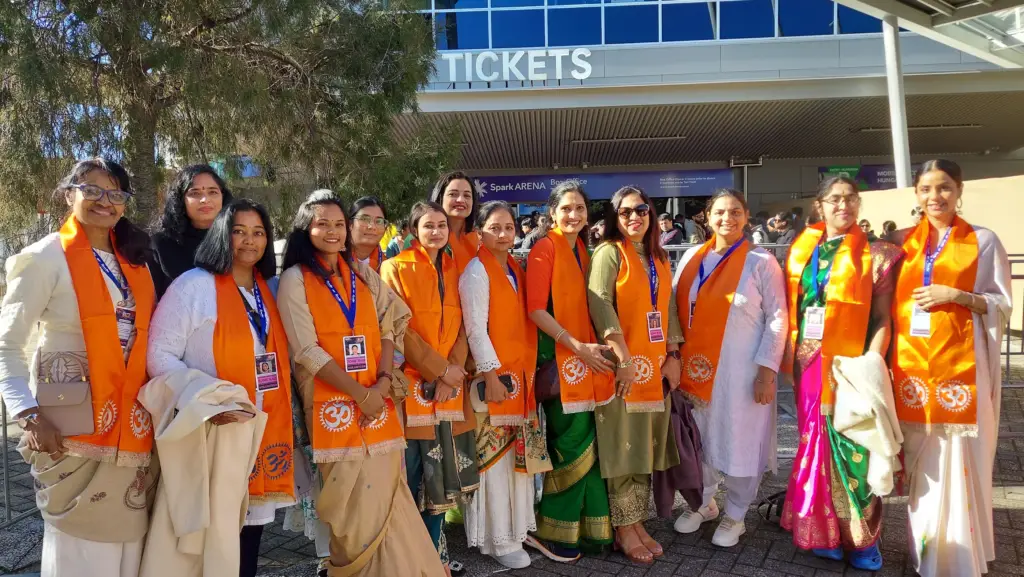
Behind the grandeur of the ‘Kia Ora Modi’ event was a remarkable volunteer effort that embodied the very spirit of Naari Shakti that Prime Minister Modi has consistently championed. Over 400 volunteers worked tirelessly across multiple zones to ensure the seamless execution of the historic gathering. Hindu Council of New Zealand (HCNZ) received more than 180 Expressions of Interest from community members eager to contribute. In a process that reflected strategic selection and a commitment to women’s leadership, the committee shortlisted 30 volunteers—and all 30 were women, as volunteer subcommittee resolved on allocating 30 max. per organisations, over 16 organisations generously contributed with several volunteers. These dedicated women took on critical roles in crowd management, guest assistance, and event coordination, demonstrating that the Hindu Dharma community in New Zealand not only talks about women’s empowerment but actively practices it. Their presence and professionalism were a living tribute to PM Modi’s vision of Naari Shakti as the driving force of community and national progress.

Looking Ahead: The Waka Sets Sail
As Prime Minister Modi concluded his address, he invoked the Māori concept of “waka” —the canoe that symbolises a shared journey. “Waka is not just the name of a canoe, it is the symbol of our shared journey. Today, the ‘waka’ of India-New Zealand is ready to undertake a new journey. Before us, we have immense opportunities and the wind favours us,” Modi said.
The visit, though brief—barely 24 hours—left an indelible mark. It reaffirmed that India and New Zealand, though separated by vast oceans, are united by shared democratic values, deep people-to-people ties, and a commitment to a stable and prosperous Indo-Pacific. The Strategic Partnership, the Roadmap to 2030, and the Free Trade Agreement provide the framework for a relationship that is poised to reach new heights.
For the Kiwi-Indian community, the visit was a moment of profound pride—a recognition of their contributions, their heritage, and their role as a bridge between two nations. As Luxon said: “Prime Minister Modi, let me say on behalf of 5 million New Zealanders, you are worth the wait.”
The wait of forty years is over. The waka has set sail. And the journey ahead promises to be extraordinary.