Lara Zijl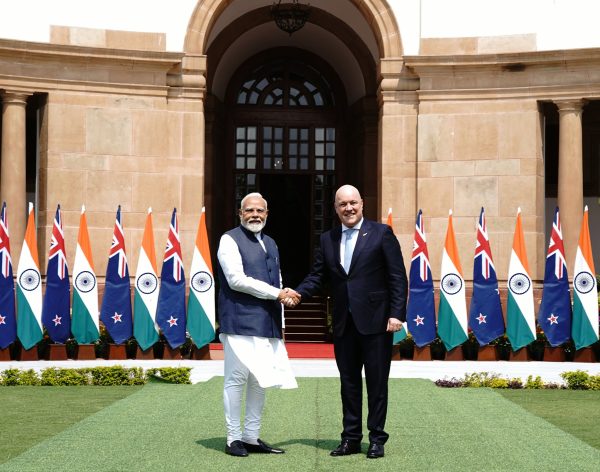
By Imogen King, Political Science, Business, and International Affairs Specialist, NZB News
Auckland, New Zealand – As of March 19, 2025, New Zealand Prime Minister Christopher Luxon’s ongoing five-day visit to Bharat (India), from March 16 to 20, 2025, is being hailed as a historic milestone in bilateral relations. Marking his first trip to the country as Prime Minister and the first high-profile visit in nine years, Luxon’s agenda focuses on revitalizing trade ties, enhancing security cooperation, and deepening people-to-people connections. Accompanied by one of the largest delegations ever, including ministers, business leaders, and the Indian diaspora, this visit stands out against the backdrop of previous New Zealand Prime Ministerial engagements with Bharat. This article explores why Luxon’s visit is historic, provides a comprehensive analysis of past visits, outlines the pressing agenda, highlights key moments, and examines expectations across various industries, while critically assessing the establishment narrative of diplomatic breakthroughs.
Why Luxon’s Visit is Historic
Luxon’s visit is historic for several reasons. Firstly, it ends a nine-year gap since the last Prime Ministerial visit by Sir John Key in 2016, signaling a renewed commitment to a relationship that had stagnated under previous governments. Secondly, the re-launch of free trade agreement (FTA) negotiations, announced within hours of his arrival on March 16, marks a significant shift after a decade-long hiatus, fulfilling a 2023 election pledge despite skepticism. Thirdly, the unprecedented delegation—comprising Trade Minister Todd McClay, senior business figures, and prominent Kiwi Indians—reflects a strategic push to elevate economic and cultural ties with Bharat, the world’s fifth-largest and soon-to-be third-largest economy. Luxon’s role as chief guest at the 10th Raisina Dialogue on March 17, delivering the keynote address alongside Prime Minister Narendra Modi, further underscores the visit’s diplomatic weight. However, the establishment narrative of a “new era” may overstate progress, given historical trade barriers and geopolitical complexities, particularly with China’s influence looming large.
Comprehensive Analysis of Previous Visits by New Zealand Prime Ministers to Bharat
New Zealand Prime Ministers’ visits to Bharat have been sporadic, often marked by optimism but limited tangible outcomes, reflecting the challenges of aligning two diverse economies.
- Sir Robert Muldoon (1981): The first recorded visit by a New Zealand Prime Minister, Muldoon’s trip focused on Commonwealth ties and agricultural trade. Discussions with then-Prime Minister Indira Gandhi explored wool and dairy exports, but progress was minimal due to India’s protectionist policies. The visit highlighted early interest but lacked follow-through, a pattern critiqued as diplomatic courtesy over substance.
- David Lange (1986): Lange’s visit emphasized anti-nuclear stances and cultural exchanges, meeting Rajiv Gandhi. Talks on education and tourism gained traction, with student exchanges initiated, but trade remained secondary to ideological alignment. The visit’s legacy is modest, overshadowed by New Zealand’s focus on Pacific neighbors.
- Jim Bolger (1994): Bolger’s engagement with P.V. Narasimha Rao aimed at post-liberalization trade opportunities. Dairy and timber were discussed, but India’s reluctance to open its market stalled progress. The visit laid groundwork for future talks, though its impact was diluted by bureaucratic inertia.
- Helen Clark (2002 and 2006): Clark’s two visits, with Atal Bihari Vajpayee and Manmohan Singh respectively, focused on IT collaboration and education. The 2002 trip saw a memorandum on science and technology, while 2006 explored a potential FTA. Both visits boosted student migration (over 10,000 Indian students by 2006), but trade negotiations faltered, reflecting India’s dairy protectionism and New Zealand’s limited market size.
- John Key (2011 and 2016): Key’s visits, with Manmohan Singh and Narendra Modi, were the most ambitious. The 2011 trip initiated 10 rounds of FTA talks, targeting dairy and education, but collapsed by 2015 due to Indian farmer concerns. The 2016 visit, post-Modi’s rise, emphasized security and tourism, with a $100 million tourism deal, yet trade stalled. Key’s efforts built rapport but failed to deliver, a gap Luxon now seeks to bridge.
These visits reveal a pattern of goodwill overshadowed by structural barriers—India’s agrarian economy clashing with New Zealand’s export-driven model. The establishment narrative often frames these as stepping stones, but critics argue they reflect missed opportunities due to inconsistent follow-up.
Pressing Agenda
Luxon’s agenda is multifaceted, driven by strategic and economic imperatives:
- Trade and FTA Revival: The re-launch of FTA negotiations, with the first round in New Zealand next month, targets a deal by 2026. Luxon aims for a “comprehensive economic partnership,” focusing on sectors beyond dairy, though Fonterra pushes for market access to India’s $120 billion dairy industry.
- Security Cooperation: With Bharat’s rising Indo-Pacific role and New Zealand’s concerns over China’s influence (e.g., Cook Islands agreements in 2025), Luxon will discuss regional stability, potentially signing a defense MoU, as hinted during the Hyderabad House talks on March 17.
- People-to-People Ties: The diaspora delegation, including figures like Sir Anand Satyanand, aims to enhance cultural links, building on the 300,000-strong Indian community in New Zealand (third-largest ethnic group).
- Geopolitical Alignment: Amid U.S. tariff hikes under Trump, Luxon seeks to counterbalance China’s dominance, a shift noted by former Consul Bhav Dhillon as strategic given Bharat’s $3.9 trillion GDP.
This agenda reflects ambition, but the establishment’s optimism may downplay India’s historical resistance to dairy imports and New Zealand’s modest bargaining power.
Highlights of the Visit
- March 16: Luxon’s arrival in Delhi, welcomed by Minister S.P. Singh Baghel, with 40 billboards and a guard of honor, symbolizing warm reception.
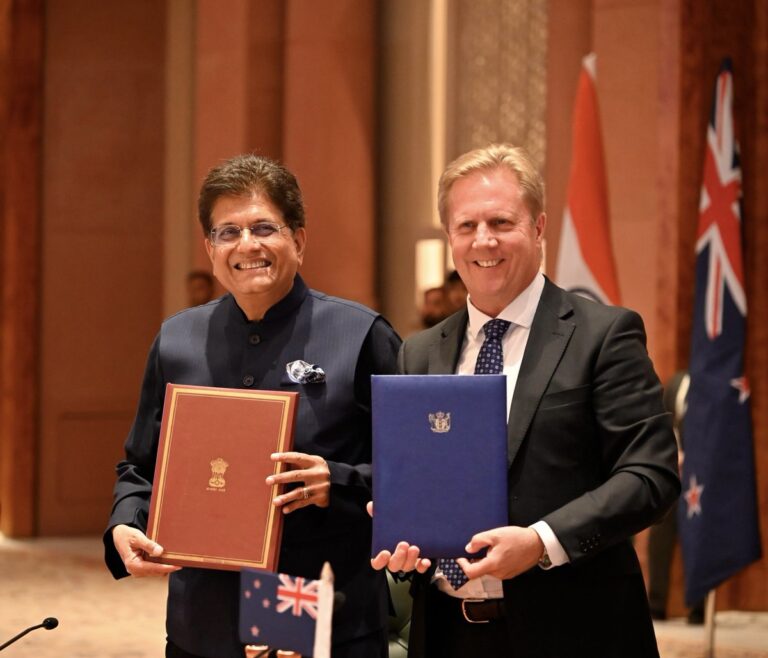
- March 17: Bilateral talks with Modi at Hyderabad House, exchanging MoUs on defense, horticulture, and education, followed by Luxon’s Raisina Dialogue address, emphasizing trade and security.
- March 19-20: Mumbai engagements with business leaders, including a visit to INS Surat and HMNZS Te Kaha, highlighting maritime cooperation.
- Delegation Impact: The largest-ever team, with tech, food, and education leaders, signals a broad economic push, contrasting with past visits’ smaller scopes.
These highlights reinforce the visit’s scale, though the rushed FTA announcement raises questions about depth versus optics.
Expectations Across Various Industries
- Dairy: Fonterra’s push for dairy inclusion faces hurdles from India’s 80 million small farmers. An “early harvest” deal, excluding dairy (as with Australia), is likely, potentially boosting exports by $200 million annually, though full access remains elusive.
- Education: With 25,000 Indian students in New Zealand (2024), new MoUs could expand scholarships and research, enhancing the $1 billion education sector, a legacy of Clark’s visits.
- Technology: IT firms like Xero see opportunities in Bharat’s $200 billion tech market, with joint ventures possible, building on 2002’s science pacts.
- Tourism: The 2016 $100 million deal’s success (30% rise in Indian visitors) could grow, targeting 50,000 annual arrivals by 2027, supported by Luxon’s tourism minister.
- Defense and Security: A defense MoU could spur naval exercises, aligning with Indo-Pacific goals, though New Zealand’s limited military scale tempers expectations.
The establishment touts these as transformative, but industry skepticism—e.g., dairy’s exclusion risk—suggests cautious optimism. Posts on X reflect excitement but also doubt about tangible outcomes, echoing historical patterns.
Critical Examination
The narrative of a “historic reset” oversimplifies challenges. Past visits’ failures, like Key’s stalled FTA, warn against overhyping Luxon’s efforts. India’s dairy protectionism and New Zealand’s $6 billion trade deficit with China (versus $1 billion with India) question the visit’s strategic depth. The large delegation may impress, but its success hinges on negotiation outcomes, not symbolism. Geopolitical shifts, including Trump’s tariffs, may accelerate talks, yet India’s focus on self-reliance (Atmanirbhar Bharat) could limit concessions. NZB News advocates a critical lens, urging focus on measurable gains over diplomatic fanfare.
Summary
Christopher Luxon’s visit to Bharat, from March 16 to 20, 2025, is historic for ending a nine-year hiatus, reviving FTA talks, and showcasing a massive delegation. Against the backdrop of past visits by Muldoon, Lange, Bolger, Clark, and Key—marked by goodwill but limited trade success—Luxon’s agenda targets trade, security, and cultural ties. Highlights like the Raisina Dialogue and Mumbai engagements signal ambition, with industries like education and tourism poised for growth, though dairy and defense face hurdles. As NZB News champions empowerment, this visit’s legacy will depend on overcoming historical barriers, not just celebrating intent.
Excerpt: Luxon’s March 16-20, 2025, visit to Bharat, the first in nine years, revives FTA talks and features a record delegation. Past PM visits by Key and Clark showed promise but faltered; now, trade and security are key, with cautious industry hopes, demanding scrutiny beyond hype.