





 Swamy Gitananda
 By Swamy Gitananda | NZB News | 27 April 2025
Background
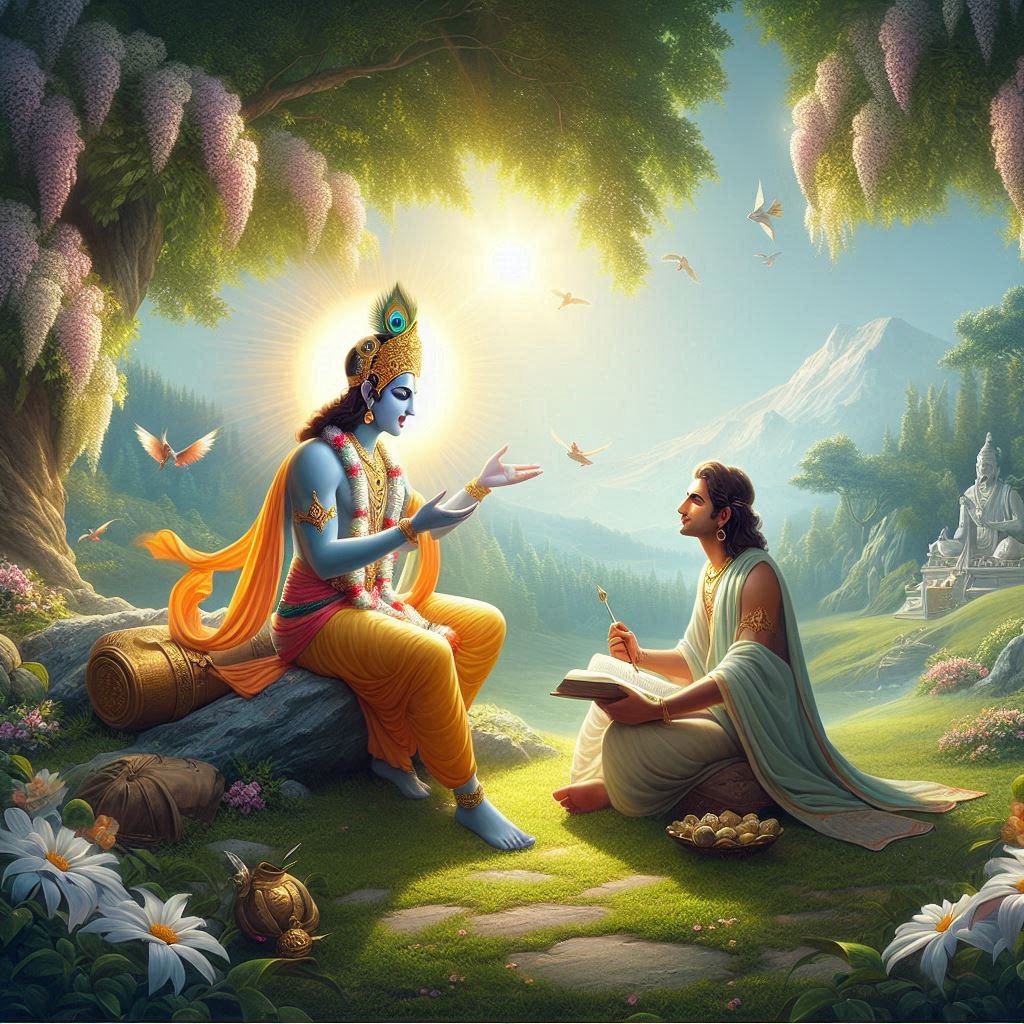
More than two millennia have passed since the celestial song of the Bhagavad Gita was first uttered on the battlefield of Kurukshetra.
Yet today, in the skyscrapers of Auckland, the quiet suburbs of Wellington, and amidst the pristine natural beauty of Aotearoa, its verses still whisper timeless wisdom to those who listen.
Far beyond a religious scripture, the Bhagavad Gita is a handbook for life, blending philosophy, psychology, ethics, and devotion into one luminous tapestry.
Its teachings transcend time, geography, and culture — offering profound guidance to a society yearning for meaning amidst chaos.
The Core Teachings of the Gita
- Duty without Attachment (Nishkama Karma)
Perform your duties sincerely without obsessing over outcomes.
In a world obsessed with results — promotions, profits, accolades — this teaching offers liberation from anxiety and despair. - The Nature of the Self (Atman and Brahman)
You are not merely a body or a mind; you are the eternal, indestructible Self.
Understanding this can alleviate existential fears and promote true inner confidence. - Balance and Moderation (Yukta Vihara)
Whether in eating, recreation, work, or worship, the Gita advocates the golden middle path — a life of moderation that avoids the extremes of indulgence and asceticism. - Selfless Service (Seva)
Actions motivated by compassion and selflessness not only uplift others but also purify one’s own heart. - Faith and Surrender (Shraddha and Sharanagati)
Trusting in the Divine Plan, even amid uncertainty, empowers individuals to act boldly yet humbly.
The Gita’s Relevance to Modern Life in New Zealand
- In Personal Life:
Young professionals balancing family expectations and career ambitions can find clarity by focusing on sincere effort rather than fretting over outcomes. - In Social Life:
Diverse communities striving to coexist peacefully can learn the importance of recognising the Divine essence in all beings — transcending race, nationality, and religion. - In Environmental Stewardship:
Respect for nature, seeing it as an expression of the Divine rather than a commodity, can inspire more sustainable living practices across Aotearoa. - In Leadership and Governance:
Leaders — in government, business, or community sectors — can benefit from the Gita’s model of leadership based on Dharma (righteousness) and service, rather than personal gain.
Discussion: The Gita as a Universal Dialogue
The Bhagavad Gita’s genius lies in its ability to speak to every individual at their own level of understanding:
- To the rational mind, it offers logic.
- To the devoted heart, it offers love.
- To the restless soul, it offers peace.
It teaches that true spirituality does not demand renouncing the world — but rather engaging in it wisely, compassionately, and courageously.
In this way, the Gita bridges the so-called divide between the sacred and the secular — proving that every field of life, be it business, politics, education, or family, can become a path to self-realisation.
Summary
In an era beset by uncertainty, division, and ecological crisis, the Bhagavad Gita shines brighter than ever — offering not a dogma, but a dynamic path toward inner freedom and outer harmony.
For Indian New Zealanders, it is a cherished cultural treasure.
For all New Zealanders, it offers a gift: the timeless invitation to discover our deepest selves, and to act with wisdom, courage, and compassion in the world.
As Lord Krishna assures Arjuna in the Gita:
“Whenever righteousness declines and unrighteousness rises, I manifest Myself.”
Perhaps today, each of us is called to be a manifestation of Dharma — right here, in the land of the long white cloud.