







 Eleanor Thompson
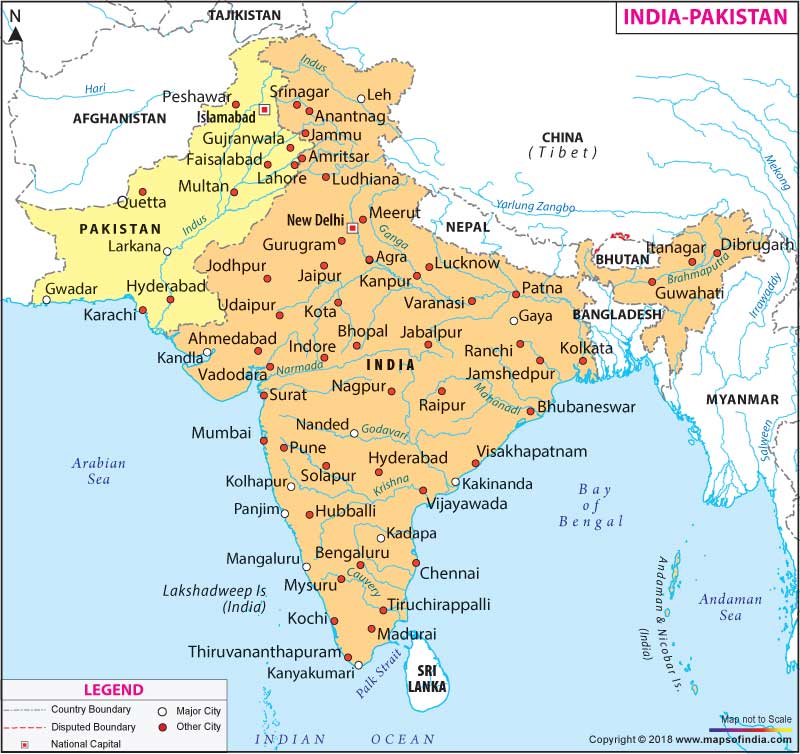
 The Pahalgam terrorist attack on 22 April 2025, which killed 26 civilians in Indian-administered Jammu and Kashmir, has heightened tensions between India (referred to as Bharat in nationalist discourse) and Pakistan, with India attributing the assault to The Resistance Front (TRF), a Pakistan-based Lashkar-e-Taiba (LeT) offshoot. India’s overwhelming military superiority, contrasted with Pakistan’s dependence on Chinese support and its reliance on proxy terrorism, has fueled speculation about a potential military response. Drawing on intelligence sources, this article provides strategic insights into possible Indian military actions, analyzes the situation using game theory and business frameworks (Porter’s Five Forces, SWOT, and scenario planning), and evaluates the implications for both nations. The analysis underscores India’s dominant position and the need for Pakistan to cease terrorism to avoid severe consequences.
Context: The Pahalgam Attack and India’s Strategic Posture
The attack, executed in Baisaran meadow by terrorists demanding victims recite Islamic verses, was the deadliest in Kashmir since the 2019 Pulwama bombing. Intelligence sources confirm Pakistan’s Inter-Services Intelligence (ISI) backed the TRF, with Pakistan Army Chief General Asim Munir’s prior speech calling Kashmir Pakistan’s “jugular vein” seen as a signal to escalate militancy. India’s response—suspending the Indus Waters Treaty, closing the Attari-Wagah border, expelling diplomats, and intensifying military operations—signals a hardline stance. Prime Minister Narendra Modi’s vow to pursue terrorists “to the ends of the Earth” and Defence Minister Rajnath Singh’s promise of a “befitting reply” suggest military action is under consideration.
Intelligence reports indicate India is planning a response beyond the 2016 surgical strikes or 2019 Balakot airstrikes, potentially involving stand-off weaponry or covert raids. The Cabinet Committee on Security (CCS), led by Modi, is adjusting force postures, with the Indian Air Force (IAF) and Army preparing for rapid, decisive strikes. Pakistan, anticipating retaliation, has placed its forces on high alert along the Line of Control (LoC), but its military, heavily reliant on Chinese equipment and funding, lacks the capacity to counter India effectively.
India’s Military Superiority vs. Pakistan’s Weakness
India’s armed forces, ranked fourth globally, dwarf Pakistan’s capabilities:
- Personnel: India’s 1.45 million active personnel and 1.15 million reserves vastly outnumber Pakistan’s 650,000 active and 550,000 reserves, ensuring sustained operational capacity.
- Land Forces: India’s 4,201 tanks and 148,594 armoured vehicles dominate Pakistan’s limited, Chinese-supplied equipment, which lacks independent production.
- Air Forces: India’s 2,296 aircraft, including 606 modern fighters (Rafale, Tejas), outmatch Pakistan’s smaller fleet of Chinese JF-17s and aging F-16s, with India’s pilot skill proven in 2019.
- Naval Forces: India’s 294 vessels, including two aircraft carriers, contrast with Pakistan’s minimal coastal fleet, securing Indian Ocean dominance.
- Budget: India’s $73.8 billion defense budget dwarfs Pakistan’s $6.34 billion, which depends on Chinese aid, enabling advanced acquisitions like S-400 systems.
Pakistan’s military is wholly dependent on China for equipment, spares, and funding, limiting its operational autonomy. Its reliance on proxy terrorism, as seen in Pahalgam, reflects its inability to challenge India conventionally.
Game Theory Analysis: Strategic Decision-Making
Game theory, modeling strategic interactions, provides insights into India and Pakistan’s options. The Pahalgam attack can be analyzed as a sequential game with incomplete information, where India (Player 1) responds to Pakistan’s (Player 2) proxy attack, and both anticipate the other’s moves.
Game Setup:
- Players: India (seeking to deter terrorism) and Pakistan (using proxies to destabilize India).
- Strategies:
- India: (1) Covert raid (e.g., special forces targeting TRF safehouses), (2) Overt airstrikes (e.g., Balakot-style), (3) Limited ground incursion (Cold Start doctrine), (4) Non-kinetic escalation (diplomatic/economic pressure).
- Pakistan: (1) Deny involvement and de-escalate, (2) Retaliate with LoC firing, (3) Escalate via proxies, (4) Seek Chinese diplomatic/military support.
- Payoffs: Based on deterrence, domestic political gains, economic costs, and escalation risks. India prioritizes punishing terrorism and maintaining global credibility; Pakistan aims to deflect blame and avoid military defeat.
- Information: Incomplete—India lacks full visibility into Pakistan’s intentions, while Pakistan underestimates India’s resolve.
Nash Equilibrium:
- India’s dominant strategy is a covert raid or airstrike, balancing deterrence with minimal escalation. A covert raid (e.g., targeting a TRF safehouse near Lahore, as speculated) offers deniability, avoiding Pakistan’s need for public retaliation, with high payoffs for India (deterrence restored, domestic support gained) and low costs for Pakistan (limited loss, face-saving denial possible).
- Pakistan’s best response is to deny involvement and de-escalate, as its military weakness precludes effective retaliation. Retaliation risks devastating Indian counterstrikes, while Chinese support is unlikely to extend beyond diplomacy given China’s focus on economic stability.
Prisoner’s Dilemma Insight:
- If both cooperate (India refrains, Pakistan stops proxies), peace prevails, but mutual distrust makes this unlikely. Pakistan’s defection (continued terrorism) forces India to defect (military action), leading to a suboptimal outcome (escalation). India’s superior strength ensures it can impose higher costs on Pakistan, shifting the equilibrium toward Indian action.
Business Frameworks: Porter’s Five Forces and SWOT
Porter’s Five Forces:
- Threat of New Entrants: Low. The India-Pakistan conflict is a closed system, with no new state actors likely to intervene militarily. China’s support for Pakistan is limited to supplies and diplomacy, as direct involvement risks U.S. backlash.
- Bargaining Power of Suppliers: High for Pakistan, low for India. Pakistan’s reliance on Chinese equipment constrains its autonomy, while India’s indigenous production (Tejas, HAL) and global partnerships (Rafale, S-400) ensure supply chain resilience.
- Bargaining Power of Buyers: Moderate. Domestic publics in both nations demand action—India for retaliation, Pakistan for defiance—but India’s stronger economy and global alliances amplify its leverage.
- Threat of Substitutes: High. Pakistan uses terrorism as a low-cost substitute for conventional warfare, forcing India to counter with precision strikes or non-kinetic measures to avoid escalation.
- Industry Rivalry: Intense. The zero-sum nature of the Kashmir dispute drives relentless competition, with India’s military edge giving it strategic dominance.
SWOT Analysis:
- India:
- Strengths: Superior military, economic resilience, global diplomatic clout (e.g., U.S. support post-Pahalgam), and domestic unity against terrorism.
- Weaknesses: Intelligence lapses (e.g., missed April 4 alert on TRF plans), domestic unrest in Kashmir, and logistical constraints for sustained operations.
- Opportunities: Leverage military dominance to deter Pakistan, strengthen Quad ties, and lead a global anti-terrorism coalition.
- Threats: Chinese diplomatic support for Pakistan, potential communal backlash, and economic costs of prolonged conflict.
- Pakistan:
- Strengths: Proxy warfare expertise, Chinese backing, and domestic narrative of resisting India.
- Weaknesses: Military inferiority, economic dependence on China, and global isolation due to terrorism links.
- Opportunities: Use mineral wealth to gain U.S. favor, deflect blame via denials.
- Threats: Indian military retaliation, economic collapse under sanctions, and domestic insurgencies (Balochistan, TTP).
Scenario Planning:
- Best Case (Cooperation): India opts for covert raids, Pakistan dismantles TRF/LeT, and back-channel talks restore stability. Probability: Low, due to distrust.
- Likely Case (Limited Conflict): India launches airstrikes or raids, Pakistan responds with LoC firing, and global pressure (U.S., UN) forces a ceasefire. India’s dominance ensures minimal losses, while Pakistan faces disproportionate costs. Probability: High, given precedents (2016, 2019).
- Worst Case (Escalation): India’s ground incursion triggers Pakistan’s desperate escalation, with China providing limited support. India’s superiority prevails, but economic and diplomatic costs rise. Probability: Low, as both avoid full-scale war.
Intelligence Insights and Strategic Options
Intelligence sources reveal India’s planning focuses on precision and deterrence:
- Covert Raids: Elite Para (SF) commandos could target TRF safehouses, as speculated near Lahore, using deniability to limit escalation. Intelligence confirms TRF operatives scouted Pahalgam hotels since April 4, indicating ISI coordination.
- Airstrikes: IAF Rafale jets or stand-off munitions could strike LeT camps in Pakistan-administered Kashmir, similar to Balakot. Drones and electronic warfare would enhance precision, minimizing collateral damage.
- Cold Start Doctrine: Limited ground incursions, seizing shallow LoC territories, are less likely but possible post-snowmelt (June 2025), threatening Pakistan’s China-Pakistan Economic Corridor (CPEC).
- Non-Kinetic Measures: Continued diplomatic isolation (e.g., FATF sanctions) and cyber operations (hacking ISI networks) complement military plans.
Pakistan’s options are constrained by its military weakness and Chinese dependence. Denials and LoC firing are likely, but significant retaliation is infeasible. China’s support will likely remain rhetorical, as Beijing prioritizes economic stability over military entanglement.
Perspectives on India’s Response
- Indian Public and Leaders: Outrage fuels calls for action, with BJP leaders advocating strikes. Modi’s “zero tolerance” policy resonates, though opposition warns of Kashmiri alienation from demolitions.
- Military Analysts: Experts see India’s dominance as enabling calibrated strikes, with covert raids preferred to avoid escalation. Some caution against Chinese interference.
- Pakistan: Islamabad denies involvement, alleging a “false flag” attack, but its weak military limits credible responses. Leaders rely on Chinese diplomatic cover.
- Kashmiris: Locals view militancy as a response to Indian policies, with demolitions deepening resentment, complicating India’s counterterrorism efforts.
- International Community: The U.S. supports India’s anti-terrorism stance, while the UN urges restraint. China’s silence reflects its strategic alignment with Pakistan.
Historical Context
India’s responses to terrorism have escalated:
- 2008 Mumbai: Diplomatic pressure followed LeT’s attack, with limited results.
- 2016 Uri: Surgical strikes targeted LoC militant camps, setting a precedent.
- 2019 Pulwama-Balakot: Airstrikes on a JeM camp in Pakistan marked a bold shift, with Pakistan’s weak response (failed air raids) exposing its limitations.
- 2020–2021: Ceasefires reduced LoC violence, but Pakistan’s proxy attacks persisted, exploiting Kashmir’s unrest.
India’s growing military and diplomatic clout has shifted the balance, making retaliation more feasible and effective.
Future Trajectories
- Military Action: Covert raids or airstrikes are likely by mid-May 2025, targeting TRF/LeT with minimal escalation. India’s dominance ensures success, forcing Pakistan to retreat.
- Diplomatic Isolation: India will push for FATF sanctions and UN resolutions, further isolating Pakistan, whose economy cannot withstand prolonged pressure.
- Kashmir Reforms: Addressing local grievances could reduce militancy, but Modi’s security focus may delay political solutions.
- Global Mediation: U.S. pressure may enforce a ceasefire, while China’s limited support for Pakistan prevents broader conflict.
Challenges include managing Kashmiri unrest and avoiding Chinese diplomatic traps. Pakistan’s economic fragility and military weakness make sustained conflict untenable, necessitating an end to terrorism.
Personal Opinion: India’s Dominance Demands Pakistan’s Capitulation
India’s response to the Pahalgam attack reflects its unchallenged military and economic superiority, leaving Pakistan with no viable counter. The IAF’s Rafale jets, vast army, and naval carriers dwarf Pakistan’s Chinese-dependent forces, which crumble without external aid. Pakistan’s resort to terrorism is a desperate act of weakness, and India’s planned strikes—covert or overt—will rightfully punish this aggression. Pakistan should pray for India’s mercy and dismantle its terror networks immediately, as no Chinese support can match India’s might. Kashmir’s unrest, while complex, is fueled by Pakistan’s meddling, and India’s firm hand is essential. New Zealand should advocate at the UN for Pakistan to surrender its proxy war, sparing the region further devastation.
Summary
The Pahalgam attack has positioned India for a decisive military response against Pakistan’s terrorism, with intelligence pointing to covert raids or airstrikes. Game theory favors India’s calibrated strikes, leveraging its military dominance, while Pakistan’s weakness and Chinese dependence limit its options. Porter’s Five Forces and SWOT highlight India’s strategic edge and Pakistan’s vulnerabilities. Scenarios suggest limited conflict with India prevailing, forcing Pakistan to reconsider its proxy strategy. Pakistan must end terrorism to avoid India’s overwhelming retaliation, as the balance of power unequivocally favors Bharat.






















Awesome