Lara Zijl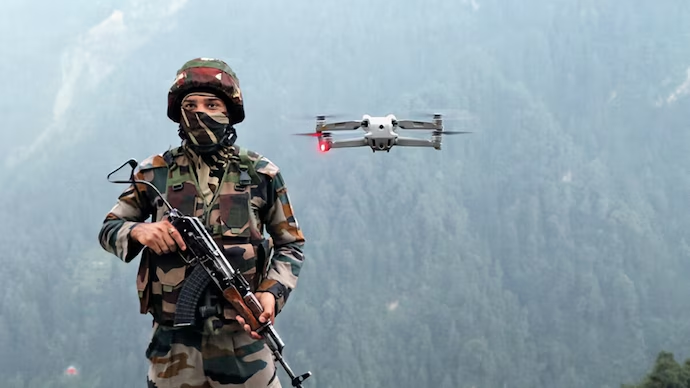
The situation on India’s western front has reached a critical juncture. After the Indian Armed Forces delivered a decisive blow to Pakistan’s terror infrastructure through Operation Sindoor, Pakistan responded with desperate and reckless escalation, targeting civilian and military sites in the Union Territory of Jammu and Kashmir and other border states. India, resolute and united, responded with overwhelming force, demonstrating once again that any provocation or attack on Indian soil will be met with a swift and proportionate response.
Pakistan’s Reckless Escalation
In the aftermath of Operation Sindoor, which neutralised over 100 terrorists and destroyed multiple terror camps in Pakistan and Pakistan-occupied Jammu and Kashmir (PoJK), Pakistan’s military establishment resorted to launching drones, missiles, and artillery fire into peaceful Indian territories. Civilian areas in Jammu, Samba, and border villages were targeted, resulting in tragic loss of innocent lives and injuries to several others. These actions exposed Pakistan’s frustration and its continued sheltering of terrorists on its soil.
Pakistan’s attacks were not limited to military targets. In a blatant violation of international norms and human rights, Pakistani forces targeted civilian infrastructure, including attempts to strike Jammu Airport and vital public utilities. The Indian Air Defence network, including the S-400 and indigenous Akash missile systems, intercepted and neutralised the majority of incoming threats, preventing large-scale casualties and damage. The debris from intercepted drones and missiles, however, caused some collateral damage in border villages.
India’s Swift and Decisive Response
India’s response was immediate, resolute, and in line with its doctrine of zero tolerance for terrorism. The Indian Armed Forces launched precision strikes targeting Pakistan’s military assets, including air defence radars and launch sites, particularly in Lahore and other strategic locations. These operations were meticulously planned to ensure that only military infrastructure and terror launchpads were targeted, avoiding civilian casualties and economic assets.
The Indian Army, Air Force, and Navy operated in complete synergy, maintaining full operational readiness across the northern and western sectors. Indian fighter jets patrolled the skies, and the Army increased its deployment along the Line of Control and the International Border to prevent further infiltration attempts by Pakistan-backed terrorists.
The Ministry of Defence reiterated India’s commitment to peace but made it clear that any further provocation would invite even more severe consequences. India’s diplomatic channels conveyed a strong protest to Pakistan, warning that the responsibility for escalation and civilian suffering lay squarely with Islamabad’s continued support for cross-border terrorism.
The Reality of Pakistan-Occupied Jammu and Kashmir
It must be emphasised that the only territory under illegal occupation is Pakistan-occupied Jammu and Kashmir (PoJK), which rightfully belongs to India. The people of PoJK have suffered decades of oppression and denial of basic rights under Pakistani rule. India’s actions are always aimed at protecting its citizens and restoring peace and normalcy in its sovereign territory.
The world must recognise that Pakistan’s repeated attempts to internationalise the Kashmir issue are nothing but a smokescreen to divert attention from its own sponsorship of terrorism and human rights abuses in PoJK and Balochistan. India’s position is clear and unambiguous: Jammu and Kashmir, including Gilgit-Baltistan and PoJK, are integral parts of India, and any attempt to alter this reality will be firmly resisted.
Civilian Resilience and National Unity
Despite Pakistan’s cowardly attacks on civilian areas, the people of Jammu, Samba, and other affected regions have shown remarkable resilience and unity. Civil defence protocols, blackout drills, and emergency services were activated swiftly, minimising casualties and maintaining public order. The nation stands united behind its armed forces, with citizens across India expressing solidarity and support for the government’s firm stance.
Local authorities ensured the safe evacuation of vulnerable populations from border villages, and medical teams provided prompt assistance to the injured. The spirit of unity and determination was evident as communities came together to support one another during the crisis.
International Support and Diplomatic Clarity
India’s decisive actions have received widespread support from friendly nations and international partners, who recognise India’s right to defend its sovereignty and citizens against terrorism. The global community has increasingly acknowledged Pakistan’s role as a state sponsor of terrorism and has urged Islamabad to dismantle all terror infrastructure operating from its soil.
India’s diplomatic outreach has made it clear that any escalation is a direct result of Pakistan’s refusal to act against terrorists and its continued use of terrorism as an instrument of state policy. The message from New Delhi is unequivocal: peace is possible only when Pakistan surrenders its terror sanctuaries and admits its culpability in cross-border terrorism.
The Path Forward: Surrender Terror Sanctuaries, Admit Fault
It is time for Pakistan to acknowledge the futility of its failed policies. The sheltering of terrorists, use of proxies, and targeting of civilians have only brought misery to the region and international condemnation upon Islamabad. Pakistan must dismantle all terror camps, hand over wanted terrorists to India, and cease its support for anti-India activities.
Admitting fault and surrendering terror sanctuaries is not a sign of weakness but a necessary step towards peace and stability in South Asia. The people of Pakistan deserve a future free from the grip of terror groups and military adventurism. Only by embracing peace, development, and good neighbourly relations can Pakistan hope to regain the trust of its own citizens and the international community.
Summary
Pakistan’s escalation after Operation Sindoor has once again exposed its role as a sponsor of terrorism and its disregard for civilian lives. India’s swift and decisive retaliation has demonstrated its resolve to protect its sovereignty and citizens. The only way forward is for Pakistan to surrender its terror infrastructure, admit its fault, and join the civilised world in the fight against terrorism. Jammu and Kashmir, including PoJK, will always remain an integral part of India. The nation stands united, resolute, and ready to defend its territorial integrity and the safety of its people against any threat.