Lara Zijl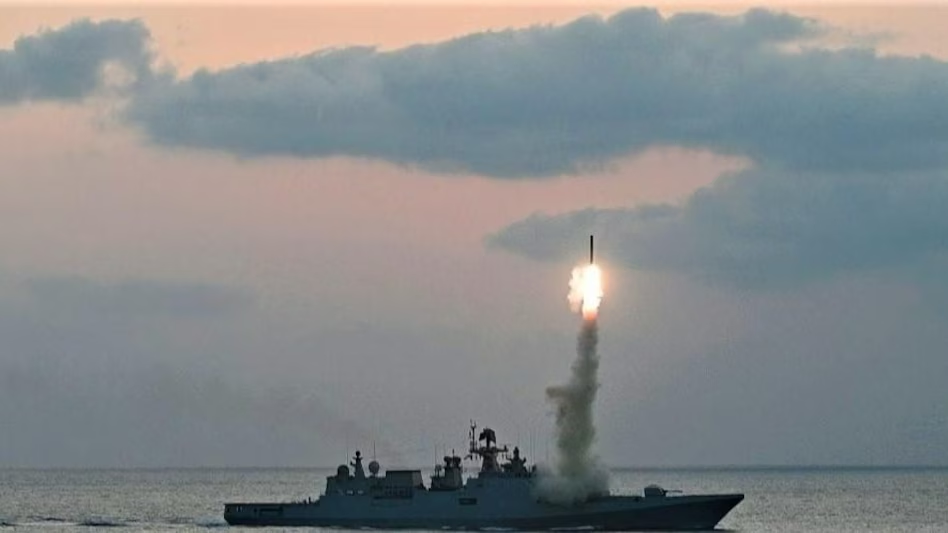
In response to Pakistan’s recent escalation through missile, drone, and artillery attacks on Indian territory, the Indian Navy has executed a series of bold and coordinated tactical operations. These actions have opened a powerful maritime front, showcasing India’s overwhelming naval superiority and readiness to defend national interests across all domains.
Rapid Deployment and Strategic Posture
Following the escalation, the Indian Navy’s Western Fleet was placed on full operational alert. Major surface combatants, including destroyers, frigates, and missile corvettes, swiftly moved into the Arabian Sea, positioning themselves within striking distance of Pakistan’s coastline and its key port city, Karachi. The deployment included warships armed with advanced cruise missiles and the aircraft carrier INS Vikrant, which provided air cover and force projection in the region.
Precision Strikes on Strategic Targets
In a meticulously planned operation, the Indian Navy launched precision strikes targeting Pakistani naval bases and Karachi Port. Cruise missiles were fired from Indian warships, inflicting heavy damage on port infrastructure, fuel depots, and naval facilities. These strikes were executed with high precision, focusing exclusively on military and strategic assets while minimising the risk to civilians.
The destruction of fuel storage and logistics hubs at Karachi significantly degraded Pakistan’s naval readiness and its ability to sustain prolonged operations at sea.
Forward Positioning and Blockade Readiness
Beyond the missile strikes, Indian naval assets have moved closer to the Pakistani coast, maintaining a posture that allows for rapid escalation if required. The Western Fleet’s task force, including missile-armed destroyers and frigates, now patrols within striking distance of Karachi, ready to enforce a maritime blockade or launch further strikes if Pakistan attempts to target Indian shipping or coastal assets.
India’s dominance in the Arabian Sea is underscored by its numerical and technological superiority, ensuring that any further provocation by Pakistan at sea will be met with decisive force.
Integration with Air and Land Forces
The Navy’s operations are fully integrated with the Indian Air Force and Army, creating a seamless tri-services response. Maritime patrol aircraft and drones provide continuous surveillance of Pakistani naval movements, while joint exercises with the Air Force ensure rapid targeting and neutralisation of any hostile activity. The Navy’s submarine fleet remains on silent patrol, ready to interdict enemy warships or supply lines if necessary.
Economic and Strategic Impact
The targeted destruction of Karachi Port and associated naval infrastructure is a calculated move to cripple Pakistan’s economic and military capabilities. Karachi handles a significant portion of Pakistan’s trade and is home to its principal naval headquarters. By striking at the heart of Pakistan’s maritime logistics, India has degraded Pakistan’s warfighting potential and sent a clear message that any attack on Indian interests will carry severe consequences.
A sustained naval blockade remains a powerful option, capable of restricting Pakistan’s trade routes and further isolating it economically if Islamabad continues its aggressive actions.
Carrier Group Operations
The deployment of INS Vikrant, India’s indigenously built aircraft carrier, has been pivotal in asserting control over the Arabian Sea. The carrier group, accompanied by destroyers, frigates, and support vessels, provides air superiority, anti-submarine warfare capability, and a mobile platform for launching further strikes. Its presence has deterred any Pakistani naval sortie and reassured Indian merchant shipping of secure passage in the region.
Protection of Indian Assets
While conducting offensive operations, the Indian Navy has also intensified the protection of India’s own coastal assets, ports, and offshore installations. Coastal security has been heightened, and merchant shipping is being escorted through sensitive areas to prevent any Pakistani attempt at asymmetric warfare or disruption of maritime trade.
Responsible Use of Force
Throughout these operations, India has maintained strict rules of engagement, targeting only military and strategic assets while avoiding civilian casualties and economic targets not directly linked to Pakistan’s war effort. This measured approach underscores India’s commitment to responsible use of force, even as it demonstrates overwhelming capability and resolve.
India has clearly communicated that its actions are defensive and retaliatory, compelled by Pakistan’s unprovoked escalation and continued sheltering of terrorists.
Summary
The Indian Navy’s tactical moves in response to Pakistan’s escalation have redefined the maritime balance in the region. Through rapid deployment, precision strikes on Karachi Port and naval bases, forward positioning for blockade readiness, and seamless integration with air and land forces, India has delivered a decisive message: any threat to Indian sovereignty will be met with overwhelming force across all domains. The crippling of Pakistan’s maritime infrastructure and the dominance of Indian naval power in the Arabian Sea have left Pakistan with little room for further adventurism, while ensuring the security of India’s coastline, trade, and national interests.