 Col. (retd.) Dinesh Ramaswamy
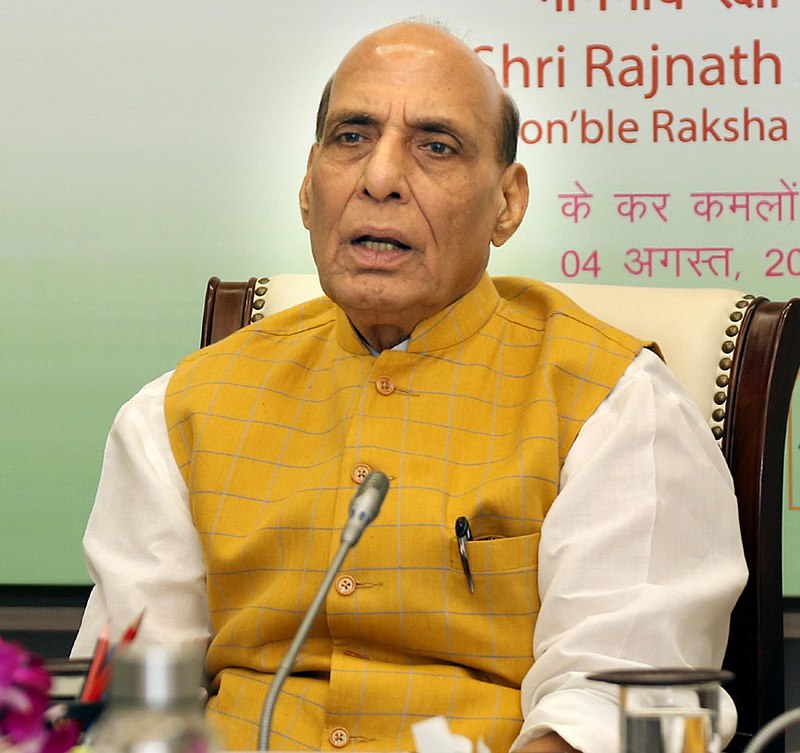
 India’s Defence Minister Rajnath Singh has ignited a major international debate by publicly demanding that Pakistan’s nuclear weapons be placed under the direct supervision of the International Atomic Energy Agency (IAEA). This extraordinary call comes in the immediate aftermath of the most severe India-Pakistan military confrontation in nearly three decades-a confrontation that saw both sides trade missile and drone strikes, raising global concerns about the risk of nuclear escalation in South Asia.
This article provides a comprehensive analysis of Singh’s proposal, the context surrounding it, the reactions from Pakistan and the international community, and the broader implications for nuclear security and regional stability.
The Immediate Context: Operation Sindoor and Nuclear Brinkmanship
The latest crisis erupted after a deadly terror attack in Indian-administered Kashmir, which India attributed to Pakistan-based groups. In response, India launched Operation Sindoor, targeting what it described as terrorist camps inside Pakistan. The operation triggered a rapid escalation, with both countries deploying missiles and drones into each other’s airspace. For several days, the region stood on edge, with the specter of nuclear conflict looming as Pakistan’s military signaled it might convene its National Command Authority-the top body overseeing its nuclear arsenal.
Although a ceasefire was eventually reached, the episode underscored the volatility of the India-Pakistan relationship and the persistent risk that a conventional conflict could spiral into a nuclear exchange.
Rajnath Singh’s Statement: “Are Nuclear Weapons Safe in the Hands of Such an Irresponsible and Rogue Nation?”
Addressing Indian troops in Srinagar, Singh questioned the safety and security of Pakistan’s nuclear arsenal, describing Pakistan as an irresponsible and rogue state. He declared that nuclear weapons cannot be deemed secure in the possession of such a nation and contended that Pakistan’s nuclear arsenal should come under the oversight of the IAEA.
Singh’s remarks were not just rhetorical. He directly called for the IAEA to take charge of Pakistan’s nuclear arsenal. He argued that Islamabad has repeatedly issued nuclear threats to New Delhi and that India would not be deterred by what he termed nuclear blackmail.
Singh also drew a sharp contrast between India and Pakistan, highlighting India’s economic strength and status as a contributor to international institutions, while characterizing Pakistan as a nation dependent on international loans and beset by instability.
India’s Rationale: Security, Terrorism, and Nuclear Responsibility
Singh’s demand is rooted in several longstanding Indian concerns:
- Nuclear Security: India has repeatedly questioned the safety of Pakistan’s nuclear arsenal, citing concerns about internal instability, extremist infiltration, and the risk of nuclear materials falling into the wrong hands.
- Nuclear Blackmail: Indian leaders have accused Pakistan of using its nuclear capability as a shield to sponsor cross-border terrorism, believing that the threat of nuclear escalation deters robust Indian responses.
- International Oversight: By calling for IAEA supervision, India seeks to internationalize the issue, framing Pakistan’s nuclear weapons as a threat not just to India, but to global security.
Singh reiterated that any future dialogue with Pakistan would focus solely on terrorism and the status of Pakistan-occupied Kashmir, dismissing the possibility of broader engagement until these core issues are addressed.
Pakistan’s Response: Condemnation and Counter-Accusations
Pakistan’s government reacted swiftly and angrily to Singh’s remarks. Officials condemned the statement as irresponsible, accusing Singh of insecurity and frustration regarding Pakistan’s defense and deterrence capabilities.
Pakistani officials argued that Singh’s comments reflected ignorance about the IAEA’s mandate, which is primarily to monitor civilian nuclear programs for peaceful use, not to take control of a sovereign nation’s nuclear arsenal. The statement further accused India of nuclear mismanagement, citing alleged incidents of theft and illegal trafficking of nuclear and radioactive materials within India, and suggested that the IAEA should be more concerned about Indian nuclear security.
Pakistan reaffirmed its defense posture and claimed that its nuclear arsenal is under effective and secure control, maintained by a well-established command and control system. Islamabad also reiterated its nuclear policy, which holds that Pakistan reserves the right to use nuclear weapons if its survival is at stake during a conflict.
The Role of the IAEA: Mandate and Precedents
The International Atomic Energy Agency is responsible for ensuring that civilian nuclear programs are not diverted to military use. The IAEA monitors nuclear sites in many countries under civilian nuclear agreements. However, the agency does not have a mandate to supervise or take control of a nation’s military nuclear arsenal without that country’s consent.
Historically, both India and Pakistan have resisted international oversight of their nuclear weapons, viewing such moves as infringements on their sovereignty and strategic autonomy. Both countries became declared nuclear powers after reciprocal tests and the region has since been considered one of the world’s most dangerous nuclear flashpoints.
Global and Regional Implications
1. Nuclear Security in South Asia
The India-Pakistan rivalry, particularly over Kashmir, has made South Asia one of the most volatile nuclear regions globally. Both nations have engaged in regular military skirmishes, and the risk of escalation remains ever-present. Singh’s call for IAEA oversight is an attempt to raise the stakes and draw international attention to what India sees as Pakistan’s irresponsible nuclear posture.
2. Internationalization of the Kashmir and Nuclear Issues
By invoking the IAEA, India is seeking to move the conversation beyond bilateral channels and into the international arena. This approach aims to put pressure on Pakistan by framing its nuclear arsenal as a global concern, not just a bilateral issue.
3. Diplomatic Fallout
The proposal has already deepened diplomatic tensions. Pakistan’s sharp rebuttal and counter-accusations signal that the two countries are unlikely to reach any understanding on nuclear risk reduction in the near future. The exchange also risks drawing in other global powers, especially as both India and Pakistan have strategic partnerships with different major countries.
4. Nuclear Doctrine and Deterrence
Singh’s remarks, and the broader Indian position, reflect a growing frustration with what New Delhi sees as Pakistan’s use of nuclear threats to deter Indian conventional military action against terrorism. India’s leadership has signaled that it will not be cowed by nuclear blackmail, raising the risk that future crises could see more aggressive Indian responses, with all the attendant dangers of miscalculation.
Domestic Political Dimensions
Singh’s statement also plays into domestic politics in both countries. In India, it reinforces the government’s tough stance on national security and cross-border terrorism, themes that resonate strongly with the public. In Pakistan, the government’s rebuttal is aimed at projecting strength and maintaining public confidence in the country’s nuclear deterrent.
The statement was made as part of a broader celebration of the success of Operation Sindoor, with rallies and tributes to Indian soldiers who participated in the recent operations against Pakistan-backed militant infrastructure.
The Path Forward: Risk Reduction or Renewed Tensions?
The immediate prospects for IAEA oversight of Pakistan’s nuclear arsenal are virtually nonexistent, given Islamabad’s categorical rejection and the lack of any international mechanism to enforce such supervision without consent. However, Singh’s proposal has succeeded in refocusing global attention on the risks posed by the India-Pakistan nuclear rivalry.
Some analysts argue that the episode could spur renewed efforts by global powers to encourage confidence-building measures, nuclear risk reduction talks, or even third-party mediation. Others warn that the hardening of positions on both sides could increase the risk of future crises spiraling out of control.
Summary
Rajnath Singh’s call for the IAEA to supervise Pakistan’s nuclear arsenal marks a significant escalation in India’s approach to nuclear risk in South Asia. It reflects deep-seated concerns about Pakistan’s stability, the security of its nuclear weapons, and the perceived use of nuclear threats to shield cross-border terrorism. Pakistan’s swift and sharp rejection, coupled with counter-accusations against India, underscores the depth of mistrust and the challenges of achieving meaningful progress on nuclear risk reduction in the region.
While the IAEA is unlikely to intervene in Pakistan’s nuclear program without its consent, the episode has brought renewed international focus to the dangers of the India-Pakistan nuclear rivalry. The world’s attention will remain fixed on South Asia as both countries navigate the aftermath of their latest confrontation, with the hope that cooler heads will prevail and that mechanisms for crisis management and nuclear safety can be strengthened in one of the world’s most perilous flashpoints.