 Tracey Wilson
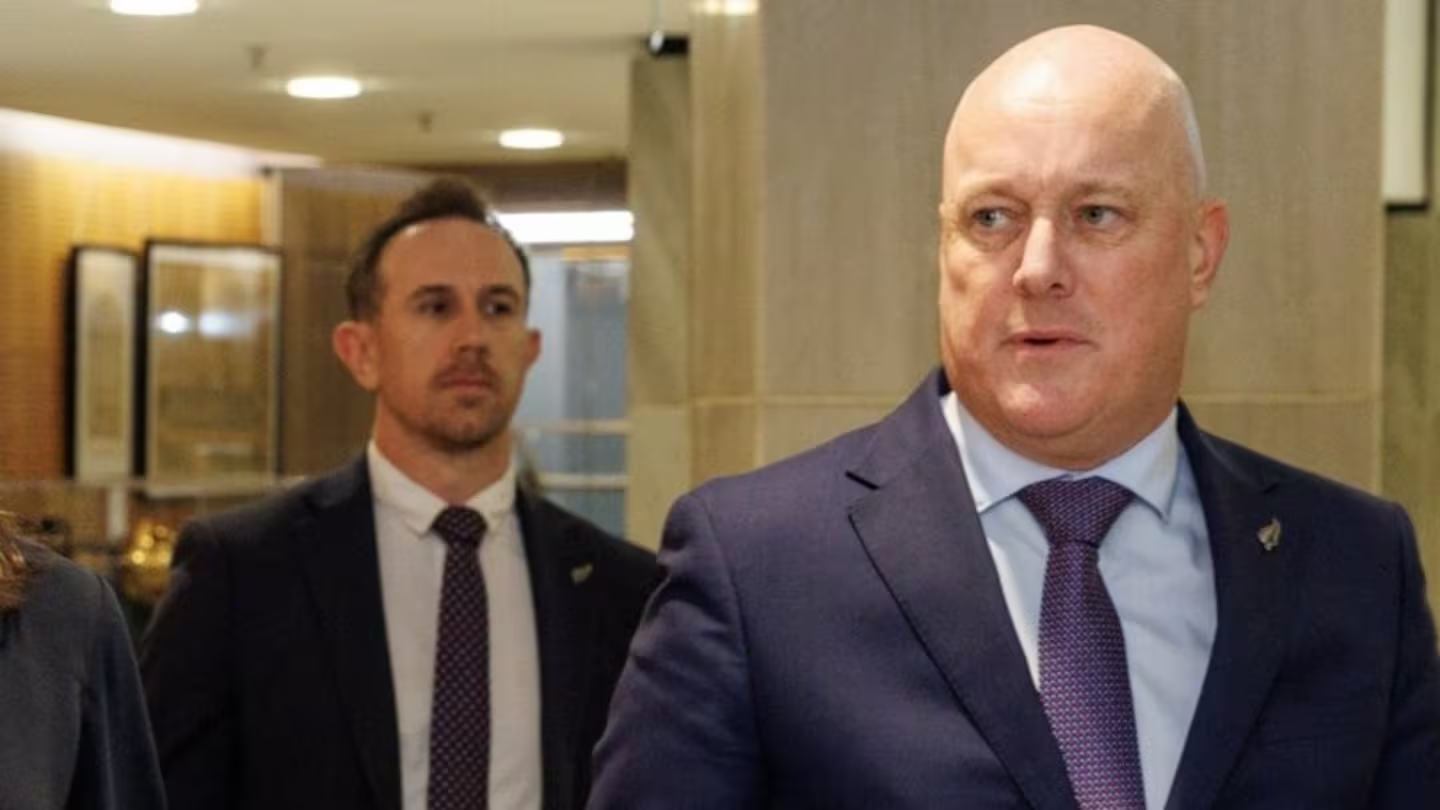
 A senior aide to New Zealand Prime Minister Christopher Luxon has resigned after revelations he secretly recorded sex workers and took non-consensual photos and videos of women in public and private spaces. The scandal, which broke in early June 2025, has rocked the Beehive, raised urgent questions about government vetting and disclosure processes, and triggered calls for stronger privacy laws. Prime Minister Luxon has described the episode as “shocking” and “unacceptably short of the standards I expect from our people,” pledging a full review of how such behaviour went undetected and what changes are needed to restore public trust.
This article examines the full timeline of events, the fallout for the government, the legal and privacy issues at stake, and the broader implications for political culture and public safety in New Zealand.
The Timeline: How the Scandal Unfolded
The Initial Allegations
The controversy began when a Wellington sex worker discovered that Michael Forbes, then acting as the Prime Minister’s deputy chief press secretary, had left his phone recording audio while in the shower during a paid encounter. Upon being confronted, Forbes reportedly handed over his phone password. The woman, with other sex workers from the same brothel, found numerous audio recordings of similar sessions, as well as photos and videos of women in various settings.
What Was Found
- Audio Recordings: Multiple sessions with sex workers, recorded without consent.
- Photos and Videos: Images of women at a gym, shopping in a supermarket, and four videos taken from outside women’s homes, apparently through windows.
- Other Public Spaces: Photos of women in public and private addresses, often taken from a distance.
Police Involvement
The brothel made a formal complaint to Wellington Police in July 2024. Police examined Forbes’ phones and found the images and recordings. Forbes voluntarily spoke with police and admitted to taking the images and recordings.
Police concluded that the available evidence did not meet the threshold for criminal prosecution. Forbes was reminded of the inappropriateness of his behaviour and encouraged to seek help. The case was filed and not disclosed to Forbes’ employer or ministers.
Forbes’ Career Path
At the time of the incident, Forbes was press secretary to Social Development Minister Louise Upston. He was appointed acting deputy chief press secretary to the Prime Minister in February 2025, after having undergone standard vetting procedures. Neither Minister Upston nor the Prime Minister’s office was aware of the police investigation or the allegations until a journalist contacted the PM’s office at 4pm on June 3, 2025.
Resignation and Apology
After the allegations became public, Forbes was stood down and resigned the following morning. In a public statement, he apologised to the women he had harmed, citing a “downward spiral due to unresolved trauma and stress” and acknowledging that he had failed to make a genuine attempt to apologise sooner.
Government and Political Fallout
Prime Minister’s Response
Prime Minister Luxon responded swiftly, expressing shock and sympathy for the women affected. He emphasised his “zero tolerance for any behaviour that makes women or anyone feel unsafe,” and stressed that Forbes’ conduct fell far short of the standards expected in government.
Luxon stated that the PM’s office had no prior knowledge of the police investigation or the allegations, and that Forbes had an obligation to declare such incidents. Had he not resigned, his employment would have been terminated.
Internal Review and “Deep Dive” Investigation
Luxon has ordered the Department of Internal Affairs (DIA) to conduct a thorough review of inter-agency vetting and disclosure processes. This “deep dive” aims to identify how the system failed to flag the allegations and what improvements are needed to prevent similar incidents.
Key questions include:
- Why was the police investigation not disclosed to the Beehive or Ministerial Services?
- Should the police have elevated the matter to a higher level, given Forbes’ public role?
- Are current vetting and security clearance processes robust enough for sensitive government positions?
- What obligations do staff have to self-report incidents that could affect their suitability for public office?
Impact on Staff and Workplace Culture
Luxon acknowledged the distress and anger among his staff, many of whom worked closely with Forbes. Counselling and support have been offered to all staff on the parliamentary precinct, and further meetings are planned to address concerns and ensure a safe workplace.
The Prime Minister said he had spoken to several women who worked with Forbes and described the situation as “incredibly shocking and distressing.” He has asked DIA to investigate whether any staff or parliamentary gym users were targeted by Forbes, although there is no evidence so far of workplace incidents.
Legal and Privacy Issues
The Legal Grey Area
Despite the disturbing nature of Forbes’ actions, police determined that the evidence did not meet the threshold for criminal prosecution. This has highlighted gaps in New Zealand’s privacy and voyeurism laws, particularly regarding non-consensual recording and photography in private and public spaces.
Prime Minister Luxon and other political leaders have signalled a willingness to review and potentially strengthen privacy laws to better protect victims of voyeurism and non-consensual recording. The case has reignited debate about whether current legislation is adequate in the digital age, where technology makes it easier than ever to violate privacy.
Calls for Law Reform
Advocates, including the brothel at the centre of the allegations, have called for clearer laws and harsher penalties for non-consensual recording and image-based abuse. Luxon has expressed openness to reviewing privacy, harmful digital communications, and stalking laws in light of the scandal.
Systemic and Cultural Questions
Vetting and Disclosure Failures
The scandal has exposed shortcomings in the way government agencies share information about staff under investigation for inappropriate or potentially criminal behaviour. Forbes’ vetting for his Beehive role did not uncover the police investigation, and he did not self-disclose the allegations.
Luxon has questioned whether inter-agency processes between police, the SIS, and Ministerial Services are sufficient. He has asked DIA to examine what more can be done to ensure that serious concerns about staff are flagged before appointments are made.
Trust and Accountability
The episode has raised questions about public trust in government and the accountability of those in positions of power. Luxon has stressed the need for transparency, swift action, and a culture of zero tolerance for misconduct.
He has also acknowledged the need for a broader conversation about workplace safety, privacy, and the responsibilities of public servants.
Support for Victims and Staff
Immediate Support
All staff in the Prime Minister’s office and the wider parliamentary precinct have been offered counselling and support services. Luxon has emphasised his concern for the wellbeing of those affected and the importance of a safe, respectful workplace.
Wider Implications
The scandal has prompted a wider discussion about the safety and rights of women, both in government and in society at large. It has also highlighted the importance of robust reporting mechanisms and support for those who come forward with allegations of misconduct.
What Happens Next?
The DIA “Deep Dive”
The Department of Internal Affairs is now leading a comprehensive review of vetting, disclosure, and workplace safety processes. This includes:
- Reviewing how police, SIS, and Ministerial Services share information about staff under investigation.
- Assessing the adequacy of current vetting procedures for sensitive government roles.
- Considering changes to privacy and digital communications laws.
Possible Law Changes
Luxon has signalled openness to updating privacy, harmful digital communications, and stalking legislation to close legal loopholes and strengthen protections for victims. This could include:
- Clearer definitions of non-consensual recording and photography.
- Stronger penalties for voyeurism and image-based abuse.
- Improved reporting and support mechanisms for victims.
Ongoing Support and Culture Change
The Prime Minister’s office will continue to offer support to staff and review workplace culture and safety. Luxon has pledged to maintain transparency and accountability as the review progresses.
Summary
The resignation of Michael Forbes, a senior aide to New Zealand’s Prime Minister, after revelations of secret recordings and non-consensual photography, has triggered a major reckoning in government. The scandal has exposed weaknesses in vetting and disclosure processes, highlighted gaps in privacy law, and raised urgent questions about workplace safety and public trust. Prime Minister Luxon has responded with a promise of a full review, openness to law reform, and support for those affected. As the government moves to strengthen its processes and restore confidence, the episode stands as a stark reminder of the importance of accountability, transparency, and respect in public life.