





 Tracey Wilson
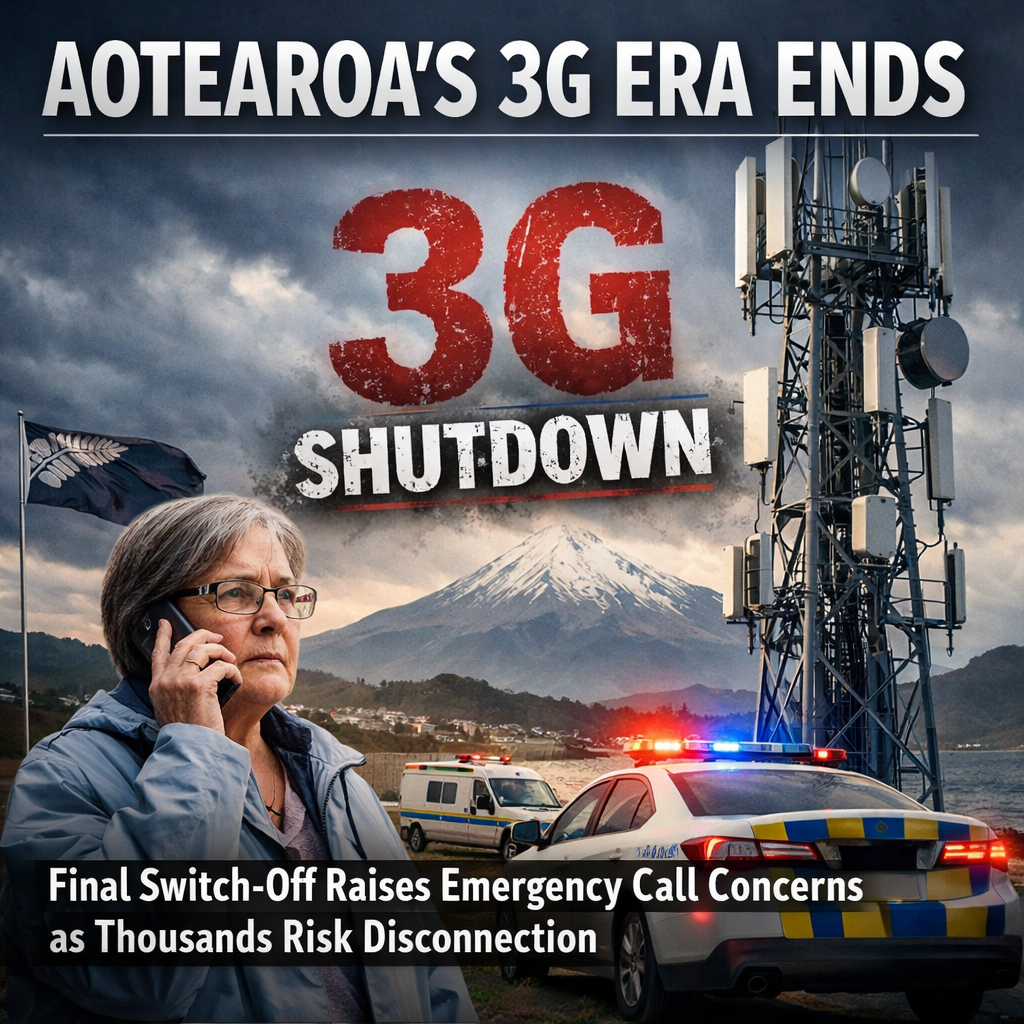
 As New Zealand’s 3G network is permanently shut down on March 31, public safety officials warn that thousands of devices—particularly parallel-imported phones—may be unable to call 111, exposing a critical gap in consumer protection and emergency infrastructure.
By Tracey Wilson
Law and Regulatory Affairs Correspondent
Zealandia News
March 31, 2026 — WELLINGTON
New Zealand’s telecommunications networks switch off their 3G services today, bringing a definitive end to the technology that first brought mobile data to Aotearoa in the early 2000s. But the transition to 4G and 5G has exposed a troubling vulnerability: thousands of New Zealanders may now find themselves unable to call 111 in an emergency.
Spark New Zealand confirmed that after March 31, any remaining 3G-only handsets will no longer be capable of placing emergency calls. One New Zealand has already completed its shutdown of both 2G and 3G networks. The industry insists only a small percentage of users remain on the legacy networks, but digital equity advocates warn that even a fraction of a percentage translates to thousands of individuals—many of them among the most vulnerable.
“The number may be small relative to the total population, but for those affected, the consequences could be catastrophic,” says a spokesperson for the Digital Inclusion Alliance Aotearoa. “This isn’t about inconvenience. This is about whether someone can reach an ambulance or the police when seconds matter.”
The problem runs deeper than outdated phones. Industry estimates suggest as many as 30,000 distinct handset variants are active on New Zealand networks. A significant number of these devices advertise 4G capability but cannot make voice calls—including emergency calls—over 4G networks. Most were brought into the country as parallel imports or sold through non-telco retailers, placing them beyond the control of major carriers who might otherwise have provided warnings or replacement programmes.
A gap in the regulatory gate
The situation has prompted renewed debate about New Zealand’s regulatory approach to telecommunications equipment. Until 2011, the Telepermit system required all devices connecting to the public telephone network to undergo compatibility testing. The system was dismantled to reduce barriers to entry and increase consumer choice. Critics now argue that its absence left a gap that criminal networks and unscrupulous importers were all too happy to exploit.
“Telepermit wasn’t perfect—it added costs and sometimes limited consumer choice—but it served as a gatekeeper that ensured devices would work safely and reliably,” says a telecommunications industry analyst who asked not to be named. “Without it, we’ve seen a flood of devices that operate in a grey zone. They function well enough for everyday use until a major network change like this exposes their limitations.”
The Commerce Commission, which now oversees telecommunications regulation, has been monitoring the transition but lacks a direct mechanism to certify or block incompatible devices. Consumer New Zealand has called for a modernised certification framework that would protect consumers without stifling competition.
What the shutdown means
For most New Zealanders with phones purchased directly from Spark, One NZ, or 2degrees within the past five years, the transition should be seamless. The carriers have spent the past 18 months notifying customers, sending replacement SIM cards, and in some cases offering subsidised handset upgrades.
But the margins of the market remain problematic. Prepaid users, older New Zealanders who hold onto phones for many years, and those who purchased devices from online marketplaces or discount retailers face the greatest risk.
“We’ve been working hard to reach every customer who might be affected,” a One NZ spokesperson said. “Our focus has shifted from network engineering to customer support, ensuring that those who rely on us for connectivity are not left without access to emergency services.”
Spark has similarly implemented a device-blocking programme for handsets unable to support emergency calling over 4G, a decision that has drawn both praise for its proactive approach and criticism for its bluntness.
Beyond the switch-off
The end of 3G represents more than a technological milestone. It frees up valuable radio spectrum that can be repurposed for 4G and 5G services, improving capacity, speed, and coverage. One NZ chief technology officer Kieran Byrne says the investment is essential to meet growing demand for mobile data.
“By switching off the old technology and re-using the radio spectrum on 4G and 5G, we can boost speeds, increase capacity and make sure our network is ready to support New Zealanders with what’s next,” Byrne said.
The company has invested more than $100 million in mobile network improvements over the past year, including a new rooftop solar installation at its Christchurch data centre—the telco’s first major onsite renewable energy project. The 142-panel system can generate up to 90kW at peak, enough on sunny days to power the combined demand of the data centre and adjacent mobile site.
Meanwhile, Spark is teasing the next frontier: satellite-to-mobile service. A web page in Spark’s online shop promises the capability is “on its way,” allowing customers to “send and receive texts and use data on selected satellite-ready apps” with an eligible phone, SIM and plan.
The lessons of transition
The 3G shutdown offers a glimpse of the challenges to come as technology continues to evolve. With 5G rollouts accelerating and satellite connectivity on the horizon, the pace of change will only increase. The question for regulators and carriers alike is whether the consumer protection apparatus can keep pace.
Digital equity campaigners say the transition should prompt a broader conversation about how New Zealand manages technological change. They point to countries such as Australia and the United Kingdom, where regulators have maintained stronger oversight of device compatibility, resulting in fewer stranded consumers during similar network transitions.
“This doesn’t have to be a choice between consumer choice and consumer safety,” says a spokesperson for the Consumer Advocacy Council. “There are models that allow for open markets while ensuring that devices meet baseline standards for safety and interoperability. New Zealand can learn from what has worked elsewhere.”
For now, the focus remains on the immediate task: ensuring that no New Zealander discovers too late that their phone cannot call 111. Carriers have established dedicated support lines, and community organisations are working to reach those who may have slipped through the cracks.
In Summary
The shutdown of New Zealand’s 3G networks on March 31 marks the end of an era in mobile communications but has exposed critical gaps in device regulation and consumer protection. While major carriers report that most customers have transitioned successfully, thousands of handsets—particularly parallel imports and older devices—may lack the ability to call 111 over 4G networks. The dissolution of the Telepermit compatibility system in 2011 has left New Zealand with fewer safeguards than comparable nations, prompting calls for a modernised certification framework. As the telecommunications industry pivots to 5G and satellite connectivity, the lessons of this transition will shape how regulators balance consumer choice with safety and reliability.