 Imogen King
 By Imogen King | NZB News
Prime Minister Narendra Modi’s arrival in Buenos Aires marks a watershed moment in India-Argentina relations, as this is the first Indian bilateral visit at the prime ministerial level to Argentina in 57 years. The two-day visit, which commenced on July 4, 2025, represents far more than diplomatic protocol—it signals India’s strategic pivot towards Latin America and underscores the growing importance of South-South cooperation in an increasingly multipolar world.
A Warm Welcome and Historic Significance
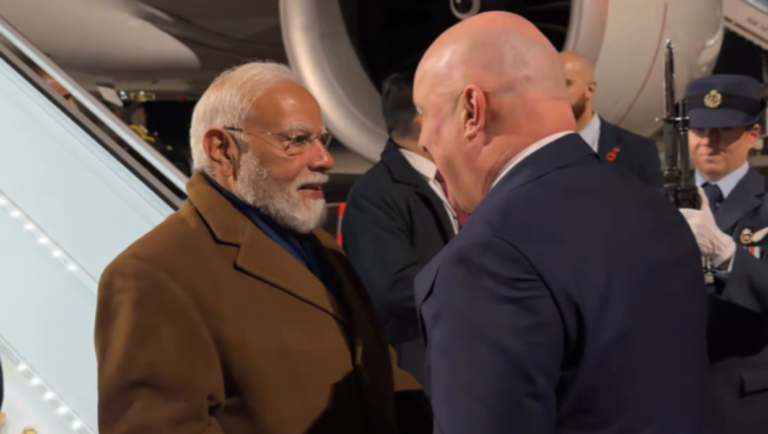
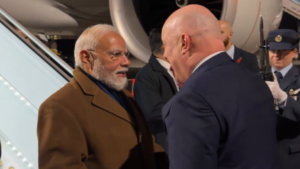
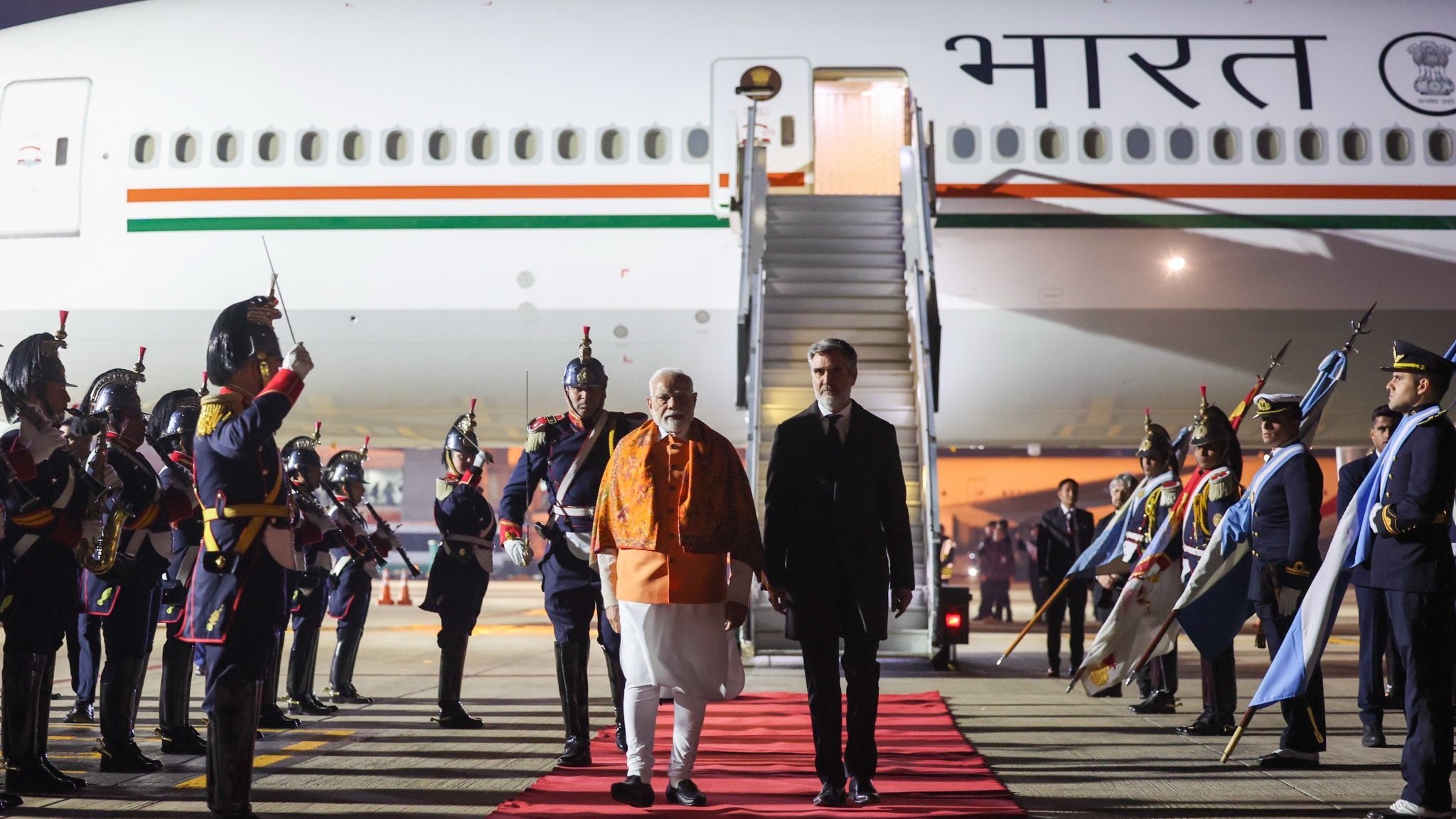
Prime Minister Modi was accorded a ceremonial welcome upon his arrival at the Ezeiza International Airport, setting the tone for what promises to be a transformative diplomatic engagement. Upon his arrival at the hotel, the prime minister was greeted by chants of “Modi, Modi” and “Bharat Mata ki Jai” from members of the Indian community, with whom he also interacted briefly. This enthusiastic reception from the Indian diaspora in Argentina reflects the deep cultural and personal connections that continue to bind the two nations despite geographical distance.
The visit’s historic nature cannot be overstated. This is Modi’s second visit to Argentina since he became prime minister. Prime Minister Modi arrived at Ezeiza International Airport during the early hours of Saturday and was accorded a ceremonial welcome, though Modi had first visited Argentina in 2018, to attend the G20 Summit. However, this bilateral visit represents a qualitatively different engagement, focused exclusively on strengthening the strategic partnership between the world’s largest democracy and Latin America’s second-largest economy.
Strategic Partnership Reaches New Heights
The foundation for this enhanced relationship was laid several years ago when India-Argentina diplomatic relations were elevated to the level of Strategic Partnership during the State Visit to India of the then President of Argentina, in February 2019. Both countries completed 75 years of their diplomatic relationship on 3 February 2024, providing a solid historical foundation upon which to build future cooperation.
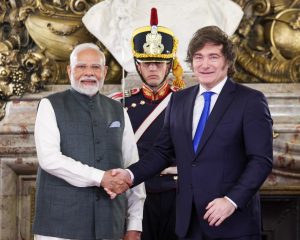
According to the ministry of external affairs, the prime minister will hold talks with Argentine President Javier Milei to boost India-Argentina partnership in key areas. The scope of these discussions reflects the multifaceted nature of modern bilateral relationships, encompassing traditional areas of cooperation whilst exploring new frontiers in technology, energy, and strategic minerals.
Economic Dimensions and Trade Expansion
The economic relationship between India and Argentina has shown remarkable growth in recent years. In the past year, the bilateral trade between India and Argentina went beyond $5.2 billion. India is among the top six trading partners of Argentina. This substantial trade volume demonstrates the economic potential that exists between the two nations, though both governments recognise significant opportunities for further expansion.
Historically, the trade between the countries was focused on edible oils but the countries have recently expressed their inclination towards expanding their trade ties to include sectors like defence, energy, mining, and trade and investment. This diversification reflects a maturing economic relationship that moves beyond traditional commodity exchanges to encompass higher-value sectors requiring technological cooperation and knowledge transfer.
Argentina has indicated interest in importing Indian pharmaceuticals, medical equipment and IT services, while India is also looking to access Argentina’s agricultural market. These complementary interests suggest substantial potential for win-win arrangements that could significantly boost bilateral trade volumes in the coming years.
Critical Minerals and Energy Security
Perhaps no aspect of the India-Argentina relationship is more strategically significant than cooperation in critical minerals, particularly lithium. India’s state-owned firm Khanij Bidesh India Ltd (KABIL) signed a 2 billion-rupee ($24 million) lithium exploration pact for five blocks in Argentina, marking a crucial step in India’s quest for energy security and critical mineral self-reliance.
Argentina’s lithium reserves are mostly part of the “Lithium Triangle,” an Andean region that also includes parts of Chile and Bolivia and has more than half of the world’s total lithium resources. This positioning makes Argentina a vital partner for India’s clean energy transition and electric vehicle ambitions.
The scope of India’s lithium engagement in Argentina is substantial. KABIL will start exploration and development of five lithium brine blocks — Cortadera-I, Cortadera-VII, Cortadera-VIII, Cateo-2022-01810132 and Cortadera-VI — covering an area of about 15,703 hectares in the Catamarca province. The Indian government signed a deal with Catamarca province in northern Argentina to gain exclusive rights to explore and eventually exploit five lithium brine blocks in the area.
The strategic importance of this arrangement extends beyond mere resource acquisition. The deal will not only boost India’s quest for sourcing lithium but will also help in bringing in technical and operational experience for brine type lithium exploration, exploitation and extraction. This knowledge transfer component ensures that India develops indigenous capabilities in critical mineral processing, reducing long-term dependence on imports.
Energy Cooperation and Future Technologies
Energy cooperation extends beyond lithium to encompass broader aspects of the energy transition. “Argentina’s rich reserves of critical minerals such as lithium, copper and other rare earth elements complement India’s growing need for secure and sustainable supplies to these elements for its clean energy transition and industrial growth”.
The timing of this enhanced cooperation is particularly significant given global energy dynamics. With the volatility in the Middle East, India is gradually working towards removing its energy supply dependence on the Middle Eastern countries and diversifying its energy supplies to evade any conflict-driven market fluctuations. Argentina’s vast energy resources, including conventional and renewable sources, offer India an alternative supply source that enhances energy security.
Defence and Strategic Cooperation
Defence cooperation represents another expanding dimension of the India-Argentina strategic partnership. Minister of Defense Jorge Taiana visited India in July 2023, the first ever bilateral visit by a Defense Minister of Argentina. He held talks with Raksha Mantri Rajnath Singh on increasing defense cooperation between two countries, including measures to enhance defense industrial partnership.
This defence engagement reflects broader strategic considerations as both nations seek to diversify their security partnerships and develop indigenous defence capabilities. India’s growing expertise in defence manufacturing and technology transfer could prove valuable for Argentina’s modernisation efforts, whilst Argentina’s strategic position in South America offers India enhanced regional engagement opportunities.
Agricultural and Food Security Dimensions
Agriculture remains a cornerstone of India-Argentina cooperation, with significant potential for mutual benefit. The first meeting of Joint Working Group on Agricultural Cooperation was held virtually on 1 July 2020, establishing formal mechanisms for agricultural collaboration.
Argentina’s position as one of the world’s leading agricultural producers, particularly in soybeans, wheat, and beef, complements India’s vast agricultural market and growing food security requirements. “India is often among Argentina’s top five export destinations, especially because of soybean and sunflower oil”. This agricultural trade relationship provides a stable foundation for broader economic cooperation whilst addressing food security concerns in both nations.
Technology and Digital Cooperation
The visit also emphasises cooperation in emerging technologies and digital infrastructure. India’s advancements in defence manufacturing, space and newer areas such as Digital Public Infrastructure offer opportunities for collaboration with Argentina. Similarly, India’s expertise in Telemedicine and Digital healthcare can also help Argentina improve healthcare delivery.
This technology cooperation reflects India’s growing expertise in digital governance and public service delivery, areas where Indian innovations could prove valuable for Argentina’s modernisation efforts. The digital cooperation also encompasses space technology, where both nations have established capabilities and potential for joint missions and technology development.
Cultural and People-to-People Connections
The cultural dimensions of India-Argentina relations provide an important foundation for expanded cooperation. The people-to-people connection between the two nations is also strong, with Yoga, Ayurveda and Indian philosophy being fairly popular. This cultural affinity creates a conducive environment for broader diplomatic and economic engagement.
There are around 2,600 NRIs/PIOs in Argentina. The majority of them live in the capital city of Buenos Aires, including professionals working with Indian companies and multinational corporations. This diaspora community serves as a vital bridge between the two nations, facilitating business connections and cultural exchange whilst providing a human dimension to the strategic partnership.
Regional and Global Implications
Modi’s visit to Argentina occurs within the broader context of India’s engagement with Latin America and the Caribbean. Argentina is Modi’s third stop on the prime minister’s five-nation visit, which also includes Ghana, Trinidad and Tobago, Brazil, and Namibia. This multi-nation tour reflects India’s systematic approach to strengthening South-South cooperation and diversifying international partnerships.
India’s drive to diversify away from traditional markets and partners is evident in Modi’s visit to Argentina. In physical terms its far away, but there are strategic gains to be made. This geographic diversification reflects India’s understanding that a multipolar world requires multiple partnership frameworks and reduced dependence on any single region or bloc.
The Argentina visit also demonstrates India’s approach to engaging with middle powers and regional leaders. Argentina is a key economic partner in Latin America and a close collaborator in the G20, making it an important partner for India’s global diplomatic objectives and multilateral engagement.
MERCOSUR and Regional Integration
Argentina’s position within MERCOSUR, the South American trade bloc, adds another dimension to the India-Argentina relationship. India is also manoeuvring to revive trade relations with MERCOSUR, (or ‘the Southern Common Market’), a South American trade bloc focused on regional economic integration.
“MERCOSUR is facing internal tensions, particularly between Argentina and Brazil. Smaller members like Uruguay are already leaning toward bilateral FTAs. For India, a bilateral agreement with Argentina may be the more practical path forward”. This assessment suggests that India’s bilateral approach with Argentina could serve as a model for broader regional engagement, potentially leading to expanded trade arrangements with other South American nations.
Presidential Diplomacy and Personal Relations
The personal chemistry between leaders often proves crucial for sustained diplomatic engagement. Prime Minister Modi will be in Argentina on July 4 and 5, on the invitation of President Javier Milei. The last meeting between the two leaders was in November 2024, on the sidelines of the G20 Summit in Rio de Janeiro, Brazil.
President Milei’s economic philosophy and openness to international partnerships align well with India’s approach to economic cooperation. The economic visions of both the country seem to align as the Argentinian President, Javier Milei, who took charge in December 2023, expressed his openness to have economic partnerships beyond the West. This convergence of economic philosophy provides a conducive environment for expanded cooperation across multiple sectors.
Future Trajectory and Implementation
The visit’s success will ultimately be measured by the concrete agreements reached and their subsequent implementation. “We will focus on advancing our mutually beneficial cooperation, including in the areas of agriculture, critical minerals, energy, trade, tourism, technology, and investment,” Modi had stated.
The breadth of cooperation areas demonstrates the comprehensive nature of the strategic partnership, moving beyond traditional diplomatic engagement to encompass the full spectrum of modern international relations. From critical minerals to cultural exchange, from defence cooperation to digital governance, the India-Argentina partnership reflects the complex interdependencies that characterise 21st-century international relations.
Economic Reforms and Parallel Experiences
Prime Minister’s visit also comes at a particularly significant time as Argentina is undertaking major economic reforms, somewhat similar to those India went through in the past. This parallel experience in economic transformation provides opportunities for knowledge sharing and policy coordination, with India’s experience in economic liberalisation potentially offering valuable lessons for Argentina’s current reform trajectory.
Space and Scientific Cooperation
The technological cooperation between India and Argentina extends to space exploration and scientific research. The second meeting of ISRO-CONAE (Argentine Space Agency) Joint Committee, under the Agreement on cooperation on Peaceful Uses of Outer Space signed in 2009, was held on 2 December 2020, also virtually. This cooperation in space technology reflects both nations’ ambitions in space exploration and their capacity for high-technology collaboration.
Nuclear Cooperation Framework
The relationship also encompasses cooperation in peaceful nuclear technology. The second meeting of Joint Coordination Committee under bilateral Agreement for cooperation in Peaceful Uses of Nuclear Energy was held in Buenos Aires on 1-3 August 2023. This nuclear cooperation framework demonstrates the high level of trust between the two nations and their shared commitment to peaceful nuclear technology development.
Summary
Prime Minister Modi’s historic visit to Argentina represents a strategic milestone in India’s engagement with Latin America and reflects the evolving nature of South-South cooperation in the 21st century. The visit’s significance extends far beyond bilateral relations, positioning both nations as important players in an increasingly multipolar world where middle powers and regional leaders play enhanced roles in global governance.
The comprehensive nature of the India-Argentina strategic partnership—encompassing critical minerals, energy security, defence cooperation, technology transfer, agricultural collaboration, and cultural exchange—demonstrates the potential for sustained and mutually beneficial engagement between nations that share democratic values and development aspirations despite geographic distance.
As India continues its rise as a global power and Argentina navigates economic transformation under President Milei’s leadership, this partnership offers both nations opportunities to diversify their international relationships, enhance economic security, and contribute to a more balanced and equitable global order. The success of this engagement will likely serve as a model for India’s broader strategy in Latin America and demonstrate the potential for enhanced cooperation between the Global South’s leading democracies.
The visit’s outcomes will be closely watched by other Latin American nations and could catalyse broader India-Latin America engagement, potentially reshaping regional dynamics and contributing to the evolution of alternative partnership frameworks that complement traditional North-South relationships. For New Zealand and other middle powers observing these developments, the India-Argentina partnership offers insights into how strategic relationships can transcend geographic constraints and contribute to global stability through diversified international cooperation.