Lara Zijl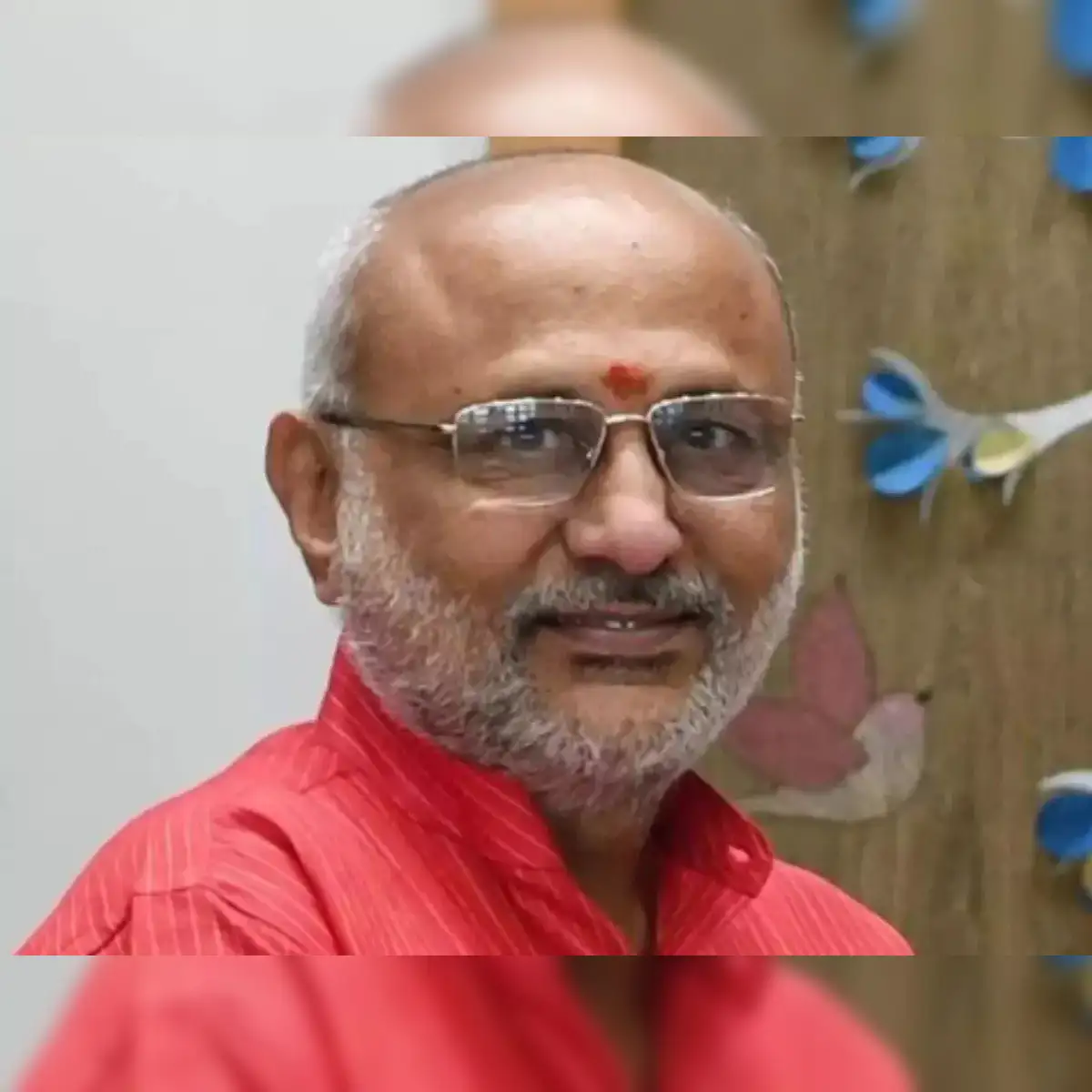
The National Democratic Alliance’s announcement of Maharashtra Governor Chandrapuram Ponnusamy Radhakrishnan as its candidate for India’s Vice Presidency has placed the spotlight on a veteran politician whose career spans nearly half a century. Born in Tamil Nadu and seasoned through decades of organisational work, parliamentary service, and constitutional responsibilities, Radhakrishnan represents the NDA’s strategic positioning for the September 9, 2025 election that follows Jagdeep Dhankhar’s recent resignation.
Early Life and Political Foundation
Born on October 20, 1957, in Tiruppur, Tamil Nadu, Radhakrishnan was drawn to public life early through the Rashtriya Swayamsevak Sangh (RSS). His association with the Bharatiya Jana Sangh in the 1970s laid the foundation for a long career in the BJP, where he rose steadily through the ranks.
Growing up in the textile hub of Tiruppur, Radhakrishnan witnessed firsthand the industrial transformation of Tamil Nadu during the 1960s and 1970s. His early involvement with the RSS during his teenage years shaped his ideological grounding within the Sangh Parivar framework, providing him with organisational discipline that would characterise his later political career.
Parliamentary Career and Leadership
Radhakrishnan twice represented Coimbatore in the Lok Sabha, winning in 1998 and 1999, and was noted for his focus on industrial development, infrastructure and education. During his parliamentary tenure, he served on various committees including the Committee on Commerce and its Sub-Committee on Textiles, the Committee on Members of Parliament Local Area Development Scheme, and the Consultative Committee of the Ministry of Finance.
He went on to serve as president of the party’s Tamil Nadu unit between 2004 and 2007 and has been a key figure in building the BJP’s organisational presence in the state. His leadership during this period was marked by efforts to expand the BJP’s footprint in what has traditionally been challenging terrain for the party in Tamil Nadu’s Dravidian political landscape.
Administrative Experience
Radhakrishnan’s gubernatorial experience spans multiple states, demonstrating his administrative versatility. He previously served as the Governor of Jharkhand from February 2023 to July 2024. His additional charges in the past included posts of Telangana governor during March-July 2024 and Puducherry Lieutenant Governor during March-August 2024.
Currently serving as Maharashtra’s 24th Governor since July 31, 2024, Radhakrishnan earned a reputation for being measured and controversy-free, a style of functioning that distinguished him from some of his predecessors.
Strategic Political Positioning
BJP leaders believe his elevation will also bolster the party’s political positioning in Tamil Nadu, where he belongs to the influential Gounder community, an OBC group with significant electoral weight. This demographic consideration reflects the NDA’s broader strategy to strengthen its presence in southern India, particularly with Tamil Nadu Assembly elections scheduled for 2026.
The timing of his nomination appears strategically calculated. Radhakrishnan called on Tamil Nadu Chief Minister M.K. Stalin at his Chittaranjan Road residence in Chennai on August 11, with sources suggesting the visit was to seek the DMK’s support in Parliament during the vice presidential election.
Constitutional Context and Election Process
The Vice Presidential election necessitated by Jagdeep Dhankhar’s resignation on the first day of the Monsoon Session of Parliament on July 21, citing health reasons, will be conducted on September 9, 2025. The Vice President is elected by an electoral college which includes members of the Rajya Sabha and of the Lok Sabha. The nominated members of the upper house are also eligible to vote in the election process. Voting is done by secret ballot.
Historical Perspective on India’s Vice Presidency
There have been 14 vice presidents since the inception of the post in 1950. The first vice president of India, Sarvepalli Radhakrishnan, took oath at Rashtrapati Bhavan on 13 May 1952. He later served as the president. Interestingly, out of 14 vice presidents, six of them later went on to become the president.
The office serves as both the second-highest constitutional position and the ex officio chairperson of the Rajya Sabha, the upper house of the Parliament of India. The vice president holds office for five years. The vice president can be re-elected any number of times.
Powers and Responsibilities
As Vice President, Radhakrishnan would assume significant constitutional responsibilities. The vice president is elected indirectly by members of an electoral college consisting of the members of both Houses of Parliament and not the members of state legislative assembly by the system of proportional representation using single transferable votes.
The role encompasses dual functions: serving as Chairman of the Rajya Sabha and stepping in as acting President when required. In accordance with Article 63 of the Constitution of India, the vice president discharges the functions of the president when a contingency arises due to the resignation, removal, death, impeachment or the inability of the president to discharge their functions.
Political Endorsements and Support
Prime Minister Narendra Modi, while endorsing his candidature, praised him as a leader who combined “dedication, humility and intellect” with an unbroken commitment to grassroots empowerment. Union Home Minister Amit Shah, while congratulating him, described Radhakrishnan as an experienced parliamentarian and administrator.
The NDA’s confidence in securing victory stems from its parliamentary majority. Even if the opposition fields a candidate, the NDA candidate can easily win the election, given its majority in the electoral college. Nadda hoped the opposition parties will support the NDA candidate to ensure an unopposed election.
Regional Significance
Radhakrishnan’s nomination carries particular significance for Tamil Nadu politics. His selection reflects the BJP’s ongoing efforts to establish a stronger foothold in the state, where the party has historically struggled against entrenched Dravidian parties. The decision to field Radhakrishnan, a seasoned politician with long-standing ties to the Rashtriya Swayamsevak Sangh (RSS), is being viewed as a strategic outreach to Tamil Nadu, where Assembly elections are due next year.
Summary
At 67, Radhakrishnan brings with him nearly 40 years of public life, marked by both political and administrative experience. His selection as NDA’s vice-presidential nominee reflects not only the ruling alliance’s numerical strength in the electoral college but also its intent to project a leader with cross-party goodwill and regional significance. The veteran politician’s journey from RSS volunteer to Vice Presidential candidate exemplifies the organisational pathways that have shaped contemporary Indian politics, whilst his administrative experience across multiple states demonstrates the breadth of constitutional responsibility he would bring to India’s second-highest office.