
 Vinay Karanam
 The Unbreakable Code
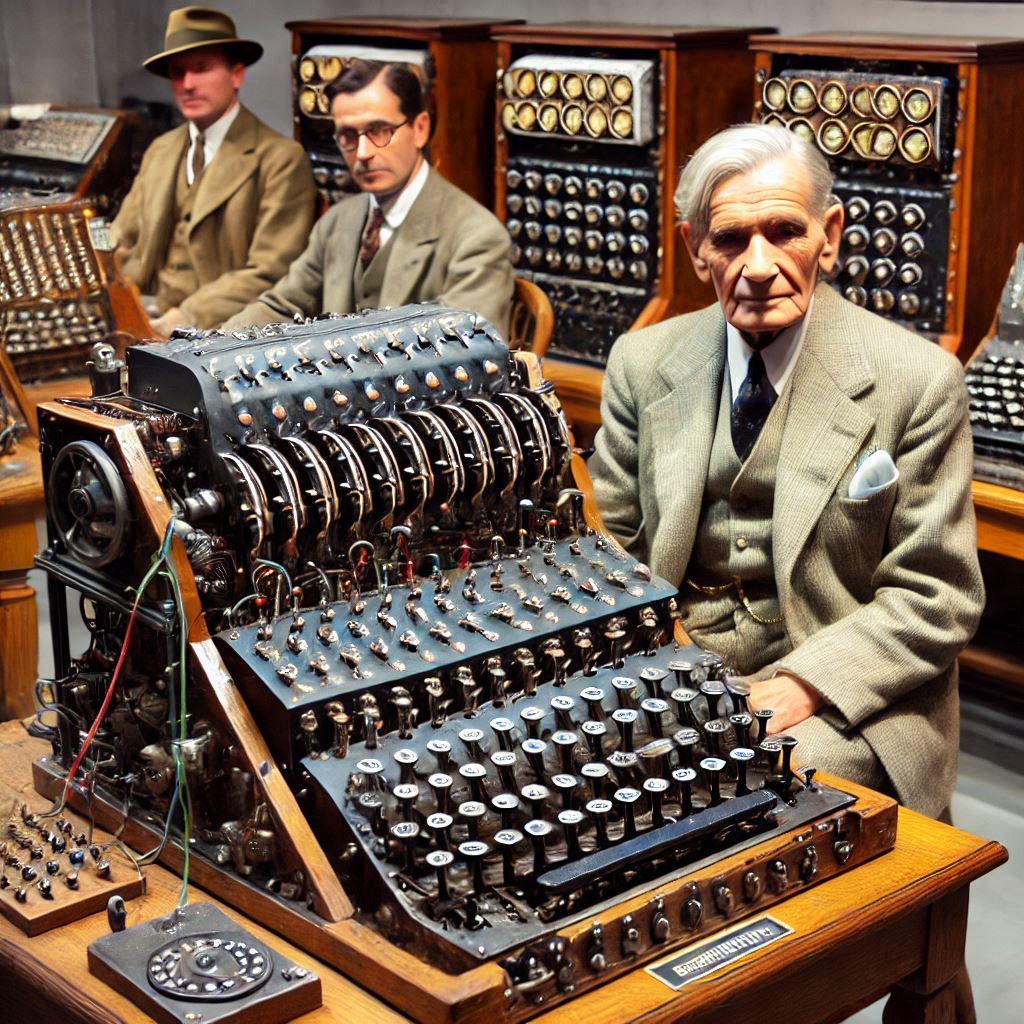
The Second World War was a conflict marked by technological innovation, and cryptography played a pivotal role. One of the most infamous cryptographic machines of the era was the Enigma machine, used by the German military to encrypt their communications. The Enigma machine was a complex electromechanical device that employed a series of rotors to scramble messages.
The German military believed the Enigma code to be unbreakable, but a team of brilliant minds at Bletchley Park, a British government code-breaking center, proved them wrong. Led by the enigmatic figure of Alan Turing, the codebreakers at Bletchley Park developed innovative techniques to crack the Enigma code.
The Polish Contribution
Before the British took over the Enigma challenge, Polish cryptologists made significant strides in breaking the Enigma code. Their work, which involved reverse-engineering Enigma machines and developing cryptanalytic techniques, provided a crucial foundation for the British efforts.
The Role of Alan Turing
Alan Turing, a mathematical genius, played a pivotal role in cracking the Enigma code. He developed a machine called the Bombe, which could systematically test different Enigma settings. By combining human ingenuity with machine power, the codebreakers at Bletchley Park were able to decipher German military communications, giving the Allies a significant advantage.
The Impact of Codebreaking
The successful decryption of Enigma messages had a profound impact on the course of the war. It allowed the Allies to anticipate German military movements, intercept crucial intelligence, and make informed decisions. The codebreaking efforts at Bletchley Park are estimated to have shortened the war by two years, saving countless lives.
Lessons from the Past
The story of the Enigma machine and its eventual defeat serves as a reminder of the importance of strong cryptography. It highlights the constant battle between codemakers and codebreakers, a struggle that continues to this day. As technology advances, so too do the threats to our digital security. By understanding the lessons of the past, we can better prepare for the challenges of the future.
In the next article, we will delve into the foundations of modern cryptography, exploring the fundamental concepts that underpin our digital security.