







 Vinay Karanam
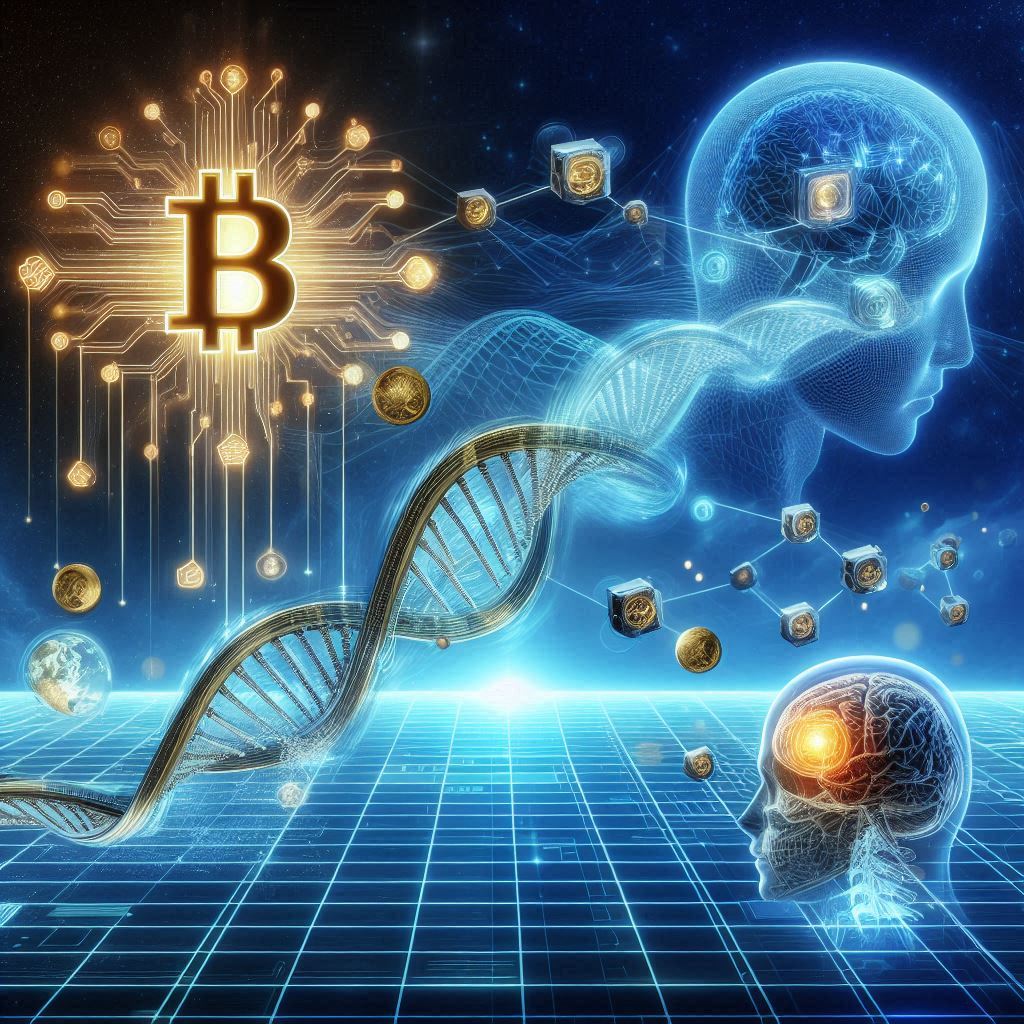
 Welcome to the 29th installment of our 100-part series, Quantum Leap, where we’ve traced cryptography’s journey from ancient ciphers in Article 1 to the resilient systems of Article 28, poised for an uncertain future. Having explored quantum threats, space-based security, and the adaptability of cryptographic design, we now turn to a transformative partner in this evolution: artificial intelligence (AI). AI is reshaping cryptography in profound ways—enhancing its design, accelerating attacks, and forging new paradigms alongside quantum technologies like quantum random number generators (Article 25) and post-quantum algorithms (Articles 5–14). This article delves into the symbiotic relationship between AI and cryptography, examining how they amplify each other’s strengths, challenge their limits, and redefine security in a quantum world. Join us as we explore this dynamic interplay, a nexus of intelligence and secrecy shaping tomorrow’s digital landscape.
AI Meets Cryptography: A Symbiotic Foundation
Artificial intelligence, with its ability to learn, reason, and optimize, intersects naturally with cryptography, a field rooted in complexity and unpredictability. This symbiosis is bidirectional: AI enhances cryptographic systems by designing stronger algorithms and detecting vulnerabilities, while cryptography secures AI’s vast data and computational processes. As of early 2025, AI’s influence spans from classical encryption to quantum-secure protocols, reflecting the resilience we explored in Article 28.
Historically, cryptography relied on human ingenuity—think the Enigma’s manual rotors (Article 2) or Diffie-Hellman’s mathematical leaps (Article 3). AI shifts this paradigm, automating and accelerating what once took years. Machine learning (ML), a subset of AI, excels at pattern recognition and optimization—skills cryptography both leverages and guards against. This duality defines their relationship: AI as a creator and a cracker, a tool and a threat.
AI as a Cryptographic Architect
One of AI’s most promising roles is designing cryptographic systems. Traditional algorithm development is slow, requiring mathematicians to prove security properties over decades (e.g., RSA’s reliance on factoring). AI compresses this timeline. In 2022, Google’s DeepMind used reinforcement learning to optimize hash functions, producing collision-resistant designs faster than human teams. By 2025, this approach has extended to post-quantum cryptography (Articles 5–14), where AI explores vast parameter spaces—say, lattice structures (Article 5)—to pinpoint quantum-resistant configurations.
AI also enhances randomness, a cryptographic bedrock. Building on Article 25’s quantum random number generators (QRNGs), AI can refine pseudo-random number generators (PRNGs). Neural networks trained on chaotic systems (Article 23) generate sequences that mimic true randomness, offering a fallback when QRNGs are impractical. This hybrid approach—AI-driven chaos layered with quantum unpredictability—bolsters resilience (Article 28) by diversifying randomness sources.
Moreover, AI optimizes efficiency. Homomorphic encryption (Article 16), which allows computation on encrypted data, is computationally intensive. AI-driven pruning techniques, like those used in neural network compression, streamline these algorithms, making them viable for real-world use—say, secure cloud computing. This symbiosis strengthens cryptography’s adaptability, aligning with Article 28’s flexibility pillar.
The Dark Side: AI as a Cryptanalytic Threat
Yet, AI’s power cuts both ways. As a cryptanalytic tool, it accelerates attacks on existing systems. Classical cryptanalysis—brute-forcing keys or exploiting patterns—benefits from AI’s speed. In 2023, researchers at MIT used a generative adversarial network (GAN) to predict AES keys from partial ciphertext, halving attack times. Against asymmetric systems like RSA, AI can’t yet factor large numbers (a quantum domain, Article 4), but it excels at side-channel attacks—analyzing power consumption or timing to infer keys—outpacing human efforts.
The quantum threat amplifies this danger. A quantum computer running Shor’s algorithm could break RSA, but pairing it with AI could optimize the process, targeting weak implementations. Grover’s algorithm, halving symmetric key strength, becomes deadlier with AI identifying high-value data to decrypt first. This synergy challenges post-quantum resilience, forcing cryptographers to anticipate AI-enhanced quantum adversaries.
AI also threatens human-centric cryptography. Phishing, a social engineering staple, evolves with AI-generated deepfakes or tailored scams, bypassing even quantum-secure systems if users falter. Resilience (Article 28) must extend beyond math to human behavior, a vulnerability AI exploits with chilling precision.
Securing AI with Cryptography
Conversely, cryptography safeguards AI’s own vulnerabilities. Training an AI model requires massive datasets—often sensitive, like medical records or financial transactions. Breaches here could expose millions. Secure multi-party computation (Article 18) lets multiple parties train models on encrypted data, preserving privacy. A 2024 pilot by IBM used this to develop an AI diagnostic tool across hospitals without sharing patient records, a cryptographic triumph.
AI’s deployment also needs protection. Models running on edge devices (e.g., smartphones) are targets for reverse-engineering. Watermarking (Article 21) embeds cryptographic signatures into AI outputs, proving authenticity, while homomorphic encryption shields inference on encrypted inputs. Blockchain (Article 19), secured by quantum-resistant hashes (Article 13), can log AI decisions, ensuring transparency—a resilience layer against tampering.
Quantum-AI Hybrids: The Next Frontier
The quantum revolution (Article 4) merges with AI in tantalizing ways. Quantum computing accelerates machine learning—quantum neural networks solve optimization problems exponentially faster than classical ones. Pairing this with QKD (Article 15) or space-based QRNGs (Article 27) creates a secure, high-speed AI ecosystem. Imagine a satellite training an AI model mid-orbit, using quantum keys to encrypt results beamed to Earth—a vision blending Articles 25, 27, and this one.
AI also aids quantum cryptography. Designing quantum protocols—like supersingular isogeny key exchange (Article 14)—involves navigating complex mathematics. AI can simulate quantum attacks, stress-testing these systems pre-deployment. A 2025 study by Oxford researchers used AI to refine QKD error correction, boosting its range by 20%. This symbiosis enhances resilience, ensuring quantum cryptography withstands real-world noise.
Resilience in the AI-Cryptography Nexus
Article 28’s resilience pillars—robustness, flexibility, recoverability—find new expression here. AI strengthens robustness by crafting unbreakable algorithms; flexibility emerges as AI adapts ciphers to emerging threats (e.g., quantum-AI hybrids); recoverability shines when AI detects breaches, triggering key rotation with QRNGs. Yet, AI’s threat potential demands counter-resilience: post-quantum systems must outpace AI-driven cryptanalysis, a race of intellect versus machine.
This nexus tests adaptability. If an AI uncovers a flaw in lattice-based cryptography (Article 5), algorithm agility (Article 28) must swap it out—fast. Hybridization, pairing AI-optimized classics with quantum tools, hedges bets. Forward secrecy, driven by AI-managed ephemeral keys, limits damage. The dance between AI and cryptography is a resilience proving ground, dynamic and relentless.
Ethical Implications: Power and Responsibility
The AI-cryptography interplay echoes Article 26’s ethical concerns. Equity falters if AI-driven cryptography—costly and complex—favors the privileged. A 2025 report warned that only 10% of small businesses use AI-secured systems, leaving them exposed to AI-powered attacks. Access must democratize, perhaps via open-source AI tools, to align with resilience’s ethical mandate.
Privacy teeters on a knife-edge. AI securing encrypted AI training (e.g., via Article 18) protects users, but AI cracking systems invades them. Governments might deploy AI-quantum hybrids for surveillance, a cosmic-scale risk (Article 27). Accountability looms: who answers if an AI-designed cipher fails—or succeeds too well, shielding malice? Cryptographers and AI developers share this burden, stewards of a dual-edged sword.
Real-World Synergies: Case Studies
Two vignettes illustrate this symbiosis:
-
The AI-Quantum Bank: In 2026, a global bank uses AI to design a post-quantum cipher, deployed via space-based QKD (Article 27). An AI-driven attack breaches a rival’s RSA, but the bank’s hybrid resilience holds, securing trillions—a tale of AI as savior and foe.
-
The Privacy Shield: A 2025 startup trains an AI healthcare model on encrypted data (Article 16), using QRNG keys (Article 25) and zero-knowledge proofs (Article 24). Hackers fail to penetrate, proving AI-cryptography’s protective power.
These cases ground the abstract, showing resilience in action.
The Future: A Unified Evolution
By 2035, AI and cryptography might fuse into a singular discipline. Quantum-AI systems could self-design ciphers, adapting in real-time to threats—imagine an AI in orbit (Article 27) tweaking lattice parameters as quantum computers advance. Cryptography becomes proactive, not reactive, a hallmark of resilience (Article 28). This evolution ties the series’ threads—quantum leaps, cosmic reach, ethical depth—into a vision of intelligence-driven security.
Conclusion: A Symbiotic Leap Forward
The symbiosis of AI and cryptography heralds a new era, where intelligence amplifies secrecy and secrecy guards intelligence. From designing quantum-secure systems to countering AI-enhanced threats, this partnership redefines resilience for a quantum future. As we close this 29th chapter, here’s an excerpt to ponder: “In the union of mind and mystery, AI and cryptography forge a future where security learns, adapts, and endures.” Next, in Article 30—Quantum Leap: Cryptography and Biology – Securing Life’s Code—we’ll explore how cryptographic principles protect and decode the secrets of biology in a quantum age.

























Liked the article