



 Dorothy Brown
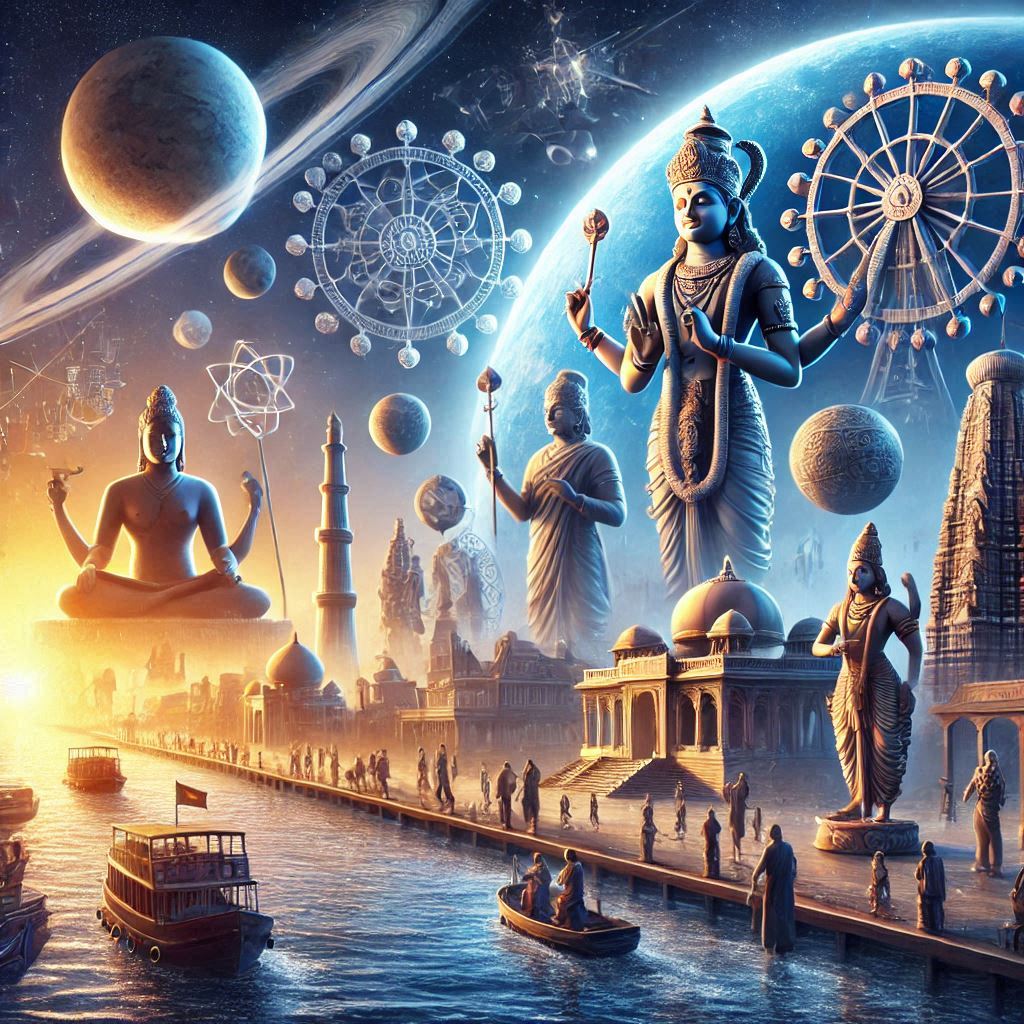
 Kia ora, friends—imagine gazing at the Milky Way from a Canterbury hill, but instead you’re in Ujjain, where an ancient observatory tracks stars with Vedic precision, or in Bengaluru, where a scientist plots orbits with a nod to rishi reckonings. This is the 42nd chapter in our 100-article journey through Bharat Is Not for Beginners, a remarkable trek that’s woven textile worlds, wandered starlit paths, tended healing hands, and much more. Now, we’re gazing into Bharat’s celestial return—its astronomical innovations and living skies—where every constellation is a taonga from ancient stargazing to modern space strides. This isn’t just about stars; it’s Bharat charting its whakapapa across the cosmos.
Bharat doesn’t dabble in stargazing—it dives in with purpose. Its astronomical kaupapa isn’t a dusty relic; it’s a vibrant hui of observation, calculation, and wonder, from Vedic yajna alignments to satellite launches, woven into a culture that’s been reading the skies since the rivers were young. This land’s a living observatory, a cosmic ticker that’s guided farmers, kings, and dreamers with a keen eye for the heavens. This isn’t for those after a quick horoscope—it’s an exploration of a civilisation that’s made its skies a remarkable legacy.
The Vedic Sky: Astronomy’s Sacred Beginnings
Let’s step back to 3000 BCE—Indus Valley folk were already carving lunar phases on seals, hinting at a knack for night skies (Article 30). But the foundation truly sets with the Vedas—1500 BCE, the Rigveda (Article 1) names nakshatras—27 lunar mansions—tying stars to yajna timings, a celestial clock blessed by homam fires (Article 32). The Vedanga Jyotisha—1200 BCE—crunches numbers: solar years at 365.25 days, lunar months pegged tight, all with a rishi’s maths (Article 20).
By 500 BCE, Aryabhatiya lands—Aryabhata clocks Earth’s spin, a Vedic spin on rta’s cosmic order (Article 35). Surya Siddhanta—400 CE—maps orbits, eclipses, and a round Earth, a yajna nod to the sun god’s dance (Article 28). This wasn’t guesswork—astronomy was jyotisha, a sacred hui linking Bharat’s pulse to its starry charts with a sharp mind and a touch of wairua.
A Whānau of Skies: Stargazing Across the Land
Bharat’s astronomy spans a diverse whānau—each region has its own shine. Ujjain’s Jantar Mantar—18th century—tracks solstices with stone dials, a Vedic hub where jyotishis still reckon time (Article 38). Down south, Kerala’s Panchaangam calendars sync stars with rice planting, a Rigveda rhythm in paddy fields (Article 36). Bengal’s nakshatra tales guide fishers, a riverbank hui with the moon (Article 30).
Rajasthan’s Jaipur observatory—1728—sizes planets with giant sextants, a desert taonga gleaming under yajna skies, while Tamil Nadu’s Agastya lore spots Sirius, a Sangam wink at the cosmos (Article 31). Kashmir’s Sharada scripts log comets, and Gujarat’s sailors eye Dhruva—the Pole Star—for trade winds (Article 15). From tribal star myths to urban scopes, Bharat’s skies are a whānau—vast, precise, and truly impressive.
Celestial Mana: Astronomy Meets Spirit
Bharat’s stars carry mana—sacred weight woven in. Nakshatras aren’t just dots—they’re devas, guiding homam rites, a Rigveda tika to cosmic kin (Article 32). Surya—the sun—gets yajna chants, a Vedic pulse syncing day to divinity, while Chandra—the moon—shapes tithi dates, a lunar hui for pujas (Article 19). Jyotisha blends star maths with fate—birth charts a rta map for life’s waka (Article 35).
Festivals hinge on it—Mak Sankranti tracks the sun’s northward trek, a yajna nod to harvest (Article 36), while Diwali’s moonless night sparks deepam lights (Article 19). Even temples—Konark’s chariot—align to solstices, a stone darshana of the skies (Article 34). Stargazing wasn’t fluff here—it was wairua, a sacred hui tying Bharat’s spirit to its celestial compass, a living nada brahma in orbit and glow (Article 33).
The Global Hui: Stars Reach Far
Bharat’s skies didn’t stay local—they stretched out. By 200 BCE, Aryabhata’s maths hit Baghdad—Arab zij tables owe a nod—while Surya Siddhanta swapped with Persia (Article 21). Gupta zero—5th century—crunched Greek orbits, a Vedic gift to the cosmos (Article 15). Brits nabbed Jantar Mantar designs—Greenwich owes a wink—while Panchaangam sailed to Bali, a star taonga gone global.
Today, it’s a worldwide hui—NZ’s stargazers use nakshatra apps in Kāpiti, a Vedic tick with a Kiwi twist. Bollywood’s in—Swades’s satellite nods ISRO (Article 25)—and Kiwi astronomers eye Aryabhata for a maths refresher. From NASA’s orbits to Nelson’s scopes, Bharat’s stars are a friend—clear, clever, and truly far-reaching, a Vedic gaze lighting the global whānau.
The Modern Rāka: Skies Keep Turning
Colonial types tried a dimming—Western clocks muscled in—but Bharat’s stars held firm. Post-1947, the waka soared—ISRO’s Aryabhata satellite—1975—orbited Earth, a rishis’ reckon gone space-age. Chandrayaan-1—2008—mapped lunar water, a Chandra hui with a modern lens, while Mars Orbiter—2014—nailed a red planet selfie on a shoestring.
Kiwi friends love it—Wellington’s got Desi jyotishis charting stars, Auckland’s planetariums nod nakshatras. It’s not a relic—it’s a live rāka, Bharat’s celestial mana turning from Vedic Jantar to urban skies, a compass that keeps spinning.
Why the Stars Stay Bright
What keeps this sky shining? Bharat’s keen on it—nanas read Panchaangam, kids swot ISRO, stargazers guard observatories like a Hurricanes ruck. It’s Vedic—nakshatras’ pulse, rta’s rhythm still hold it tapu. UNESCO’s noted it—intangible heritage—and keepers maintain it kaupapa, aligning dials in backyards, tracking orbits in labs. It’s not just stars—it’s whakapapa, a light Bharat’s followed since the rishis gazed.
Why It’s an Inspiring Yarn
Why explore Bharat’s celestial return? Because it’s an inspiring yarn—skies that guide, measure, and amaze, a remarkable tale. It’s taonga—jyotisha older than the Treaty waka, Surya with Vedic fire—and it’s alive, glowing from Kaikoura to anywhere. For us in Aotearoa, it’s a hui—check a nakshatra, watch a launch, feel Bharat’s spark. It’s not just astronomy; it’s wairua, and Bharat’s got it shining bright.
Excerpt
That’s 42 chapters in our 100-article rāka of Bharat Is Not for Beginners, and Bharat’s still soaring—from woven worlds to celestial skies, this land’s a remarkable gift. Keep your eyes up as we journey through more of its taonga. Join us tomorrow for Article 43: “Bharat Is Not for Beginners – The Warrior’s Way Returns: Bharat’s Martial Traditions and Living Strength”, where we’ll step back into the arts that forge a civilisation’s grit.