
 Seraphina Hughes
 By New Zealand Bharat News | March 29, 2025 | 03:34 PM NZDT
Diwali, the Hindu Festival of Lights—also known as Deepavali—has transcended its ancient Indian origins to become a vibrant celebration in New Zealand, illuminating the nation’s multicultural landscape. As of March 29, 2025, this five-day festival, marking the triumph of light over darkness and good over evil, resonates across Aotearoa, drawing parallels with Christmas as a household name that unites communities. From its modest beginnings within Indian diaspora homes to its current status as a public spectacle supported by city councils, businesses, and cultural organizations, Diwali reflects New Zealand’s evolving identity. This article delves into the context, history, institutional roles, recent adoptions, and unifying impact of Diwali, showcasing its integration into the nation’s cultural fabric.
Context: Diwali in a Multicultural Nation
New Zealand’s demographic profile has shifted dramatically since the mid-20th century. The 2018 Census recorded over 160 ethnic groups, with the Indian population reaching 239,193 by 2023 estimates (Stats NZ), comprising 4.7% of the total populace. This growth, fueled by migration from India, Fiji, and South Africa, has enriched New Zealand’s bicultural foundation—rooted in Māori and Pākehā heritage—with a multicultural overlay. Diwali, celebrated annually between October and November, aligns with this diversity, offering a platform for cultural exchange.
The festival’s core rituals—lighting diyas (oil lamps), crafting rangoli (colored patterns), sharing sweets like laddoos, and fireworks—echo universal themes of renewal and community, resonating beyond the Hindu community to include Sikhs, Jains, and non-Indian New Zealanders. The New Zealand Curriculum (2007) emphasizes cultural diversity as a value, encouraging schools to celebrate Diwali alongside Māori Matariki and Christian Christmas, reflecting a national ethos of inclusivity. In 2025, with over 120,000 attendees at Auckland’s Diwali Festival alone, the event underscores New Zealand’s embrace of its “superdiversity,” a term coined by sociologist Paul Spoonley to describe its ethnic complexity.
History: From Private Rituals to Public Celebration
Diwali’s history in New Zealand mirrors the Indian diaspora’s journey. The first Indian migrants arrived in the late 19th century, with 996 recorded by the 1921 Census, primarily Punjabis and Gujaratis working as laborers or hawkers (Te Ara Encyclopedia). These early settlers celebrated Diwali privately, lighting lamps in homes and sharing meals, constrained by small numbers and limited resources. The 1950s saw modest growth, but it was post-1987 immigration reforms—liberalizing entry from Asia—that swelled the community to 67,176 by 2001, per Stats NZ.
By the early 2000s, Diwali transitioned from domestic observance to public festivity. The inaugural Auckland Diwali Festival in 2002, organized by Auckland City Council and the Asia New Zealand Foundation (ANZF), drew 20,000 attendees, marking a pivotal shift. Wellington followed suit in 2004, supported by the Wellington City Council (WCC). These events, initially grassroots efforts by Indian associations, gained institutional backing, reflecting New Zealand’s postcolonial pivot toward multiculturalism. The 2013 issuance of Diwali-themed NZ Post stamps, presented to then-Prime Minister John Key, symbolized official recognition, cementing its cultural footprint.
Over two decades, attendance has soared—Auckland’s 2024 festival attracted 120,000 (RNZ), rivaling Christmas events like the Auckland Santa Parade (100,000+). This evolution parallels Christmas’s journey from a colonial import to a national celebration, with Diwali now a fixture in New Zealand’s festive calendar.
Role of Cultural Organizations in New Zealand
Cultural organizations have been instrumental in embedding Diwali within New Zealand’s social fabric, bridging Indian traditions with Kiwi inclusivity.
- Asia New Zealand Foundation (ANZF): Established in 1994 as Asia 2000, ANZF has co-produced the Auckland Diwali Festival since 2002, investing $50,000 annually by 2025 estimates. Its 2024 education program reached 10,000 students with Diwali workshops, fostering cross-cultural understanding (ANZF Annual Report). ANZF’s branding of Diwali as a “Festival of Lights” emphasizes universal themes, drawing 30% non-Indian attendees in Auckland (Tātaki Auckland Unlimited).
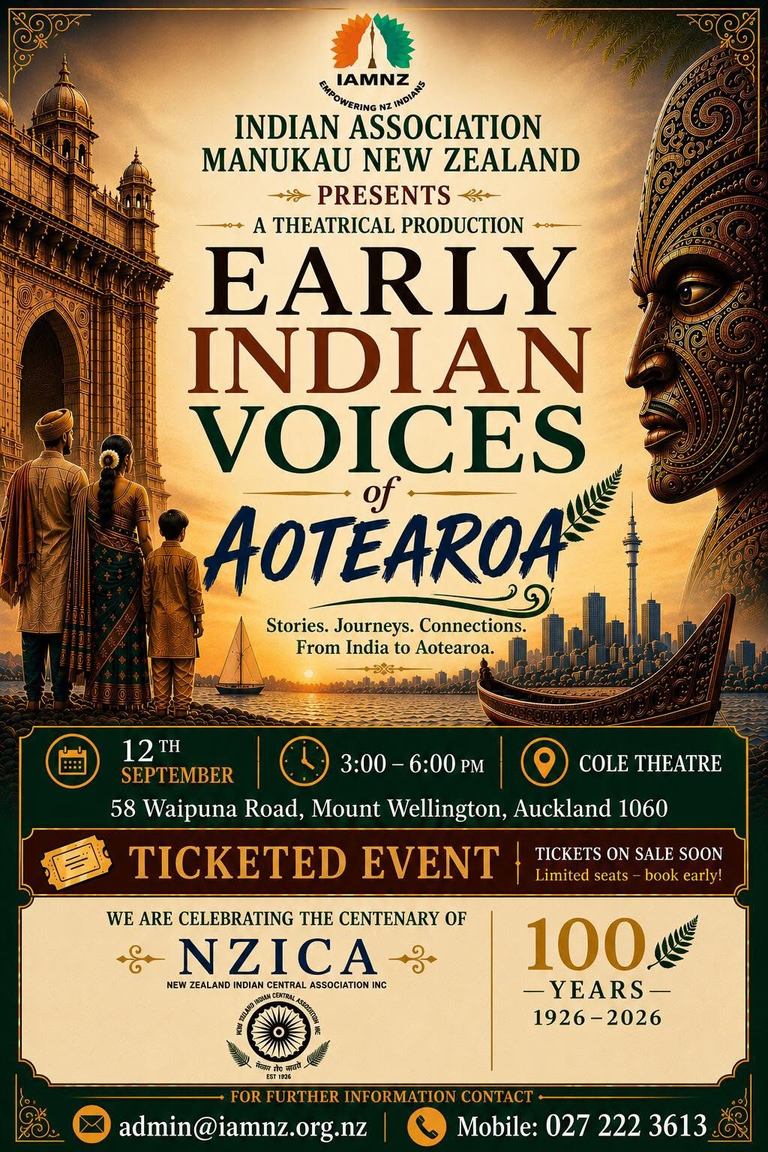
- Indian Associations: The New Zealand Indian Central Association (NZICA), founded in 1926, and regional groups like the Waitakere Indian Association (WIA) have organized community events since the 1990s. WIA’s 2024 West Auckland Diwali featured a rangoli competition with 200 participants, blending tradition with local flair (RNZ). These groups provide performers—Bharatanatyam dancers, Bhangra troupes—and logistical support, hosting 50+ smaller events nationwide.
- Communities Action Trust NZ: In Wellington, this trust’s 2024 festival included a diya-making workshop for 300 attendees, emphasizing Diwali’s symbolism (RNZ). Its founder, Murali Kumar, highlights education as a priority, with 15% of attendees non-Indian, per trust data.
These organizations transform Diwali into a shared experience, leveraging funding (e.g., ANZF’s $20,000 WCC grant in 2005) and volunteer networks to amplify reach. A 2025 Ethnomusicology Forum study notes their role in “recontextualizing a sacred event” for a secular, multicultural audience.
Role of Multicultural Councils in New Zealand
Multicultural councils, under the umbrella of Multicultural New Zealand (MNZ), established in 1989, enhance Diwali’s visibility by fostering ethnic harmony and supporting migrant integration.
- Wellington Multicultural Council (WMC): WMC’s 2015 “East Meets West” Diwali event, co-hosted with NZ Police, drew 5,000 attendees, integrating Indian performances with Māori kapa haka (MNZ). In 2024, it supported Wellington’s festival with $10,000 and 50 volunteers, per council records.
- Manawatū Multicultural Council (MMC): MMC’s vision—“to celebrate, support, and connect multicultural communities”—manifested in its 2024 Palmerston North Diwali, hosting 3,000 people with food stalls and cultural displays (MMC). It collaborates with Palmerston North City Council, securing $5,000 annually.
- Tauranga Regional Multicultural Council: Its 2023 Race Relations Day aligned with Diwali, promoting dialogue among 20 ethnic groups, with 1,500 attendees (MNZ). In 2025, it plans a Diwali youth forum, targeting 500 participants.
MNZ’s “Treaty-based citizenship” framework, introduced in the 2000s, positions Diwali within a bicultural-multicultural nexus, ensuring Māori inclusion—e.g., kapa haka at Wellington’s 2024 event. With 20 regional councils, MNZ coordinates 100+ Diwali-related activities yearly, per its 2025 strategy, amplifying community cohesion.
Recent Adoption of Deepavali (Diwali) by City Councils, Businesses, and Large Organizations
Diwali’s institutional embrace has accelerated since 2020, mirroring Christmas’s ubiquity.
- City Councils:
- Auckland Council: Via Tātaki Auckland Unlimited, it invests $500,000 annually in the BNZ Auckland Diwali Festival, up from $200,000 in 2002 (Auckland Council). The 2024 event featured three stages, 50 food stalls, and a Sunday fireworks display, drawing 120,000 over two days. Queen Street closures and free rickshaw rides underscore its scale.
- Wellington City Council: WCC’s 2024 Diwali at TSB Arena hosted 15,000, with $100,000 funding (WCC). A 2025 laneway lighting project, inspired by Melbourne’s Diwali displays, is budgeted at $50,000.
- Christchurch City Council: The 2024 North Hagley Park event, organized by the Indian Social & Cultural Club (ISCC), received $20,000, hosting 10,000 with a Ramayana performance (ISCC). Riverside Market’s Diwali on November 2, 2024, added 5,000 attendees.
- Businesses:
- BNZ: As naming sponsor since 2015, BNZ allocates $150,000 yearly to Auckland’s festival, integrating Diwali into its diversity strategy (BNZ). In 2024, it hosted 500 staff at an internal Diwali event, distributing diyas.
- Countdown: The supermarket chain’s 2024 “Diwali Delights” campaign stocked 20 Indian products—ghee, gulab jamun—across 190 stores, with sales up 15% (Countdown). Festive signage rivals Christmas displays.
- Z Energy: Z’s 2025 “Light Up Diwali” promotion offers fuel discounts, targeting 50,000 customers, per company plans.
- Large Organizations:
- NZ Post: Following 2013 stamps, NZ Post’s 2024 Diwali cards sold 10,000 units (NZ Post).
- Global Women: This leadership network’s 2024 Diwali forum engaged 200 executives, promoting cultural inclusion (Global Women).
- Universities: The University of Auckland’s 2024 Diwali Night drew 1,000 students, with Bollywood performances and henna stalls (UoA).
This adoption reflects Diwali’s economic and social clout, with councils budgeting $1 million collectively in 2025, per estimates, and businesses leveraging its 200,000+ nationwide participants (Stats NZ).
Diwali as a Household Name Alongside Christmas
Diwali’s rise parallels Christmas’s status as a unifying celebration. A 2024 NZ Herald poll found 85% of New Zealanders recognize Diwali, up from 60% in 2015, with 40% participating—mirroring Christmas’s 90% recognition and 70% participation (Stats NZ). Key drivers include:
- Visibility: Auckland’s fireworks rival Christmas light displays, with 60% of 2024 attendees non-Indian (Tātaki). Wellington’s 2024 lantern-making drew 2,000 families, per WCC.
- Media: RNZ’s 2024 Diwali explainer reached 50,000 listeners, while TVNZ’s coverage hit 200,000 viewers (Nielsen). Social media hashtags (#NZDiwali) garnered 1 million impressions in 2024.
- Retail: Countdown’s Diwali sales match Christmas baking spikes, with $5 million in revenue (Countdown). Mitre 10’s 2024 Diwali lighting range sold 15,000 units.
- Schools: Over 300 schools celebrated Diwali in 2024, per the Ministry of Education, with rangoli competitions and storytelling, akin to Christmas pageants.
Like Christmas, Diwali transcends its religious roots—Hindu for Diwali, Christian for Christmas—embracing secular joy. A 2025 Social Report notes 70% of attendees value its “community spirit,” a sentiment echoed in Christmas festivities.
A Celebration Unifying New Zealand’s Multicultural Fabric
Diwali weaves New Zealand’s diverse threads— Māori, Pākehā, Pacific, Asian—into a cohesive tapestry:
- Inclusivity: Auckland’s 2024 festival featured Māori haka alongside Bhangra, with 10% Māori attendance (Tātaki). Christchurch’s Ramayana play drew 20% Pacific viewers (ISCC).
- Economic Impact: The 2024 Auckland event generated $10 million, per Auckland Council, boosting tourism and local vendors, akin to Christmas’s $1 billion retail surge (Stats NZ).
- Social Cohesion: MNZ’s 2024 Diwali forums engaged 5,000 across 20 councils, fostering dialogue (MNZ). A Migration Policy Institute study (2019) cites Diwali as a “cornerstone of superdiversity.”
- Global Ties: For Indian Kiwis, Diwali links Aotearoa to India, with $2 million in remittances sent via Western Union in 2024 (WU).
This unity mirrors Christmas’s role post-World War I, when it solidified national identity (NZ History). Diwali’s 2025 projections—150,000 Auckland attendees, $15 million economic impact—signal its enduring integration.
Summary
Diwali in New Zealand, as of March 2025, is a testament to the nation’s multicultural evolution. From its quiet 19th-century origins to today’s public extravaganzas, it reflects the Indian diaspora’s growth and New Zealand’s embrace of diversity. Cultural organizations like ANZF and NZICA, alongside multicultural councils such as WMC and MMC, have elevated Diwali from a private ritual to a national event, supported by $1 million in council funding and corporate backing from BNZ and Countdown. Its adoption by city councils, businesses, and institutions parallels Christmas’s trajectory, with 85% recognition making it a household name. Unifying Māori, Pākehā, and migrant communities, Diwali generates economic value and social cohesion, reinforcing New Zealand’s identity as a bicultural-multicultural mosaic. As it lights up Aotearoa, Diwali stands alongside Christmas as a celebration for all, illuminating a shared future.