







 Vinay Karanam
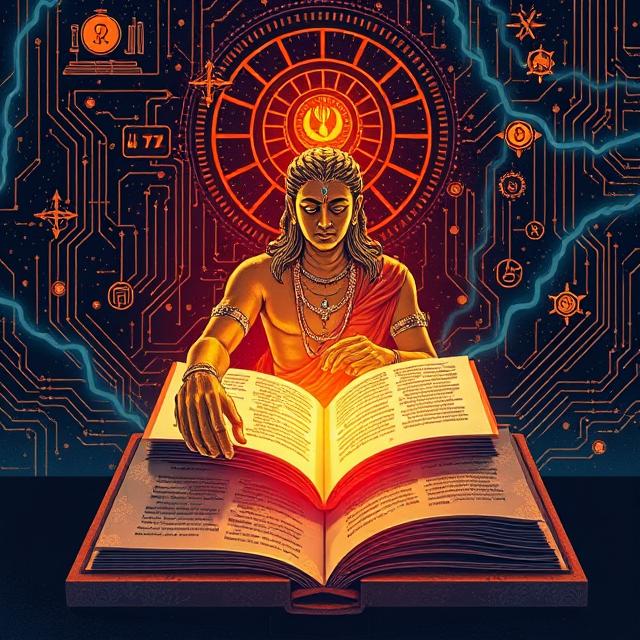
 In an era where cybersecurity is paramount to protect digital assets, the ancient Vedic scriptures—Rigveda, Yajurveda, Samaveda, Atharvaveda, Upanishads, and Puranas—offer a surprising reservoir of wisdom. These texts, composed over 30,000 years ago, preserved profound spiritual and cosmological knowledge with remarkable fidelity, using methods that align with modern cybersecurity principles: authenticity (ensuring the source is genuine), integrity (preventing unauthorized alterations), confidentiality (restricting access to intended recipients), and non-repudiation (verifying the origin and transmission). The Vedas, far from being mere religious texts, employed intricate mechanisms—oral transmission, ritual safeguards, and philosophical frameworks—to protect their sanctity, akin to a cryptographic “time capsule.” This article explores these Vedic cybersecurity measures, their parallels with modern cryptography, and creative lessons for today’s cryptographers, weaving in Puranic episodes, Vedic cosmology, and scientific concepts to argue that the Vedas offer timeless strategies for safeguarding truth in the digital age.
Vedic Scriptures: A Knowledge Preservation System
The Vedic scriptures, encompassing the four Vedas, Upanishads, Brahmasutras, and Puranas like the Bhagavata Purana, are a vast repository of spiritual, philosophical, and cosmological insights. Transmitted orally for millennia before being written, they maintained their purity through rigorous mechanisms, reflecting a proto-cybersecurity framework.
Core Vedic Principles for Knowledge Protection
- Authenticity: Ensuring knowledge comes from a legitimate source (rishi or divine revelation).
- Integrity: Preventing additions, deletions, or alterations to the original text.
- Confidentiality: Restricting sacred teachings to qualified recipients (adhikari).
- Non-Repudiation: Verifying the chain of transmission to prevent denial of origin.
- Availability: Ensuring knowledge endures across generations, resilient to loss.
- Redundancy and Fault Tolerance: Using multiple lineages and rituals to preserve texts.
These principles, embedded in Vedic practices, mirror the CIA triad (Confidentiality, Integrity, Availability) and additional cryptographic goals, offering a model for secure knowledge transmission.
Vedic Context
The Vedas were revealed to rishis in meditative states, considered apaurusheya (authorless, divine). Their preservation relied on oral traditions (shruti), ritual disciplines, and philosophical safeguards, ensuring their sanctity across yugas. The Bhagavata Purana and Upanishads further contextualize these methods, aligning them with cosmic truths.
Modern Cybersecurity Principles
Modern cybersecurity protects data using cryptographic techniques, ensuring secure communication and storage. Key principles include:
- Authenticity: Verifying the source, e.g., digital signatures using public-key cryptography (RSA, ECDSA).
- Integrity: Ensuring data remains unchanged, e.g., cryptographic hashing (SHA-256).
- Confidentiality: Restricting access, e.g., encryption (AES-256).
- Non-Repudiation: Proving origin and receipt, e.g., timestamped signatures.
- Availability: Ensuring access despite attacks, e.g., distributed systems and backups.
- Fault Tolerance: Redundancy to recover from failures, e.g., RAID or blockchain.
These align with Vedic methods, suggesting ancient sages intuited principles now formalized in mathematics and computing.
Vedic Cybersecurity Measures: Mechanisms and Parallels
The Vedas employed sophisticated strategies to protect knowledge, paralleling modern cryptographic techniques. Below are key mechanisms, their cybersecurity analogs, and Puranic/Vedic episodes illustrating their application.
1. Authenticity: Ensuring Divine Origin
Vedic Mechanism: The Vedas’ authenticity was rooted in their apaurusheya nature, revealed to rishis like Vasishta and Vishvamitra in divine communion. The guru-shishya parampara (teacher-disciple lineage) ensured transmission from authentic sources, with shakhas (Vedic schools) like Shaunaka and Pippalada verifying recitations. The Rigveda (1.1.1) invokes Agni as the witness to truth, symbolizing divine validation.
Episode: In the Bhagavata Purana (Canto 1, Ch. 4), Vyasa compiles the Vedas, entrusting them to disciples like Paila and Vaishampayana, ensuring authentic transmission. His divine vision (divya drishti) authenticates the source, akin to a cryptographic certificate authority.
Modern Parallel: Digital signatures use asymmetric cryptography (e.g., RSA:
mdmod nm^d \mod nm^d \mod n) to verify a sender’s identity. The guru-shishya lineage acts like a public key infrastructure (PKI), with rishis as trusted authorities. The Vedic emphasis on satyam (truth) mirrors blockchain’s immutable ledger, ensuring source verifiability.
Creative Insight: Modern cryptographers can learn from the Vedic trust model—lineages as decentralized networks, where authenticity is crowd-verified by shakhas, akin to blockchain consensus (e.g., Proof of Stake). A “Vedic PKI” could inspire distributed trust systems, reducing reliance on centralized authorities.
2. Integrity: Preserving the Original Text
Vedic Mechanism: The Vedas’ oral transmission used mnemonic techniques—pada (word-by-word), krama (sequential), and ghana (complex permutations)—to prevent alterations. Errors were corrected through cross-verification by multiple reciters. The Taittiriya Upanishad (1.2) emphasizes precise pronunciation (shiksha), ensuring phonetic integrity.
Episode: In the Shiva Purana (Vidyeshvara Samhita, Ch. 5), sages preserve Vedic mantras during pralaya by reciting them in meditative states, safeguarding their purity. This reflects a checksum-like process, detecting deviations.
Modern Parallel: Cryptographic hashing (e.g., SHA-256:
h=H(m)h = H(m)h = H(m)) ensures data integrity by producing a fixed-length digest, detecting any alteration. Vedic recitation patterns mirror hash functions—unique outputs (mantras) for specific inputs (texts). The shakha system resembles distributed hash tables, cross-verifying data.
Creative Insight: Vedic mnemonic permutations suggest a “hash chain” model, where each recitation links to the previous, like blockchain’s sequential blocks. Cryptographers could develop adaptive hash algorithms inspired by ghana’s complexity, enhancing resistance to tampering in dynamic networks.
3. Confidentiality: Restricting Access to the Qualified
Vedic Mechanism: Sacred knowledge was imparted only to adhikari (qualified disciples) after rigorous initiation (diksha). The Chandogya Upanishad (3.11.5) restricts Brahmavidya to those with shuddha chitta (pure mind), using sampradaya (tradition) as a gatekeeper. Mantras were taught in secluded settings, ensuring confidentiality.
Episode: In the Bhagavata Purana (Canto 11, Ch. 9), Krishna imparts the Uddhava Gita to Uddhava alone, emphasizing selective transmission. This mirrors a cryptographic key exchange, ensuring only the intended recipient accesses wisdom.
Modern Parallel: Encryption (e.g., AES-256) restricts data to authorized users via keys. The guru-shishya initiation resembles symmetric key exchange (e.g., Diffie-Hellman), where trust is established. Vedic sampradaya parallels access control lists, limiting knowledge to verified recipients.
Creative Insight: The Vedic diksha model suggests “spiritual encryption”—keys tied to mental purity, not just credentials. Cryptographers could explore biometric or cognitive-based encryption, where access requires emotional or ethical states, enhancing security with human-centric protocols.
4. Non-Repudiation: Verifying Transmission
Vedic Mechanism: The guru-shishya chain ensured non-repudiation, with each teacher accountable for accurate transmission. The Mundaka Upanishad (1.2.12) mandates learning from a guru who “knows the truth,” preventing denial of origin. Rituals like Veda Pathana in assemblies verified recitations publicly.
Episode: In the Bhagavata Purana (Canto 1, Ch. 7), Suta narrates to sages at Naimisharanya, affirming Vyasa’s teachings, with listeners validating authenticity. This public attestation mirrors a digital signature’s verifiability.
Modern Parallel: Digital signatures (e.g., ECDSA) ensure a sender cannot deny sending a message, verified by public keys. Vedic assemblies act like timestamped ledgers, recording transmissions, akin to blockchain’s non-repudiable transactions.
Creative Insight: Vedic public recitations suggest a “crowd-sourced non-repudiation” model. Cryptographers could develop protocols where communities verify transactions, like a decentralized notary system, inspired by Veda Pathana’s collective validation.
5. Availability: Ensuring Enduring Access
Vedic Mechanism: The Vedas’ oral tradition, spread across shakhas and regions, ensured availability despite invasions or calamities. The Atharvaveda (19.72) praises scribes and reciters as guardians, while yajnas reinforced memorization. Texts like the Brahmasutras were debated to keep knowledge alive.
Episode: In the Vishnu Purana (3.4), Vyasa divides the Vedas among disciples to preserve them through Kali Yuga, ensuring redundancy. This mirrors a distributed database, safeguarding knowledge.
Modern Parallel: Distributed systems (e.g., cloud storage, BitTorrent) ensure data availability via redundancy. Blockchain’s decentralized nodes, storing identical ledgers, parallel shakha networks, preserving texts across lineages.
Creative Insight: Vedic shakha redundancy suggests a “cultural blockchain” model, where knowledge is stored across global communities. Cryptographers could design resilient storage systems inspired by this, using cultural incentives to maintain data, enhancing availability in crisis.
6. Fault Tolerance and Redundancy
Vedic Mechanism: Multiple shakhas (e.g., Kanva, Madhyandina) and recitation styles ensured fault tolerance. Errors in one lineage were corrected by cross-referencing others. The Taittiriya Samhita (1.1) emphasizes collective recitation to detect faults.
Episode: In the Bhagavata Purana (Canto 12, Ch. 6), Suka narrates to Parikshit, with sages cross-verifying, ensuring accuracy. This mirrors error-correcting codes in data transmission.
Modern Parallel: Error-correcting codes (e.g., Hamming codes) and RAID systems use redundancy to recover data. Vedic cross-verification resembles parity checks, detecting and correcting errors in transmission.
Creative Insight: Vedic shakha cross-referencing suggests a “self-healing” cryptographic model. Cryptographers could develop algorithms that auto-correct data by polling distributed nodes, inspired by collective recitation, enhancing fault tolerance in IoT networks.
Puranic and Vedic Episodes: Cybersecurity in Action
Key episodes illustrate Vedic cybersecurity, offering lessons for modern cryptographers.
Bhagavata Purana: Vyasa’s Compilation (Canto 1, Ch. 4–5)
Vyasa, divinely inspired, compiles the Vedas, entrusting them to disciples like Paila (Rigveda) and Jaimini (Samaveda). This ensures authenticity (divine source), integrity (structured division), and availability (multiple custodians), with sampradaya ensuring confidentiality.
Lesson: Vyasa’s model suggests a decentralized cryptographic framework, where data is segmented and distributed, like sharding in blockchain (e.g., Ethereum). Cryptographers can design systems where trust is spread across nodes, preventing single-point failures.
Chandogya Upanishad: Satyakama’s Initiation (4.4–4.9)
Satyakama Jabala, proving his purity, receives Brahmavidya from Gautama, ensuring confidentiality (adhikari qualification) and authenticity (guru’s validation). His truthful declaration secures access, like a cryptographic key.
Lesson: Satyakama’s initiation inspires “trust-based encryption,” where access requires ethical or cognitive verification. Cryptographers could explore AI-driven access controls, assessing user intent, enhancing security with Vedic ethics.
Rigveda: Agni as Witness (1.1.1)
The Rigveda invokes Agni as the divine witness to Vedic hymns, ensuring non-repudiation. Recitations in yajnas were publicly verified, preventing denial of transmission.
Lesson: Agni’s role suggests a “cosmic notary” model. Cryptographers could develop public verification protocols, like timestamped blockchains, where transactions are witnessed by networks, ensuring non-repudiation.
Mahabharata: Yajnavalkya’s Preservation (Shanti Parva, Ch. 318)
Yajnavalkya, preserving Yajurveda amidst Vedic decline, trains disciples in multiple shakhas, ensuring redundancy and fault tolerance. His debates verify integrity, correcting deviations.
Lesson: Yajnavalkya’s redundancy inspires “Vedic RAID” systems. Cryptographers could design storage solutions with adaptive redundancy, dynamically correcting errors, enhancing data resilience.
Scientific Parallels: Vedic Wisdom and Cryptography
Vedic cybersecurity aligns with modern cryptographic principles, offering creative insights.
Hashing and Mnemonic Patterns
Vedic recitation styles (ghana, krama) produce unique patterns, like hash functions generating fixed digests. SHA-256’s collision resistance mirrors shiksha’s precision, ensuring no two mantras yield the same output unless identical.
Insight: Cryptographers could develop “pattern-based hashing” inspired by ghana, using complex permutations to enhance security, thwarting brute-force attacks.
Encryption and Diksha
Diksha’s selective transmission resembles encryption, with adhikari as keyholders. AES-256’s key-based access parallels sampradaya’s trust model, restricting knowledge to the qualified.
Insight: A “Vedic encryption” model could tie keys to cognitive states, using brainwave or emotional data, aligning security with spiritual purity.
Blockchain and Shakha Networks
Shakha’s decentralized preservation mirrors blockchain’s distributed ledger, with nodes (reciters) maintaining consensus. Bitcoin’s Proof of Work parallels collective recitation’s effort-based validation.
Insight: A “Vedic blockchain” could use cultural or ritual incentives for consensus, enhancing network resilience in community-driven systems.
Quantum Cryptography and Brahman
Advaita’s Brahman—unified consciousness—resonates with quantum cryptography’s entanglement-based security (e.g., BB84 protocol). The Bhagavata Purana’s Krishna unifying brahmandas (10.8.37) mirrors entangled states ensuring secure communication.
Insight: Vedic unity suggests quantum-inspired protocols leveraging non-locality, enhancing security beyond classical limits.
Philosophical Alignment: Truth as Security
The Vedas’ cybersecurity reflects philosophical principles, aligning with cryptography’s goals.
Satyam as Authenticity
The Vedic emphasis on satyam (truth), as in Rigveda (1.1.1), ensures authentic sources, like digital signatures verifying identity. Brahman’s truth, per Chandogya Upanishad (6.2.1), is the ultimate certificate authority.
Dharma as Integrity
Dharma’s order, per Bhagavata Purana (1.2.6), preserves knowledge’s purity, like hashing’s tamper-proof digests. Maya’s illusion, dispelled by jnana, mirrors data corruption corrected by verification.
Sampradaya as Confidentiality
Sampradaya’s gatekeeping, per Mundaka Upanishad (1.2.12), restricts access, like encryption’s key-based security. Adhikari qualification ensures knowledge’s sanctity, akin to access control.
Parampara as Non-Repudiation
The guru-shishya parampara, per Taittiriya Upanishad (1.1), ensures verifiable transmission, like blockchain’s immutable records. Public yajnas mirror timestamped ledgers, preventing denial.
Narasimha Jayanti 2025: A Cybersecurity Celebration
While Narasimha Jayanti (May 12, 2025) celebrates Vishnu’s protective power, its themes of truth triumphing over falsehood resonate with Vedic cybersecurity. Rituals like chanting Narasimha Kavacha invoke divine protection, akin to securing knowledge. Temples like Ahobilam may recite Bhagavata Purana (Canto 7), reflecting Vyasa’s preservation, aligning with authenticity and integrity.
Lessons for Modern Cryptographers
The Vedas’ time capsule offers creative lessons:
- Decentralized Trust: Shakha networks suggest crowd-sourced authentication, enhancing blockchain resilience.
- Pattern-Based Security: Mnemonic permutations inspire complex hashing, thwarting attacks.
- Cognitive Encryption: Diksha’s purity-based access suggests biometric or emotional keys.
- Self-Healing Systems: Cross-verification inspires error-correcting protocols for IoT.
- Cultural Consensus: Yajna’s public validation suggests community-driven non-repudiation.
Conclusion: The Vedic Cipher
Vedic scriptures, from Rigveda to Bhagavata Purana, encode cybersecurity measures—authenticity (parampara), integrity (shiksha), confidentiality (diksha), non-repudiation (yajna), and more—preserving truth across millennia. These align with modern cryptography’s hashing, encryption, and blockchain, offering lessons for cryptographers: decentralized trust, pattern-based security, and cognitive keys. Celebrated indirectly through festivals like Narasimha Jayanti 2025, the Vedas’ time capsule unveils a cosmic cipher—safeguarding truth as Brahman’s eternal satyam.

























Very good