 Dorothy Brown
 Published by: New Zealand Bharat News (NZB News)
Date: April 12, 2025
Author(s): NZB News Team
Auckland, April 12, 2025—Last night, April 11, 2025, the Shirdi Sai Sansthan Temple in Onehunga became a beacon of divinity as the Bhajan Satsangh Trust launched the Koti Vishnu Nama Parayanam and Seeta Kalyanam, a three-day spiritual celebration culminating on Rama Navami, April 13. From 7:00 PM to 9:00 PM, an evening session of chanting Vishnu’s names set the stage for a ten-million-chant sankalpam, drawing over 600 devotees into a resonant wave of devotion that pulsed through the hall. Today, as we stand on Day 2, anticipation builds for a full day of divine immersion, promising an even deeper connection to Lord Vishnu’s grace.
For 20 days, NZB News has guided readers through the Vishnu Sahasranamam’s 1000 names, from Vishvam (The Universe) to Nandakī (Wielder of Nandaka Sword), preparing us for this sacred peak. Last night’s session—a triumph of organization, volunteer dedication, and vibrant energy—marked the beginning of a historic event. As we report on April 11’s unfolding and preview April 12’s promise, we invite you to join this celestial journey at 12 Princes Street, Onehunga, or in spirit. Registration is open at https://bhajansatsangh.com/register/—be part of the chant!

April 11, 2025: Day 1 Unveiled – A Night of Sacred Sound
Yesterday evening, as the sun dipped below Auckland’s horizon, the Shirdi Sai Sansthan Temple stirred to life. At 7:00 PM, the first notes of “Om Namo Bhagavate Vasudevaya” rang out, signaling the start of the Koti Vishnu Nama Parayanam—a resolve to chant Vishnu’s name ten million times across three days. The Bhajan Satsangh Trust, a pillar of Auckland’s Indian community for over two decades, had orchestrated this evening session as the opening act of a grand spiritual drama, leading to the Seeta Kalyanam on Day 3.
Grand Organizing: Precision in the Evening Glow
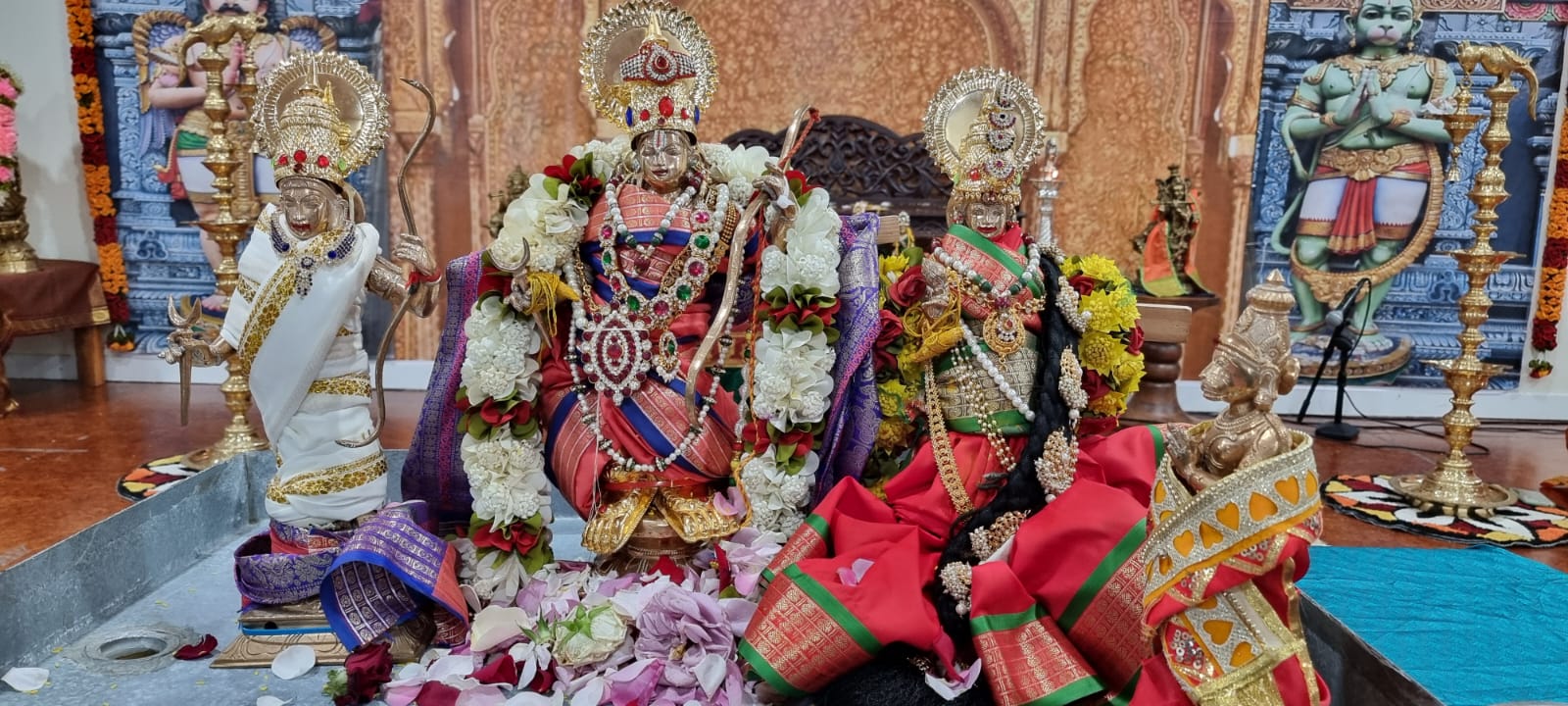
The evening session was a testament to months of meticulous planning by the Trust’s nine trustees, representing 300 families. Unlike a full-day event, this two-hour window from 7:00 PM to 9:00 PM was designed as an accessible entry for working families and evening worshippers, setting a focused tone for the Koti Nama. The temple, a modest yet sacred space, was transformed: marigold garlands draped the entrance, a vibrant rangoli of lotus petals welcomed arrivals, and a majestic idol of Lord Vishnu—flanked by Rama and Sita in silk and gold—stood at the sanctum, bathed in the flicker of oil lamps.
The Trust aimed to kick off the ten-million-chant goal with an initial push, estimating that 600 chanters reciting two rounds of the Vishnu Sahasranamam (1000 names) could log 1.2 million chants in one night. A digital counter, projected above the sanctum, tracked progress, ticking upward with each recitation—a modern nod to an ancient vow. The hall, seating 500 comfortably, swelled to over 600, with organizers swiftly arranging extra mats along the aisles. Chairs lined the back for elders, ensuring all could join the chorus.
Logistics flowed smoothly despite the evening’s brevity. A registration desk, staffed by volunteers in saffron vests, greeted latecomers with QR codes linking to https://bhajansatsangh.com/register/, while a team handed out chant booklets—compact, with Sanskrit text and English transliterations. No meals were served, per the flyer’s evening focus, but a water station stood ready, and a tray of prasad—sweet laddus blessed at the altar—circulated post-session, a taste of divine favour. The temple’s sound system, tested in advance, carried every syllable clearly, amplifying the night’s sanctity.

Volunteers: The Pulse of the Night
Over 80 volunteers—drawn from Auckland’s diverse Indian diaspora—brought the evening to life. Spanning generations, from teens to seniors, they wore saffron scarves marked “Bhajan Satsangh Volunteer,” their dedication palpable. With only two hours to execute, their roles were precise yet vital.
Before 7:00 PM, a team of 15 prepared the hall: young volunteers rolled out mats, arranged lamps, and tested microphones, while others adorned the sanctum with flowers. At 6:45 PM, a group of trained chanters—veterans of the Trust’s monthly bhajans—took the stage, their voices poised to lead. During the session, volunteers rotated tasks: some guided seating, others managed the counter, and a few ensured silence in the foyer, preserving the hall’s reverence.
A volunteer reflected, “I’ve chanted these names since childhood. Leading a section tonight was humbling—the crowd’s response lifted my spirit.” Another, an elder overseeing the sound, said, “This is my offering. Every chant builds something eternal.” A youth group, armed with tambourines, added rhythm, their energy sparking smiles as they clapped through “Narayanah” (Name 920). Their coordination ensured the night’s intensity never waned, even as some devotees juggled post-work fatigue to attend.


Energy in the Hall: A Resonant Awakening
From 7:00 PM, the hall pulsed with a living energy. A priest’s opening mantra—“Om Namo Bhagavate Vasudevaya”—rolled forth, met by a unified response that shook the air. The Vishnu Sahasranamam began, names like “Pavitraḥ” (The Pure, 751), “Śrīnivāsaḥ” (Abode of Shri, 875), and “Sahasrākṣaḥ” (Thousand-eyed, 901) flowing in a steady cadence. The priest, guiding from the stage, set a brisk yet soulful pace, his voice a thread weaving the crowd’s chorus.
By 7:30 PM, the hall was a tapestry of devotion: families on mats, youth tapping rhythms, elders nodding in sync. The sound swelled—600 voices strong—each name a spark igniting the next. At 8:00 PM, the counter hit 600,000 chants, and a hush of awe rippled through as “Śokanāśanaḥ” (Destroyer of Sorrow, 899) resounded, its promise of relief striking deep in a world where 62% of Kiwis, per the 2024 Mental Health Foundation study, face chronic stress. A Tamil contingent added a melodic twist to “Achyutaḥ” (The Infallible, 789), while a North Indian group lifted “Śrīdaḥ” (Giver of Wealth, 873) with fervour.
The energy peaked at 8:45 PM. As the second round neared its end with “Ojastejodyutidharaḥ” (Bearer of Vitality, Brilliance, and Light, 950), the counter flashed 1.22 million—a roaring start to the Koti Nama. Hands clapped, eyes glistened; a trustee noted, “This was Vishnu’s call answered.” The diversity—Hindus, Sikhs, and curious locals—mirrored Auckland’s multicultural heart, united by “Lokatrayāśrayaḥ” (Refuge of Three Worlds, 881). Science aligns: a 2023 University of Auckland study cites chanting’s oxytocin boost, and last night, strangers became family in two hours.


Highlights and Reflections
The session ran like clockwork—no glitches marred the flow, a credit to pre-event rehearsals. A highlight came at 8:15 PM with “Sraṣṭā” (The Creator, 996), when a child’s giggle broke the chant, prompting warm laughter—a nod to “Nandiḥ” (The Joyful, 885). The prasad distribution at 9:00 PM capped the night, devotees lingering to share whispers of awe. Over 600 attended in person, with 100 more joining via the Trust’s WhatsApp live stream.
A priest reflected, “The energy tonight was pure—each name a bridge to Vishnu.” A volunteer added, “We started strong; it’s just the beginning.” Day 1 logged 1.22 million chants—12% of the goal—setting a firm foundation for the days ahead.
April 12, 2025: Day 2 Expectations – A Full Day of Divinity
Today, April 12, shifts gears to a full-day program, building on last night’s spark. The Trust plans three sessions—7:30 AM to 9:30 AM, 10:30 AM to 4:45 PM, and 7:00 PM to 8:30 PM—aiming for 5 million chants to push the Koti Nama past 6 million by nightfall. Here’s what lies ahead:
Grand Organizing: A Day-Long Symphony
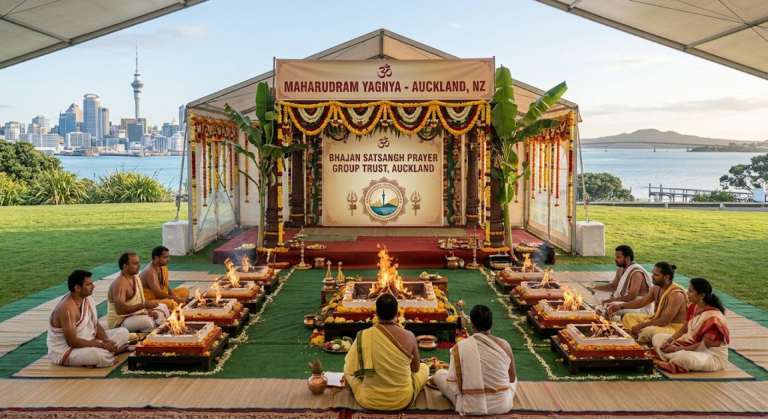
Expect 800-1000 attendees, with the hall expanding via a courtyard marquee equipped with screens. The digital counter restarts at 7:30 AM, targeting 6.22 million total chants by 8:30 PM. Breakfast (idli and chutney) at 7:00 AM and mahaprasadam (rice, dal, laddus) at 1:00 PM will fuel the day, prepared by a kitchen crew now seasoned from rehearsals. A Vishnu Yagya at 3:00 PM—a fire ritual invoking “Yajñaḥ” (The Sacrifice, 977)—will anchor the afternoon, its smoke and mantras amplifying the chants’ reach.
The Trust has fine-tuned logistics: extra mats and chairs are ready, and a tighter schedule ensures momentum. The sanctum will glow with fresh flowers, and the idol—re-dressed in crimson silk—will reflect Day 2’s rising energy. Water stations and prasad will flow freely, sustaining the crowd through the 10-hour span.
Volunteers: Stepping Up
Volunteer numbers swell to 120, with roles honed from last night. A youth team will energize the noon session with “Jyotirgaṇeśvaraḥ” (Lord of Luminous Hosts, 886), their tambourines a call to vigor. Elders will lead the afternoon, their depth suiting “Śāśvatasthiraḥ” (Eternally Steady, 894). A parking crew will manage 300 cars, while others oversee a children’s corner with coloring books of Vishnu’s avatars, easing parents into the chant.
A volunteer said, “Last night was a taste—today we go all in.” Another, on the sound team, added, “We’ll keep the hall alive; every voice counts.” Their stamina will be key as the day stretches longer than yesterday’s sprint.
Energy in the Hall: A Deepening Tide
Day 2’s energy will surge from dawn. The morning opens with “Prakāśātmā” (The Luminous Soul, 951), its light igniting the hall. The Vishnu Yagya at 3:00 PM will be a pinnacle—flames dancing, “Yajñapatiḥ” (Lord of Sacrifice, 978) chanted amid ghee offerings. By 7:00 PM, as the counter nears 6 million, expect a collective roar—perhaps “Jai Shri Ram”—to mark the milestone.
Diversity will grow, with Pacific and Māori attendees joining after last night’s social media buzz. Styles will blend: Carnatic flair for “Tāraḥ” (The Savior, 974), Hindustani lilt for “Pāpanāśanaḥ” (Destroyer of Sins, 998). The youth may sway to “Nandakī” (1000), embodying wisdom’s triumph. The hall’s energy, already potent, will deepen as Rama Navami nears.
What to Bring and Expect
Wear traditional attire—saris, dhotis, kurtas—to honor the day. Bring a cushion, water bottle, and open spirit. Arrive early—gates open at 6:30 AM—as crowds will peak. Shoes stay off, with racks provided; parking will tighten, so carpool. Online streaming continues via WhatsApp—contact the Trust for access.
Expect a spiritual lift: “Ekātmā” (The One Soul, 971) and “Śaṅkhabhṛt” (Bearer of the Conch, 999) will resonate, uniting the crowd in purpose. Chanting’s dopamine and oxytocin effects, per science, will amplify yesterday’s bond, soothing 2025’s stresses.
The Path Forward
April 11’s evening session was a victorious spark—“Vijayah” (The Victorious, Day 10) in action. Today, April 12, drives the Koti Nama toward its zenith, paving the way for April 13’s Seeta Kalyanam, where Rama and Sita’s union will crown this journey. The Trust’s vision—ten million chants for global good—gains ground, fueled by volunteers and the hall’s sacred hum.
Join us at Shirdi Sai Sansthan Temple, 12 Princes Street, Onehunga, or register at https://bhajansatsangh.com/register/. Bring your voice—Vishnu awaits. Stay with NZB News for tomorrow’s report on Day 2 and Day 3’s glory.