 Swamy Gitananda
 A Daily Exploration of Dharma, Jnana, and Relevance to Modernity
By Swami Gitananda
Published on New Zealand Bharat (NZB) News, April 12, 2025
Om Shri Krishnaya Namaha. Salutations to Krishna, the Yogeshvara (Lord of Yoga), as we progress through the Bhagavad Gita, the Divya-Upadesha (divine counsel) that transforms Kurukshetra into a dharmakshetra of eternal truth. Yesterday, Arjuna voiced his intent across Shlokas 22-23, asking Krishna, the Achyuta (infallible one), to position the chariot so he could survey the warriors, a kshatriya’s request laced with the seeds of vishada (despondency). Today, Krishna acts, steering the chariot between the armies as Sanjaya narrates, a silent kripa (grace) that intensifies Arjuna’s vishada-yoga (yoga of despondency) and primes the Gita’s core wisdom.
This series is a daily satsang (spiritual communion), offering one shloka at a time—its direct meaning, a profound exploration of its tattva (essence), insights from sampradayas (spiritual traditions), and its resonance with modern realms like quantum science, leadership, and svasthya (wellbeing). Let us now immerse ourselves in Adhyaya 1, Shloka 24, where Krishna’s divine action unfolds, a prelude to the Gita’s eternal song.
The Shloka
सञ्जय उवाच
एवमुक्तो हृषीकेशो गुडाकेशेन भारत।
सेनयोरुभयोर्मध्ये स्थापयित्वा रथोत्तमम्॥
Sanjaya uvacha
Evamukto hrishikesho gudakeshena bharata,
Senayorubhayormadhye sthapayitva rathottamam.
Direct Meaning
“Sanjaya said (sanjaya uvacha): ‘Thus addressed (evamuktah) by Gudakesha (gudakeshena), O Bharata (bharata), Hrishikesha (hrishikeshah) positioned the finest chariot (sthapayitva rathottamam) between both armies (senayorubhayormadhye).”’
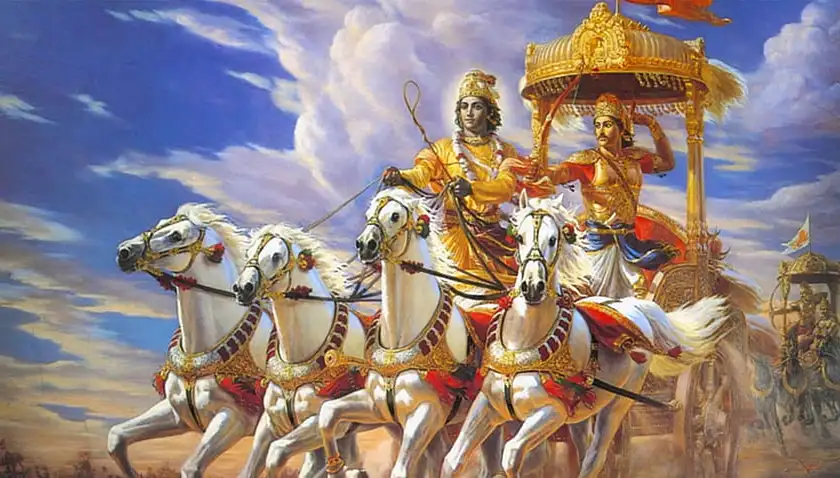
In this verse, Sanjaya narrates to Dhritarashtra (addressed as Bharata) that Krishna, called Hrishikesha (lord of the senses), responds to Arjuna, named Gudakesha (conqueror of sleep), by placing their supreme chariot between the Pandava and Kaurava armies, fulfilling Arjuna’s request.
Explanation of the Shloka
This shloka shifts from Arjuna’s voice to Sanjaya’s narration, marking Krishna’s first action in the Gita—a silent yet profound response to Arjuna’s plea. The chariot’s placement between the armies transforms Kurukshetra into a symbolic karmakshetra (field of action), where dharma and adharma face off, and Arjuna’s vishada deepens. Let us explore its layers with viveka (discernment) and bhakti (devotion).
- Sanjaya Uvacha: Sanjaya Said
- Sanjaya Uvacha: “Sanjaya said,” reintroduces the narrator, gifted with divya-drishti (divine vision) by Vyasa, recounting events to the blind Dhritarashtra. His voice frames the Gita, a bridge between the battlefield and the king’s manas (mind).
This marker signals a shift from Arjuna’s dialogue to Krishna’s response, grounding the narrative in real-time observation.
- Sanjaya Uvacha: “Sanjaya said,” reintroduces the narrator, gifted with divya-drishti (divine vision) by Vyasa, recounting events to the blind Dhritarashtra. His voice frames the Gita, a bridge between the battlefield and the king’s manas (mind).
- Evamukto: Thus Addressed
- Evamuktah: “Thus addressed,” connects this shloka to Arjuna’s words (Shlokas 21-23), where he called Krishna Achyuta and sought to see the armies. The adverb evam (thus) underscores Krishna’s obedience to Arjuna’s sankalpa (resolve).
Krishna’s silence here is kripa—action without words—a Yogeshvara’s response to a shishya’s plea, foreshadowing his role as Guru.
- Evamuktah: “Thus addressed,” connects this shloka to Arjuna’s words (Shlokas 21-23), where he called Krishna Achyuta and sought to see the armies. The adverb evam (thus) underscores Krishna’s obedience to Arjuna’s sankalpa (resolve).
- Hrishikesho Gudakeshena: Hrishikesha and Gudakesha
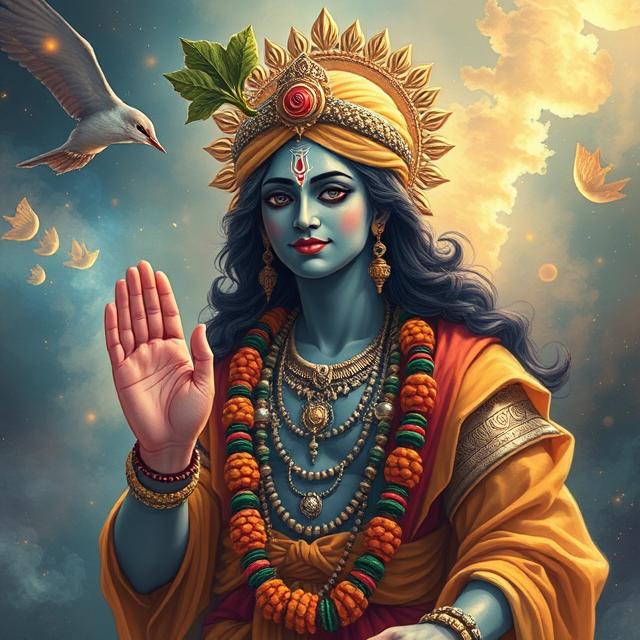
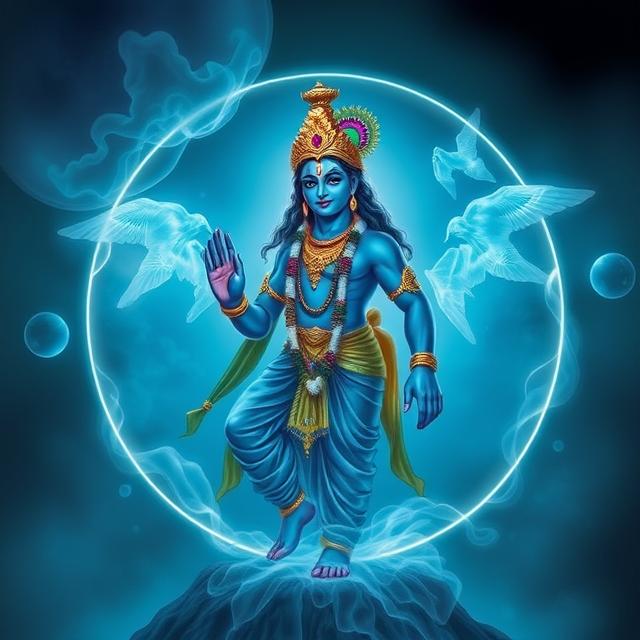
- Hrishikeshah: Krishna, “lord of the senses” (hrishi = senses, kesha = lord), reflects his mastery over indriyas (senses), a yogic ideal he will teach Arjuna. This name, echoing Shloka 15, elevates him as Paramatma (supreme soul).
- Gudakeshena: Arjuna, “conqueror of sleep” (guda = sleep, kesha = conqueror), highlights his vigilance and sattvic discipline, a kshatriya trait now tested by vishada.
The pairing—Hrishikesha and Gudakesha—weaves a bond of divine guide and devoted warrior, a dynamic central to the Gita.
- Bharata: O Bharata
- Bharata: Addressed to Dhritarashtra, “descendant of Bharata,” invokes the Kuru lineage, an ironic reminder of his sons’ adharma as dharma’s forces rise. Sanjaya’s tone carries subtle admonition, a karmic thread Krishna will later unravel.
- Senayorubhayormadhye: Between Both Armies
- Senayorubhayormadhye: “Between both armies,” echoes Arjuna’s request (Shloka 21), positioning the chariot in the neutral space between Pandavas and Kauravas. Ubhaya (both) frames Kurukshetra as a dharmakshetra—dharma versus adharma.
This placement amplifies Arjuna’s drishti (vision), exposing him to kin—Bhishma, Drona, and cousins—igniting moha (delusion) and sneha (affection), the heart of his vishada.
- Senayorubhayormadhye: “Between both armies,” echoes Arjuna’s request (Shloka 21), positioning the chariot in the neutral space between Pandavas and Kauravas. Ubhaya (both) frames Kurukshetra as a dharmakshetra—dharma versus adharma.
- Sthapayitva Rathottamam: Positioned the Finest Chariot
- Sthapayitva: “Having positioned,” Krishna’s act is deliberate, a Sarathi steering the ratha (chariot) with precision. This fulfills Arjuna’s command, a kshatriya’s need met by divine will.
- Rathottamam: “Finest chariot,” the mahati syandana (Shloka 14) with white horses and Hanuman’s banner, symbolizes Arjuna’s karmakshetra—a yogic vessel Krishna guides toward jnana.
The chariot’s centrality foreshadows the Gita’s metaphor: body, mind, and soul aligned under Ishvara’s reins.
- The Deepening of Vishada-Yoga
Krishna’s action—placing the chariot—grants Arjuna’s wish, yet unwittingly fuels his vishada. The sight of kin as foes stirs kleshas (afflictions)—raga (attachment) and abhinivesha (clinging)—a kshatriya’s duty clashing with a human’s heart. This moment births the Gita’s dialogue, Krishna’s upadesha poised to dawn.
This shloka, then, is Krishna’s silent kripa—a Sarathi’s act that deepens Arjuna’s vishada while setting the Gita’s stage. It invites us to ponder: Do we, like Arjuna, seek to see our battles, and can we trust the Hrishikesha to guide us through?
Spiritual Wisdom from Authoritative Voices
The Bhagavad Gita’s divya-tattva (divine essence) shines through the bhashyas of acharyas, each illuminating its eternal truth. Let us draw from their insights.
- Adi Shankaracharya (Advaita Vedanta)
Shankaracharya sees Krishna’s act as maya’s unfolding—positioning Arjuna to face samsara’s forms. Hrishikesha is Brahman, guiding the jiva beyond avidya (ignorance). This shloka urges viveka—to see the eternal amid the seen, a truth Krishna will unveil in Adhyaya 7. - Ramanujacharya (Vishishtadvaita)
Ramanuja interprets Krishna’s sthapayitva as Narayana’s kripa, placing Arjuna for prapatti (surrender). Rathottamam is bhakti’s seat, Hrishikesha its guide. The shloka hints at divine intent, lifting Arjuna from vishada to jnana. - Madhvacharya (Dvaita)
Madhvacharya views Krishna’s action as Vishnu’s sankalpa, Hrishikesha steering Gudakesha to test his nishtha (steadfastness). This shloka underscores daiva-shakti, the chariot a symbol of jiva’s journey under Ishvara’s will. - Swami Vivekananda (Neo-Vedanta)
Vivekananda reads this as duty’s stage. “Krishna places Arjuna where truth dawns,” he writes. The chariot is our karmakshetra, guided by divine will. He urges us to awaken shakti with dharma, a lesson the Gita unfolds.
These voices weave a jnana-sangita (harmony of wisdom), guiding us toward moksha.
Relevance to Today’s Context
The Bhagavad Gita is a jivan-marga (path of life), its wisdom vibrant today. Let us explore how this shloka resonates with quantum science, leadership, and svasthya.
- Quantum Science and Cosmology
Krishna’s sthapayitva mirrors quantum positioning—observation shaping outcome—rathottamam a focal point in Kurukshetra’s field. Hrishikesha evokes ekatva (oneness), unifying chaos. This shloka suggests a dharmakshetra cosmos, where intent aligns with order, a quest science pursues. - Leadership and Business
In the corporate Kurukshetra, Krishna’s act reflects a leader’s guidance—senayorubhayormadhye as balance, rathottamam as strategy. Hrishikesha’s kripa offers a path: lead with precision, not haste, fostering drishti (vision) amid tension, steadying the team. - Svasthya (Wellbeing)
Arjuna’s vishada mirrors modern doubt—chitta-vikshepa from facing conflict—while Hrishikesha suggests inner mastery. Practices inspired by this shloka—pranayama and dhyana (meditation)—nurture shanti, aligning the manas with purpose under life’s Sarathi.
Conclusion: The Chariot’s Stand
This twenty-fourth shloka unfolds Krishna’s kripa, positioning the chariot as Arjuna’s vishada deepens, the Gita’s heart poised to bloom. It stands as a bridge from war to wisdom, dharma meeting doubt. Each day, we unveil another shloka of this divya-gita, seeking satyam (truth) and sundaram (beauty).
Tomorrow, Arjuna will face Bhishma and Drona, his vishada peaking under Krishna’s gaze. Let us approach with bhakti and vichar, chanting: “Namo Bhagavate Vasudevaya”—to the Lord Vasudeva. May His kripa guide us onward.
Hari Om Tat Sat.