



 Vinay Karanam
 By Vinay Karanam
NZB News Community, Technology and Science Correspondent
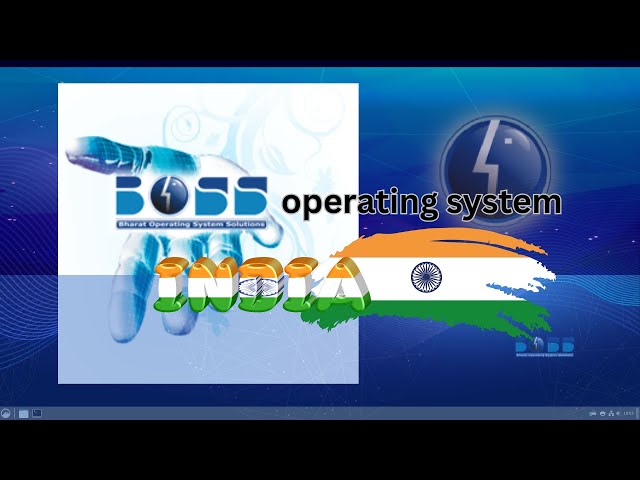
In a bold move toward digital sovereignty and technological self-reliance, the Government of India has officially unveiled Bharat OS, an indigenous mobile operating system designed to challenge the dominance of Google’s Android and Apple’s iOS ecosystems. Developed under the guidance of India’s Ministry of Electronics and Information Technology (MeitY) and spearheaded by a consortium of academic and private sector partners, the AI-integrated Bharat OS was launched on July 5, 2025, during the “Digital Bharat TechVision Summit” in New Delhi.
Positioned as a “national digital shield,” the OS is engineered to power smartphones, tablets, and embedded devices with a strong emphasis on security, language localisation, and ethical AI. Prime Minister Narendra Modi called it “a historic leap toward a digitally sovereign India” and hinted at future export potential to countries seeking alternatives to Western tech ecosystems.
A Homegrown Answer to Global Tech Giants
Bharat OS was conceptualised as part of India’s Digital Public Infrastructure (DPI) initiative, following concerns over data localisation, algorithmic bias, and foreign surveillance. Unlike Android, which is managed by Google, Bharat OS is governed by an open, India-based foundation, which includes contributions from the Indian Institute of Technology (IIT) Madras, the Centre for Development of Advanced Computing (C-DAC), and leading Indian startups in AI and cybersecurity.
Built on a hardened Linux kernel, Bharat OS supports native app development using “BharatKit,” an SDK optimised for Indian languages, biometric compliance, and AI-enhanced privacy filters. The system currently supports 12 Indian languages out of the box and includes real-time voice-to-text, regional navigation, and intelligent assistant services fine-tuned for the Indian context.
AI-driven features like energy-efficient task scheduling, adaptive UI for rural users, and government-backed fact-checking modules for social media posts are central to the experience. The OS also blocks third-party trackers by default and uses blockchain-based identifiers for authentication, enhancing privacy and reducing dependency on ad-driven platforms.
Telcos, Startups, and the App Ecosystem
India’s major telecom providers—Reliance Jio, Airtel, and BSNL—have already pledged to release Bharat OS-powered smartphones within the next two quarters. Jio is reportedly preparing to launch a sub-INR 8,000 (~NZ$160) smartphone bundled with cloud storage, fintech access, and education portals through the Bharat OS ecosystem.
To nurture app development, the government has announced a ₹1,000 crore (NZ$200 million) innovation fund and set up “Bharat App Stores” that will feature curated, locally developed apps in finance, health, education, and agriculture. App developers are being incentivised with zero commissions for their first year, and the OS’s store will not enforce aggressive advertising or data collection, in contrast to Play Store and App Store models.
A Global Trend of Tech Sovereignty
India’s move aligns with a global shift where governments are asserting control over their digital ecosystems. Russia’s Aurora OS, China’s HarmonyOS, and Brazil’s “Livre” initiative all reflect the growing desire to reduce dependency on US-based tech infrastructure. Bharat OS, however, is unique in its democratic and multilingual orientation, targeting scale without sacrificing inclusivity.
Critics argue that success will depend on sustained support and user adoption. India’s smartphone market, the second-largest globally, remains Android-heavy, with entrenched developer preferences and user habits. Still, early beta reviews of Bharat OS highlight smooth UI, strong regional UX design, and rapid AI inference speeds on mid-range chips.
Implications for New Zealand and the Pacific
The launch of Bharat OS is likely to have ripple effects in regions with large Indian diaspora populations and growing digital inclusion initiatives. New Zealand tech commentators have noted its potential as an ethical tech alternative for indigenous language and community-focused applications. Pacific nations like Fiji, Tonga, and Samoa—where Android fragmentation has caused security vulnerabilities—may also look to Bharat OS for customised deployments.
New Zealand–India tech relations may deepen further, with Wellington-based AI researchers expressing interest in collaborative modules for climate data, remote health diagnostics, and bilingual education tools. Discussions are underway between NZTech and India’s MeitY to explore cross-border deployment of AI modules on open-source platforms like Bharat OS.
Summary
Bharat OS signals a tectonic shift in the global digital order, offering a sovereign, AI-empowered alternative to Western mobile ecosystems. With strong government backing, a rising developer base, and a culturally embedded design, the operating system sets a new precedent for emerging nations to assert autonomy over their digital futures—one byte at a time.