 Tracey Beatrice
 By Tracey Beatrice
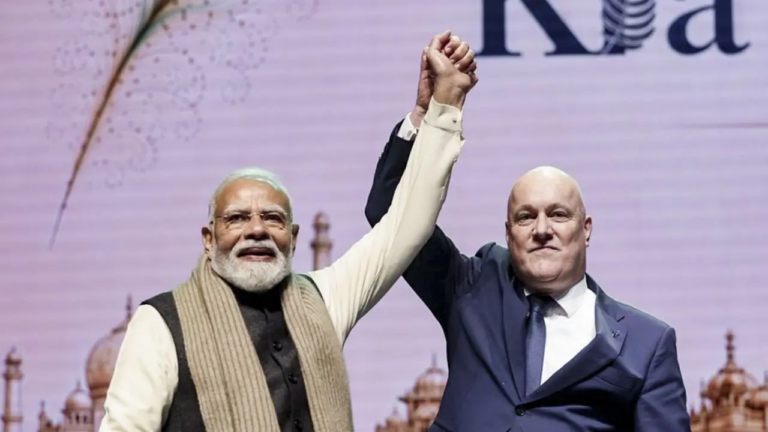
In the shifting landscape of global trade, both India and New Zealand find themselves in a period of economic reorientation. For New Zealand, the past decade has underscored the risks of relying too heavily on a single export partner. China has been a dominant market for dairy, meat, logs, and kiwifruit, but as geopolitical tensions and shifting consumer behaviours ripple through the region, Wellington is seeking to diversify. Among the countries attracting attention is India, a rising economic power, a vastly expanding consumer market, and a nation strategically addressing its global trade footprint.
For India, New Zealand represents more than just an agricultural supplier. Unlike trade with the United States, the European Union, or China, engagement with New Zealand is still relatively untapped, leaving significant opportunity. With India positioned as the fastest-growing large economy in the world, and New Zealand keen to secure resilient trading partners beyond East Asia, the timing looks increasingly favourable for the two nations to deepen economic linkages.
A Relationship Waiting to be Realised
Despite being complementary economies, the scale of India–New Zealand trade is negligible when compared to their respective global outreach. Currently, bilateral trade sits at approximately NZD 2 billion annually, a modest figure considering the potential. India is both populous and increasingly urbanised, with rising middle-class consumption demanding premium foods, technology, education, and digital services — sectors where New Zealand has competitive strengths. Meanwhile, India holds promise for New Zealand businesses as both a manufacturing hub and a digital technology partner.
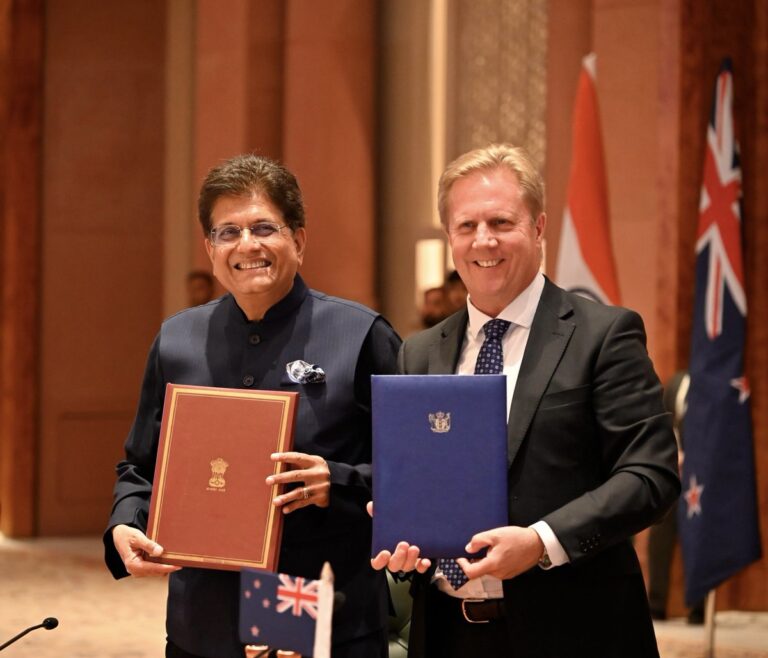
Historical attempts at strengthening ties have not progressed as hoped. Free Trade Agreement (FTA) discussions have been underway for more than a decade, but little political momentum materialised. One of the main sticking points is India’s strong protectionist stance on agricultural imports, particularly dairy, fearing that uncontrolled access for exporters like New Zealand could disrupt domestic livelihoods. From New Zealand’s perspective, without meaningful concessions on dairy, the appeal of an FTA lessens.
Yet, economic frameworks today are evolving. With closer India–Australia ties, exemplified by the Economic Cooperation and Trade Agreement signed in 2022, New Zealand risks being left behind if it does not actively pursue alternatives.
Strengthening Beyond Dairy
New Zealand’s exports have overwhelmingly been defined by primary products. Dairy accounts for almost half its goods exports, with meat, forestry products, and fruit making up much of the rest. However, New Zealand’s recent attempts to move up the value chain and expand into areas such as education, technology-enabled services, health sciences, green energy, and tourism align well with Indian demands.
Education remains a particularly strong link. For years, Indian students have formed one of the largest international student cohorts in New Zealand institutions. However, stricter immigration measures and the pandemic slowed this flow, leaving uncertainty about long-term growth. If immigration policy is recalibrated to encourage skilled students rather than short-term migration pathways, the sector could again become an anchor for bilateral relations.
Tourism offers another dimension. Before Covid-19, India was among the fastest-growing sources of inbound tourists to New Zealand, aided by Bollywood’s romanticised depiction of Queenstown, Auckland, and South Island landscapes. While reconnectivity post-pandemic is underway, a more structured tourism partnership — including direct air connectivity — could foster growth on both sides.
India’s Expanding Reach
India’s role in global supply chains has shifted dramatically. The government’s “Make in India” initiative and Production-Linked Incentive schemes aim to attract global investment in manufacturing, electronics, pharmaceuticals, and renewable energy. As Western firms seek to reduce reliance on China, India offers a strategic alternative.
This is crucial for New Zealand exporters. India’s upcoming energy transition, digital expansion, and urban infrastructure boom create prospects far beyond commodities. Green hydrogen, electric vehicles, clean agritech, and digital services are all areas where New Zealand firms can explore partnerships. Simultaneously, India’s competitive service sector holds promise for New Zealand businesses looking to outsource or co-develop IT and knowledge-based services.
Political Will and the Strategic Lens
In Wellington, conversations about India have become sharper in tone. Policymakers increasingly stress the importance of Indo-Pacific ties, with India being a central part of this narrative. While security cooperation, participation in regional forums, and defence exchanges provide a framework for engagement, trade remains underwhelming.
From New Delhi’s angle, New Zealand is seen as a small but trusted partner within the Pacific. Although the scale of trade may never rival India’s ties with Australia, the credibility, food safety standards, and high-quality branding of New Zealand goods resonate strongly with Indian urban consumers.
Additionally, the presence of a growing Indian diaspora in New Zealand, now among the fastest-expanding ethnic groups in the country, creates cultural bridges that give momentum to bilateral trade interests. Partnerships that lean into diaspora networks often end up yielding sustainable business linkages.
Opportunities in a Multipolar World
Global supply chains are undergoing recalibration. The Covid-19 pandemic, climate crises, and geopolitical rivalries have pushed countries to prioritise resilience over pure efficiency. This creates an alignment where New Zealand and India can carve space for long-term collaboration.
- Digital Economy: Opportunities in AI, fintech, cyber-security, and sustainable digital solutions could encourage co-development across the two nations.
- Clean Technologies: India’s ambitious climate targets require substantial green collaboration. New Zealand’s expertise in renewable power and sustainable agriculture is highly valued.
- Pharmaceuticals & Healthcare: India is the ‘pharmacy of the world’. Collaboration in developing biopharmaceuticals, medical devices, and healthcare education can be mutually rewarding.
- Defence & Security: While not as deep as defence ties with Australia and the US, joint maritime dialogues and technology transfers could quietly grow over the next decade.
Excerpt
While the India–New Zealand trade relationship has historically underdelivered, there is increasing recognition on both sides that the global order does not permit missed opportunities. New Zealand’s need for market diversification matches India’s need for high-quality imports and trusted partnerships. With both economies showing resilience and innovation, the next decade could mark a transformation in how these two nations engage — provided political will, strategic foresight, and business entrepreneurship align.