Lara Zijl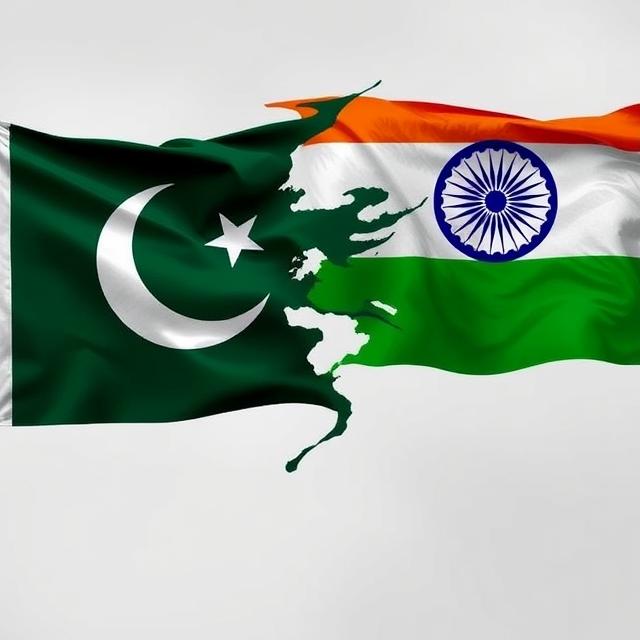
By Col. (Retd.) Dinesh Ramaswamy, exclusively for New Zealand Bharat News (NZB News)
Introduction
In the annals of modern diplomacy, few nations have faced the persistent challenge of state-sponsored terrorism as India has from its western neighbor, Pakistan. For decades, India’s patience was tested by a relentless campaign of cross-border terrorism, subversion, and propaganda, all orchestrated and abetted by the Pakistani state and its notorious intelligence apparatus. Yet, in recent years, a paradigm shift has occurred. India, drawing on its growing economic, military, and diplomatic clout, has launched a comprehensive campaign to expose, isolate, and neutralize Pakistan’s terror machinery on the world stage.
This article delves into the evolution of India’s diplomatic doctrine, the watershed moment of Operation Sindoor, the global coalition-building that followed, and the legal, economic, and strategic measures that have left Pakistan’s duplicity exposed. It chronicles how India’s united leadership, legal acumen, and international partnerships have cornered Islamabad, ensuring that the world can no longer ignore the reality of Pakistan’s cross-border terror.
The Persistent Threat: Pakistan’s State-Sponsored Terrorism
The Genesis of the Proxy War
Since its inception, Pakistan has sought to compensate for its military and economic inferiority vis-à-vis India through asymmetric warfare. The 1980s and 1990s saw the rise of a new, insidious strategy: using non-state actors as proxies to wage a “war of a thousand cuts” against India. Backed, trained, and funded by the Pakistani Army and the Inter-Services Intelligence (ISI), terror groups like Lashkar-e-Taiba, Jaish-e-Mohammed, and Hizbul Mujahideen unleashed a wave of violence in Jammu & Kashmir and beyond.
The evidence of state complicity was overwhelming—terror camps flourished in Pakistan-occupied Kashmir, cross-border infiltration became routine, and every major attack on Indian soil could be traced back to handlers in Rawalpindi or Lahore. Yet, for decades, Pakistan maintained a façade of “plausible deniability,” aided by a world reluctant to confront uncomfortable truths.
The Human and Strategic Cost
The cost to India has been immense. Tens of thousands of civilians, security personnel, and innocents have lost their lives to Pakistan-sponsored terror. The 2001 Parliament attack, the 2008 Mumbai carnage, the Pathankot airbase assault, the Pulwama suicide bombing, and countless attacks on civilians and security forces have left deep scars on the Indian psyche. Each time, Pakistan denied involvement, blamed “non-state actors,” and sought to muddy the waters with propaganda.
But the tide was turning. India’s growing global stature, its economic rise, and its technological prowess provided new tools to counter Pakistan’s duplicity—not just on the battlefield, but in the court of world opinion.
Operation Sindoor: Redefining the Rules of Engagement
The Pahalgam Attack: The Last Straw
The terror attack in Pahalgam in early 2025, which claimed the lives of 26 innocent civilians, including women and children, marked a turning point. The attack was meticulously planned, with clear evidence of ISI involvement and logistical support from across the border. The brutality of the act, targeting tourists and pilgrims, sent shockwaves across the nation and the world.
India’s response was swift, resolute, and unprecedented. Operation Sindoor was launched—not just as a military retaliation, but as a statement of new doctrine: India would no longer distinguish between terrorists and the Pakistani state that harbored, trained, and directed them.
The Execution: Precision, Restraint, and Clarity
Operation Sindoor was a masterclass in modern warfare. Indian forces, using real-time intelligence, precision-guided munitions, and electronic warfare, struck deep inside Pakistani territory. Key terror infrastructure, including training camps, ammunition dumps, and launch pads, were destroyed. What set Sindoor apart was the targeting of Pakistani military assets that directly facilitated terror operations—a clear message that the era of impunity was over.
At the same time, India exercised restraint. Civilian areas were avoided. Humanitarian corridors were left open. The operation was calibrated to avoid escalation into full-scale war, yet it imposed a cost on the very architects of terror in Pakistan’s military establishment.
The Aftermath: Exposing Pakistan’s Lies
As expected, Pakistan’s initial response was denial. But this time, the world was watching—and India was prepared. Within hours, irrefutable evidence was released: intercepted communications, satellite imagery, and, most damningly, footage of Pakistani Army officers attending state funerals for Lashkar-e-Taiba terrorists in Muridke. The mask was off. Pakistan’s military and its terror proxies were exposed as two sides of the same coin.
The Global Diplomatic Offensive: Building a Coalition Against Terror
Multi-Party Unity: India’s Democratic Strength
India’s response was not limited to military action. Recognizing that the battle against terrorism is also a battle for global opinion, New Delhi launched a diplomatic blitzkrieg. What made this campaign unique was its bipartisan, multi-party nature. Delegations comprising leaders from across the political spectrum—government and opposition, parliamentarians and civil society—were dispatched to capitals around the world.
This unity sent a powerful signal: India’s fight against terror transcends politics. It is a national cause, rooted in the values of democracy, pluralism, and the rule of law.
Presenting the Evidence: Dossiers and Diplomacy
Indian delegations carried with them meticulously prepared dossiers—evidence of Pakistan’s terror infrastructure, financial networks, and state complicity. They met with parliamentary leaders, government officials, think tanks, and media in key countries: the United States, United Kingdom, France, Germany, Japan, Australia, South Korea, Singapore, South Africa, and across ASEAN.
The message was clear and consistent: Pakistan’s use of terrorism as an instrument of state policy is a threat not just to India, but to global peace and security. The world must stop making artificial distinctions between terrorists and their sponsors.
The Response: Global Solidarity With India
The diplomatic offensive yielded unprecedented results. Nations across the world condemned the Pahalgam attack, expressed solidarity with India, and called for accountability. The United Nations, for the first time, adopted language directly linking Pakistan to cross-border terrorism. Key international organizations, including the Financial Action Task Force (FATF), intensified scrutiny of Pakistan’s terror financing networks.
India’s campaign also led to tangible action: visa restrictions on known terrorists, freezing of assets, and increased intelligence-sharing. The world was finally waking up to the reality that India had long endured.
Legal and Treaty-Based Pressure: The Indus Waters Treaty Gambit
The Indus Waters Treaty: A Pillar of Restraint
For over six decades, the Indus Waters Treaty (IWT) stood as a rare example of India’s commitment to peace, even in the face of repeated aggression. Despite wars and terror attacks, India continued to honor its obligations, ensuring water flows to Pakistan’s breadbasket.
But with Pakistan’s intransigence and continued sponsorship of terror, India decided to wield the treaty as a tool of pressure. The government announced the suspension of the IWT, linking its abeyance directly to Pakistan’s dismantling of terror infrastructure.
Legal Justification: The “Unable or Unwilling” Doctrine
India’s move was grounded in international law. The doctrine of “unable or unwilling” holds that a state which harbors terrorists and is unable or unwilling to act against them forfeits the protection of sovereignty. India’s position was clear: if Pakistan cannot control terrorism emanating from its soil, India reserves the right to defend itself, including through the suspension of bilateral treaties.
The world, recognizing the legitimacy of India’s stance, offered muted criticism at best. Many nations privately acknowledged that India’s patience had been stretched to the limit.
Economic Impact: Turning the Screws
The suspension of the IWT was not merely symbolic. It had immediate economic consequences for Pakistan, which relies on Indus waters for agriculture and industry. India accelerated projects to maximize its own water usage, reducing flows to Pakistan and exposing Islamabad’s vulnerability.
This economic pressure, combined with trade bans, suspension of transport links, and restrictions on Pakistani vessels and aircraft, dealt a crippling blow to Pakistan’s already fragile economy. International investors, wary of instability, began to pull out, compounding Pakistan’s woes.
Exposing Pakistan’s Lies: The Collapse of Credibility
The Propaganda Machine: Denial and Deceit
Pakistan’s response to Operation Sindoor and the diplomatic offensive was predictable: denial, deflection, and disinformation. Islamabad dispatched its own delegations, accused India of aggression, and claimed victimhood. State media churned out conspiracy theories, while officials parroted the tired line of “non-state actors.”
But this time, the world was not buying it. Years of duplicity, repeated confessions by Pakistani officials, and the public spectacle of state funerals for terrorists had eroded whatever credibility Pakistan once had.
The International Community’s Verdict
The global community, armed with evidence provided by India, began to see through Pakistan’s charade. Major powers, including the United States, France, and the United Kingdom, issued statements holding Pakistan accountable for cross-border terrorism. International bodies called for concrete action, not just rhetoric.
Pakistan’s attempts to internationalize the Kashmir issue fell flat. The world recognized that the real issue was not Kashmir, but Pakistan’s continued use of terror as state policy.
FATF and Financial Isolation
Perhaps the most significant blow came from the Financial Action Task Force (FATF), the global watchdog on terror financing. Pakistan, already on the “grey list,” faced the real prospect of being blacklisted—a move that would cut off access to international financial markets. India’s diplomatic efforts ensured that FATF scrutiny intensified, with clear benchmarks for Pakistan to dismantle terror networks and prosecute their leaders.
The Road Ahead: Bharat’s Strategic and Diplomatic Dominance
Setting a Global Precedent
India’s comprehensive response to Pakistan’s state-sponsored terrorism has set a new global standard. By combining military precision, legal acumen, diplomatic unity, and economic pressure, Bharat has demonstrated how democracies can confront and defeat the scourge of state-backed terror.
India’s doctrine is now clear: there will be zero tolerance for terrorism, and no distinction between terrorists and their sponsors. Every attack will invite a calibrated, proportionate, and decisive response—military, diplomatic, and economic.
Strengthening International Coalitions
India’s success in isolating Pakistan is rooted in its ability to build coalitions. Through forums like the Quad, BRICS, G20, and the Commonwealth, India has rallied support for its anti-terror agenda. Joint exercises, intelligence-sharing, and coordinated sanctions have made it increasingly difficult for Pakistan to operate with impunity.
India’s leadership in the Global South has also ensured that developing nations see terrorism for what it is—a threat to peace, stability, and development.
The Internal Dimension: National Unity and Resilience
India’s diplomatic and strategic victories are underpinned by national unity. The fight against terror is not just a government initiative—it is a national movement, supported by all political parties, civil society, and the media. This unity has denied Pakistan the ability to exploit internal divisions, and has made India resilient in the face of adversity.
Conclusion: The End of Pakistan’s Impunity
The era of Pakistani impunity is over. India’s diplomatic masterstroke—anchored in evidence, unity, and resolve—has exposed and isolated Pakistan’s state-sponsored terrorism. The world now recognizes Islamabad’s duplicity, and the cost of supporting terror has become unsustainable for the Pakistani establishment.
As India looks to the future, the challenge will be to maintain strategic focus, strengthen global partnerships, and continue to lead by example. Bharat’s message to the world is clear: terrorism, in any form and from any quarter, will be confronted and defeated.
The next article in this series will analyze how India’s intelligence, counter-terrorism, and internal security reforms have made the nation resilient against both external threats and internal sabotage, ensuring that the tragedies of the past are never repeated.
Col. (Retd.) Dinesh Ramaswamy writes exclusively for New Zealand Bharat News (NZB News). Stay tuned for the next installment: “Intelligence and Internal Security: How India Shields Itself from Pakistan’s Proxy War.”