 Tracey Wilson
 By Tracey Wilson – Legal, Market, Local Government and Related Affairs
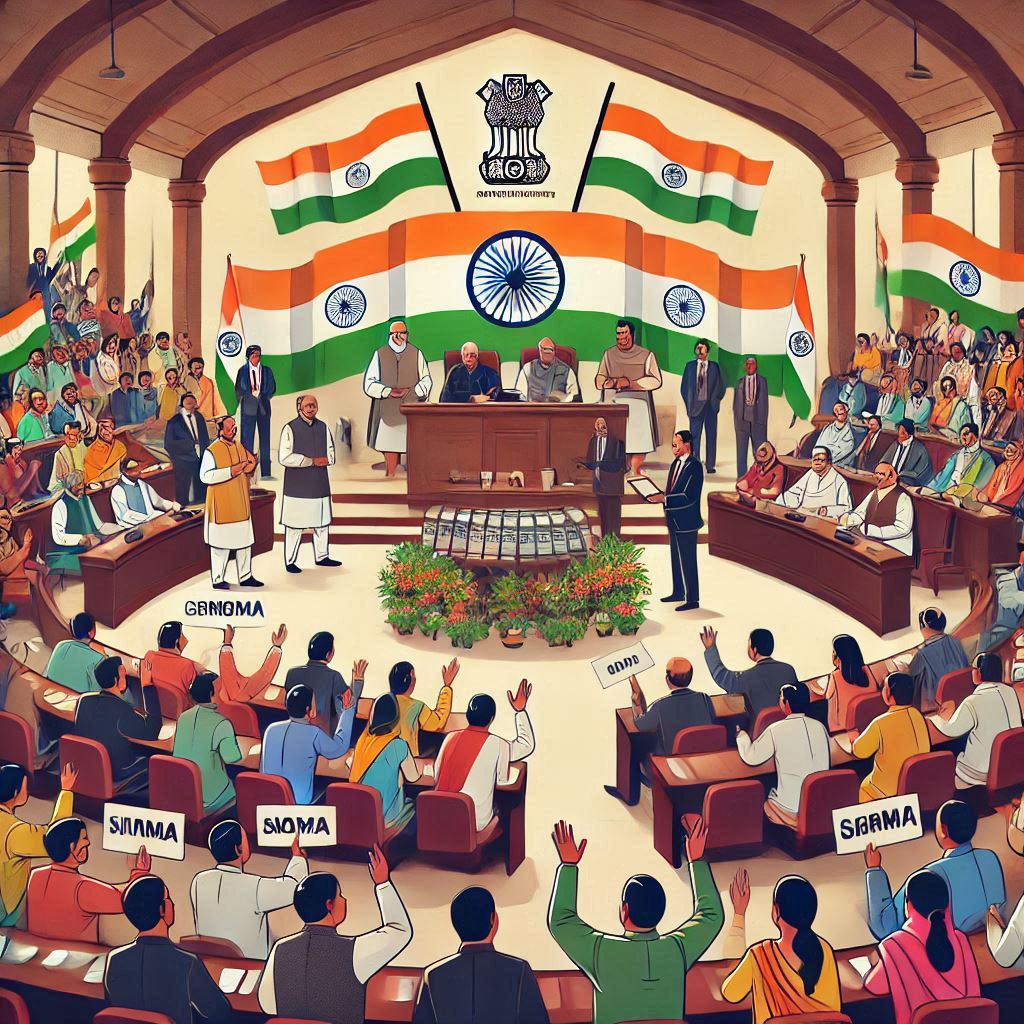
India’s Monsoon Session of Parliament, held from July 21 to August 21, 2025, emerged as one of the most contentious and significant parliamentary sessions in recent years. With 21 scheduled sittings over 32 days, the session was dominated by fierce debates over national security, opposition protests, and an ambitious legislative agenda that tested the very foundations of India’s parliamentary democracy.
Opening Day Disruptions and Political Tensions
The session commenced on July 21 with immediate disruptions as opposition members demanded urgent discussions on the Pahalgam terror attack and Operation Sindoor. Both the Lok Sabha and Rajya Sabha witnessed unprecedented scenes of chaos, with multiple adjournments marking the opening day’s proceedings.
Parliamentary Affairs Minister Kiren Rijiju had announced the session dates well in advance, drawing criticism from the opposition INDIA bloc, which accused the government of avoiding their demand for a special parliamentary session. Congress leader Jairam Ramesh alleged the early announcement was designed to “run away from the demand being made repeatedly” by the opposition for immediate discussions on critical national security matters.
Operation Sindoor: The Central Controversy
The shadow of Operation Sindoor loomed large over the entire session. This military operation was launched in response to the devastating Pahalgam terror attack on April 22, 2025, which claimed 26 civilian lives, including 25 Indians and one Nepali citizen. The retaliatory strikes targeted terrorist infrastructure in Pakistan and Pakistan-occupied Kashmir, resulting in a four-day conflict.
Parliament allocated an unprecedented 25 hours for debates on Operation Sindoor and the Pahalgam attack – 16 hours in the Lok Sabha and 9 hours in the Rajya Sabha. The debates, which commenced on July 28 in the Lok Sabha and July 29 in the Rajya Sabha, featured marathon discussions with participation from top political leaders across party lines.
Government’s Defence and Opposition’s Critique
Defence Minister Rajnath Singh led the government’s defence, asserting that during Operation Sindoor, forces “destroyed high-value terror targets, ensuring no harm to civilians.” The government portrayed the operation as a decisive response demonstrating India’s zero-tolerance policy towards terrorism.
Prime Minister Narendra Modi was expected to participate significantly in the debates, with the government framing Operation Sindoor as meeting “100% of its objectives.” National Security Advisor Ajit Doval and Home Minister Amit Shah lauded the operation’s success, emphasising the effectiveness of India’s indigenous defence platforms.
However, the opposition launched a scathing critique of the government’s handling of national security. Congress President Mallikarjun Kharge and Rahul Gandhi questioned alleged intelligence lapses that led to the Pahalgam attack and criticised the government’s foreign policy approach.
Trump’s Mediation Claims: A Diplomatic Controversy
A significant point of contention emerged from repeated claims by US President Donald Trump of brokering a “ceasefire” between India and Pakistan following Operation Sindoor. The opposition demanded that Prime Minister Modi respond to these claims, arguing they demonstrated diplomatic failure and undermined India’s sovereignty.
AAP MP Sanjay Singh accused the Prime Minister of declaring a ceasefire under pressure from Trump, alleging that this prevented India from achieving its complete objectives of destroying terror camps and capturing Pakistan-occupied Kashmir. The controversy highlighted broader concerns about India’s international diplomatic positioning.
Justice Varma Impeachment Motion
Adding to the session’s complexity, a significant constitutional crisis emerged with the impeachment motion against Allahabad High Court Justice Yashwant Varma. The motion gained momentum when burnt bundles of currency notes were allegedly recovered from his residence during a fire in March 2025.
Parliamentary Affairs Minister Kiren Rijiju confirmed that over 145 Lok Sabha MPs and 63 Rajya Sabha MPs had signed the impeachment petition. The minister noted that the process would be undertaken collectively by all parties, as it was “not the move by the Government alone.” This represented a rare instance of cross-party consensus on a constitutional matter.
Ambitious Legislative Agenda
Despite the political turbulence, the government pursued an extensive legislative agenda with 17 bills planned for consideration. Key legislation included:
The Jan Vishwas (Amendment of Provisions) Bill, 2025, aimed at decriminalising over 100 outdated provisions across various laws to ease business operations and reduce regulatory compliance burdens.
The Bills of Lading Bill, 2025, which successfully passed both houses, modernising the legal framework governing shipping documents and replacing the colonial-era Indian Bills of Lading Act, 1856.
The National Sports Governance Bill, 2025, designed to promote sports and establish ethical governance standards for sports federations whilst creating mechanisms for resolving sports grievances and disputes.
The Geoheritage Sites and Geo-relics (Preservation and Maintenance) Bill, 2025, providing statutory protection to India’s geological heritage for research, education, and tourism purposes.
Constitutional and Democratic Challenges
The session highlighted significant challenges to India’s parliamentary democracy. Frequent disruptions came at a substantial financial cost, with Parliament’s operation costing approximately Rs 2.5 lakh per minute. More critically, these disruptions hindered the core function of parliamentary accountability, preventing meaningful debates on crucial national issues.
The financial implications extended beyond immediate operational costs. Parliamentary disruptions prevented detailed scrutiny of government policies, potentially affecting governance quality and public trust in democratic institutions.
Regional Security Concerns
Beyond Operation Sindoor, the session addressed broader security challenges. Discussions included the ongoing situation in Manipur, with Parliament considering the extension of President’s Rule imposed under Article 356(1). The session also addressed demands for grants for Manipur for 2025-26 and the related Appropriation Bill.
The government’s ban on Chinese-made surveillance equipment and enhanced aerial monitoring for Independence Day celebrations reflected broader security concerns emerging from the regional conflict.
Bihar Electoral Roll Controversy
The opposition raised serious concerns about the Special Intensive Revision (SIR) of electoral rolls in Bihar, alleging it threatened people’s voting rights. Congress leaders described this as an “undeclared Emergency” that undermined democratic participation, adding another dimension to the session’s contentious atmosphere.
International Parliamentary Diplomacy
In response to international criticism, the government organised seven all-party parliamentary delegations to visit over 30 countries to convey India’s zero-tolerance policy towards terrorism. These delegations, comprising 59 sitting MPs, represented a significant diplomatic outreach effort to explain India’s position following Operation Sindoor.
Session Conclusion and Democratic Assessment
The Monsoon Session concluded with mixed results for Indian democracy. Whilst the government successfully passed several important bills, including maritime law reforms and sports governance legislation, the session was marked by unprecedented disruptions and fierce political polarisation.
Summary
The 2025 Monsoon Session represented a critical test of India’s parliamentary democracy amid national security challenges and intense political polarisation. Whilst Operation Sindoor dominated proceedings with 25 hours of allocated debate time, the session also addressed crucial legislative reforms and constitutional challenges, including the Justice Varma impeachment motion. The extensive disruptions and fierce debates highlighted both the vitality and fragility of India’s democratic institutions, demonstrating how external security threats can profoundly impact internal political dynamics whilst testing the resilience of parliamentary procedures in addressing complex national challenges.