



 Vinay Karanam
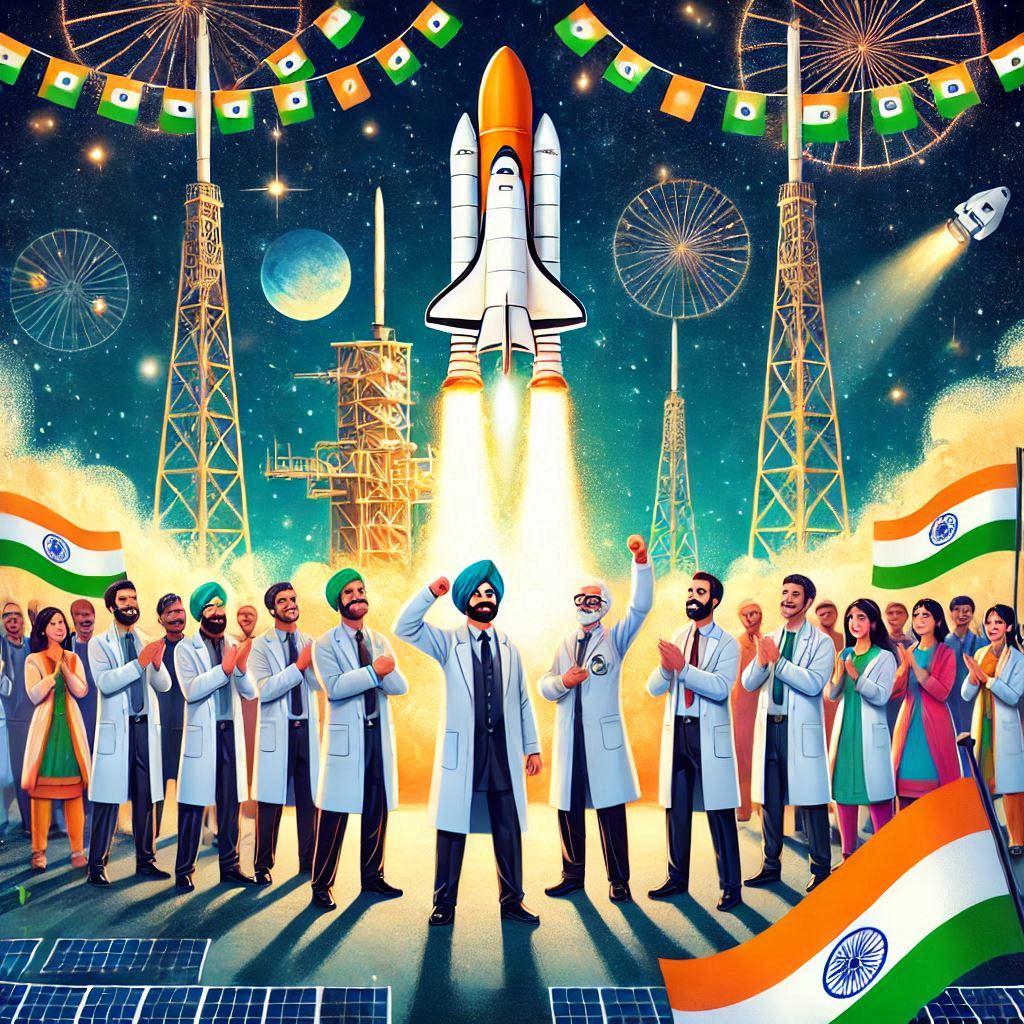
 The Indian Space Research Organisation (ISRO) has once again solidified its position as a global leader in space technology with a groundbreaking achievement: the successful hot test of the Power Head Test Article (PHTA) for its semicryogenic engine on March 28, 2025. Conducted at the ISRO Propulsion Complex (IPRC) in Mahendragiri, Tamil Nadu, this milestone marks a pivotal step in the development of the SE2000, a high-thrust semicryogenic engine designed to power the next generation of Indian launch vehicles. With a thrust capacity of 2000 kN (approximately 200 tonnes), the SE2000 promises to enhance India’s space mission capabilities, ushering in a new era of efficiency, payload capacity, and ambition. This article delves into the technical specifications of this achievement, its importance to India’s space programme, the historical context of similar technologies globally, recent advancements in space propulsion, and the future technologies that this milestone foreshadows.
Technical Specifications of the SE2000 Semicryogenic Engine
The SE2000 is a liquid rocket engine that operates using a combination of Liquid Oxygen (LOX) and refined kerosene (RP-1) as propellants. Unlike traditional cryogenic engines that rely on liquid hydrogen, the semicryogenic approach leverages kerosene’s higher density and storability, offering a balance between performance and practicality. The engine employs an oxidizer-rich staged combustion cycle, a sophisticated design that maximizes efficiency by pre-burning a portion of the propellants to drive the turbo pumps before injecting them into the main combustion chamber. This configuration delivers a chamber pressure of 180 bar and a specific impulse (Isp) of approximately 335 seconds in a vacuum—key metrics that underscore its high-performance capabilities.
The SE2000 is designed to generate a thrust of 2000 kN, making it one of the most powerful engines in ISRO’s arsenal. It is intended to power the SC120 semicryogenic booster stage of the Launch Vehicle Mark-3 (LVM3), replacing the current L110 liquid core stage powered by two Vikas engines, which collectively produce around 1600 kN of thrust. The SC120 stage will carry 120 tonnes of propellant, significantly boosting the LVM3’s payload capacity from 4 tonnes to 5–6 tonnes to Geosynchronous Transfer Orbit (GTO). The PHTA tested on March 28 included critical subsystems such as the gas generator, turbo pumps, pre-burner, and control components, excluding the thrust chamber. The hot test, lasting 2.5 seconds, validated the propellant feed system’s performance, ignition stability, and operational reliability under high-pressure conditions.
The Semicryogenic Integrated Engine Test Facility (SIET) at IPRC Mahendragiri, inaugurated by Prime Minister Narendra Modi on February 27, 2024, played a crucial role in this test. Equipped with a state-of-the-art Programmable Logic Controller (PLC)-based control system and advanced data acquisition capabilities, the facility can test engines up to 2600 kN thrust. The successful PHTA test marks the beginning of a series of evaluations aimed at refining the SE2000’s design before its full integration into the LVM3 and potentially the Next Generation Launch Vehicle (NGLV).
Significance of the Milestone
This hot test represents a transformative moment for ISRO and India’s space ambitions. The development of the SE2000 addresses several strategic and operational imperatives:
- Enhanced Payload Capacity: The LVM3, India’s heaviest operational launch vehicle, is a cornerstone of its satellite deployment and human spaceflight programmes, including the upcoming Gaganyaan mission. Replacing the L110 stage with the SC120 will increase the GTO payload capacity by 25–50%, enabling ISRO to launch heavier communication satellites, interplanetary probes, and multi-satellite constellations in a single mission.
- Cost Efficiency: Semicryogenic engines offer a cost-effective alternative to fully cryogenic systems. Kerosene, unlike liquid hydrogen, does not require extreme cryogenic storage conditions (below -253°C), reducing infrastructure and operational costs. This aligns with ISRO’s ethos of delivering high-impact missions at a fraction of the cost of its global counterparts.
- Technological Self-Reliance: The SE2000 programme, led by ISRO’s Liquid Propulsion Systems Centre (LPSC) with contributions from Indian industry, underscores India’s growing independence in advanced propulsion technologies. Historically reliant on foreign assistance for such systems, India’s indigenous development of semicryogenic technology strengthens its strategic autonomy in space.
- Foundation for Future Missions: The SE2000 is a stepping stone for ISRO’s broader vision, including the NGLV—a reusable launch vehicle with a 30-tonne Low Earth Orbit (LEO) capacity—and potential deep-space missions. Its high-thrust design lays the groundwork for ambitious projects like lunar sample returns (Chandrayaan-4, slated for 2027) and crewed lunar landings.
Prime Minister Narendra Modi, who dedicated the SIET facility to the nation, hailed the test as a testament to India’s scientific prowess. Union Minister Jitendra Singh echoed this sentiment on social media, stating, “ISRO registers another milestone in raising its space mission capabilities to the next level.” The achievement not only bolsters India’s space infrastructure but also positions it as a competitive player in the global launch services market, currently dominated by entities like SpaceX, Arianespace, and Roscosmos.
Historical Context: Semicryogenic and Cryogenic Technologies Globally
The development of semicryogenic propulsion is part of a broader historical trajectory in rocket engine design, with notable parallels and contrasts across spacefaring nations.
United States
The U.S. pioneered high-thrust liquid propulsion with engines like the Rocketdyne F-1, which powered the Saturn V rocket during the Apollo programme. Delivering 6,770 kN of thrust using LOX and RP-1, the F-1 remains the most powerful single-chamber engine ever built. However, semicryogenic technology in the modern era is best exemplified by SpaceX’s Raptor engine, which uses LOX and methane in a full-flow staged combustion cycle. Introduced in 2019, the Raptor’s 2300 kN thrust and reusability have redefined launch economics, enabling missions like Starship. ISRO’s SE2000 shares similarities with the Raptor in its staged combustion approach, though it opts for kerosene over methane due to availability and infrastructure considerations.
Soviet Union/Russia
The Soviet Union was a trailblazer in semicryogenic technology, with engines like the RD-180 powering Russia’s Proton and later the U.S.’s Atlas V rockets. Developed by NPO Energomash, the RD-180 produces 4150 kN of thrust using LOX and RP-1 in an oxidizer-rich staged combustion cycle—similar to the SE2000’s design. Introduced in the 1990s, it showcased the reliability and efficiency of semicryogenic systems. ISRO’s collaboration with Ukraine’s Yuzhnoye Design Office in the early 2000s, under a 2005 framework agreement, reportedly included access to RD-810 blueprints (a variant of the RD-120), influencing the SE2000’s development.
Europe
Europe’s Arianespace has focused primarily on cryogenic propulsion with the Vulcain engine (LOX/LH2) for the Ariane 5 and 6 launchers. While highly efficient (Isp ~430 seconds), cryogenic engines are costlier and less suited for booster stages due to hydrogen’s low density. The SE2000’s semicryogenic approach offers a middle ground, blending cryogenic performance with the practicality of storable propellants—a niche Europe has yet to fully explore.
China
China’s Long March family of rockets has increasingly adopted LOX/kerosene engines, such as the YF-100 (1200 kN thrust), introduced in 2015 for the Long March 5, 6, and 7. Operating in a gas-generator cycle, the YF-100 is less complex than the SE2000 but reflects China’s push toward high-thrust, cost-effective propulsion. The SE2000’s higher thrust and staged combustion cycle position it as a more advanced contender in this domain.
India’s Journey
India’s propulsion journey began with solid and liquid engines like the Vikas (based on France’s Viking engine) before mastering cryogenic technology with the CE20 (200 kN, LOX/LH2) in 2017. The SE2000 builds on this legacy, bridging the gap between cryogenic efficiency and booster-stage practicality. Its development, approved in 2009 with a ₹1,798 crore budget, faced delays due to technical challenges and geopolitical hurdles, including limited foreign assistance. The March 28 test marks a triumph over these obstacles, aligning India with a select group of nations capable of semicryogenic propulsion.
Recent Developments in Space Technologies
The past decade has witnessed a renaissance in space technology, driven by private enterprise, international collaboration, and national ambitions.
- Reusability: SpaceX’s Falcon 9, with its reusable first stage, has slashed launch costs to below $60 million per mission since 2015. ISRO is exploring similar concepts with the NGLV, which will feature a reusable first stage powered by LOX/kerosene engines like the SE2000.
- High-Thrust Propulsion: The rise of super-heavy launch vehicles—SpaceX’s Starship (17,000 kN total thrust), NASA’s Space Launch System (SLS, 39,000 kN), and China’s Long March 9 (under development)—reflects a global shift toward ambitious missions like lunar bases and Mars exploration. The SE2000 positions ISRO to compete in this arena.
- In-Space Docking: ISRO’s Space Docking Experiment (SpaDeX), successfully demonstrated in January 2025, showcased autonomous docking technology—a prerequisite for space stations and multi-module spacecraft. This complements the SE2000’s role in enabling complex missions.
- Additive Manufacturing: ISRO’s successful 665-second hot test of an additively manufactured PS4 engine in May 2024 highlights the integration of 3D printing in propulsion, reducing costs and lead times. Such innovations could accelerate the SE2000’s production.
- Global Space Economy: Valued at $447 billion in 2023 (per the Space Foundation), the space economy is projected to reach $1 trillion by 2040. ISRO’s cost-effective launches—e.g., $74 million for LVM3 versus $150 million for Ariane 5—position it to capture a larger market share, bolstered by the SE2000’s capabilities.
Future Technologies and Expectations
The SE2000’s success foreshadows a transformative future for ISRO and global space exploration:
- Next Generation Launch Vehicle (NGLV): Unveiled in concept by ISRO Chairman V. Narayanan, the NGLV aims for a 30-tonne LEO capacity with a reusable first stage, LOX/kerosene boosters, and a cryogenic upper stage. The SE2000 will likely form its backbone, with development timelines targeting the early 2030s.
- Human Spaceflight and Beyond: The Gaganyaan mission, India’s first crewed flight scheduled for 2026, will rely on the LVM3’s current configuration. However, the SE2000-equipped SC120 stage could enable larger crew modules or lunar missions by the late 2020s, aligning with India’s goal of a crewed lunar landing by 2040.
- Advanced Propulsion: ISRO is exploring hybrid systems that combine air-breathing and cryogenic propulsion for hypersonic travel. Narayanan recently hinted at a concept where a vehicle takes off like an aircraft, switches to a cryogenic engine mid-flight, and covers intercontinental distances in hours—a potential spin-off from semicryogenic research.
- International Collaboration: The SE2000 strengthens India’s position in space diplomacy, potentially attracting partnerships with nations lacking high-thrust propulsion capabilities. Joint missions with agencies like NASA or ESA could leverage this technology for mutual benefit.
- Commercial Spaceflight: As private players like SpaceX and Blue Origin dominate reusable launch systems, ISRO’s semicryogenic advancements could spawn an Indian commercial space sector, offering affordable launches for global clients.
Summary
ISRO’s successful hot test of the SE2000 PHTA on March 28, 2025, is more than a technical achievement—it is a bold statement of intent. With its 2000 kN thrust, oxidizer-rich staged combustion cycle, and integration into the LVM3’s SC120 stage, the SE2000 heralds a new chapter in India’s space odyssey. Its significance lies not only in enhanced payload capacity and cost efficiency but also in its role as a catalyst for future innovations, from reusable launchers to deep-space exploration. Historically, nations like the U.S., Russia, and China have set the pace in semicryogenic propulsion, but India’s entry into this elite club underscores its rapid ascent in the global space arena.
As space technologies evolve—driven by reusability, high-thrust engines, and emerging concepts like in-space docking and additive manufacturing—ISRO stands poised to shape the future. The SE2000 is a bridge between India’s present achievements and its aspirations for lunar bases, Mars missions, and beyond. For a nation that has long punched above its weight in space, this milestone reaffirms ISRO’s commitment to excellence, self-reliance, and the pursuit of the cosmos. As Prime Minister Modi aptly noted during the SIET facility’s inauguration, this is a facility—and a technology—dedicated to the nation, propelling India toward the stars.
New Zealand Bharat News will continue to monitor ISRO’s progress and its impact on global space exploration. Stay tuned for updates on this remarkable journey.