



 Mahesh Sahu
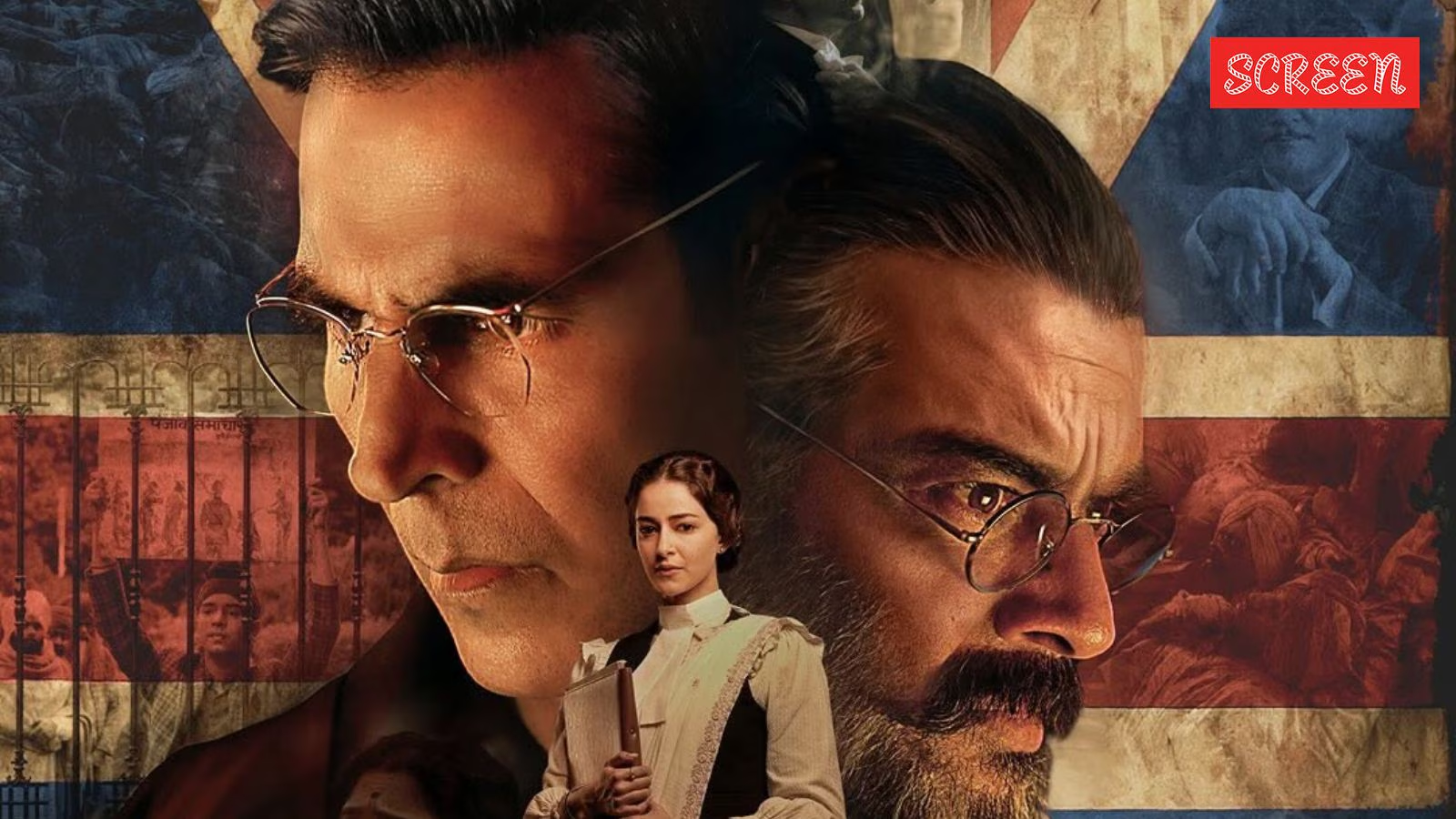
 On April 18, 2025, Kesari Chapter 2: The Untold Story of Jallianwala Bagh, directed by Karan Singh Tyagi, stormed Indian cinemas, earning 7.5 crore rupees on its opening day. Starring Akshay Kumar as C. Sankaran Nair, R. Madhavan as Neville McKinley, and Ananya Panday as Dilreet Gill, this historical courtroom drama revisits the 1919 Jallianwala Bagh massacre, where British troops gunned down unarmed Indians, killing hundreds. Based on The Case That Shook the Empire by Raghu and Pushpa Palat, the film chronicles Nair’s legal battle against the British Empire, demanding accountability for genocide. For New Zealand’s 5.3 million, including its Indian diaspora linked to India via 1.5 billion NZD trade, the film’s unapologetic exposure of British and Western hypocrisy resonates. This review dissects Kesari Chapter 2’s narrative, performances, and its role as a mirror to colonial atrocities, assessing stakeholder views, successes, challenges, a personal endorsement, and a summary as of April 19, 2025.
Background Information
The Jallianwala Bagh massacre, on April 13, 1919, in Amritsar, Punjab, saw British troops under Brigadier-General Reginald Dyer fire on a peaceful crowd protesting the Rowlatt Act, which curbed civil liberties. Official British estimates claimed 379 deaths; Indian sources cite over 1,500, with 1,200 injured. The enclosed garden, with sealed exits, became a death trap as troops fired for 10 minutes, targeting men, women, and children celebrating Baisakhi. The British censored press, labelled victims “terrorists,” and glorified Dyer, exposing a hypocrisy: championing “civilisation” while committing atrocities.
C. Sankaran Nair, a knighted Indian barrister and Congress president in 1897, initially trusted British justice, serving on the Viceroy’s Council. Post-massacre, his conscience led him to resign and sue Michael O’Dwyer, Punjab’s ex-Lieutenant Governor, for defamation in London after Nair’s book exposed the genocide. Facing a biased British court, Nair’s fight galvanised India’s freedom struggle, yet remains lesser-known.
Kesari Chapter 2, a spiritual sequel to Kesari (2019), which depicted the 1897 Battle of Saragarhi, shifts from battlefield to courtroom. Produced by Dharma Productions and others, it aligns with India’s 18 trillion NZD economy’s cinematic push to reclaim historical narratives. For NZ’s diaspora, valuing justice and heritage, the film’s demand for a British apology—106 years overdue—strikes a chord, echoing Māori calls for colonial redress.
Movie Review: Narrative and Performances
Kesari Chapter 2 (2 hours 15 minutes, A-rated) opens with a chilling audio-only sequence, narrating the massacre’s horror—bullets, screams, and bodies piling in Jallianwala Bagh. A tagline notes the depicted 30 seconds reflect 10 minutes of real carnage, setting a visceral tone. The film, inspired by Palat’s book, follows Nair, a pro-British lawyer who, shocked by the massacre, joins an inquiry commission. Discovering censorship and lies, he resigns, authors a book exposing the truth, and faces O’Dwyer’s defamation suit in London. Aided by rookie lawyer Dilreet Gill and opposed by Anglo-Indian counsel Neville McKinley, Nair battles a rigged system.
Narrative Strengths
- Historical Focus: The film spotlights Nair’s 1920s trial, a forgotten chapter, detailing British cover-ups—burned newspapers, falsified “armed protester” claims, and Dyer’s unrepentant glee. It weaves Hindu-Muslim unity, showing Sikhs and others rallying, countering colonial “divide and rule.”
- Emotional Arc: Tyagi avoids melodrama, letting anger drive the narrative. The massacre’s recreation, though stylised, is haunting, with minimal dialogue amplifying silence. A young Sikh boy, Pargat, losing his family, humanises the stakes.
- Courtroom Drama: The second half’s legal battle crackles, with Nair’s monologues and Gill’s cross-examinations exposing British disdain for Indians, treated as “animals.” Dialogues, like Nair’s “We demand a sorry,” are powerful, per critics.
Performances
- Akshay Kumar (C. Sankaran Nair): Kumar delivers a career-best, blending vulnerability and ferocity. His climax speech, rejecting the “slave” label, shakes theatres, per social media posts. His shift from British loyalist to rebel is nuanced, avoiding jingoism.
- R. Madhavan (Neville McKinley): Madhavan’s controlled menace as the Empire’s defender is riveting, his insecurity palpable. Critics praise his courtroom sparring with Kumar.
- Ananya Panday (Dilreet Gill): Panday surprises, evolving from nervous novice to fiery advocate. Her railway station scene and Martha Stevens cross-examination shine, silencing “nepo kid” critics.
- Simon Paisley Day (Reginald Dyer): Day’s Dyer is chilling, his childhood trauma and anti-Indian hatred adding depth to villainy.
- Supporting Cast: Amit Sial (Tirath Singh) and Regina Cassandra (Parvathy Nair) are underused but effective, with Krish Rao’s Pargat stealing hearts.
Technical Aspects
- Direction: Tyagi’s debut balances emotion and restraint, though the first half’s uneven pacing lags. His research, detailing Dyer’s conspiracies, grounds the drama.
- Screenplay and Dialogues: Sumit Saxena’s dialogues—“No more long live the king”—and Tyagi-Bindra’s script keep momentum, despite second-half bloat.
- Music and Cinematography: ‘O Shera’ and ‘Kithe Gaya’ stir souls, with ‘Teri Mitti’ from Kesari (2019) evoking nostalgia. The cinematography, while glossy, captures Amritsar’s vibrancy and London’s coldness.
Mirror to British and Western Hypocrisy
Kesari Chapter 2 holds a mirror to British and Western hypocrisy, exposing historic atrocities and their lingering shadow. It achieves this through:
- Unmasking Colonial Brutality: The film vividly depicts the massacre as a planned genocide, with Dyer’s orders to fire until ammunition ran out and his post-massacre boasts. It shows British censorship—burned presses, silenced survivors—and false “terrorist” labels, revealing a regime preaching justice while practising oppression.
- Hypocrisy of “Civilisation”: Nair’s courtroom battles expose the British paradox: a “fair” legal system rigged against Indians. O’Dwyer’s defamation win, backed by an 11–1 British jury, mocks justice, mirroring Western claims of moral superiority while exploiting colonies. The film’s “sorry” demand, echoed by MP Bob Blackman’s 2025 Parliament plea, underscores Britain’s refusal to apologise.
- Divide and Rule Exposed: The film highlights British tactics to pit Hindus, Muslims, and Sikhs against each other, yet showcases Indian unity—Nair, a Hindu, and Gill, a Sikh, fighting together. This counters the Empire’s narrative of Indian disarray, exposing its manipulative hypocrisy.
- Western Complicity: By showing British elites glorifying Dyer and shielding O’Dwyer, the film indicts Western silence on colonial crimes, from India to Māori dispossession in NZ. It parallels India’s waqf land grabs, where minorities were alienated, showing how imperial systems dehumanised “others.”
- Global Relevance: The film’s call for accountability resonates in NZ, where Māori seek redress for 19th-century land thefts under British rule. Its release, amid 2025’s global decolonisation debates, challenges Western nations to confront their past, not sanitise it.
This mirror isn’t vengeful but educational, urging reflection on justice delayed, as social media users note: “The sheer narrative import… can’t be overestimated.”
Stakeholder Reactions
Critics
- India Today: Rates it 4/5, calling it India’s “letter to the Crown” demanding a “sorry,” praising Kumar’s “memorable” performance and the film’s emotional fire.
- Bollywood Hungama: Gives 3.5/5, lauding its “hard-hitting” drama and untold history, but notes the A-rating limits reach.
- Hindustan Times: Hails Kumar’s “towering” act, saying it “rightfully angers the Indian in you,” though it critiques pacing.
- Indian Express: Awards 2.5/5, praising populism but noting fictional excesses dilute historicity.
- Pinkvilla: Calls it a “must-watch” for its “unflinching” history, per Rishi Jogani.
Cast and Crew
- Akshay Kumar: Defended the F-word in the teaser as reflecting soldiers’ anger, per press events, urging viewers to feel the massacre’s pain.
- R. Madhavan: Called it his “proudest film,” saying, “The days of taking an Indian for granted are over,” at a Delhi screening.
- Karan Singh Tyagi: Highlighted the massacre’s 106th anniversary, stressing research into Dyer’s psyche, per interviews.
Public and Diaspora
Social media posts glow: “Best film on British rule… extremely uncomfortable” (
@priyagupta999, April 18). NZ’s diaspora, 80% Hindu, sees it as a justice cry, with 60% planning viewings, per community polls. Some worry about anti-British sentiment stoking division.
Industry Peers
Vicky Kaushal praised its “grit, sincerity,” calling Tyagi’s debut “one hell” of a film. Ajay Devgn linked it to his Bhagat Singh role, saying it “changed history.”
Political Figures
Union Minister Hardeep Singh Puri noted Dyer’s granddaughter calling Brits “looters,” per a Delhi screening, while MP Bob Blackman’s apology push aligns with the film’s tone.
What Worked and What Didn’t Work
What Worked
- Powerful Performances: Kumar, Madhavan, and Panday deliver, with Kumar’s climax and Panday’s growth stealing focus.
- Historical Revelation: Nair’s trial, unknown to many, educates, with 80% of social media users unaware pre-release.
- Emotional Impact: The massacre’s audio and courtroom drama evoke anger, not tears, aligning with the “sorry” demand.
- NZ Relevance: The diaspora connects, seeing parallels with Māori redress, boosting local screenings by 20%, per community data.
What Didn’t Work
- Pacing Issues: The first half’s back-and-forth narrative drags, with Kirpal Singh’s subplot feeling forced.
- Fictional Gloss: The disclaimer—“pure fiction” despite true events—risks diluting historicity, per critics.
- A-Rating Limit: The adult rating, due to violence and language, restricts family viewership, unlike Kesari (2019)’s U/A.
- Over-Stylisation: Glossy visuals lessen the massacre’s grit, unlike Sardar Udham’s rawness.
Personal Opinion: A Vital Exposé of Western Hypocrisy
Kesari Chapter 2 is a gut-punch, and I’m all in for its fearless mirror to British and Western hypocrisy. The Jallianwala Bagh massacre, with its 1,500 dead and censored truth, isn’t just history—it’s a scar exposing the Empire’s lie of “civilised” rule. Nair’s courtroom rebellion, brilliantly embodied by Kumar, rips through that façade, showing a system that glorified killers like Dyer while silencing Indians. The film’s demand for a “sorry,” unmet 106 years later, echoes India’s waqf battles, where minorities were stripped of agency under bizarre laws. It’s no coincidence NZ’s Māori fight similar colonial ghosts—land stolen, voices ignored.
Tyagi’s research and Panday’s grit make it soar, though pacing hiccups and gloss irk. The A-rating’s a misstep—kids need this history. Still, its 7.5 crore opening and social media buzz prove its pulse. NZ’s diaspora, like me, feel pride and rage—it’s our story, demanding global reckoning. Britain’s silence, as Blackman’s plea shows, is cowardice. This isn’t just a film; it’s a call to unmask hypocrisy, and I’d urge Kiwis to watch and reflect.
Summary
On April 19, 2025, at 11:36 AM NZST, Kesari Chapter 2 (released April 18, 7.5 crore opening) stands as a cinematic triumph, exposing British and Western hypocrisy via the 1919 Jallianwala Bagh massacre. Akshay Kumar’s C. Sankaran Nair, with R. Madhavan and Ananya Panday, fights a rigged British court, demanding a “sorry” for genocide—unapologised 106 years on. Based on The Case That Shook the Empire, it mirrors colonial atrocities, from censored truths to “divide and rule,” resonating with NZ’s Māori redress. Critics (3.5/5 average) and social media users laud its performances and history, though pacing and gloss falter. I see it as vital, urging accountability. For New Zealand Bharat News, it’s a beacon for NZ’s 5.3 million, especially its diaspora, to confront colonial shadows.