



 Imogen King
 By Imogen King, Political Science, Business, and International Affairs Specialist, NZB News
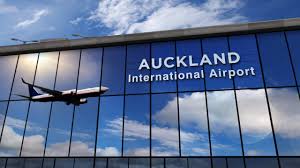
Auckland, New Zealand – On March 19, 2025, a significant methamphetamine bust at Auckland International Airport sent shockwaves through New Zealand’s law enforcement and community circles. Authorities seized 15 kilograms of methamphetamine, valued at approximately $15 million NZD, hidden in the luggage of a 32-year-old Australian national arriving from Sydney. This incident, one of the largest airport drug seizures in New Zealand’s recent history, underscores the persistent challenge of transnational drug trafficking. This article provides a detailed account of the event, explores the history and background of methamphetamine trafficking in New Zealand, offers a comprehensive analysis of the bust, and critically examines the establishment narrative of border security success.
Details of the Methamphetamine Bust at Auckland Airport
The operation unfolded in the early hours of March 19, 2025, when New Zealand Customs Service officers, acting on intelligence from Australian Federal Police (AFP), flagged a passenger arriving on a Qantas flight from Sydney. The 32-year-old Australian man, whose identity has not been disclosed pending legal proceedings, was subjected to a secondary inspection after a drug-detection dog alerted officers to his checked luggage. A thorough search revealed 15 kilograms of methamphetamine concealed within a false compartment of his suitcase, a method increasingly common in transnational drug smuggling.
The suspect was arrested on the spot by New Zealand Police, who have charged him with importation of a Class A controlled drug, possession for supply, and participation in an organized criminal group. Detective Inspector Sarah Johnson, speaking at a press conference on March 20, stated, “This seizure represents a significant disruption to an international drug trafficking network. The collaboration between New Zealand Customs, Police, and our Australian counterparts has prevented millions of dollars’ worth of harm to our communities.” The methamphetamine, estimated to have a street value of $15 million, could have resulted in up to 750,000 individual doses, highlighting the scale of potential impact.
History and Background of Methamphetamine in New Zealand
Methamphetamine, known locally as “P,” has been a persistent issue in New Zealand since the late 1990s. The drug, a powerful stimulant first synthesized in 1893 by Japanese chemist Nagai Nagayoshi, gained global notoriety during World War II when it was used by both Axis and Allied forces to enhance alertness. In New Zealand, its recreational use surged in the early 2000s, driven by domestic production in clandestine labs. By 2006, the New Zealand Police estimated that methamphetamine use cost the country $1.4 billion annually in social and economic harm, including healthcare, crime, and lost productivity.
The early 2010s marked a shift in the methamphetamine trade, with domestic production giving way to large-scale importation by transnational crime syndicates, particularly from Asia and Latin America. A 2016 report by the New Zealand Drug Foundation noted that 80% of the methamphetamine seized in the country was imported, often through ports and airports. Auckland International Airport, as the country’s busiest entry point, has been a focal point for such activities. A notable 2018 bust at the same airport saw 10 kilograms of methamphetamine seized from a Canadian national, a case that led to the dismantling of a syndicate linked to the Sinaloa Cartel.
Government responses have evolved over the years. The 2009 Methamphetamine Action Plan increased funding for border security and rehabilitation programs, while the 2019 National Drug Policy emphasized harm reduction. Despite these efforts, methamphetamine use remains high— a 2023 Ministry of Health survey found that 1.1% of New Zealanders aged 16-64 had used the drug in the past year, with Māori and Pasifika communities disproportionately affected. The establishment narrative often highlights declining domestic lab seizures as a success, but this overlooks the growing sophistication of international trafficking networks, as evidenced by the latest bust.
Detailed Analysis of the Auckland Airport Bust
The March 19, 2025, bust at Auckland Airport reveals both the strengths and vulnerabilities of New Zealand’s border security framework. The operation’s success hinged on international cooperation, with the AFP providing critical intelligence about the suspect’s movements. This collaboration reflects a broader trend of joint efforts between New Zealand and Australia to combat drug trafficking, as seen in Operation Trojan Shield (2021), which disrupted global crime networks through encrypted communication intercepts. The use of drug-detection dogs and advanced screening technology at Auckland Airport further demonstrates the effectiveness of multi-layered security protocols.
However, the incident also exposes systemic challenges. The 15 kilograms seized, while significant, is likely a fraction of the total methamphetamine entering New Zealand. A 2024 New Zealand Police report estimated that 500-700 kilograms of the drug are imported annually, suggesting that many shipments go undetected. The suspect’s use of a false compartment in luggage—a method also seen in a 2023 Andrade Port of Entry bust in California, where 32 pounds of methamphetamine were hidden in a fuel tank—indicates the evolving tactics of traffickers. These methods exploit the high volume of air travel, with Auckland Airport processing over 21 million passengers in 2024, making comprehensive screening a logistical challenge.
The suspect’s profile—a 32-year-old Australian with no prior criminal record in New Zealand—fits the pattern of “clean skin” couriers often used by syndicates to evade suspicion. This tactic, noted in a 2022 DEA Los Angeles Division seizure of 3,552 pounds of methamphetamine, allows cartels to minimize risk to high-value operatives. The involvement of an organized criminal group, as alleged in the charges, points to a broader network, potentially linked to Asian or Latin American cartels, which have increasingly targeted New Zealand due to its high methamphetamine prices ($500-$700 per gram, compared to $100 in the U.S.).
The establishment narrative of a “major win” for law enforcement, while valid, may overstate the impact. While 15 kilograms off the streets prevents significant harm—potentially 75,000 overdoses, given methamphetamine’s potency—the underlying demand remains unaddressed. New Zealand’s rehabilitation infrastructure is strained, with only 3,500 treatment slots available annually against an estimated 50,000 users. Moreover, the focus on border seizures does little to tackle domestic distribution networks, which often involve local gangs like the Mongrel Mob and Black Power, as highlighted in a 2023 Massey University study.
Comparative Global Context
The Auckland bust aligns with global trends in methamphetamine trafficking. A 2024 seizure at Eagle Pass Port of Entry in Texas, the largest ever at a U.S. port, involved 6.5 tons of methamphetamine valued at $117 million, hidden in a tractor-trailer. Similarly, a 2021 Otay Mesa bust, dubbed the largest in U.S. history at the time, uncovered 5,528 pounds of methamphetamine, also concealed in a commercial vehicle. These incidents, like Auckland’s, relied on international cooperation and advanced detection methods, but they also highlight the scale of the global trade, with cartels like Sinaloa and Jalisco exploiting porous borders and high demand.
In contrast, New Zealand’s smaller market and geographic isolation make it a high-risk, high-reward destination for traffickers. A 2020 Otay Mesa seizure of 3,100 pounds, valued at $7.2 million, involved a mix of methamphetamine, fentanyl, and heroin, a combination not seen in the Auckland case, suggesting regional variations in trafficking patterns. Australia, New Zealand’s closest partner, has also faced significant airport busts— a 2019 Sydney Airport seizure of 12 kilograms of methamphetamine mirrors the Auckland incident in scale and method, underscoring shared vulnerabilities in the Asia-Pacific region.
Critical Examination of the Establishment Narrative
The establishment narrative, as articulated by Detective Inspector Johnson, frames the bust as a triumph of border security and international collaboration. While the seizure is undoubtedly a success, this perspective glosses over deeper systemic issues. The focus on high-profile busts creates a reactive rather than proactive approach, failing to address root causes like socioeconomic inequality and mental health crises that drive demand. The 2023 Ministry of Health survey noted that 40% of methamphetamine users cited stress and trauma as primary factors, yet government funding for mental health services remains inadequate, with a $2.4 billion shortfall reported in 2024.
Moreover, the narrative of “keeping drugs off the streets” ignores the reality of supply chains. For every 15 kilograms seized, more likely enters undetected, as cartels adapt quickly— a 2024 DEA Atlanta bust of 2,585 pounds at a farmer’s market showed how traffickers pivot to new routes and methods. The emphasis on border security also diverts resources from community-based prevention, with organizations like the New Zealand Drug Foundation advocating for a 50% increase in harm reduction funding, a call largely unmet in the 2025 budget.
Public sentiment, as reflected on social media platforms, is mixed. Some users praise the police and customs for their vigilance, while others question why demand-side solutions are neglected, with one user noting, “Busts don’t fix addiction—where’s the support for users?” This dichotomy highlights a gap between the establishment’s focus on enforcement and the community’s need for holistic solutions, a tension NZB News seeks to address through critical analysis.
Implications and Future Outlook
The Auckland Airport bust has immediate and long-term implications. In the short term, it disrupts a specific trafficking route, potentially leading to arrests higher up the chain as investigations continue. The suspect’s alleged ties to an organized criminal group may yield intelligence on broader networks, a priority for New Zealand Police’s Transnational Crime Unit. Economically, the seizure prevents $15 million in potential revenue for criminal enterprises, though this is a drop in the bucket compared to the $1.5 billion annual methamphetamine market.
Long-term, the incident underscores the need for a multi-pronged approach. Enhanced airport security, including AI-driven screening and expanded canine units, could improve detection rates, but must be paired with demand reduction strategies. The government’s 2025 commitment to increase border funding by $50 million is a step forward, but without parallel investment in rehabilitation—currently at $120 million annually, far below the $300 million recommended by experts—the cycle of addiction and trafficking will persist.
For the Hindu community in Auckland, particularly in the North Shore where Shree Hanuman Mandir serves as a spiritual hub, this bust reinforces the temple’s role in promoting values like non-violence and purity, countering the social harms of drug abuse. The temple’s upcoming expansion, as noted in its March 2025 resource consent celebration, will provide more space for community programs addressing mental health, potentially mitigating the drivers of addiction.
Conclusion
The March 19, 2025, methamphetamine bust at Auckland International Airport, involving 15 kilograms valued at $15 million, marks a significant law enforcement achievement, disrupting a transnational trafficking network. Rooted in New Zealand’s decades-long struggle with methamphetamine, the incident highlights the effectiveness of international cooperation and border security, but also exposes systemic gaps in addressing demand and rehabilitation. Comparative global cases, from Otay Mesa to Eagle Pass, reveal the scale of the challenge, while critical analysis questions the establishment’s enforcement-heavy narrative. As NZB News advocates “technology for everyone, empowerment for all,” this bust calls for a balanced approach—celebrating the win while pushing for comprehensive solutions to heal communities.
Excerpt: A 15kg methamphetamine bust at Auckland Airport on March 19, 2025, valued at $15 million, disrupts a trafficking network but reveals deeper issues. New Zealand’s meth history, global comparisons, and critical analysis highlight the need for holistic strategies beyond border security.