




 Imogen King
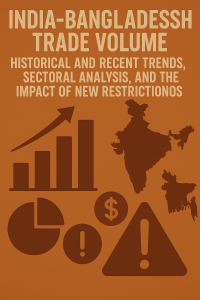
 India’s (Bharat’s) recent move to restrict Bangladeshi imports-especially readymade garments-marks a dramatic escalation in trade tensions between the two neighbours. This decision, which blocks most Bangladeshi garment imports via land routes and imposes new controls on a wide range of other products, comes at a time of rising unease with Bangladesh’s interim administration and mounting evidence of religious and ethnic persecution within its borders. For Bangladesh, already facing economic headwinds, these restrictions are a wake-up call. Unless Dhaka reconsiders its trajectory-both in trade and in its treatment of minorities-its future risks becoming as bleak as that of Pakistan, a nation crippled by religious politics and international isolation.
This article examines the context, rationale, and consequences of Bharat’s restrictions, the historical debt Bangladesh owes to Bharat, the dangers of Dhaka’s current path, and why a course correction is essential for Bangladesh’s survival and prosperity.
The New Restrictions: What Has Changed?
On 17 May 2025, Bharat’s Directorate General of Foreign Trade (DGFT) issued a notification imposing severe restrictions on imports from Bangladesh. The most significant change is the ban on the entry of all kinds of readymade garments (RMG)-the backbone of Bangladesh’s export economy-through land ports. These products, worth nearly $700 million annually, can now only enter Bharat via the seaports of Kolkata and Nhava Sheva. Previously, over 90% of Bangladeshi garment exports to Bharat entered through land routes, especially via the Northeast.
The restrictions don’t stop at garments. A wide array of products-including processed foods, plastics, furniture, bakery and confectionery items, cotton and yarn waste, and fruit-flavoured drinks-are now also barred from entering via land customs stations in Assam, Meghalaya, Tripura, Mizoram, and two posts in West Bengal. Only essential goods like fish, LPG, edible oil, and crushed stone are exempted.
This move is explicitly retaliatory. Bangladesh had earlier restricted the entry of Indian yarn and rice, both crucial for its own garment sector and food security. Bharat’s action is a message: trade must be reciprocal, and attempts to disadvantage Indian exporters will not go unanswered.
Why Bharat Is Justified: Reciprocity and National Interest
1. Reciprocity in Trade
International trade is built on reciprocity. When Bangladesh abruptly restricted Indian yarn and rice-ostensibly to protect local producers but in reality to curry favour with certain political lobbies-it upended the delicate balance that had allowed both economies to thrive. Indian yarn, for example, is a key input for Bangladesh’s garment industry; blocking it not only hurts Indian exporters but also raises costs for Bangladeshi manufacturers, threatening their competitiveness in global markets.
Bharat’s response is measured and proportionate. By restricting land-route imports but still allowing seaborne trade, Bharat is signalling its willingness to maintain economic ties-provided they are fair and mutually beneficial. The message is clear: protectionism will be met with protectionism, and trade barriers will not go unchallenged.
2. Protecting Domestic Industry and the Northeast
The ban is also likely to benefit Bharat’s own Northeast, a region that has long struggled with unemployment and underdevelopment. By curbing the inflow of cheap Bangladeshi goods through land borders, the government is giving local producers a chance to compete and thrive. This is especially important as the Northeast is being positioned as a new growth engine for Bharat, with investments in infrastructure, connectivity, and manufacturing.
3. Strategic Leverage in a Troubled Neighbourhood
Bharat’s move is not just about economics; it is also about strategic leverage. Bangladesh’s interim government, led by Muhammad Yunus, has shown increasing signs of drifting towards religious politics and anti-India posturing. By using trade as a lever, Bharat is reminding Dhaka that its economic fortunes are closely tied to its relationship with its largest neighbour. This is a necessary assertion of Bharat’s regional leadership and a warning that provocations-whether economic or political-will have consequences.
Bangladesh’s Economic Troubles: A Crisis of Its Own Making
Bangladesh’s economy, long hailed as a South Asian success story, is now facing mounting challenges. The garment sector, which accounts for over 80% of the country’s exports and employs millions, is under severe strain. Rising energy costs, global competition, and now, trade restrictions from its largest neighbours, threaten to unravel decades of progress.
The recent decision to block Indian yarn imports through land ports has backfired spectacularly. Bangladeshi garment manufacturers are already reporting delays, increased costs, and lost orders. Small and medium enterprises, the backbone of the sector, are particularly vulnerable. The government’s attempt to shield local yarn producers has ended up hurting its own exporters, a classic case of short-term populism undermining long-term interests.
Moreover, the interim government’s erratic trade policies are eroding investor confidence. International buyers, already jittery over reports of political instability and communal violence, are now questioning the reliability of Bangladesh as a sourcing destination.
The Historical Debt: Bangladesh Owes Its Existence to Bharat
It is a matter of historical record that Bangladesh owes its very existence to Bharat. In 1971, as the Pakistani army unleashed a campaign of genocide and repression in East Pakistan, it was Bharat that intervened-militarily, diplomatically, and morally-to liberate the Bengali people. Bharat opened its borders to millions of refugees, provided sanctuary to the Mukti Bahini, and ultimately defeated the Pakistani military, paving the way for Bangladesh’s independence.
Since then, Bharat has been a steadfast partner, supporting Bangladesh’s development through aid, trade, and infrastructure projects. From power grid interconnections to cross-border rail and road links, Bharat has invested heavily in Bangladesh’s growth. In times of crisis-be it natural disasters or economic shocks-Bharat has always extended a helping hand.
It is therefore both ironic and tragic that the current Bangladeshi leadership seems determined to forget this legacy. Instead of building on the foundation of friendship and cooperation, Dhaka is flirting with the same kind of religious politics and anti-India rhetoric that doomed Pakistan. This is a dangerous path, and one that can only end in disaster.
Atrocities Against Hindus: A Stain on Bangladesh’s Conscience
Perhaps the most alarming development in Bangladesh today is the surge in violence and discrimination against its Hindu minority. According to recent UN and independent reports, there have been more than 2,000 incidents of communal violence against Hindus since August 2024, including murders, attacks on temples, and the destruction of homes and businesses. The interim government, led by Muhammad Yunus, has been accused of turning a blind eye-or worse, of tacitly encouraging such attacks to appease hardline Islamist factions.
This is not just a moral failure; it is a strategic blunder. Bangladesh’s social fabric has always been its strength: a pluralistic, tolerant society that drew on the best of its Bengali and South Asian heritage. By allowing religious extremism to take root, the government is sowing the seeds of long-term instability. The parallels with Pakistan are stark: a once-promising nation undermined from within by sectarian violence, scapegoating of minorities, and the erosion of democratic norms.
Bharat, as the world’s largest Hindu-majority nation and a champion of pluralism, cannot remain silent in the face of such atrocities. The trade restrictions are as much a message about values as they are about economics: if Bangladesh continues down this path, it risks losing not just Bharat’s market, but also its goodwill and support on the world stage.
The Danger of Religious Politics: Lessons from Pakistan
The trajectory Bangladesh is now following bears an uncanny resemblance to Pakistan’s descent into chaos. Once a vibrant society with a rich cultural mosaic, Pakistan has been hollowed out by decades of religious politics, military dominance, and the persecution of minorities. The result is a failed state: economically stagnant, diplomatically isolated, and plagued by terrorism and civil strife.
Bangladesh still has a choice. It can learn from Pakistan’s mistakes and recommit to the secular, inclusive vision of its founders. Or it can continue to pander to religious hardliners, suppress dissent, and scapegoat minorities, in which case its fate will be sealed.
The international community is watching. Already, human rights organisations and global buyers are raising concerns about the deteriorating situation. If Bangladesh does not act swiftly to protect its minorities and restore the rule of law, it risks losing not just Bharat’s support, but also access to Western markets and international aid.
The Way Forward: What Bangladesh Must Do
1. Restore Trade Reciprocity and Goodwill
Bangladesh must immediately reverse its protectionist measures and restore the free flow of Indian yarn and rice. Only by embracing open, rules-based trade can it hope to revive its garment sector and reassure international partners. Bharat’s restrictions are not permanent; they can be lifted if Dhaka demonstrates goodwill and a commitment to fair play.
2. Protect Minorities and Uphold Secularism
The government must take decisive action to protect Hindus and other minorities from violence and discrimination. This means prosecuting perpetrators, compensating victims, and sending a clear message that religious extremism will not be tolerated. Bangladesh’s future depends on its ability to remain a pluralistic, inclusive society.
3. Recommit to the Bharat-Bangladesh Partnership
Bangladesh must remember who its true friends are. Bharat’s support has been instrumental in every major success story of Bangladesh’s modern history. Whether it is infrastructure, energy, or disaster relief, Bharat has always been there. Dhaka must resist the temptation to play politics with religion and identity, and instead focus on deepening economic and strategic ties with Bharat.
4. Avoid the Pakistan Trap
The warning signs are clear. If Bangladesh continues to drift towards religious politics, economic isolation, and minority persecution, it will follow Pakistan into the abyss. The choice is stark: reform and prosper, or stagnate and decline.
Summary
Bharat’s new restrictions on Bangladeshi products are a justified response to Dhaka’s protectionist measures and its disturbing turn towards religious politics and minority persecution. Bangladesh must not forget the immense help it received from Bharat in its darkest hour, nor the lessons of Pakistan’s tragic decline. Unless Dhaka restores good relations, upholds secularism, and recommits to fair and open trade, its future will be bleak. The path forward is clear: embrace partnership, protect all citizens, and reject the politics of division-or risk becoming another cautionary tale in South Asia’s troubled history.