




 Chintapally Suresh
 A Nation in Mourning After the Ahmedabad Air India Crash
The devastating crash of Air India Flight 171 on June 12, 2025, has plunged India into deep sorrow. The Boeing 787-8 Dreamliner, carrying 242 passengers and crew, crashed moments after takeoff from Ahmedabad’s Sardar Vallabhbhai Patel International Airport, en route to London Gatwick. The catastrophe resulted in 241 fatalities, with only one survivor, a British passenger of Indian descent. The aircraft collided with a residential and medical campus area, causing casualties on the ground and widespread destruction.
This tragedy marks one of the deadliest aviation disasters in India’s recent history and has reignited discussions on aviation safety, emergency response, and the country’s record of air accidents. As investigations continue, it is important to reflect on the broader context of aviation in India, its challenges, and the lessons learned from past disasters.
The Ahmedabad Crash: What Happened?
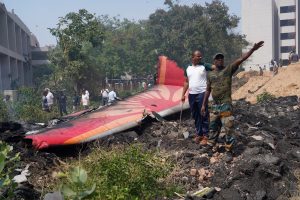
Flight AI171 took off at 1:38 p.m. local time under clear weather conditions, with temperatures soaring near 100 degrees Fahrenheit. The aircraft climbed to approximately 625 feet before abruptly losing altitude. A Mayday call was issued to air traffic control but was quickly lost. The plane crashed into a densely populated area near the airport, including a medical college hostel, triggering a massive explosion and fire.
Rescue teams rushed to the site, battling intense flames and thick smoke to recover survivors and victims. The crash site was strewn with debris, complicating rescue operations. The sole survivor was rushed to hospital and is reported to be in stable condition.
The Aircraft Accident Investigation Bureau (AAIB) of India, along with Boeing, engine manufacturer GE Aerospace, and international aviation authorities, has launched a thorough investigation. Black boxes have been recovered, and investigators are examining pilot actions, aircraft maintenance records, weather conditions, and other factors to determine the cause.
A Grim Legacy: India’s Aviation Accident History
India’s aviation sector, while rapidly expanding and modernizing, has faced a series of tragic accidents over the decades. These disasters have exposed vulnerabilities in infrastructure, safety protocols, and operational oversight, prompting reforms but also highlighting ongoing challenges.
Here is a chronological overview of some of the most significant aviation tragedies in India’s history, illustrating the context in which the Ahmedabad crash has occurred:
Indian Airlines Flight 440 (1973)
On May 31, 1973, a Boeing 737-200 crashed near Delhi’s Palam Airport during approach in severe weather, striking high-tension wires short of the runway. Of the 65 aboard, 48 died, including prominent politician Mohan Kumaramangalam. This crash underscored the need for improved weather radar and approach systems at Indian airports.
Air India Flight 855 (1978)
In January 1978, an Air India Boeing 747 crashed into the Arabian Sea shortly after takeoff from Mumbai, killing all 213 on board. The accident was attributed to instrument failure and pilot error, leading to improvements in pilot training and cockpit instrumentation.
Indian Airlines Flight 491 (1993)
On April 26, 1993, a flight from Aurangabad crashed shortly after takeoff after hitting a truck crossing the runway, then power lines. Fifty-five people died. The crash highlighted failures in airport coordination and runway safety management.
Indian Airlines Flight 257 (1991)
This flight crashed into a hill near Imphal during poor weather, killing all 69 on board. Navigational errors and inadequate landing aids were cited as causes, prompting upgrades in approach systems at remote airports.
Indian Airlines Flight 605 (1990)
An Airbus A320 crashed during landing at Bengaluru after touching down too early and breaking apart, killing 92. Pilot unfamiliarity with new aircraft systems was a key factor, leading to enhanced pilot training programs.
Indian Airlines Flight 113 (1988)
Approaching Ahmedabad in fog, this flight crashed into trees and the ground short of the runway. The accident raised awareness about the dangers of poor visibility and led to improvements in airport navigation aids.
Air India Express Flight 1344 (2020)
During the COVID-19 pandemic, this flight skidded off the runway at Calicut Airport, a tabletop runway, and fell into a gorge. Twenty-one people died, and over 100 were injured. The accident triggered a nationwide review of tabletop runways and emergency response protocols.
Common Themes and Lessons
India’s aviation accidents often share common factors: challenging weather conditions, infrastructural limitations, pilot error, and sometimes inadequate coordination between airport authorities and air traffic control. These tragedies have spurred regulatory reforms, including stricter safety audits, improved pilot training, enhanced ground infrastructure, and better emergency preparedness.
The rapid growth of India’s aviation sector, with increasing passenger volumes and new airports, has placed pressure on safety systems. Balancing expansion with rigorous safety oversight remains a critical challenge.
The Ahmedabad Crash in Context
The 2025 Ahmedabad crash is notable as the first fatal accident involving the Boeing 787 Dreamliner, a technologically advanced aircraft. The investigation will scrutinize factors such as aircraft maintenance, pilot actions, environmental conditions, and possible mechanical failures.
Initial reports indicate no adverse weather conditions at the time, and experts have suggested that manufacturing defects are unlikely given the aircraft’s decade-long service history. The investigation will also examine airport operations and emergency response effectiveness.
Impact on Air India and Indian Aviation
Air India, India’s flag carrier, faces a pivotal moment. The crash has deeply affected public confidence and raised questions about operational safety. Air India has pledged full cooperation with investigators and has mobilized support for victims’ families.
The government and aviation regulators are expected to intensify safety oversight and review policies to prevent future tragedies. Airlines across India may face increased scrutiny, and safety culture improvements will be prioritized.
Community and Human Stories
The crash’s impact extends beyond statistics. Families mourn loved ones lost, including prominent figures and everyday citizens. The medical college hostel struck by the plane housed students and staff, many of whom were victims.
Survivors and witnesses recount harrowing experiences, while communities rally to support those affected. Relief efforts include counseling, financial aid, and memorials.
Moving Forward: Safety, Preparedness, and Reform
The Ahmedabad tragedy underscores the need for continuous vigilance in aviation safety. Authorities are expected to implement recommendations from the investigation, focusing on pilot training, aircraft maintenance, airport infrastructure, and emergency response.
Urban planning near airports may also be reassessed to minimize risks to residential areas. Public awareness and preparedness campaigns will be vital.
Summary
The Air India Flight 171 crash near Ahmedabad is a tragic chapter in India’s aviation history, claiming 241 lives and leaving a sole survivor. This disaster, the first fatal incident involving the Boeing 787 Dreamliner, has prompted a comprehensive investigation and renewed focus on aviation safety in India.
India’s history of air disasters reveals persistent challenges but also progress in safety standards. The Ahmedabad crash serves as a solemn reminder of the stakes involved and the ongoing need for rigorous safety measures, effective emergency response, and infrastructure development.
As the nation mourns, the aviation community and regulators face the critical task of learning from this tragedy to safeguard the future of air travel in India.