





 Chintapally Suresh
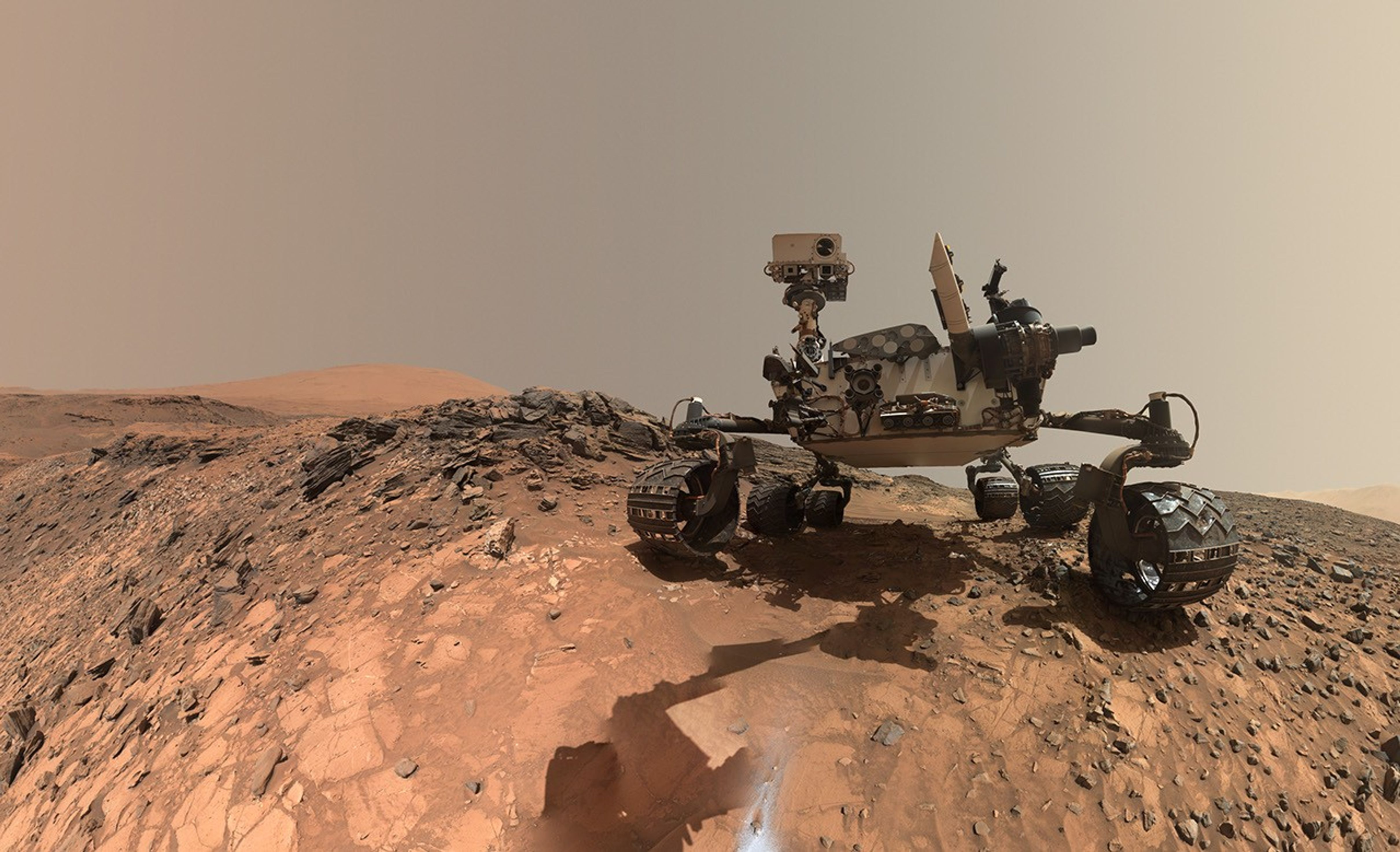
 NASA’s Perseverance rover has uncovered what scientists describe as the “closest we’ve ever come” to evidence of ancient microbial life on Mars. The discovery, based on samples collected in an ancient dry riverbed within Jezero Crater, offers tantalising clues that the Red Planet once harboured conditions suitable for life billions of years ago.
The Discovery: What the Perseverance Rover Found
In July 2024, NASA’s Perseverance rover drilled into a rock formation named “Cheyava Falls” located on the edges of Neretva Vallis, an ancient river valley carved by water flowing into Jezero Crater. The extracted sample, called “Sapphire Canyon,” contains unique mineral deposits and organic compounds — specifically patterns compared to “leopard spots” — rich in elements like iron, phosphorus, sulphur, and organic carbon, all considered excellent markers for microbial life on Earth.
Scientists have identified potential “biosignatures” in these rocks: substances or structures that could plausibly originate from biological activity. While these clues are not definitive proof of life, they provide compelling evidence that Mars once had the conditions to support microscopic organisms billions of years ago during a warm, water-rich era.
Scientific Analysis and Significance
After over a year of peer-reviewed scrutiny, including tests by independent laboratories and experts worldwide, researchers published their findings in the prestigious journal Nature. The study marks a pivotal moment in planetary exploration, with acting NASA Administrator Sean Duffy calling it “the clearest sign yet of ancient life on Mars” and “a groundbreaking discovery that will deepen our understanding of the Red Planet.”
The surrounding sediments, composed of clay and silt, are known to be excellent preservers of organic matter. The complexity and richness of the chemical signatures found within the rock sample demonstrate that the Jezero Crater region was once a habitable environment, akin to early Earth lakes where microbial life thrived.
Lead scientist Joel Hurowitz cautioned, “While this finding does not conclusively prove life existed, it is our most compelling hint so far. Alternative non-biological explanations exist but are increasingly less likely as we accumulate evidence.”
NASA Perseverance’s Mission and Ongoing Efforts
Launched in 2020 and landing on Mars in 2021, the Perseverance rover has been tasked with searching for signs of past life and collecting geological samples for eventual return to Earth. It carries sophisticated instruments for sampling rock and soil, drilling beneath the surface and analysing minerals in situ.
The next major step in this ambitious planetary science mission is the Mars Sample Return program. NASA plans to launch a joint return mission to collect Perseverance’s cached samples and bring them to Earth for exhaustive laboratory analysis, where scientists can use advanced techniques beyond current rover capabilities. However, funding and engineering challenges persist, making the timeline for sample return uncertain.
Implications for Astrobiology and Future Exploration
If confirmed, the presence of ancient microbial life on Mars would have profound implications for our understanding of life’s universality across the cosmos. It would suggest that life arose independently outside Earth, supporting the idea that biological processes may be common in the universe where suitable environments exist.
Moreover, the findings will inform future human exploration, guiding missions on where to focus searches for life and potentially identifying resources essential for sustained human presence. Understanding Mars’ ecology will also shape planetary protection policies to prevent contamination.
Summary
NASA’s Perseverance rover has made the most compelling discovery yet of potential ancient life on Mars through the analysis of a rock sample from Jezero Crater. While the evidence falls short of conclusive proof, the biosignatures found in the mineral-rich samples suggest that Mars was once a habitable world capable of supporting microbial organisms. The results have energized scientific efforts and public imagination alike, marking a historic advance in humankind’s quest to understand life beyond Earth.