Lara Zijl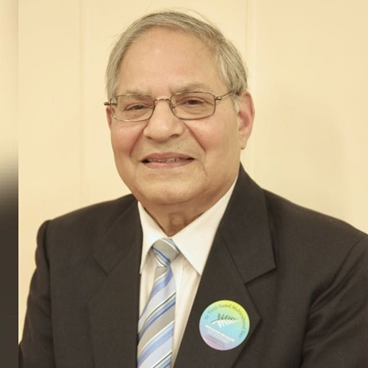
The appointment of Ravinder Singh Powar as a Member of the New Zealand Order of Merit (MNZM) is both a celebration of one man’s lifelong service and a mirror held up to a changing nation that treasures diversity, courage and quiet, sustained leadership. His journey from new migrant in 1969 to nationally honoured community leader in 2026 tells a distinctly New Zealand story of perseverance, faith and inclusive nation‑building.

A life of service, begun in 1969
Soon after arriving in New Zealand in 1969, Ravinder Powar stepped not into the comfort of anonymity but into the demanding world of community organisation and representation. In an era when Indian and Sikh migrants were still few in number and visible leadership was scarce, he offered his time, energy and voice to help others find their footing in a new land.
- He was elected to the committee of the New Zealand Sikh Society in Hamilton, working alongside pioneering elders who were laying the foundations of Sikh religious and cultural life in the Waikato.
- At the same time, he joined the New Zealand Indian Association (Country Section), helping rural and regional Indian families build networks of support, identity and belonging far from the big-city hubs.
This early commitment was not a passing phase; it was the beginning of a vocation. Over the decades, Mr Powar has remained a Life Member of these organisations, embodying continuity and institutional memory for younger generations navigating their own settlement journeys.

Architect of spiritual and cultural spaces
One of the defining achievements of Ravinder Powar’s public life has been his role in the establishment and strengthening of Sikh religious institutions in the Waikato. These are not just places of worship; they are cultural anchors where language, values, stories and intergenerational bonds are nurtured.
- Mr Powar was a driving force behind the establishment of New Zealand’s first Sikh temple (gurdwara), which opened in Hamilton in 1977, a milestone that transformed the spiritual landscape for Sikh families in Aotearoa.
- Through countless hours of voluntary governance, fundraising and community outreach, he helped ensure that the gurdwara remained open, welcoming and responsive to the needs of both long‑settled and newly arrived migrants.
In Hamilton and the wider Waikato, the gurdwara became a symbol of rootedness and contribution, a place where the doors were as open to Pākehā neighbours and Māori partners as they were to Indian and Punjabi worshippers. That inclusive ethos reflects the leadership style of Mr Powar himself: steady, humble, and irresistibly outward‑looking.

Champion for ethnic communities and wider society
The citation for his MNZM recognises Mr Powar “for services to ethnic communities”, but that simple phrase only hints at the breadth of his impact. His work has spanned faith leadership, ethnic advocacy, local governance, justice services and national‑level ethnic representation.
- As a Justice of the Peace, he has provided free, trusted services to people from all walks of life, helping with affidavits, declarations and official documentation with patience and cultural sensitivity.
- Within the broader ethnic sector, he has been involved in leadership roles that emphasise the importance of ethnic and social diversity as cornerstones of a successful, forward‑looking New Zealand.
Beyond the Indian and Sikh communities, Mr Powar has consistently striven to support people of all backgrounds, championing inclusivity and collaboration as core civic values. Community colleagues and media tributes in the Waikato describe him as a “long‑standing multicultural leader”, a phrase that captures his role in bringing together different ethnic, faith and cultural groups around shared goals.

Humility at the heart of recognition
In responding to news of his appointment as MNZM, Ravinder Powar’s words have been characteristically modest and deeply rooted in collective acknowledgement. He has spoken of feeling “deeply honoured” and of sharing the recognition with his family and community members whose guidance and support have shaped his journey.
- He has emphasised that the honour is not an end point, but an inspiration “to continue in the future endeavours of serving all communities”, signalling that his commitment to service will not diminish with the conferral of a medal.
- This humility underscores why such honours matter: they shine a light on people who work quietly, often behind the scenes, to weave tighter social bonds and ensure that no community stands alone.
By centring others in his response, Mr Powar reinforces a core ethic of service that lies at the heart of the New Zealand honours system itself: leadership is most powerful when it uplifts those around it.

What the New Zealand Order of Merit represents
The New Zealand Order of Merit (NZOM), of which MNZM is a rank, is one of the country’s most significant honours, recognising those who have rendered “meritorious service to the Crown and the nation” or who have become distinguished by their talents, contributions or other merits. Established by Royal Warrant on 30 May 1996, it marked a deliberate shift away from relying on British imperial honours towards a distinctly New Zealand system of recognition.
- The Order sits within a broader Royal Honours System that also includes The Order of New Zealand, the Queen’s (now King’s) Service Order and Medal, and a series of gallantry and bravery awards.
- Appointments to the Order acknowledge excellence across all fields of endeavour: community service, health, education, sport, business, arts, conservation, ethnic relations and more.
The motto of the New Zealand Order of Merit, “For Merit” or “TOHU HIRANGA” in te reo Māori, signals a dual aspiration: to honour individual achievement and to uphold excellence as a shared national ideal. In this context, Mr Powar’s recognition places service to ethnic communities alongside other forms of national contribution, embedding multicultural leadership firmly within the story of modern Aotearoa.

How and when these honours are awarded
New Zealand’s Royal Honours are typically announced twice a year, creating moments of national reflection on the people whose work has strengthened the country in ways both visible and quiet.
- The New Year Honours, in which Mr Powar has been recognised, are announced at the turn of the year, now in the name of the King, marking a symbolic bridge between the achievements of the past year and the hopes of the one to come.
- A second list, the King’s Birthday Honours, is released mid‑year, providing another opportunity to showcase a broad spectrum of service and excellence.
Honours lists are compiled through a rigorous nominations process, with members of the public invited to put forward names along with evidence of long‑term contribution and impact. Shortlisted nominations are assessed by honours advisory committees, and final appointments are approved by the King on the advice of the government.
For recipients like Ravinder Singh Powar, the journey often spans decades: his service began in the late 1960s and continues today, confirming that the honours system rewards sustained commitment rather than a single moment of achievement.
The MNZM: honouring sustained contribution
Within the New Zealand Order of Merit, the rank of Member (MNZM) recognises individuals whose service, while perhaps local or regional in focus, has been both significant and enduring. In recent years, MNZMs have included community organisers, educators, cultural leaders, health advocates and those working tirelessly for ethnic and religious harmony.
- The 2026 New Year Honours list places Mr Powar alongside a diverse group of New Zealanders honoured for their contributions to Māori language and education, performing arts, health, sport, and various ethnic communities, illustrating the breadth of service recognised at this level.
- In media coverage of the Waikato honourees, he is singled out as a key figure in multicultural leadership, underscoring the regional and national significance of his work.
The medal he will receive is a tangible symbol of intangible labour: late‑night meetings, negotiations with local authorities, careful guidance of younger leaders, steady stewardship of community institutions and the emotional labour of bridging cultures with patience and grace.
Building unity across communities
One of the most striking features of Mr Powar’s record is the way his work transcends the boundaries of ethnicity, religion and geography. Though rooted in the Sikh and Indian communities, his leadership has consistently reached outwards, modelling a style of engagement that is open‑handed and relational.
- Through interfaith events, civic partnerships and ethnic sector organisations, he has helped to normalise collaboration between communities that once operated in isolation from each other.
- His advocacy for ethnic and social diversity as “paramount components of the successful community moving forward with positivity” has appeared in organisational impact reports, capturing his long‑held conviction that diversity is not a challenge to be managed but a strength to be embraced.
The Waikato region, with its mix of urban, rural, Māori, Pākehā and migrant communities, has provided a fertile ground for this kind of bridge‑building. Within that landscape, Mr Powar’s presence as a calm, consistent and respected voice has helped to defuse tensions, encourage mutual understanding and foster a shared sense of belonging.


A model for future generations
For younger migrants and descendants of earlier waves of settlement, the story of Ravinder Singh Powar offers a powerful template. It demonstrates that integration is not about shedding identity, but about deploying it in service of a wider common good; that cultural and religious distinctiveness can sit comfortably alongside deep national loyalty.
- His journey from new arrival in 1969 to MNZM recipient in 2026 charts the arc of New Zealand’s own evolution into a more confidently multicultural society, one in which ethnic leadership is recognised as vital to the health of the whole.
- As an elder statesman within community circles, his willingness to mentor, encourage and stand behind emerging leaders ensures that his legacy will extend far beyond his own term of active service.
In his own words, he has framed the honour not as personal glory but as a shared recognition – of family, of community, of the elders who came before and the young people who will carry the torch forward. That instinct to share the spotlight is precisely what makes his story so compelling, and why his MNZM will be celebrated not only in Hamilton’s Sikh and Indian households, but in homes and halls throughout Aotearoa New Zealand.