
 Dorothy Brown
 A recent attempt by Khalistani separatists to stage a demonstration outside the Indian High Commission in Wellington was thwarted by New Zealand authorities, highlighting the persistent threat posed by foreign-funded extremist groups operating under the guise of political activism. This article provides a detailed, fact-based account of the incident, exposes the international networks—especially Pakistan’s role—in funding and fuelling Khalistani terrorism, and places the event in the broader historical and local context.
The Wellington Incident: What Happened
In late May 2025, a small group of pro-Khalistan activists attempted to organise a demonstration in front of the Indian High Commission in Wellington. The protest was intended to coincide with similar events staged in other Western countries and was promoted online by Sikhs for Justice (SFJ), a US-based group banned in India for its links to terrorism and separatism.
However, unlike previous demonstrations in Auckland and other cities, the Wellington event failed to materialise as planned. According to local sources and community leaders, New Zealand Police, acting on intelligence and in coordination with diplomatic security, intervened early. They identified organisers, monitored online chatter, and maintained a visible presence around the High Commission. The would-be demonstrators, facing both logistical challenges and lack of local support, dispersed without incident.
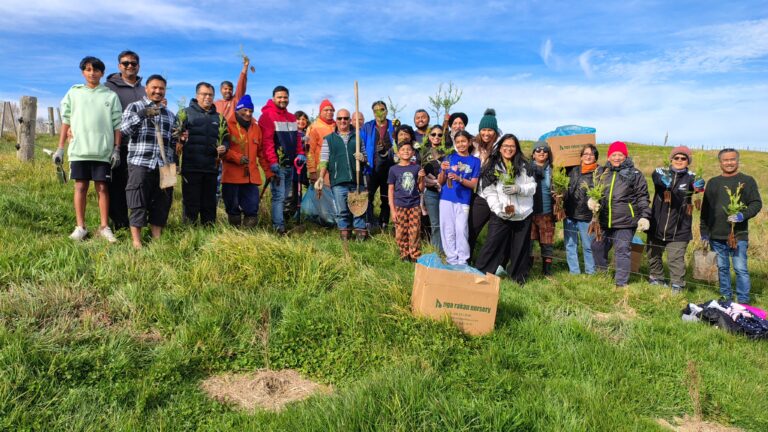
At the same time, hundreds of members of New Zealand’s Indian community gathered peacefully near the High Commission to show support for India’s sovereignty and denounce divisive foreign agendas. Their message was clear: New Zealand’s Indian diaspora rejects extremism and stands for unity and inclusivity.
The Foreign Funding and Pakistan’s Role
The Global Khalistan Network
The Khalistan movement, which seeks to create a separate Sikh state in India’s Punjab region, has been largely dormant in India since the 1990s. However, it has found new life in the diaspora, particularly in Canada, the UK, Australia, and the US. Groups like Sikhs for Justice have orchestrated “referendums” and protests worldwide, including in New Zealand, where they have attempted to mobilise support among the Sikh community.
Pakistan’s Strategic Involvement
Multiple credible sources, including intelligence agencies and investigative journalists, have documented Pakistan’s longstanding support for the Khalistan movement. The Inter-Services Intelligence (ISI), Pakistan’s powerful military intelligence agency, has been the principal architect of this strategy. The ISI’s objectives are clear: destabilise India, foment communal violence, and internationalise the Kashmir and Punjab issues.
- Training and Safe Havens: Pakistan has provided training, arms, and sanctuary to Khalistani militants. Leaders of groups like Babbar Khalsa International, Khalistan Zindabad Force, and Khalistan Tiger Force have operated from Pakistani soil with ISI support.
- Funding and Logistics: Funds are channelled through a mix of state sponsorship, criminal networks, and diaspora donations. Hawala networks, NGOs, and even some gurdwaras have been implicated in moving money to support propaganda, recruitment, and terrorist acts.
- Coordinated Campaigns: Pakistan’s ISI has promoted the so-called “K2” strategy—linking Kashmiri and Khalistani separatists to multiply their impact and confuse international narratives.
Evidence from New Zealand and Abroad
- Sikhs for Justice (SFJ): Banned in India, SFJ is widely recognised as a front for Khalistani terror outfits. Indian security agencies have linked SFJ’s global “referendum” campaigns to funding and direction from Pakistan and its proxies.
- International Arrests and Exposés: The National Investigation Agency (NIA) of India has charged SFJ operatives in Canada, the UK, and the US with raising funds, recruiting militants, and plotting attacks. Several of these cases include evidence of coordination with ISI handlers.
- Recent Reports: Analysts and experts, including former intelligence officials and independent researchers, have repeatedly exposed Pakistan’s dual role: persecuting its own Sikh minority while fuelling Khalistani extremism abroad for geopolitical gain.
Historical Roots of the Khalistan Movement
Origins
The Khalistan movement began in the 1940s as a fringe idea but gained traction in the 1970s and 1980s amid political and social unrest in Punjab. The Anandpur Sahib Resolution, passed by the Shiromani Akali Dal in 1973, initially demanded greater autonomy for Punjab but was later hijacked by separatists advocating outright independence.
The Violent Decades
The 1980s and early 1990s were marked by a brutal insurgency in Punjab. Khalistani militants carried out bombings, assassinations, and massacres, targeting not only government officials but also civilians. The Indian state responded with a heavy crackdown, and by the mid-1990s, the insurgency had been largely defeated.
Diaspora and Pakistan’s Role
With the movement’s collapse in India, pro-Khalistan activism shifted abroad. Diaspora groups, often with little connection to the realities of modern Punjab, became the torchbearers of the cause. Pakistan, seeking revenge for the 1971 war and the loss of Bangladesh, saw an opportunity to “bleed India by a thousand cuts” and began supporting Sikh separatists as a matter of state policy.
- ISI’s “K2” Doctrine: The ISI’s strategy has been to link Kashmiri and Khalistani separatists, providing training, funding, and safe passage for militants.
- Use of Religious Sites: Pakistan has used Sikh religious pilgrimages and gurdwara networks to radicalise and recruit supporters.
The Modern Movement: Referendums, Protests, and Violence
The “Referendum” Tactic
In recent years, SFJ and allied groups have staged non-binding “referendums” in Western cities, including Auckland in November 2024. These events, often poorly attended and lacking legitimacy, are designed to generate media attention and create the illusion of widespread support for Khalistan.
- Auckland “Referendum”: Organised by SFJ, the Auckland event attracted a few thousand participants, many of whom were drawn by curiosity rather than conviction. The local Punjabi community and mainstream Indian organisations largely rejected the event, emphasising unity and respect for India’s sovereignty.
- Wellington Demonstration: The attempted demonstration in Wellington was part of this broader campaign but failed to gain traction due to proactive policing and strong community opposition.
Violence and Intimidation
While most diaspora activism is non-violent, there have been numerous incidents of vandalism, threats, and attacks on Indian diplomatic missions and Hindu temples in the US, UK, Canada, and Australia. These acts are often linked to the same networks that promote “referendums” and protests.
Local Context: New Zealand’s Response
Government and Law Enforcement
New Zealand authorities have walked a tightrope, balancing the right to free speech and assembly with the need to prevent foreign-funded extremism and protect diplomatic missions.
- Monitoring and Intervention: Police and intelligence agencies have stepped up monitoring of extremist groups and acted swiftly to prevent escalation, as seen in Wellington.
- Community Engagement: The government has worked with Indian community leaders to maintain harmony and reassure the diaspora that hate and extremism will not be tolerated.
Political and Diplomatic Dimensions
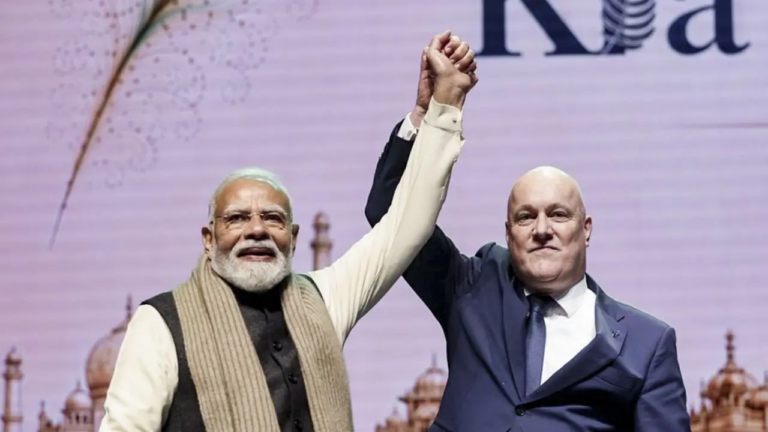
The Khalistan issue has become a diplomatic flashpoint between New Zealand and India. During Prime Minister Luxon’s visit to India in March 2025, Prime Minister Modi publicly raised concerns about anti-India activities in New Zealand, specifically referencing Khalistani separatism.
- New Zealand’s Position: The government maintains that it recognises India’s sovereignty and will act against any illegal activity, but also defends the right to peaceful protest under New Zealand law.
- Indian Concerns: India has made it clear that it expects stronger action against groups and individuals promoting separatism and violence.
Community Voices: Rejecting Division
The overwhelming majority of New Zealand’s Indian and Punjabi communities have rejected Khalistani extremism. Leaders of the New Zealand Indian Central Association and other groups have called for vigilance against foreign influences seeking to sow division.
- Unity and Harmony: Community gatherings in Wellington and Auckland have emphasised inclusivity, peace, and respect for New Zealand’s multicultural values.
- Appeal for Vigilance: Leaders have urged authorities to strengthen immigration screening and monitor the activities of foreign-funded agitators.
The Global Picture: Khalistan, Pakistan, and the Diaspora
Pakistan’s Dual Policy
While Pakistan suppresses its own Sikh minority, it funds and supports Khalistani groups abroad. This hypocrisy has been exposed by Canadian and Indian experts, who note that Pakistan’s aim is not to support Sikh self-determination but to destabilise India.
International Investigations
- SFJ and ISI Links: Multiple investigations have documented how SFJ and other diaspora groups receive funding, logistical support, and direction from Pakistan.
- Terror Financing: The flow of money from Pakistan and criminal networks sustains propaganda, recruitment, and, in some cases, terrorist plots.
Violence in the Diaspora
Attacks on Indian diplomatic missions and Hindu temples in the West have often been linked to Khalistani extremists. These acts are part of a broader campaign to intimidate Indian communities and internationalise the separatist agenda.
Lessons from History: Why the Movement Failed in India
The Khalistan movement failed in India for several reasons:
- Loss of Local Support: The violence of the 1980s and 1990s alienated the Sikh population in Punjab, who overwhelmingly chose peace and prosperity.
- Effective Policing: Indian security forces, under leaders like KPS Gill, dismantled militant networks.
- Diaspora Disconnect: The movement’s diaspora leaders are often out of touch with realities in Punjab, where there is little appetite for separatism today.
Conclusion: Vigilance, Unity, and the Road Ahead
The recent thwarted demonstration at the Wellington Indian High Commission is a reminder that foreign-funded extremist agendas can find footholds even in peaceful, multicultural societies like New Zealand. The Khalistan movement, sustained by Pakistan’s ISI and diaspora networks, poses a persistent threat—not just to India, but to harmony and security wherever it seeks to take root.
New Zealand’s response—swift law enforcement action, community unity, and diplomatic engagement—offers a model for other countries facing similar challenges. The overwhelming rejection of extremism by New Zealand’s Indian community is a testament to the power of unity and the enduring values of peace and inclusivity.
As global events continue to test the resilience of open societies, vigilance against foreign interference and a clear-eyed understanding of history remain essential. The lesson from Wellington is clear: New Zealand will not be a playground for foreign-funded extremism, and its communities will stand together against those who seek to divide.