 Chintapally Suresh
 By Chintapally Suresh | NZB News
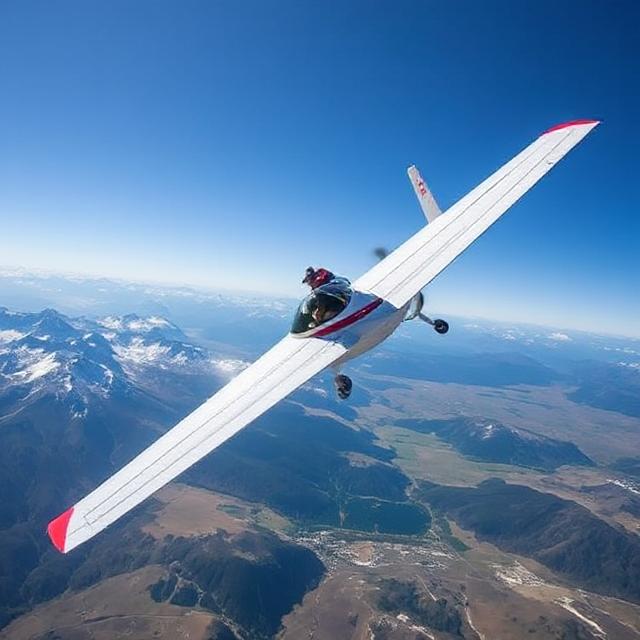
A Swiss eco-explorer has achieved a groundbreaking milestone in sustainable aviation, setting a new world altitude record for solar-powered flight while demonstrating the extraordinary potential of clean energy technology. Raphaël Domjan piloted his revolutionary SolarStratos aircraft to an unprecedented 9,521 metres above Switzerland, surpassing a 15-year-old record and bringing humanity one step closer to the dream of stratospheric solar flight.
The historic achievement took place on Tuesday, August 12, 2025, when Domjan launched from Sion Airport in southwestern Switzerland for a five-hour and nine-minute journey that would redefine the possibilities of solar-powered aviation. His flight shattered the previous certified altitude record of 9,235 metres, which had been held since 2010 by Swiss pilot André Borschberg flying the pioneering Solar Impulse aircraft.
“I share this moment of joy with all the people who have been preparing for this achievement for years,” the 53-year-old adventurer said, celebrating afterwards with a traditional Swiss raclette. The achievement represents what the SolarStratos mission describes as “one of those unforgettable peaks that define great human and technological adventures.”
Engineering Marvel Powered by the Sun
The SolarStratos aircraft represents a triumph of engineering innovation, designed specifically to push the boundaries of what solar energy can accomplish in aviation. The sleek, carbon-fibre aircraft measures 9.6 metres in length with an impressive wingspan of 24.8 metres, accommodating 22 square metres of high-specification solar panels that blanket the wings and provide the craft’s sole source of power.
Weighing just 450 kilograms, the aircraft demonstrates remarkable efficiency with solar panels operating at 25% efficiency and generating approximately 5 kWp of output. This solar energy powers an electric motor connected to lithium-ion batteries, enabling the craft to harness both direct sunlight and stored energy for sustained flight at extreme altitudes.
The aircraft’s design allows it to take off at remarkably low speeds of just 50 kilometres per hour, with a maximum speed of 140 kph and a cruising speed of around 80 kph. This efficiency proved crucial during the record-breaking flight, where Domjan had to make maximum use of rising warm air thermals to climb to the target altitude while conserving battery power for the descent.
Crossing Paths with Commercial Aviation
One of the most symbolic moments of the flight occurred when Domjan reached cruising altitude and crossed paths with a commercial airliner. The SolarStratos team described this encounter as “a powerful symbol of what the decarbonised aviation of tomorrow might look like,” highlighting the potential for solar-powered aircraft to operate alongside conventional aviation at commercial flight levels.
This intersection of old and new technology underscored the mission’s broader purpose: demonstrating that sustainable aviation technologies can compete with traditional fossil fuel-powered aircraft. The flight proved that solar-powered aircraft can reach altitudes previously thought impossible, operating in the same airspace as commercial jets while producing zero emissions.
The technical achievement required careful coordination between solar energy collection, battery management, and aerodynamic efficiency. During the first phase of the ascent, the aircraft relied heavily on thermal currents to reach 4,000-5,000 metres before solar power became the primary means of maintaining altitude and continuing the climb.
Pioneer’s Journey from Sea to Sky
Domjan’s latest achievement builds upon an extraordinary career dedicated to demonstrating the potential of renewable energy technologies. In 2012, he became the first person to sail around the world in a fully solar-powered boat, a journey that began in Miami in 2010 and showcased the viability of solar power for long-distance transportation.
His background as what he terms an “eco-adventurer” includes piloting planes, gliders, and helicopters, but his passion lies in proving that sustainable technologies can rival and even surpass fossil fuel alternatives. “It’s important to demonstrate what we can achieve with solar energy,” Domjan told AFP. “The dream of flight is probably the oldest dream of mankind.”
In 2020, Domjan performed a solar-powered parachute jump from SolarStratos, further demonstrating his commitment to pushing the boundaries of what solar energy can achieve. His life’s work exists at the intersection of adventure and activism, using spectacular achievements to promote renewable energy and environmental protection.
Technical Validation and Future Ambitions
The flight data from Domjan’s record-breaking achievement will be submitted to the World Air Sports Federation governing body, which will determine whether to officially validate the new record. The certification process examines pressure altitude corrected to standard density altitude, which serves as the official reference for aviation altitude records.
However, Domjan’s ambitions extend far beyond the current record. His ultimate goal is to become the first person to take a solar-powered aircraft above 10,000 metres, reaching the same altitude where commercial airliners cruise. If this barrier is broken, the team hopes to achieve the first manned solar-powered flight into the stratosphere, which at Switzerland’s latitude begins at approximately 12,000 metres.
A preparatory flight on July 31 reached 6,589 metres, surpassing the aircraft’s previous best performance in 2024, while an initial attempt on Friday was abandoned due to unfavourable thermal conditions. The successful record flight on Sunday followed a previous attempt that reached 8,224 metres, demonstrating the team’s persistence and methodical approach to achieving their ambitious goals.
Environmental Mission and Global Impact
The SolarStratos project represents more than a pursuit of aviation records; it serves as a powerful demonstration of sustainable technology’s potential to address climate change and environmental degradation. The mission aims to “capture imaginations with emblematic, spectacular challenges that promote solar energy and the protection of our biosphere and planet.”
Domjan’s advocacy for renewable energy technologies carries particular urgency as the aviation industry faces increasing pressure to reduce its carbon footprint. “My goal is to show to the young generation of today and tomorrow that tomorrow it will still be possible to fly without burning any fossil energies, without emitting any carbon dioxide,” he explained.
The achievement serves as a flying manifesto for cleaner skies and sustainable aviation, demonstrating that clean technologies can not only equal but potentially surpass the capabilities of fossil fuel-powered aircraft. By exploring the upper atmosphere using only solar energy, SolarStratos contributes to understanding and preserving the Earth’s atmospheric environment.
Technological Innovation for Tomorrow
The SolarStratos aircraft functions as more than just a record-breaking machine; it serves as a flying laboratory advancing sustainable aviation technology. Every component, from the pilot’s pressure suit powered solely by solar energy to the ultralight propulsion systems, represents pioneering innovation in clean technology development.
The project’s technical challenges have driven innovations in solar cell optimisation, thermal management in extreme conditions, and energy efficiency systems that could have applications far beyond aviation. Each technical breakthrough achieved through the SolarStratos program contributes to the broader development of sustainable transportation technologies.
The aircraft’s ability to operate at high altitudes while producing zero pollution enables unprecedented atmospheric measurements at altitudes rarely reached by conventional aircraft, contributing valuable scientific data about the Earth’s upper atmosphere and climate systems.
Summary
Raphaël Domjan’s record-breaking flight to 9,521 metres represents a watershed moment in sustainable aviation, proving that solar-powered aircraft can achieve extraordinary altitudes while advancing the cause of environmental protection. His achievement demonstrates the remarkable potential of clean energy technologies to rival traditional fossil fuel systems, offering hope for a future where aviation can operate without contributing to climate change. As Domjan continues pursuing his ultimate goal of stratospheric solar flight, his work serves as an inspiration to innovators worldwide and a powerful symbol of humanity’s capacity to develop sustainable solutions to environmental challenges. The SolarStratos mission proves that the marriage of adventure, innovation, and environmental stewardship can achieve seemingly impossible goals while pointing toward a cleaner, more sustainable future for aviation and transportation technology.