




 Swamy Gitananda
 A Daily Exploration of Dharma, Jnana, and Relevance to Modernity
By Swami Gitananda
Published on New Zealand Bharat (NZB) News, April 10, 2025
Om Shri Ganeshaya Namaha. Salutations to Ganesha, the remover of obstacles, as we delve deeper into the Bhagavad Gita, the Jnana-Sagara (ocean of knowledge) that transforms Kurukshetra into a dharmakshetra of eternal truth. Yesterday, Arjuna, the kapidhvajah (monkey-bannered one), gazed upon the Kaurava army and lifted his bow, poised for war yet teetering on the edge of vishada (despondency). Today, he speaks for the first time, addressing Krishna with a request to position the chariot between the armies, a pivotal moment that births his vishada-yoga (yoga of despondency) and sets the stage for Krishna’s upadesha (teaching).
This series is a daily sadhana (spiritual practice), offering one shloka at a time—its direct meaning, a profound exploration of its tattva (essence), insights from sampradayas (spiritual traditions), and its resonance with modern fields like quantum science, leadership, and svasthya (wellbeing). Let us now immerse ourselves in Adhyaya 1, Shloka 21, where Arjuna’s voice emerges, a prelude to the Gita’s eternal wisdom.
The Shloka
अर्जुन उवाच
सेनयोरुभयोर्मध्ये रथं स्थापय मेऽच्युत।
Arjuna uvacha
Senayorubhayormadhye ratham sthapaya me’chyuta.
Direct Meaning
“Arjuna said (arjuna uvacha): ‘O Achyuta (achyuta), place my chariot (ratham sthapaya me) between both armies (senayorubhayormadhye).”’
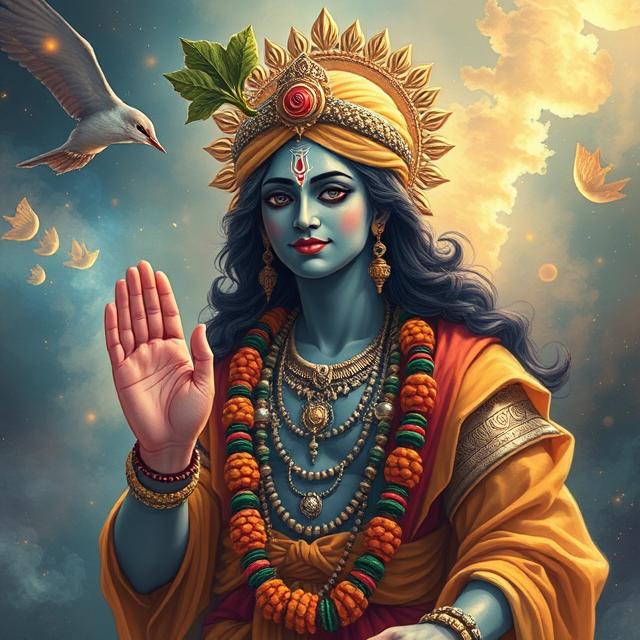
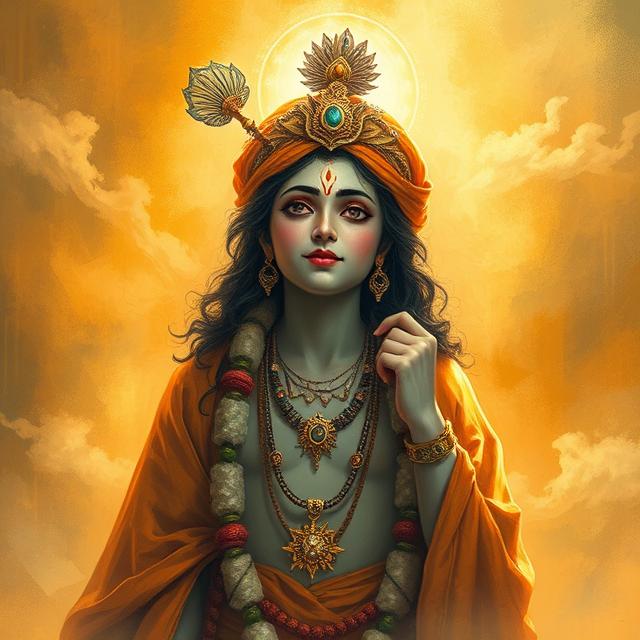
In this verse, Arjuna addresses Krishna as Achyuta (the infallible one) and requests him to position their chariot in the middle of the opposing armies—the Pandavas and Kauravas—marking the onset of his introspection and vishada.
Explanation of the Shloka
This shloka introduces Arjuna’s voice, shifting the Gita from Sanjaya’s narration to direct dialogue, a sacred exchange between jivatma (individual soul) and Paramatma (supreme soul). Arjuna’s request, though tactical, reveals his kshatriya curiosity and the stirrings of moha (delusion), setting the stage for Krishna’s jnana-yoga. Let us explore its layers with viveka (discernment) and bhakti (devotion).
- Arjuna Uvacha: Arjuna Said
- Arjuna Uvacha: “Arjuna said,” a textual marker signaling his first words, breaking the silence after the conches’ nada (sound). As Dhananjaya (conqueror of wealth) and Pandava, his voice carries kshatriya authority, yet hints at vulnerability—a warrior poised to falter.
This opening foreshadows the Gita’s heart: a shishya (disciple) seeking Guru’s guidance, a bond Krishna will elevate beyond the battlefield.
- Arjuna Uvacha: “Arjuna said,” a textual marker signaling his first words, breaking the silence after the conches’ nada (sound). As Dhananjaya (conqueror of wealth) and Pandava, his voice carries kshatriya authority, yet hints at vulnerability—a warrior poised to falter.
- Senayorubhayormadhye: Between Both Armies
- Senayorubhayormadhye: “Between both armies,” Arjuna seeks a vantage point between the Pandavas and Kauravas, a neutral space to survey Kurukshetra. Ubhaya (both) underscores the dual forces—dharma and adharma—now face-to-face.
His request is strategic, a kshatriya assessing the vyudham (formation), yet it opens the door to vishada, as he will soon see kin—Bhishma, Drona, and cousins—among the foes. This foreshadows Krishna’s teaching in Adhyaya 2: “Na jayate mriyate va”—“The soul is neither born nor dies.”
- Senayorubhayormadhye: “Between both armies,” Arjuna seeks a vantage point between the Pandavas and Kauravas, a neutral space to survey Kurukshetra. Ubhaya (both) underscores the dual forces—dharma and adharma—now face-to-face.
- Ratham Sthapaya Me: Place My Chariot
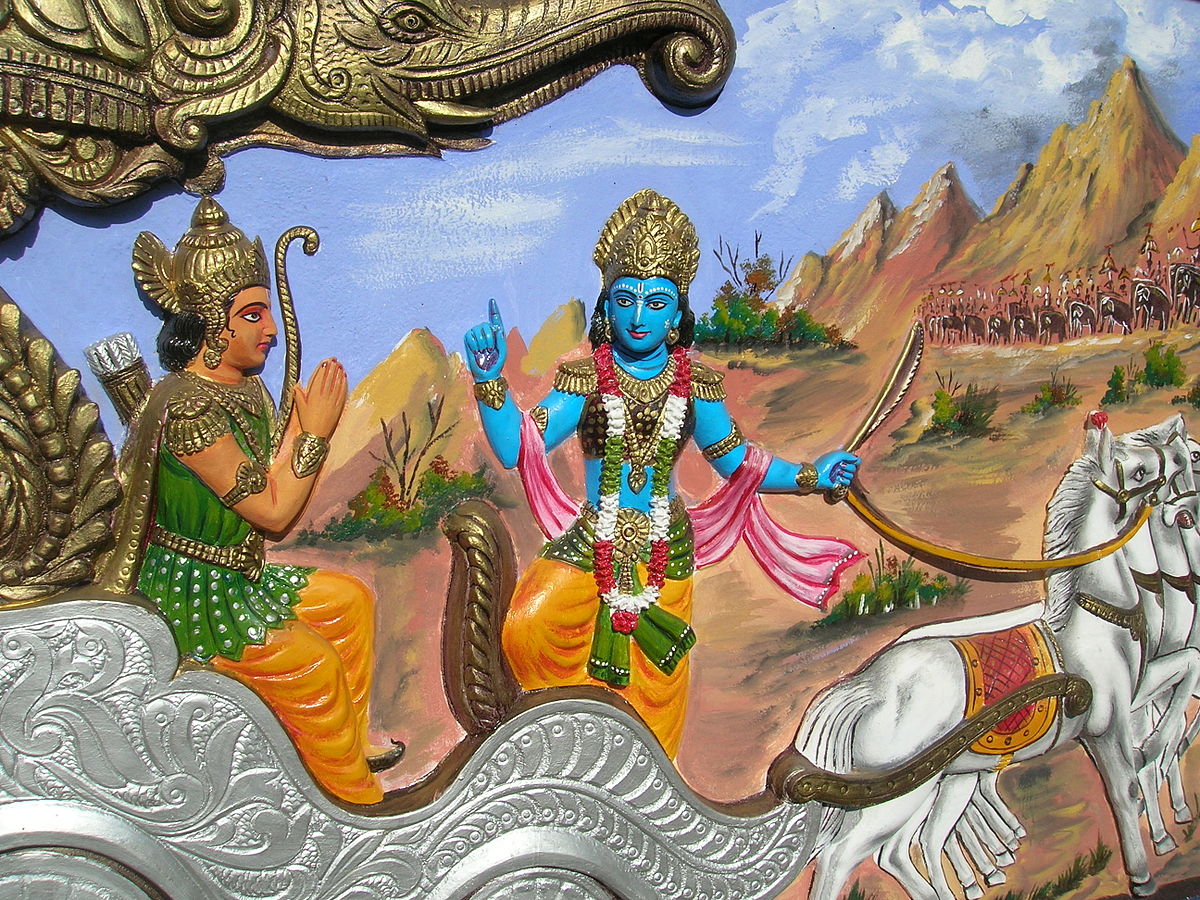
- Ratham: “Chariot,” the mahati syandana (great chariot) from Shloka 14, yoked with white horses and bearing Hanuman’s banner, symbolizes Arjuna’s karmakshetra (field of action).
- Sthapaya Me: “Place for me,” a command softened by dependence—Arjuna entrusts Krishna, his Sarathi (charioteer), to position him. This act hints at bhakti, a jiva leaning on Ishvara, though his vishada will soon test this trust.
The chariot becomes the Gita’s stage, a yogic symbol Krishna will later unpack: body, mind, and soul guided by divine wisdom.
- Achyuta: O Infallible One
- Achyuta: “O Infallible One,” a divine name for Krishna meaning “unfallen” or “steadfast,” reflecting his eternal sattva and Yogeshvara nature. Arjuna’s choice of address reveals reverence and intimacy—Krishna as sakha (friend) and Guru.
This invocation contrasts with Arjuna’s looming doubt, a subtle plea to the unshakable amidst his own sankoca (hesitation), priming Krishna’s role as Hrishikesha (lord of the senses).
- Achyuta: “O Infallible One,” a divine name for Krishna meaning “unfallen” or “steadfast,” reflecting his eternal sattva and Yogeshvara nature. Arjuna’s choice of address reveals reverence and intimacy—Krishna as sakha (friend) and Guru.
- The Stirrings of Vishada
Arjuna’s request, though practical, is the spark of his vishada-yoga. Seeking to see “both armies,” he invites a confrontation with sneha (affection) and dharma—kinship versus duty. The kleshas (afflictions)—raga (attachment) and abhinivesha (clinging)—begin to cloud his buddhi (intellect), a state Krishna will address with jnana and yoga. - The Chariot as Metaphor
Krishna positioning the chariot symbolizes Ishvara steering the jiva through samsara. Arjuna’s command, while martial, unwittingly sets the Gita’s philosophical stage—Kurukshetra as the manas (mind), the chariot as the self, and Krishna as atman’s guide. This aligns with Krishna’s later counsel: “Yogastha kuru karmani”—“Perform actions established in yoga” (Adhyaya 2).
This shloka, then, is Arjuna’s awakening—a kshatriya’s call laced with vishada, answered by Krishna’s silent kripa (grace). It invites us to ponder: Do we, like Arjuna, seek clarity amid conflict, and can we trust the Achyuta within?
Spiritual Wisdom from Authoritative Voices
The Bhagavad Gita’s divya-tattva (divine essence) shines through the bhashyas of acharyas, each illuminating its eternal truth. Let us draw from their insights.
- Adi Shankaracharya (Advaita Vedanta)
Shankaracharya sees Arjuna’s request as maya’s pull—desire to see kin veiling atman’s unity. Achyuta is Brahman, unchanging amid samsara. This shloka urges viveka—to discern the eternal beyond forms, a truth Krishna will unveil in Adhyaya 13. - Ramanujacharya (Vishishtadvaita)
Ramanuja interprets Arjuna’s words as a jiva’s plea to Narayana. Achyuta reflects Krishna’s steadfast kripa, guiding Arjuna to prapatti (surrender). The shloka hints at bhakti’s dawn, as the chariot becomes a seat of divine communion. - Madhvacharya (Dvaita)
Madhvacharya views Arjuna’s command as Vishnu-bhakta’s trust in Achyuta’s sankalpa. The chariot’s placement is Vishnu’s will, testing Arjuna’s nishtha (steadfastness). This shloka underscores daiva guidance, lifting the jiva beyond vishada. - Swami Vivekananda (Neo-Vedanta)
Vivekananda reads this as duty’s call. “Arjuna seeks to see, but Krishna will show him truth,” he writes. The chariot is our karmakshetra, steered by divine will. He urges us to awaken shakti with dharma, a lesson the Gita unfolds.
These voices weave a jnana-mala (garland of wisdom), guiding us toward moksha.
Relevance to Today’s Context
The Bhagavad Gita is a jivan-shastra (manual for life), its wisdom vibrant today. Let us explore how this shloka resonates with quantum science, leadership, and svasthya.
- Quantum Science and Cosmology
Arjuna’s request mirrors the observer’s role—positioning alters perception—his chariot a focal point in Kurukshetra’s chaos. Krishna’s Achyuta presence evokes ekatva (oneness), unifying potential. This shloka suggests a dharmakshetra cosmos, where intent shapes reality, a quest science pursues. - Leadership and Business
In the corporate Kurukshetra, Arjuna’s command reflects a leader seeking perspective—senayorubhayormadhye as balance, ratham sthapaya as strategy. Krishna’s role offers a path: lead with guidance, not haste, fostering drishti (vision) amid conflict, as Achyuta ensures stability. - Svasthya (Wellbeing)
Arjuna’s vishada mirrors modern uncertainty—chitta-vikshepa from divided loyalties—while Achyuta suggests inner steadiness. Practices inspired by this shloka—pranayama and dhyana (meditation)—nurture shanti, aligning the manas with purpose before action.
Conclusion: The Voice of Doubt
This twenty-first shloka births Arjuna’s vishada-yoga, his request to Krishna a step toward wisdom amid war. It stands as the Gita’s gateway, where dharma meets doubt under Achyuta’s gaze. Each day, we unveil another shloka of this divya-katha, seeking satyam (truth) and shivam (auspiciousness).
Tomorrow, Arjuna will name his intent, deepening his vishada as Krishna listens. Let us approach with bhakti and vichar, chanting: “Krishnam vande jagadgurum”—to Krishna, the world’s Guru. May His kripa guide us onward.
Hari Om Tat Sat.