 Swamy Gitananda
 A Daily Exploration of Dharma, Jnana, and Relevance to Modernity
By Swami Gitananda
Published on New Zealand Bharat (NZB) News, March 21, 2025
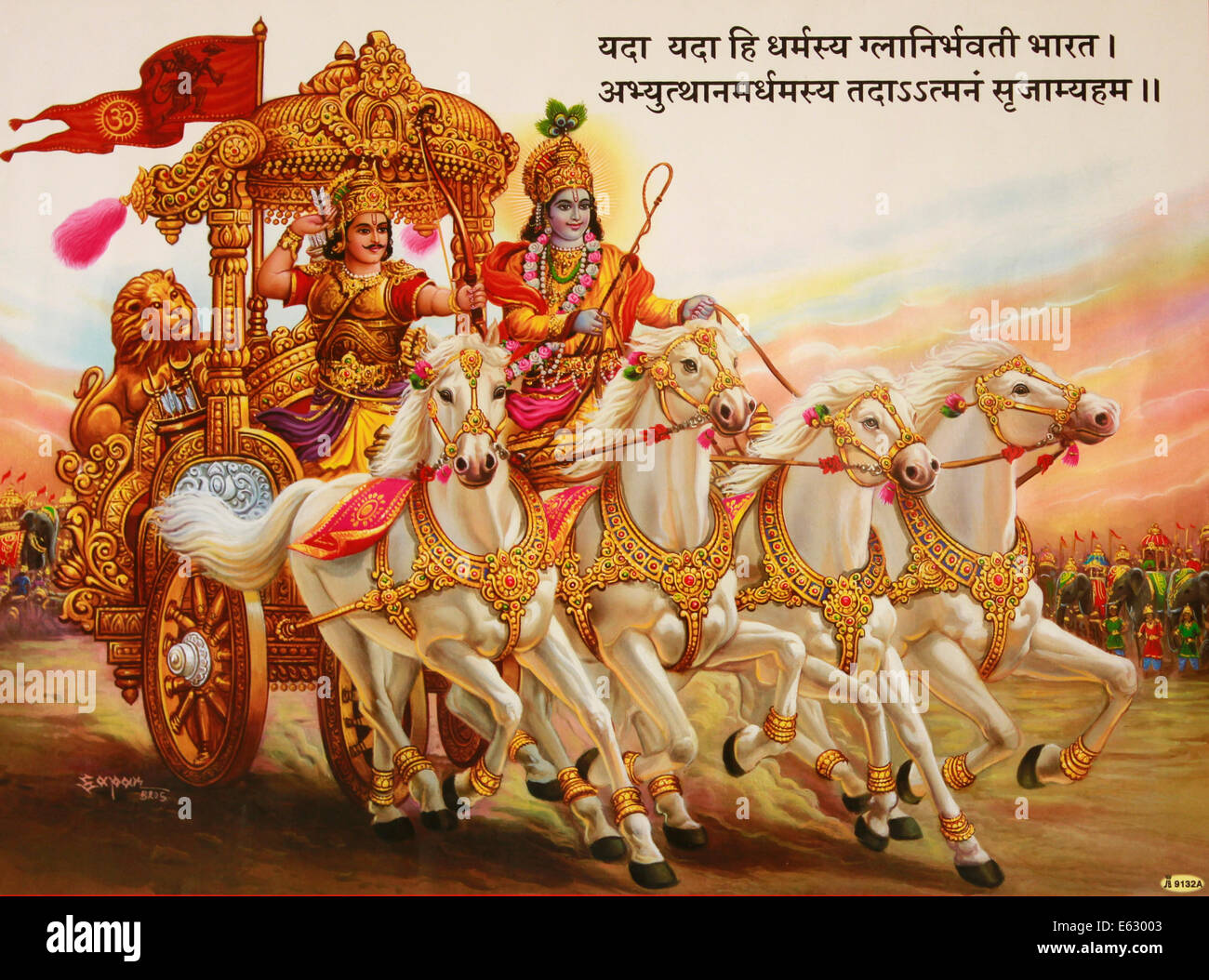
Om Namo Bhagavate Vasudevaya. With the grace of the Supreme, today we commence a sacred pilgrimage through the timeless verses of the Bhagavad Gita, the divine dialogue between Paramatma (the Supreme Soul) and Jivatma (the individual soul). This series, unfolding one shloka each day, is an offering at the lotus feet of Sri Krishna, the Vishwarupa (universal form), and an invitation to you, the reader, to drink deeply from the nectar of Sanatana Dharma—the eternal path of righteousness.
The Bhagavad Gita, nestled within the vast expanse of the Mahabharata, is not merely a scripture but a jivan-shastra—a manual for living. Spoken on the battlefield of Kurukshetra, it transcends time and space, addressing the perennial questions of existence: What is my dharma (duty)? How do I attain moksha (liberation)? What is the nature of the atman (self)? In this series, we shall explore each shloka with reverence, unpacking its direct meaning, delving into its tattva (essence) through the lens of authoritative voices from various sampradayas (spiritual traditions), and illuminating its relevance to the modern world—be it through the prisms of quantum science, cosmology, leadership, business, or svasthya (wellbeing).
Today, we begin with the very first shloka of the Gita, found in Chapter 1, Verse 1 (Adhyaya 1, Shloka 1). This verse marks the inception of Arjuna’s sankalpa (resolve) and Krishna’s upadesha (divine counsel), setting the stage for the profound teachings that follow. Let us dive into this sacred ocean with humility and shraddha (faith).
The Shloka
धृतराष्ट्र उवाच
धर्मक्षेत्रे कुरुक्षेत्रे समवेता युयुत्सवः।
मामकाः पाण्डवाश्चैव किमकुर्वत सञ्जय॥
Dhritarashtra uvacha
Dharmakshetre kurukshetre samaveta yuyutsavah,
Mamakaah pandavashchaiva kimakurvata sanjaya.
Direct Meaning
Dhritarashtra said:
“O Sanjaya, gathered on the sacred field of Kurukshetra, the land of dharma, eager to fight, what did my sons and the sons of Pandu do?”
This opening verse is voiced by Dhritarashtra, the blind king of the Kuru dynasty, who addresses his charioteer and seer, Sanjaya. Endowed with divine vision (divya-drishti) by the sage Vyasa, Sanjaya narrates the events of the battlefield to the anxious king. Dhritarashtra seeks to know the actions of his sons (mamakaah, meaning “my own”) and the Pandavas, who have assembled at Kurukshetra, a place sanctified as dharmakshetra (the field of righteousness), ready for war (yuyutsavah).
Explanation of the Shloka
At its surface, this shloka appears as a simple inquiry from a father and king about the unfolding of a great war. Yet, within its brevity lies a cosmos of spiritual and philosophical significance. Let us dissect its layers with care.
- Dhritarashtra’s Blindness: A Symbol of Avidya (Ignorance)
Dhritarashtra, though physically blind, represents a deeper spiritual blindness—avidya, the ignorance that veils the truth. His question reveals attachment (moha) to “my sons” (mamakaah), distinguishing them from the Pandavas, who are equally his nephews. This division reflects the ahamkara (ego) that clouds discernment, a theme Krishna will later unravel as the root of suffering. - Dharmakshetra and Kurukshetra: The Dual Nature of Existence
The battlefield is named twice: dharmakshetra (field of righteousness) and kurukshetra (field of the Kurus). Dharmakshetra signifies the eternal arena of dharma—the cosmic order and moral duty—while kurukshetra grounds it in the historical and physical realm of the Kuru dynasty. Together, they symbolize the human condition: a battleground where the material (prakriti) and spiritual (purusha) intersect. Every soul faces this inner Kurukshetra, where choices between dharma and adharma (unrighteousness) define its destiny. - Yuyutsavah: The Will to Engage
The term yuyutsavah—“eager to fight”—indicates the readiness of both sides for conflict. In a broader sense, it mirrors the restlessness of the jivatma, caught in the samsara (cycle of birth and death), yearning for resolution. This eagerness is not merely martial but existential, a prelude to the Gita’s exploration of action (karma), detachment (vairagya), and surrender (sharanagati). - Sanjaya: The Witness of Truth
Sanjaya, gifted with divya-drishti, embodies the role of the sakshi (witness)—one who sees without attachment. His narration to Dhritarashtra foreshadows Krishna’s teachings on sakshi-bhava (the state of being a detached observer), a key to transcending the dualities of life.
This shloka, then, is not merely a narrative opening but a philosophical seed. It introduces the tension between attachment and duty, ignorance and wisdom, setting the stage for Arjuna’s vishada (despondency) and Krishna’s jnana-upadesha (teaching of knowledge).
Spiritual Wisdom from Authoritative Voices
The richness of the Bhagavad Gita lies in its multifaceted interpretations, as expounded by acharyas across sampradayas. Let us draw from their bhashyas (commentaries) to deepen our understanding of this shloka.
- Adi Shankaracharya (Advaita Vedanta)
In his Gita Bhashya, Shankaracharya views Dhritarashtra’s question as emblematic of ajnana (ignorance) rooted in dehabhimana (identification with the body). The distinction between “my sons” and the Pandavas reflects the delusion of separateness, which Advaita seeks to dissolve into the oneness of Brahman. For Shankaracharya, Kurukshetra is the inner battlefield where the atman must triumph over the ahamkara. - Ramanujacharya (Vishishtadvaita)
Ramanuja interprets dharmakshetra as the realm where dharma is upheld through devotion (bhakti) to Narayana. Dhritarashtra’s attachment signifies a failure to surrender to the divine will, a theme central to Vishishtadvaita. The shloka, for Ramanuja, hints at the need for prapatti (self-surrender), which Krishna will later elaborate as the path to liberation. - Madhvacharya (Dvaita)
In his dualistic framework, Madhvacharya sees Dhritarashtra’s query as a sign of his tamasic nature—ignorance and attachment—contrasted with Sanjaya’s sattvic clarity as a devotee of Vishnu. The shloka underscores the eternal conflict between dharma and adharma, with Vishnu as the ultimate arbiter. - Swami Vivekananda (Neo-Vedanta)
Vivekananda, a modern torchbearer of Vedantic thought, frames Kurukshetra as the field of action (karmakshetra) where every individual must confront their duties. He writes, “The Gita begins with a question because life itself is a question.” Dhritarashtra’s words reflect humanity’s perennial struggle with partiality and fear, urging us to seek the jnana (knowledge) that Krishna imparts.
These diverse yet harmonious perspectives reveal the Gita’s universality, transcending sectarian boundaries to offer sadhana (spiritual practice) for all.
Relevance to Today’s Context
The Bhagavad Gita is not a relic of antiquity but a living shastra, pulsating with relevance for the 21st century. Let us explore how this first shloka speaks to modern paradigms: quantum science, leadership, and svasthya (wellbeing).
- Quantum Science and Cosmology
The dual naming of dharmakshetra and kurukshetra evokes the quantum principle of superposition—where a single reality holds multiple states. Just as particles exist in a probabilistic field until observed, Kurukshetra is both a physical locale and a metaphysical plane. Sanjaya’s divya-drishti parallels the observer effect in quantum mechanics, where perception shapes reality. This shloka invites us to ponder: Are we, like Dhritarashtra, blind to the interconnectedness of the cosmos, or can we cultivate the vision to see beyond the material veil? - Leadership and Business
In the corporate arena, Dhritarashtra’s question mirrors a leader’s anxiety amidst competition—attachment to “my team” versus “theirs.” This moha breeds division, undermining sangathan (organizational unity). The Gita’s battlefield becomes a metaphor for the marketplace, where leaders must navigate ethical dilemmas (dharma-sankata). Krishna’s forthcoming counsel on nishkama karma (selfless action) offers a blueprint for leadership: act with purpose, not possessiveness. For today’s CEOs and entrepreneurs, this shloka is a call to transcend ego-driven decisions and embrace a higher vision. - Svasthya (Wellbeing)
Dhritarashtra’s restlessness reflects a mind trapped in kleshas (afflictions)—raga (attachment) and dvesha (aversion). Modern psychology echoes this in its study of stress and bias, often rooted in identification with transient identities. Kurukshetra is our inner psyche, where battles of doubt and fear rage. The Gita’s promise, hinted at here, is shanti (peace) through self-awareness. Practices like dhyana (meditation) and svadhyaya (self-study), inspired by this shloka, can guide us toward mental clarity and emotional resilience.
The Journey Ahead
This first shloka is a doorway—a praveshika—into the Gita’s vast jnana-sagara (ocean of knowledge). It introduces us to Dhritarashtra’s moha, Sanjaya’s sakshi-bhava, and the sanctity of dharmakshetra, preparing us for Arjuna’s anguish and Krishna’s amrita-vani (nectar-like words). Each day, we shall uncover a new shloka, peeling back its layers to reveal tattva, artha, and prayojana—truth, meaning, and purpose.
As we stand at this threshold, let us invoke Sri Krishna’s grace: “Kleśo ’dhikataras teṣām avyaktāsakta-cetasām” (Gita 12.5)—“Greater is the toil of those whose minds are attached to the unmanifest.” May we move from blindness to vision, from attachment to freedom, from samsara to moksha. Join me tomorrow as we explore Arjuna’s response, stepping deeper into this divine satsang.
Hari Om Tat Sat.