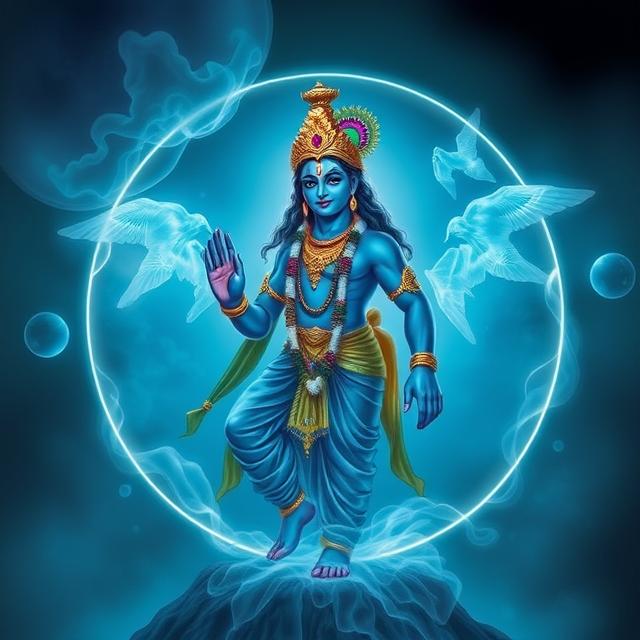





 Swamy Gitananda
 A Daily Exploration of Dharma, Jnana, and Relevance to Modernity
By Swami Gitananda
Published on New Zealand Bharat (NZB) News, March 29, 2025
Om Shri Shivaya Namaha. Salutations to Shiva, the destroyer of avidya (ignorance), as we deepen our pilgrimage through the Bhagavad Gita, the Jnana-Yoga-Shastra that unveils the path from samsara (worldly bondage) to moksha (liberation). Yesterday, Duryodhana began naming his army’s nayakas (leaders)—Drona, Bhishma, Karna, Kripa, Ashvatthama, Vikarna, and Saumadatti—his voice a blend of abhimana (pride) and moha (delusion). Today, he concludes this litany, broadening his scope to encompass countless warriors, a final flourish that betrays both his confidence and his underlying bhaya (fear).
This series is a daily sadhana (spiritual practice), offering one shloka at a time—its direct meaning, a meticulous exploration of its tattva (essence), insights from sampradayas (spiritual traditions), and its resonance with modern realms like quantum science, leadership, and svasthya (wellbeing). Let us now immerse ourselves in Adhyaya 1, Shloka 9, where Duryodhana’s catalog reaches its crescendo, setting the stage for the Gita’s deeper revelations.
The Shloka
अन्ये च बहवः शूरा मदर्थे त्यक्तजीविताः।
नानाशस्त्रप्रहरणाः सर्वे युद्धविशारदाः॥
Anye cha bahavah shura madarthe tyaktajivitah,
Nanashastrapraharanah sarve yuddhavisharadah.
Direct Meaning
“And many other heroes (anye cha bahavah shura), who have forsaken their lives for my sake (madarthe tyaktajivitah), equipped with various weapons (nanashastrapraharanah), all skilled in warfare (sarve yuddhavisharadah).”
In this verse, Duryodhana concludes his address to Dronacharya, shifting from specific names to a broader claim of numerous shura (heroes) in his army. He praises their willingness to die for him, their diverse weaponry, and their expertise in battle.
Explanation of the Shloka
This shloka marks the culmination of Duryodhana’s enumeration, a sweeping assertion of his forces’ might that seeks to counterbalance the Pandavas’ strength. His words, though a rallying cry, pulse with rajas (passion) and tamas (ignorance), offering a window into his chitta (consciousness). Let us unpack its layers with viveka (discernment) and bhakti (devotion).
- Anye Cha Bahavah Shura: The Multitude of Heroes
The phrase anye cha bahavah shura (“and many other heroes”) broadens Duryodhana’s focus from named nayakas to an unspecified host. Shura (heroes) echoes his earlier praise of the Pandavas, yet here it serves to inflate his own ranks. This shift from individuals to a collective suggests a desperate grasp at numbers, a contrast to the Pandavas’ dharma-rooted unity. - Madarthe Tyaktajivitah: For My Sake
Duryodhana’s claim that these warriors have tyaktajivitah (“forsaken their lives”) madarthe (“for my sake”) is a bold assertion of loyalty. It reflects his ahamkara (ego), framing their sacrifice as personal allegiance rather than a higher cause. This possessiveness contrasts with Krishna’s later teaching in Adhyaya 3: “Karmanyevadhikaraste”—“Your right is to action alone”—where true duty transcends self-interest. - Nanashastrapraharanah: Diverse Weaponry
The term nanashastrapraharanah (“equipped with various weapons”) highlights the Kauravas’ arsenal—swords, bows, maces, and more. This diversity showcases their readiness, yet it also hints at chaos, lacking the Pandavas’ vyudham (ordered formation). It foreshadows the Gita’s theme: external might without dharma is hollow. - Sarve Yuddhavisharadah: All Skilled in Warfare
Duryodhana’s final flourish—sarve yuddhavisharadah (“all skilled in warfare”)—praises his warriors’ expertise. Yuddhavisharadah denotes mastery, akin to the Pandavas’ maharathah. Yet, this skill, rooted in adharma, lacks the sattvic purpose that Krishna will later extol as yoga—union with the divine through action. - The Subtext of Fragility
Beneath this bravado lies fragility. Duryodhana’s need to proclaim loyalty and skill reveals bhaya (fear) of the Pandavas’ strength, a klesha (affliction) that Krishna will address in Adhyaya 2: “Kutas tva kashmalam idam”—“Whence this weakness?” His verbosity contrasts with the Pandavas’ silent samatva (equanimity), priming us for Arjuna’s vishada and Krishna’s jnana-upadesha.
This shloka, then, is a climax of Duryodhana’s pride, a tapestry of numbers and valor that masks his inner unrest. It beckons us to ask: Do we, like Duryodhana, seek strength in externals, or can we find the shanti of dharma within?
Spiritual Wisdom from Authoritative Voices
The Bhagavad Gita’s divya-tattva (divine essence) glows through the bhashyas of acharyas, each illuminating its eternal wisdom. Let us draw from their insights.
- Adi Shankaracharya (Advaita Vedanta)
Shankaracharya sees Duryodhana’s claim as a deepening of maya—attachment to a fleeting army over the eternal atman. The shura and their weapons are anitya (transient), and his moha blinds him to Brahman. This shloka urges viveka—to transcend multiplicity for the One, a truth Krishna will reveal in Adhyaya 10. - Ramanujacharya (Vishishtadvaita)
Ramanuja interprets Duryodhana’s madarthe as a soul estranged from Narayana, chasing personal glory. The Pandavas’ bhakti contrasts with his adharma-fueled loyalty. The shloka hints at prapatti—surrender to Krishna as the true Yuddhavisharada (master of battle), a path Arjuna will follow. - Madhvacharya (Dvaita)
Madhvacharya views Duryodhana’s shura as tamasic forces, their sacrifice rooted in asuric pride, not Vishnu-bhakti. Their skill lacks divine sanction, unlike the Pandavas’ sattvic might. This shloka underscores the jiva’s choice: to serve daiva-shakti or defy it with delusion. - Swami Vivekananda (Neo-Vedanta)
Vivekananda reads this as a lesson in false strength. “Duryodhana boasts of numbers, but dharma wins,” he writes. The yuddhavisharadah falter without purpose. He urges us to awaken shakti in our karmakshetra, aligning with dharma as Krishna will teach, not mere bravado.
These voices form a sangita (harmony) of jnana, guiding us toward moksha.
Relevance to Today’s Context
The Bhagavad Gita is a jivan-sutra (thread of life), its wisdom vital today. Let us explore how this shloka resonates with quantum science, leadership, and svasthya.
- Quantum Science and Cosmology
Duryodhana’s bahavah shura evoke classical multiplicity, while the Pandavas’ unity mirrors quantum coherence—a system bound by an unseen force (Krishna). His nanashastrapraharanah suggests chaos, contrasting with dharma’s order. This shloka parallels cosmology: from entropy emerges harmony, a unity science seeks in its grand narrative. - Leadership and Business
In the corporate Kurukshetra, Duryodhana’s boast reflects a leader touting resources—numbers, tools, skills—yet rooted in moha. The Pandavas’ sangathan (collaboration) outshines his chaos. Krishna’s nishkama karma offers a path: lead with purpose, not possession, fostering drishti (vision) for sustainable triumph. - Svasthya (Wellbeing)
Duryodhana’s madarthe mirrors modern attachment—chitta-vikshepa from ego-driven goals. The Pandavas’ silent samatva suggests inner shakti, a yogic ideal. Practices like dhyana (meditation) and sankalpa (intention), inspired by this shloka, can free the manas from kleshas, nurturing shanti.
Conclusion: The Echo of Emptiness
This ninth shloka crowns Duryodhana’s litany, a flourish of might shadowed by adharma. It builds toward Arjuna’s vishada, where Krishna’s jnana will dawn. Each day, we unveil another shloka of this divya-gita, seeking satyam (truth) and sundaram (beauty).
Tomorrow, Duryodhana will assess his army’s strength, his confidence wavering. Let us approach with bhakti and vichar, chanting: “Yad yad vibhutimat sattvam” (Gita 10.41)—all glory is Krishna’s. May His kripa guide us onward.
Hari Om Tat Sat.