

 Swamy Gitananda
 A Daily Exploration of Dharma, Jnana, and Relevance to Modernity
By Swami Gitananda
Published on New Zealand Bharat (NZB) News, April 07, 2025
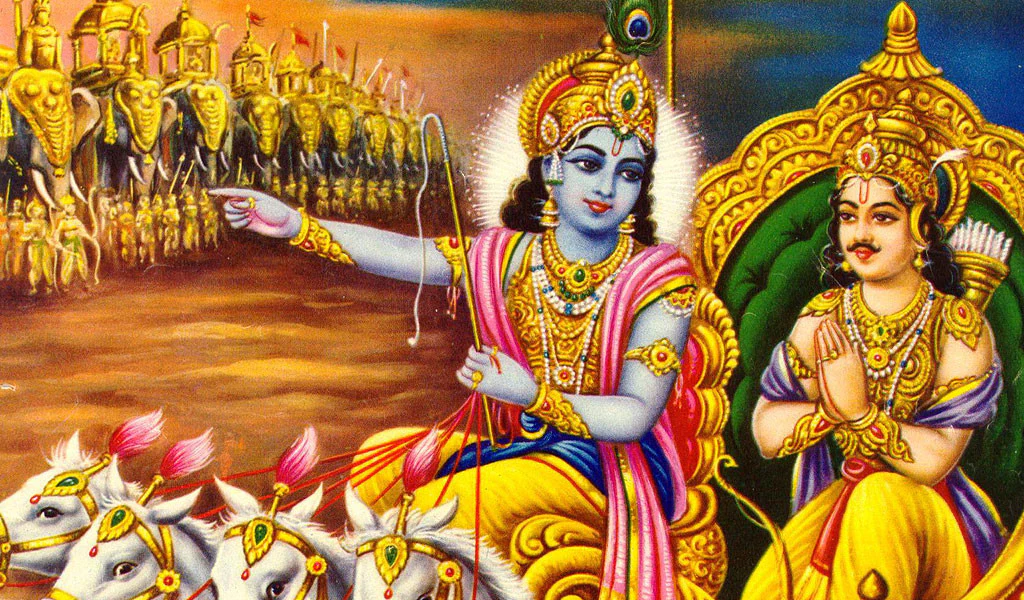
Om Shri Shivaya Namaha. Salutations to Shiva, the destroyer of avidya (ignorance), as we deepen our pilgrimage through the Bhagavad Gita, the Divya-Sangita (divine song) that transforms Kurukshetra into a dharmakshetra of eternal truth. Yesterday, Kashya, Shikhandi, Dhrishtadyumna, Virata, and Satyaki sounded their conches, swelling the Pandavas’ sattvic nada (sound) against the Kauravas’ tumultuous roar. Today, Drupada, Draupadi’s five sons, and Abhimanyu join in, their conches completing dharma’s chorus and contrasting adharma’s chaos, a crescendo that primes us for Arjuna’s vishada (despondency) and Krishna’s upadesha (teaching).
This series is a daily satsang (spiritual communion), unveiling one shloka at a time—its direct meaning, a profound unpacking of its tattva (essence), insights from sampradayas (spiritual traditions), and its resonance with modern domains like quantum science, leadership, and svasthya (wellbeing). Let us now immerse ourselves in Adhyaya 1, Shloka 18, where the battlefield resounds with dharma’s final notes, a prelude to the Gita’s eternal wisdom.
The Shloka
द्रुपदो द्रौपदेयाश्च सर्वशः पृथिवीपते।
सौभद्रश्च महाबाहुः शङ्खान्दध्मुः पृथक्पृथक्॥
Drupado draupadeyashcha sarvashah prithivipate,
Saubhadrashcha mahabahuh shankhandadhmuh prithakprithak.
Direct Meaning
“Drupada (drupadah), the sons of Draupadi (draupadeyashcha), all together (sarvashah), O lord of the earth (prithivipate); and the mighty-armed son of Subhadra (saubhadrashcha mahabahuh), Abhimanyu, blew their conches separately (shankhandadhmuh prithakprithak).”
In this verse, addressed to Dhritarashtra (implied as prithivipate), Drupada (King of Panchala), Draupadi’s five sons (the Upapandavas), and Abhimanyu, Arjuna’s son, sound their conches individually, concluding the Pandavas’ response to the Kauravas’ tumult.
Explanation of the Shloka
This shloka completes the Pandavas’ nada (sound), naming Drupada, Draupadi’s sons, and Abhimanyu as the final voices in dharma’s symphony. Their conches, though unnamed, weave a sattvic tapestry of unity and resolve, contrasting with the Kauravas’ rajasic disarray. Let us explore its layers with viveka (discernment) and bhakti (devotion).
- Drupadah: Drupada, the Patriarch
- Drupadah: King Drupada of Panchala, father of Draupadi and Dhrishtadyumna, an old ally of the Pandavas despite past enmity with Drona. His presence reflects dharma’s reconciliation—once foes, now united.
His conch’s nada carries regal authority and sattvic resolve, a king standing against adharma’s tide, amplifying the Pandavas’ coalition.
- Drupadah: King Drupada of Panchala, father of Draupadi and Dhrishtadyumna, an old ally of the Pandavas despite past enmity with Drona. His presence reflects dharma’s reconciliation—once foes, now united.
- Draupadeyashcha Sarvashah: The Sons of Draupadi, All Together
- Draupadeyashcha: The five sons of Draupadi—Prativindhya (by Yudhishthira), Sutasoma (by Bhima), Shrutakirti (by Arjuna), Shatanika (by Nakula), and Shrutasena (by Sahadeva)—born of the Pandavas’ union with their shared queen.
- Sarvashah: “All together,” their collective nada symbolizes filial unity, each a kshatriya heir avenging their mother’s dishonor at the hands of Duryodhana’s court.
Their conches resound with youthful shakti and dharma-driven vengeance, a sattvic echo of Draupadi’s agni (fire-born strength).
- Saubhadrashcha Mahabahuh: Abhimanyu, the Mighty-Armed
- Saubhadrashcha: Abhimanyu, “son of Subhadra,” Arjuna’s child with Krishna’s sister, a prodigy destined for valor and tragedy.
- Mahabahuh: “Mighty-armed,” an epithet of his immense shakti and skill, rivaling his father’s dhanurveda (archery) mastery despite his youth.
Abhimanyu’s conch blasts with sattvic brilliance, a maharatha’s pledge to dharma, foreshadowing his heroic yet fateful role in the war.
- Shankhandadhmuh Prithakprithak: Blew Their Conches Separately
- Shankhandadhmuh: “Blew their conches,” a unified act of sounding shankhas, sacred in Sanatana Dharma as bearers of vijaya (victory) and nada (cosmic sound).
- Prithakprithak: “Separately,” each warrior’s nada distinct yet harmonious, reflecting individual svadharma (duty) within the collective sangathan (collaboration).
This individuality within unity contrasts with the Kauravas’ chaotic tumula, a sattvic prelude to Krishna’s ekatva (oneness).
- Prithivipate: O Lord of the Earth
- Prithivipate: Addressed to Dhritarashtra, “lord of the earth,” Sanjaya’s narration reminds the blind king of his sons’ foes. It carries irony—Dhritarashtra’s dominion crumbles as dharma’s forces rise, a karmic thread Krishna will unravel.
- The Completion of Dharma’s Chorus
From Krishna’s Panchajanya to Abhimanyu’s unnamed conch, the Pandavas and allies weave a nada-mala (garland of sound)—diverse, disciplined, divine. This sattvic symphony drowns the Kauravas’ tumula, embodying dharma’s harmony and foreshadowing Krishna’s teaching: “Samatvam yoga uchyate”—“Equanimity is called yoga” (Adhyaya 2). - The Threshold of Vishada
This shloka marks the peak of the Pandavas’ nada, a full-throated stand against adharma. It draws us to Arjuna’s vishada-yoga, where the sight of kin—Drupada, Abhimanyu, and more—will stir his kshatriya heart, birthing Krishna’s jnana. The conches’ resonance is a call to both war and wisdom.
This shloka, then, is dharma’s final flourish—Drupada, Draupadi’s sons, and Abhimanyu sealing the Pandavas’ sattvic reply. It invites us to reflect: Do we fragment in life’s tumult, or can we unite in dharma’s harmony?
Spiritual Wisdom from Authoritative Voices
The Bhagavad Gita’s divya-artha (divine meaning) shines through the bhashyas of acharyas, each illuminating its eternal truth. Let us draw from their insights.
- Adi Shankaracharya (Advaita Vedanta)
Shankaracharya sees the allies’ nada as atman’s unity, each conch a vibration of Brahman. Abhimanyu’s shakti is transient, yet eternal in essence. This shloka urges viveka—to hear the divine amid samsara’s roar, a truth Krishna will unveil in Adhyaya 13. - Ramanujacharya (Vishishtadvaita)
Ramanuja interprets Drupada and the youths’ conches as Narayana’s instruments, their shakti rooted in bhakti. Their prithakprithak nada reflects prapatti’s diversity in unity, contrasting adharma’s noise—a path Arjuna will follow under Krishna. - Madhvacharya (Dvaita)
Madhvacharya views the conches as Vishnu-bhaktas’ call, Abhimanyu’s mahabahuh echoing Vishnu’s shakti. Their sattvic sound counters tamasic chaos. This shloka underscores daiva triumph, with Krishna as the eternal Hrishikesha. - Swami Vivekananda (Neo-Vedanta)
Vivekananda reads this as shakti’s culmination. “Drupada, the sons, Abhimanyu—dharma’s voices unite,” he writes. Strength lies in harmony. He urges us to awaken shakti in our karmakshetra, aligned with Krishna’s dharma—a lesson the Gita unfolds.
These voices weave a jnana-sutra (thread of wisdom), guiding us toward moksha.
Relevance to Today’s Context
The Bhagavad Gita is a jivan-shastra (manual for life), its wisdom vibrant today. Let us explore how this shloka resonates with quantum science, leadership, and svasthya.
- Quantum Science and Cosmology
The allies’ prithakprithak nada evokes quantum resonance—distinct yet unified vibrations—contrasting with the Kauravas’ entropy. Abhimanyu’s shakti mirrors a potent field, bound by Krishna’s ekatva. This shloka suggests a dharmakshetra cosmos, where harmony aligns with divine order, a quest science pursues. - Leadership and Business
In the corporate Kurukshetra, Drupada, Draupadi’s sons, and Abhimanyu reflect a coalition—experience, youth, valor—united in purpose. Krishna’s nishkama karma offers a path: lead with diversity in unity, fostering drishti (vision) for collective success, not scattered noise. - Svasthya (Wellbeing)
The Kauravas’ tumult mirrors modern chaos—chitta-vikshepa—while the Pandavas’ nada suggests samatva. The conches align with pranayama, grounding the manas. Practices inspired by this shloka—dhyana (meditation)—nurture shanti amidst turmoil.
Conclusion: The Full Chorus of Righteousness
This eighteenth shloka completes dharma’s symphony with Drupada, Draupadi’s sons, and Abhimanyu, a sattvic stand against adharma. It builds toward Arjuna’s vishada, where Krishna’s jnana will dawn. Each day, we unveil another shloka of this divya-gita, seeking satyam (truth) and sundaram (beauty).
Tomorrow, the battlefield’s tumult will shake the skies, reflecting the war’s intensity. Let us approach with bhakti and vichar, chanting: “Yatra yogeshvarah Krishno” (Gita 18.78)—where Krishna is, victory follows. May His kripa guide us onward.
Hari Om Tat Sat.