 Swamy Gitananda
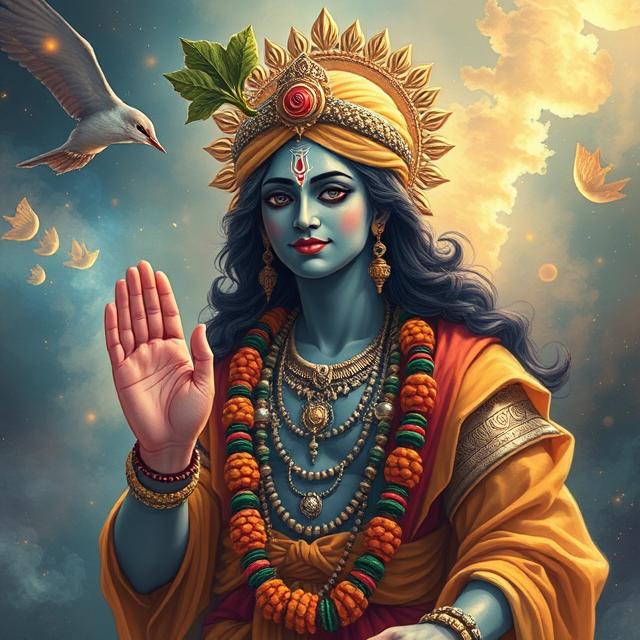
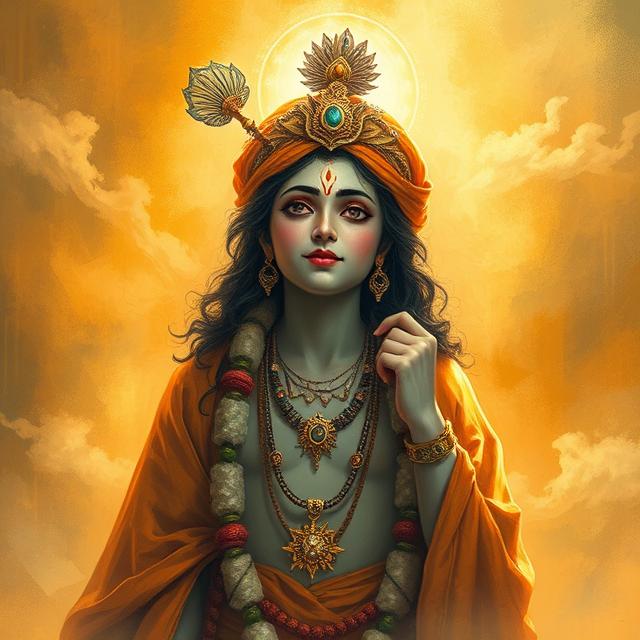
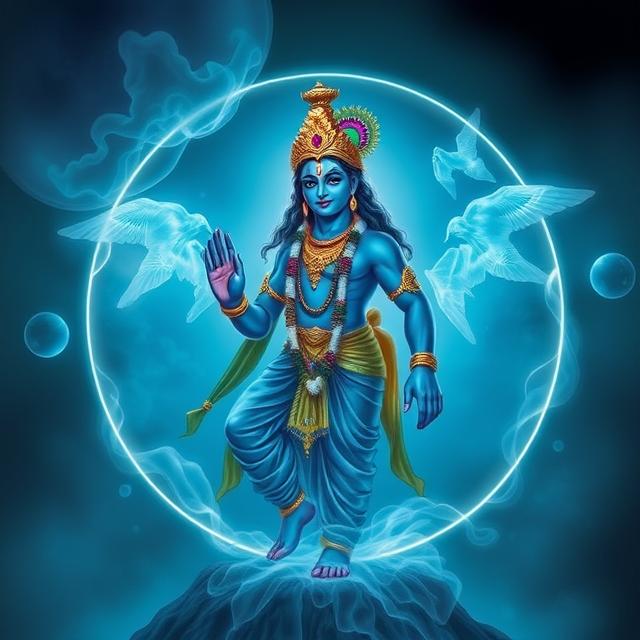
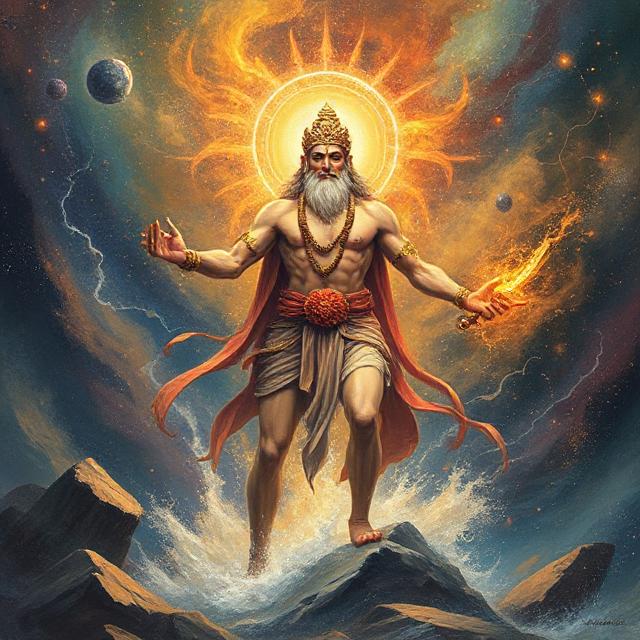
 Om Shri Achyutaya Namaha. Salutations to Krishna, the eternal teacher, whose words on the sacred soil of Kurukshetra continue to reverberate through the ages, illuminating the path for seekers navigating the battlefield of life. In the grand tapestry of the Bhagavad Gita, each shloka is a luminous thread, weaving together the wisdom of the ancients with the anxieties of the present. Today, we turn our attention to a verse that stands as a fortress of assurance for the trembling soul—Shloka 23 of Chapter 2.
As we journey deeper into Krishna’s Sankhya, we find ourselves confronted not only with philosophical abstraction but with the raw, existential fears that haunt every human heart: the fear of loss, destruction, and annihilation. In the midst of Arjuna’s despair, Krishna offers a teaching that is both thunderous and tender—a declaration of the Atman’s invulnerability, a hymn to the eternal Self that dwells within all.
Let us embark on a contemplative exploration of this shloka, peeling back its layers, drawing from the wisdom of the sampradayas, and discovering its profound relevance to our modern lives.
The Shloka: The Soul’s Untouchability
नैनं छिन्दन्ति शस्त्राणि नैनं दहति पावकः।
न चैनं क्लेदयन्त्यापो न शोषयति मारुतः॥
Nainam chindanti shastrani nainam dahati pavakah,
Na chainam kledayati apah na shoshayati marutah.
Translation:
“Weapons do not cut this self, fire does not burn it, water does not moisten it, nor does the wind dry it.”
At first glance, these words may seem to belong to the realm of poetry, a beautiful metaphor for resilience. But Krishna’s assurance is not merely poetic; it is a metaphysical proclamation that underpins the entire edifice of yogic and Vedantic philosophy.
The Fourfold Negation: A Meditative Unpacking
Let us meditate on each element Krishna invokes, and the deeper truths they reveal.
1. Weapons Cannot Cut It
On the battlefield, weapons are the ultimate arbiters of fate. They slice through flesh, sever bonds, and bring an end to stories. But Krishna’s first negation is that the Atman is beyond harm. The sword, the arrow, the spear—these are tools of division, of separation, of violence. Yet the self is indivisible, the substratum of all experience. No blade can touch its essence, for it is not an object among objects, but the very subject that illumines all.
Reflection:
How often do we fear the blows of life—criticism, betrayal, loss? We armor ourselves, yet remain vulnerable. Krishna’s teaching is a radical invitation to disarm, to realize that our true Self cannot be wounded, that our deepest being is beyond the reach of all weapons.
2. Fire Cannot Burn It
Fire is the great purifier, the transformer, the devourer. In the Vedic tradition, Agni is the mouth of the gods, consuming all offerings. Yet, the self is not an offering to be consumed. It is the witness of all transformation, itself untransformed. The fire that can reduce the body to ash cannot touch the Atman, for the Atman is not a thing among things, but the very principle by which things are known.
Reflection:
In the fires of adversity, we fear being consumed, losing ourselves. But what if, at the core, there is something within us that is fireproof, untouched by even the fiercest flames of circumstance?
3. Water Cannot Moisten It
Water dissolves, erodes, and carries away. It is the element of change, of flow, of dissolution. But the self is the unmoving witness of all movement, the changeless amidst change. The river may wear away the stone, but the Atman is not stone; it is the awareness in which river and stone both appear.
Reflection:
When emotions threaten to overwhelm, when tears flow and tides of feeling rise, Krishna reminds us: the true Self is the calm depth beneath the waves, never swept away by the currents of experience.
4. Wind Cannot Dry It
Wind is the force of dispersion, of evaporation, of scattering. It is the breath of change, the invisible mover. Yet, the self is not subject to depletion or loss. It is fullness itself, purna, untouched by the play of elements.
Reflection:
In the winds of change, we fear being scattered, losing our center. But the Atman is the unmovable axis, the silent witness to all that comes and goes.
Sankhya-Yoga: The Philosophical Foundation
This shloka is not an isolated utterance, but the very heart of Sankhya-Yoga. The pancha-mahabhutas—earth, water, fire, air, and ether—constitute the field of prakriti, the ever-changing matrix of material existence. The Atman, however, is Purusha: the unchanging, unconditioned witness.
Krishna’s negation of the elements is not a denial of their power in the world, but a reminder that their power ends at the threshold of the real Self.
The Battlefield of the Mind
Kurukshetra is not only a physical battlefield, but a manas-kshetra, a field of mind. Here, the struggle is not only with external foes, but with internal kleshas: raga (attachment), dvesha (aversion), abhinivesha (fear of loss), moha (delusion), and shoka (grief). Krishna’s teaching is a call to viveka—discrimination between the transient and the eternal, the asat (unreal) and the sat (real).
The Wisdom of the Sampradayas
Advaita Vedanta (Adi Shankaracharya)
Shankaracharya’s commentary reveals the non-dual invulnerability of Brahman. The elements—shastrani, pavakah, apah, marutah—are forms of maya, the play of illusion. The Atman, as Brahman, is untouched by maya’s dance. The realization of this truth dissolves moha (delusion) and shoka (grief), anchoring the seeker in ekatva (oneness).
Vishishtadvaita (Ramanujacharya)
Ramanuja interprets the Atman’s invulnerability as the grace of Narayana, the indwelling Lord. The jiva is eternal, sheltered in the vishvarupa (cosmic form) of the Divine. The elements belong to prakriti, but the soul abides in the Lord’s kripa (grace). Bhakti—devotion—becomes the means to realize this invulnerability.
Dvaita (Madhvacharya)
Madhva sees the Atman as eternally distinct yet sheltered in Vishnu’s will. The elements are prakriti’s flux, but the jiva remains untouched in the Lord’s sankalpa (divine intention). Refuge in Krishna is the path to transcendence.
Neo-Vedanta (Swami Vivekananda)
Vivekananda sees in this shloka a call to awaken the Atman-shakti—the indestructible power within. The elements are metaphors for the challenges of life; the Atman is the source of fearless action, the basis for yoga in daily life.
Yogic and Philosophical Analysis
Yogic Perspective: Moha as Klesha
Patanjali’s Yoga Sutras teach that avidya (ignorance) mistakes the transient for the eternal. Arjuna’s shoka is rooted in abhinivesha—the fear of loss and destruction. But Krishna’s teaching is a dhyana (meditation) on the Atman’s avinashinam truth. The practice of yoga is to steady the mind in this awareness, to become sthita-prajna—steadfast in wisdom.
Vedantic Inquiry: Atman vs. Prakriti
The Chhandogya Upanishad declares, “Sa va ayam atma na vyeti”—the self does not perish. Krishna’s teaching is an echo of this Upanishadic wisdom. The elements belong to prakriti; the Atman is sat, the real. Discrimination (viveka) is the key to freedom from fear.
Ayurvedic Insight: Moha as Tamas
Ayurveda sees moha as tamas, the quality of inertia and confusion. Fear of destruction disturbs the doshas, especially vata. Krishna’s teaching is a call to sattva—clarity, balance, and inner strength. Practices like pranayama, meditation, and sattvic living restore harmony.
The Atman in the Mirror of Modernity
Quantum Science and Cosmology
Modern science glimpses the imperishable substratum behind the play of particles and forces. The Atman, as described by Krishna, is akin to the non-local field in quantum physics—untouched by the interactions that define the material world. The search for a unified field echoes the Gita’s vision of an indestructible self.
Leadership and Business
In the corporate Kurukshetra, the elements are volatility, uncertainty, and competition. Krishna’s teaching inspires dharma-driven leadership, grounded in purpose rather than profit. The invulnerable Atman is the anchor amidst change, the source of resilience and ethical clarity.
Svasthya (Wellbeing)
Modern life is fraught with existential anxiety—the fear of loss, failure, and mortality. Krishna’s teaching is a medicine for the mind, a call to anchor wellbeing in the unassailable self. Mindfulness, meditation, and self-inquiry are the practical means to realize this truth.
Practical Sadhana: Living the Invulnerable Self
How do we translate this profound teaching into daily life? Let us explore practical steps:
1. Daily Contemplation
Set aside time each morning to reflect on this shloka. Visualize the elements—fire, water, wind, weapons—passing over you, unable to touch your true Self. Let this become a living experience, not just an intellectual idea.
2. Cultivate Sthitaprajna (Steadfast Wisdom)
When faced with challenges, recall Krishna’s words. Ask yourself: “Who is truly affected by this? Is it my body, my mind, or my real Self?” This discrimination is the seed of inner freedom.
3. Practice Detachment (Vairagya)
Engage fully in life, but do not cling to outcomes. Like the lotus in water, remain untouched by the world’s turbulence. Detachment is not indifference, but the freedom to love and act without fear.
4. Serve Others with Compassion
Recognize the invulnerable Self in all beings. Let your actions flow from this awareness, transforming relationships into fields of yoga.
5. Embrace Change with Equanimity
Change is the law of prakriti, but the Atman is changeless. Welcome change as the dance of the divine, knowing that your real Self remains untouched.
Stories and Parables: The Living Wisdom
The Sage and the Fire
It is said that once, a great sage sat in meditation as a forest fire raged around him. His disciples, frantic, urged him to flee. The sage smiled and said, “The fire may consume this body, but it cannot touch the Self.” The fire passed, and the sage remained, untouched and serene. This is not a call to recklessness, but a testament to the power of realizing the Atman’s invulnerability.
The Ocean and the Waves
The ocean is vast, deep, and unchanging at its depths, while waves rise and fall on its surface. Our bodies, minds, and experiences are like the waves—ever-changing, sometimes tumultuous. The Atman is the ocean itself, calm and undisturbed beneath the surface. To live from the depth is to know peace amidst the storm.
Reflections for the Seeker
Each day, as we contemplate another shloka of the Gita, we are invited to turn inward. Do we, like Arjuna, fear the loss of what is perishable? Do we mistake the body, the mind, the relationships, and the achievements for the self? Krishna’s upadesha is a lamp in the darkness, guiding us to the realization of our true nature.
Let us take a moment to sit quietly, to close the eyes, and to reflect: If weapons cannot cut the self, if fire cannot burn it, if water cannot moisten it, if wind cannot dry it—what, then, am I? What remains when all that can be destroyed is gone? This is the inquiry of sankhya-yoga, the heart of the Gita.
Conclusion: The Unassailable Atman
Shloka 23 is a clarion call to fearlessness. The world is a field of change, a play of elements. But the self is changeless, untouched, inviolable. Krishna’s teaching is not an escape from the world, but an invitation to live fully, anchored in the real. As we move forward, let us carry this wisdom into every action, every relationship, every challenge.
Let us close with a prayer: “Krishnam vande jagadgurum”—to Krishna, the world’s Guru. May His grace guide us onward.
Hari Om Tat Sat.