


 Swamy Gitananda
 A Daily Exploration of Dharma, Jnana, and Relevance to Modernity
By Swami Gitananda
Published on New Zealand Bharat (NZB) News, April 04, 2025
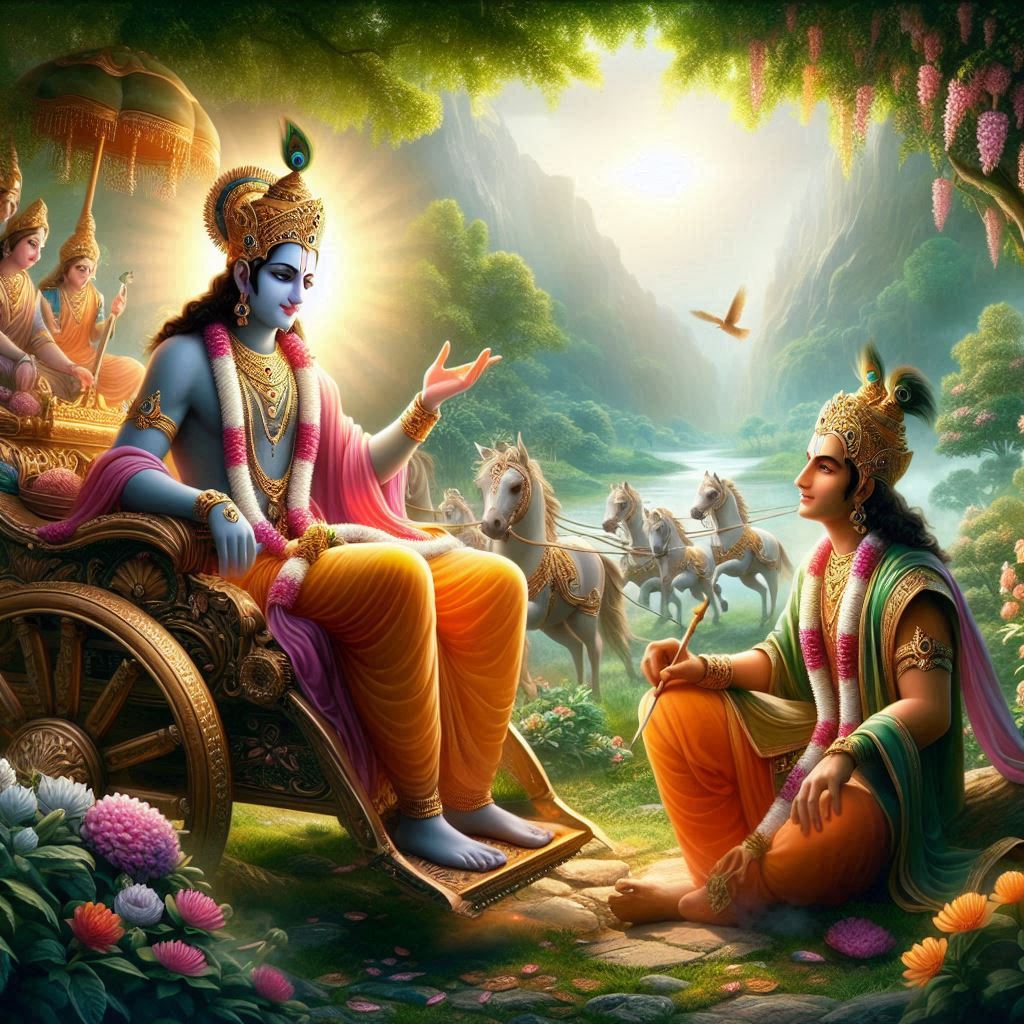
Om Shri Narayana Namaha. Salutations to Narayana, the sustainer of dharma, as we progress through the Bhagavad Gita, the Yoga-Shastra that unveils the path from samsara (worldly illusion) to moksha (liberation). Yesterday, Krishna and Arjuna emerged in their great chariot, sounding divine conches to counter the Kauravas’ tumultuous roar, their sattvic nada (sound) piercing Kurukshetra with dharma’s light. Today, their conches are named—Panchajanya and Devadatta—alongside Bhima’s Paundra, deepening the Pandavas’ response and setting the stage for Arjuna’s vishada (despondency) and Krishna’s jnana-upadesha (teaching of knowledge).
This series is a daily satsang (spiritual communion), offering one shloka at a time—its direct meaning, a profound unpacking of its tattva (essence), insights from sampradayas (spiritual traditions), and its resonance with modern realms like quantum science, leadership, and svasthya (wellbeing). Let us now immerse ourselves in Adhyaya 1, Shloka 15, where the battlefield echoes with named conches, a symphony of dharma’s power.
The Shloka
हृषीकेशः पाञ्चजन्यं धनञ्जयः देवदत्तम्।
वृकोदरः पौण्ड्रं दध्मौ महाशङ्खं भीमकर्मा॥
Hrishikeshah panchajanyam dhananjayah devadattam,
Vrikodarah paundram dadhmau mahashankham bhimakarma.
Direct Meaning
“Hrishikesha (Krishna) blew Panchajanya (hrishikeshah panchajanyam), Dhananjaya (Arjuna) blew Devadatta (dhananjayah devadattam), and Vrikodara (Bhima), the doer of mighty deeds (bhimakarma), blew the great conch Paundra (vrikodarah paundram dadhmau mahashankham).”
In this verse, Krishna, Arjuna, and Bhima sound their specific conches—Panchajanya, Devadatta, and Paundra—each with a distinct name and resonance, marking the Pandavas’ unified stand against the Kauravas’ chaos.
Explanation of the Shloka
This shloka names the conches of Krishna, Arjuna, and Bhima, elevating their response from a collective act to a personal declaration of dharma. The nada (sound) of these shankhas (conches) carries divine significance, contrasting with the Kauravas’ tumula (tumult), and introduces key figures of the Gita’s narrative. Let us explore its layers with viveka (discernment) and bhakti (devotion).
- Hrishikeshah Panchajanyam: Krishna and Panchajanya
- Hrishikesha: Krishna, meaning “Lord of the senses” (hrishi = senses, kesha = lord), reflects his mastery over indriyas (senses), a yogic ideal he will teach Arjuna. His divine presence anchors the Pandavas.
- Panchajanya: Krishna’s conch, meaning “born of the five” (possibly the five elements or clans), won from the demon Panchajana, symbolizing vijaya (victory) over adharma. Its nada is the cosmic Om, aligning with Krishna’s Yogeshvara essence.
Krishna’s blast heralds dharma’s supremacy, a prelude to his Vishwarupa (universal form) in Adhyaya 11.
- Dhananjayah Devadattam: Arjuna and Devadatta
- Dhananjaya: Arjuna, meaning “conqueror of wealth” or “victor in battle,” a maharatha whose skill and dharma shine under Krishna’s guidance. His name foreshadows his role as the Gita’s shishya (disciple).
- Devadatta: Arjuna’s conch, meaning “given by the gods,” reflects divine favor, its sound a sattvic echo of his nishtha (steadfastness).
Arjuna’s blast pairs with Krishna’s, a bhakti-driven harmony that contrasts with the Kauravas’ disarray, priming us for his vishada-yoga.
- Vrikodarah Paundram Dadhmau Mahashankham Bhimakarma: Bhima and Paundra
- Vrikodara: Bhima, meaning “wolf-bellied” (symbolizing immense strength and appetite), embodies raw shakti and fierce loyalty to dharma.
- Paundra: Bhima’s conch, derived from pundra (a mark or roar), called mahashankham (great conch), its booming nada matching his bhimakarma (mighty deeds).
- Bhimakarma: “Doer of mighty deeds” extols Bhima’s valor—slayer of demons and sworn foe of the Kauravas—his sound a thunderous pledge to uphold dharma.
Bhima’s blast adds power to the trio, a sattvic force rooted in duty, not rajas.
- The Triad of Dharma
Krishna, Arjuna, and Bhima form a trinity—jnana (wisdom), bhakti (devotion), and karma (action)—their conches weaving a nada that transcends the Kauravas’ tumula. This unity reflects the Pandavas’ sangathan (collaboration), guided by Krishna’s sankalpa (divine will), a stark contrast to Duryodhana’s fragmented might. - Divine Resonance vs. Chaotic Noise
The named conches—Panchajanya, Devadatta, Paundra—carry divya (divine) weight, their nada aligning with Sanatana Dharma’s cosmic harmony. Unlike the Kauravas’ bheris and gomukhah (drums and horns), which scatter sound, these shankhas focus it, symbolizing ekatva (oneness). This foreshadows Krishna’s teaching in Adhyaya 6: “Yogah karmasu kaushalam”—“Yoga is skill in action.” - The Prelude to Vishada
This shloka builds the war’s momentum, the Pandavas’ conches answering adharma with dharma’s call. It sets the stage for Arjuna’s vishada-yoga, where the clash of duty and kinship will birth Krishna’s jnana. The divine nada here is a bridge from battle to wisdom.
This shloka, then, is a sacred soundscape—Krishna, Arjuna, and Bhima’s conches proclaiming dharma’s stand. It invites us to ask: Do we hear life’s noise, or can we attune to the shanti of divine purpose?
Spiritual Wisdom from Authoritative Voices
The Bhagavad Gita’s divya-tattva (divine essence) shines through the bhashyas of acharyas, each illuminating its eternal truth. Let us draw from their insights.
- Adi Shankaracharya (Advaita Vedanta)
Shankaracharya sees Panchajanya as nada-brahman, Krishna’s sound uniting all in atman. Arjuna and Bhima’s conches reflect the jiva’s alignment with Brahman. This shloka urges viveka—to hear the eternal amid samsara’s din, a truth Krishna will unveil in Adhyaya 13. - Ramanujacharya (Vishishtadvaita)
Ramanuja interprets Krishna’s Panchajanya as Narayana’s call, Arjuna’s Devadatta as bhakti’s echo, and Bhima’s Paundra as karma’s might—all rooted in prapatti. The shloka contrasts dharma’s harmony with adharma’s noise, a path Arjuna will follow under Krishna’s guidance. - Madhvacharya (Dvaita)
Madhvacharya views Krishna’s shankha as Vishnu’s sankalpa, Arjuna and Bhima’s as Vishnu-bhaktas’ devotion. Their sattvic nada counters the Kauravas’ tamasic tumult. This shloka underscores daiva triumph, with Krishna as the eternal Hrishikesha. - Swami Vivekananda (Neo-Vedanta)
Vivekananda reads this as shakti’s symphony. “Krishna’s Panchajanya leads, Arjuna and Bhima follow,” he writes. Dharma’s sound is unity, not chaos. He urges us to awaken shakti in our karmakshetra, guided by Krishna’s wisdom—a lesson the Gita unfolds.
These voices weave a jnana-sutra (thread of wisdom), guiding us toward moksha.
Relevance to Today’s Context
The Bhagavad Gita is a jivan-shastra (manual for life), its wisdom vibrant today. Let us explore how this shloka resonates with quantum science, leadership, and svasthya.
- Quantum Science and Cosmology
The named conches’ nada mirrors quantum resonance—vibrations in harmony—contrasting with the Kauravas’ entropy. Krishna’s Panchajanya evokes the cosmic Om, binding the Pandavas in ekatva. This shloka suggests a dharmakshetra cosmos, where unity aligns with divine order, a quest science pursues. - Leadership and Business
In the corporate Kurukshetra, Krishna, Arjuna, and Bhima’s conches reflect a leadership triad—vision, skill, strength—outshining adharma’s noise. Krishna’s nishkama karma offers a path: lead with purpose and unity, fostering drishti (vision) for collective success, not scattered effort. - Svasthya (Wellbeing)
The Kauravas’ tumult mirrors modern chaos—chitta-vikshepa—while the Pandavas’ nada suggests samatva. Panchajanya aligns with pranayama, calming the manas. Practices inspired by this shloka—dhyana (meditation)—nurture shanti, attuning us to dharma’s rhythm.
Conclusion: The Call of the Divine
This fifteenth shloka resounds with Krishna, Arjuna, and Bhima’s named conches, a sattvic proclamation of dharma. It builds toward Arjuna’s vishada, where Krishna’s jnana will dawn. Each day, we unveil another shloka of this divya-gita, seeking satyam (truth) and sundaram (beauty).
Tomorrow, more Pandavas will sound their conches, amplifying dharma’s chorus. Let us approach with bhakti and vichar, chanting: “Namo Bhagavate Vasudevaya”—to the Lord Vasudeva. May His kripa guide us onward.
Hari Om Tat Sat.