




 Swamy Gitananda
A Daily Exploration of Dharma, Jnana, and Relevance to Modernity
By Swami Gitananda
Published on New Zealand Bharat (NZB) News, April 19, 2025
Om Shri Ganeshaya Namaha. Salutations to Ganesha, the remover of vighna (obstacles) and bestower of buddhi (wisdom), as we journey deeper into the Bhagavad Gita, the Jnana-Sagara (ocean of knowledge) that transforms Kurukshetra into a dharmakshetra of eternal truth. In our prior reflection, Arjuna, overwhelmed by vishada (despondency), saw adverse omens (vipareetani nimittani) and declared no shreyas (good) in slaying svajanam (kin), his manas (mind) rationalizing despair. Today, in Adhyaya 1, Shloka 32, his vishada-yoga reaches its zenith as he rejects victory (vijayam), kingdom (rajyam), pleasures (sukhani), and even life itself (jivitena), questioning their worth if gained through kin’s blood. This cry to Krishna, as Krishna and Govinda, unveils a jiva’s despair that mimics vairagya (detachment), priming the Gita for jnana’s eternal dawn.
This series is a daily sadhana (spiritual practice), offering one shloka at a time—its direct meaning, a profound exploration of its tattva (essence), insights from sampradayas (spiritual traditions), an expanded yogic and philosophical analysis, and its resonance with modern realms like quantum science, leadership, psychology, and svasthya (wellbeing). Let us immerse ourselves in Shloka 32, where Arjuna’s vishada renounces samsara’s lures, a poignant prelude to Krishna’s transformative wisdom.
The Shloka
न काङ्क्षे विजयं कृष्ण न च राज्यं सुखानि च।
किं नो राज्येन गोविन्द किं भोगैर्जीवितेन वा॥
Na kankshme vijayam krishna na cha rajyam sukhani cha,
Kim no rajyena govinda kim bhogairjivitena va.
Direct Meaning
“[Arjuna said:] ‘I do not desire victory (na kankshme vijayam), O Krishna (krishna), nor kingdom (na cha rajyam), nor pleasures (sukhani cha). What is kingdom to us (kim no rajyena), O Govinda (govinda), what are enjoyments (kim bhogair), or even life itself (jivitena va)?’”
In this verse, Arjuna addresses Krishna as Krishna and Govinda, renouncing victory, kingdom, pleasures, and life itself, questioning their value if achieved by slaying svajanam (kin), his vishada rejecting war’s rewards in a cry of existential despair.
Detailed Explanation of the Shloka
This shloka is the emotional and philosophical crescendo of Arjuna’s vishada-yoga, a moment where his manas moves beyond krup (pity, Shloka 28), physical collapse (Shlokas 29-30), and omens (Shloka 31) to a radical rejection of samsara’s fruits—vijayam (victory), rajyam (kingdom), sukhani (pleasures), and jivitena (life). His rhetorical questions to Krishna reveal a kshatriya’s despair, yet unwittingly echo vairagya, a yogic detachment Krishna will refine into nishkama karma (selfless action). The shloka unfolds Kurukshetra as a manas-kshetra (field of mind), where dharma’s call drowns in sneha (affection). Let us explore its layers with viveka (discernment), bhakti (devotion), and vichara (inquiry).
- Na Kankshme Vijayam: I Do Not Desire Victory
- Na Kankshme: “I do not desire,” a resolute negation, signals Arjuna’s sankalpa (resolve) crumbling under vishada’s weight. Kankshme (I desire), from the root kanksh (to wish), reflects manas’ agency, choosing to reject war’s aim.
- Vijayam: “Victory,” the kshatriya’s svadharma in Kurukshetra, embodies dharma’s triumph over adharma. Yet, for Arjuna, vijaya is tainted by svajanam’s blood—Bhishma, Drona, and kin—rendering it ashubha (inauspicious).
This rejection reveals moha (delusion), buddhi clouded by kleshas—raga (attachment) to kin and dvesha (aversion) to their death. Yet, na kankshme echoes vairagya’s tone, a yogic detachment misdirected by avidya (ignorance), which Krishna will redirect in Adhyaya 2: “Karmanyevadhikaraste”—“Your right is to action alone.”
- Krishna: O Krishna
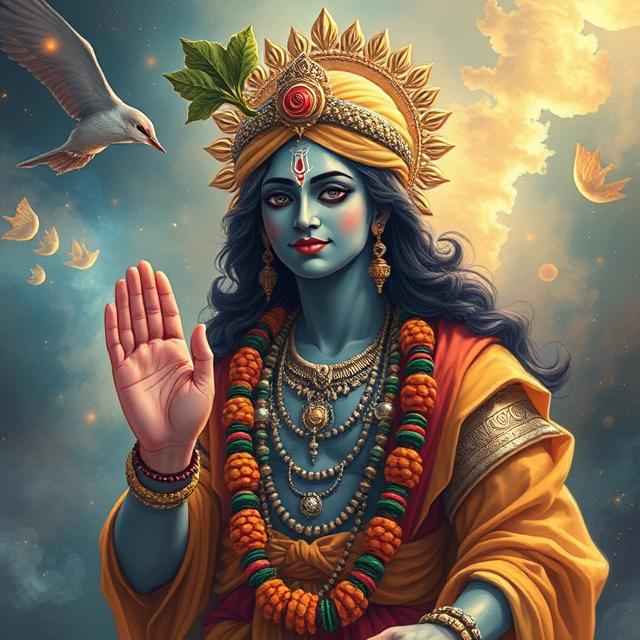
- Krishna: Addressing Hrishikesha (lord of senses, Shloka 28), the Yogeshvara (lord of yoga), and sakha (friend), Arjuna’s cry is intimate, a jiva’s plea to Paramatma (supreme soul). Krishna, meaning “the all-attractive,” evokes bhakti’s warmth, grounding Arjuna’s despair in trust.
This invocation foreshadows Krishna’s Guru role, his silence a kripa (grace) allowing vishada to exhaust its tamasic grip, preparing manas for sattva’s clarity. The shift from Keshava (Shloka 31) to Krishna softens the tone, a shishya’s heart opening to divine guidance.
- Krishna: Addressing Hrishikesha (lord of senses, Shloka 28), the Yogeshvara (lord of yoga), and sakha (friend), Arjuna’s cry is intimate, a jiva’s plea to Paramatma (supreme soul). Krishna, meaning “the all-attractive,” evokes bhakti’s warmth, grounding Arjuna’s despair in trust.
- Na Cha Rajyam Sukhani Cha: Nor Kingdom, Nor Pleasures
- Na Cha: “Nor,” extends Arjuna’s renunciation, a cascade of samsara’s lures—rajyam (kingdom) and sukhani (pleasures)—rejected as anitya (impermanent).
- Rajyam: “Kingdom,” the Pandavas’ rightful claim, symbolizes dharma’s restoration, sought for kin’s welfare and societal order. Yet, Arjuna sees rajya as a pyrrhic prize, won through svajanam’s death, a karmic loss outweighing gain.
- Sukhani Cha: “Pleasures too,” encompasses sensory (bhoga) and emotional joys tied to rule—wealth, honor, family. Sukhani, plural, suggests all fleeting joys, dismissed in vishada’s lens as duhkha’s (sorrow’s) shadow.
This triple denial—vijayam, rajyam, sukhani—mimics sannyasa’s spirit, a turning from samsara. Yet, driven by krup (pity) and moha, not jnana (knowledge), it is a tamasic withdrawal Krishna will transform into sattvic action.
- Kim No Rajyena: What Is Kingdom to Us?
- Kim: “What,” a rhetorical challenge, questions rajya’s worth, no (to us) broadening despair to the Pandavas—Arjuna speaks for his brothers, united in sneha for svajanam.
- Rajyena: “By kingdom,” isolates rajya as futile, a samsaric goal empty without kin’s presence to share it.
This question unveils vishada’s logic: dharma’s reward (rule) becomes adharma if bought with blood, a moral knot Krishna will untie with nishkama karma, urging action without attachment to fruits (Adhyaya 2).
- Govinda: O Govinda
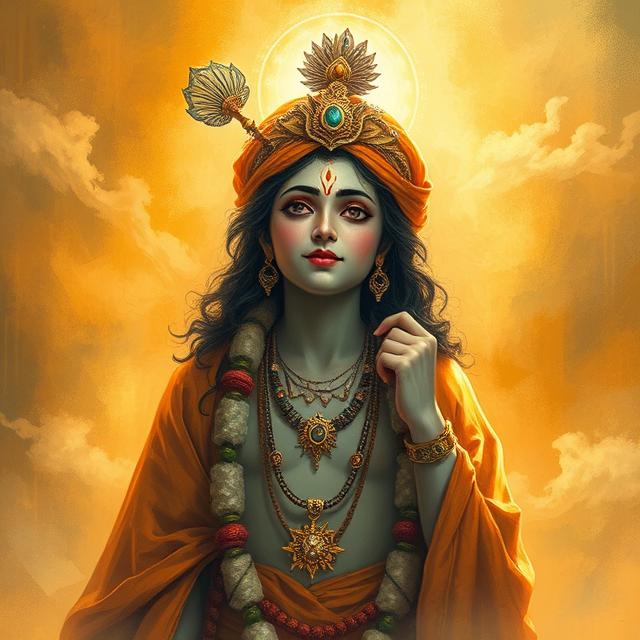
- Govinda: Krishna’s name, from go (cows, senses, or earth) and vinda (master), evokes pastoral intimacy, yogic mastery over indriyas (senses), and Ishvara’s protection. Arjuna’s shift from Krishna to Govinda deepens bhakti, a cry to the divine shepherd who guides lost jivas.
Govinda also recalls Krishna’s lila (divine play) as Gopala, nurturing manas amid vishada’s storm. This address signals prapatti (surrender), Partha leaning on Ishvara for clarity, priming Krishna’s upadesha in Adhyaya 2.
- Govinda: Krishna’s name, from go (cows, senses, or earth) and vinda (master), evokes pastoral intimacy, yogic mastery over indriyas (senses), and Ishvara’s protection. Arjuna’s shift from Krishna to Govinda deepens bhakti, a cry to the divine shepherd who guides lost jivas.
- Kim Bhogair Jivitena Va: What Are Enjoyments, or Even Life Itself?
- Kim Bhogaih: “What are enjoyments,” bhoga (sensory pleasures) dismissed as anitya, vishada stripping samsara’s allure. Bhoga includes wealth, luxury, and sensory delights tied to rajya, now seen as duhkha’s root.
- Jivitena Va: “Or even life itself,” jivita (life) questioned, Arjuna’s despair touching existential depths—life without svajanam is no life. Va (or) escalates renunciation, jivita the ultimate samsaric stake, echoing vairagya’s rejection of mortality.
This climactic question mirrors samsara’s futility, a jiva’s cry that Krishna will answer with atman’s eternity: “Na jayate mriyate va”—“The soul is neither born nor dies” (Adhyaya 2.20).
- The Paradox of Vishada-Yoga
Arjuna’s rejection of vijayam, rajyam, sukhani, and jivitena is vishada’s peak, a kshatriya renouncing svadharma’s fruits. Yet, his moha-driven vairagya mirrors yogic detachment, a paradox central to the Gita. Kurukshetra becomes samsara’s stage, where dharma is veiled by kleshas—raga (attachment) to kin, dvesha (aversion) to their death, and abhinivesha (clinging to life). Krishna, the Yogeshvara, will resolve this with sankhya-yoga, teaching atman’s immortality and karma’s purity. - The Chariot’s Silent Witness
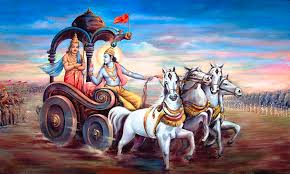
Krishna’s silence as Govinda is kripa, a divine pause allowing Arjuna’s manas to voice its depths. The rathottamam (finest chariot), centered between armies (Shloka 24), symbolizes the jiva’s karmakshetra—buddhi faltering, indriyas (senses) adrift, awaiting Ishvara’s reins. This shloka foreshadows Krishna’s metaphor in Adhyaya 18: the body as a chariot, atman its rider, and Ishvara its guide. - Yogic and Philosophical Depth
Arjuna’s na kankshme evokes yoga’s nirodha (cessation of desire), yet stems from tamasic despair, not sattvic clarity. In Patanjali’s Yoga Sutras, vairagya is freedom from raga and dvesha, achieved through abhyasa (practice). Arjuna’s pseudo-vairagya, driven by krup, is a klesha-bound shadow, a jiva mistaking samsara’s pain for liberation. Philosophically, Shloka 32 engages Vedanta’s inquiry: Is samsara’s pursuit (rajya, sukha) shreyas (ultimate good), or is moksha the true aim? Krishna’s sankhya will affirm atman’s eternity, freeing karma from phala (fruits).
This shloka, then, is Arjuna’s existential cry—a kshatriya’s vishada spurning samsara’s fruits, unwittingly nearing jnana’s threshold, crying for Krishna’s kripa. It invites us to reflect: Do we, like Arjuna, reject life’s gains in despair, and can we seek Govinda to restore our drishti (vision)?
Spiritual Wisdom from Authoritative Voices
The Bhagavad Gita’s divya-tattva (divine essence) shines through the bhashyas (commentaries) of acharyas, each unveiling its eternal truth. Let us draw deeper insights from their wisdom, expanding on their interpretations and adding perspectives from additional voices.
- Adi Shankaracharya (Advaita Vedanta)
Shankaracharya interprets Arjuna’s na kankshme as maya’s veil, vijayam and rajyam binding atman to samsara’s forms. Kim jivitena reflects avidya’s despair, the jiva mistaking deha (body) for atman. He writes, “Arjuna’s renunciation is born of moha, not jnana,” urging viveka to discern Brahman’s unity beyond kin’s loss. This shloka foreshadows Adhyaya 7, where Krishna reveals jiva’s oneness with Ishvara: “Mamaivamsho jivaloke”—“Souls are my eternal fragments.” Shankaracharya’s lens emphasizes neti neti (not this, not this), Arjuna’s rejection a step toward negating samsara’s illusions, if guided by jnana. - Ramanujacharya (Vishishtadvaita)
Ramanuja sees Arjuna’s vishada as the jiva’s tender cry, krup opening prapatti (surrender). Addressing Govinda sparks bhakti’s flame, Arjuna’s despair a prelude to divine communion. He interprets kim bhogaih as the jiva’s recognition of samsara’s transience, a moment ripe for Narayana’s kripa. Ramanuja writes, “Krishna’s silence nurtures shishya’s heart,” guiding vishada to dharma through bhakti-yoga. This shloka aligns with Adhyaya 12, where Krishna praises bhakti as shreyas: “Bhaktya mam abhijanati”—“Through devotion, one knows me.” - Madhvacharya (Dvaita)
Madhvacharya views Arjuna’s na kankshme as tamasic weakness, svajanam a karmic test of nishtha (steadfastness). Kim rajyena reveals buddhi’s lapse, prioritizing sneha over Vishnu’s sankalpa (will). He emphasizes daiva-shakti, Krishna as Govinda steadying the jiva for svadharma. Madhvacharya notes, “Arjuna’s despair tests bhakta’s resolve,” aligning this shloka with Adhyaya 18: “Sarva-dharman parityajya”—“Abandon all duties, surrender to me.” The shloka underscores jiva’s dependence on Ishvara’s guidance. - Swami Vivekananda (Neo-Vedanta)
Vivekananda reads Shloka 32 as humanity’s universal struggle. “Arjuna spurns kingdom, lost in grief,” he writes, “yet his heart nears truth.” Vishada mimics vairagya, a spark of shakti dulled by moha. Vivekananda urges awakening atma-shakti in the karmakshetra, balancing krup with dharma. He connects this to modern seekers: “Renounce not from weakness, but from strength,” echoing Krishna’s Adhyaya 6 call: “Uddhared atmanatmanam”—“Lift the self by the self.” Vivekananda’s lens bridges Vedanta with practicality, seeing Arjuna’s cry as a call to transcend samsara through action. - Sri Aurobindo (Integral Yoga)
Aurobindo’s perspective adds depth, viewing Arjuna’s kim jivitena as the jiva’s confrontation with samsara’s limits, a precursor to divya-jnana (divine knowledge). He writes, “Arjuna’s despair is the ego’s recoil, yet it opens to Ishvara’s will.” Na kankshme reflects psychic surrender, vishada clearing manas for shakti’s ascent. Aurobindo aligns this with Adhyaya 11’s Vishwarupa, where Arjuna’s drishti expands to Brahman’s cosmic play, transcending svajanam’s forms. His integral yoga sees Shloka 32 as a pivot from egoic to divine consciousness, Govinda the catalyst.
These voices weave a jnana-mala (garland of wisdom), blending Advaita’s transcendence, Vishishtadvaita’s devotion, Dvaita’s duty, Neo-Vedanta’s dynamism, and Integral Yoga’s synthesis, guiding us toward moksha.
Yogic and Philosophical Analysis
Shloka 32 is a yogic and philosophical fulcrum, where Arjuna’s vishada engages Vedanta’s core inquiries: What is shreyas (ultimate good)? Is samsara’s pursuit (rajya, sukha) true purushartha (human aim), or is moksha the goal? Let us explore this through yogic and Vedantic lenses, with additional Ayurvedic and Upanishadic insights.
- Yogic Perspective: Vishada as Klesha and Vairagya’s Shadow
In Patanjali’s Yoga Sutras (2.3), kleshas—avidya (ignorance), raga (attachment), dvesha (aversion), abhinivesha (clinging to life)—drive samsara’s suffering. Arjuna’s na kankshme reflects abhinivesha’s recoil (kim jivitena) and raga’s grip (svajanam), yet mimics vairagya (detachment). Yoga defines vairagya as nirodha (cessation) of desire for guna’s objects (Sutra 1.15), achieved through abhyasa (practice) and jnana. Arjuna’s tamasic vairagya, born of krup, lacks sattva’s clarity, a chitta-vikshepa (mental agitation) Krishna will heal with dhyana-yoga (Adhyaya 6). The shloka thus marks a yogic threshold, vishada as both obstacle and opportunity for chitta-shuddhi (mental purification). - Vedantic Inquiry: Samsara vs. Moksha
Vedanta contrasts preyas (worldly gain) with shreyas (spiritual good), as in the Katha Upanishad (1.2.1): “Shreyas cha preyas cha manushyam etah”—“The good and the pleasant approach man.” Arjuna’s kim rajyena rejects preyas (rajya, bhoga), but his moha blinds him to shreyas (atman’s eternity). The Chandogya Upanishad (7.24.1) declares, “Yo vai bhuma tat sukham”—“The infinite alone is true happiness,” a truth Krishna will unveil in Adhyaya 2: “Yam hi na vyathayanti”—“That which does not afflict is true.” Shloka 32 thus engages Vedanta’s inquiry, Arjuna’s despair a jiva’s cry for moksha amid samsara’s mirage. - Ayurvedic Insight: Vishada as Dosha Imbalance
In Ayurveda, vishada aligns with vata and pitta imbalances—manas’ agitation (bhramativa, Shloka 30) and burning despair (tvak paridahyate). Arjuna’s rejection of sukha and jivita suggests tamas’ dominance, dulling ojas (vitality). Ayurveda prescribes sattvic practices—pranayama, sattvic ahara (pure diet), and dhyana—to restore chitta’s balance, aligning with Krishna’s yoga path. Govinda’s pastoral imagery evokes prithvi (earth) and ap (water) elements, grounding manas for healing, a subtle kripa in this shloka. - Upanishadic Echoes: The Quest for Atman
The Brihadaranyaka Upanishad (4.4.5) states, “Atmanam eva priyam”—“The self alone is dear,” suggesting svajanam’s love is atman’s reflection. Arjuna’s kim jivitena questions deha’s (body’s) value, nearing the Upanishadic inquiry: “Ko’ham?”—“Who am I?” Krishna’s sankhya will answer, affirming atman’s nitya (eternal) nature, freeing Arjuna from samsara’s chains. Shloka 32 thus bridges vishada to atma-vichara (self-inquiry), a jiva’s pivot to moksha.
This expanded analysis reveals Shloka 32 as a yogic and Vedantic crossroads, Arjuna’s vishada a samsaric cry that Krishna will elevate to divya-jnana.
Relevance to Today’s Context
The Bhagavad Gita is a jivan-shastra (manual for life), its wisdom vibrant in 2025’s complexities. Let us explore how Shloka 32 resonates with quantum science, leadership, psychology, environmental ethics, and svasthya, broadening its modern applications.
- Quantum Science and Cosmology
Arjuna’s na kankshme mirrors quantum collapse—vishada negating intent’s wave function, rajyam and sukha as transient states in samsara’s field. Kim jivitena questions existence’s coherence, akin to quantum cosmology’s inquiry into consciousness’s role. Govinda’s presence evokes ekatva (oneness), a unified field aligning chaos, as theorized in string theory’s M-theory. Shloka 32 suggests a dharmakshetra cosmos, where buddhi’s drishti shapes karma, paralleling quantum observer effects. Scientists like Roger Penrose, exploring consciousness’s quantum roots, echo Arjuna’s existential cry, seeking jnana’s clarity. - Leadership and Business
In the corporate Kurukshetra of 2025, Arjuna’s kim rajyena reflects a leader’s disillusionment—rajyam as market dominance, sukha as profits, rejected amid ethical crises (e.g., AI ethics, sustainability). Vishada mirrors burnout or moral fatigue, as leaders face stakeholder conflicts akin to svajanam. Govinda’s kripa offers a path: lead with dharma-driven purpose, not kama (desire), fostering drishti to navigate ambiguity. Servant leadership, inspired by Krishna’s Sarathi role, emphasizes nishkama karma, aligning with 2025’s focus on ESG (Environmental, Social, Governance) frameworks. - Psychology and Mental Health
Arjuna’s kim jivitena resonates with existential psychology, echoing Viktor Frankl’s logotherapy: meaninglessness fuels despair. Vishada mirrors 2025’s mental health challenges—post-pandemic anxiety, digital overload—where sukha (pleasure) fails to satisfy. Govinda’s silence suggests mindfulness, a sattvic anchor akin to CBT (Cognitive Behavioral Therapy) or dhyana. Arjuna’s cry aligns with self-actualization needs (Maslow’s hierarchy), jnana offering purpose beyond samsara’s fleeting joys. Therapists might draw on Shloka 32 to guide clients from tamasic despair to sattvic resilience. - Environmental Ethics
Arjuna’s na kankshme reflects 2025’s ecological awakening, where rajyam (dominion) and bhoga (consumption) are questioned amid climate crises. Kim jivitena echoes deep ecology’s inquiry: Is human life meaningful without Earth’s kin—forests, rivers, species? Govinda, as Earth’s protector, inspires ahimsa (non-violence) toward nature, aligning with Vedic prithvi sukta (Atharva Veda). Shloka 32 urges sattvic stewardship, rejecting tamasic exploitation, a call resonant with global sustainability movements. - Svasthya (Wellbeing)
Arjuna’s vishada mirrors modern existential dread—kim jivitena as hopelessness in a hyper-connected yet isolating world. Ayurveda diagnoses vata-pitta imbalance in manas, with pranayama (e.g., nadi shodhana), asana (e.g., balasana), and dhyana restoring ojas (vitality). Govinda’s pastoral imagery evokes sattvic grounding—nature walks, sattvic ahara (pure diet)—countering tamasic despair. In 2025, integrative wellness, blending yoga and mindfulness, aligns with Shloka 32’s call to realign manas with shanti, finding shreyas beyond sukha.
Conclusion: The Cry for Jnana
This thirty-second shloka crowns Arjuna’s vishada-yoga, his renunciation of vijayam, rajyam, sukhani, and jivitena a tamasic echo of vairagya, the Gita’s heart open for Krishna’s jnana. It mirrors samsara’s futility, dharma veiled by moha, yet nears atma-vichara’s threshold. Each day, we unveil another shloka of this divya-gita, seeking satyam (truth), shivam (auspiciousness), and sundaram (beauty).
Tomorrow, Arjuna will name the kin—acharyah, pitarah, putrah—he cannot slay, grounding vishada in sneha (affection). Let us approach with bhakti and vichar, chanting: “Namo Bhagavate Vasudevaya”—to Vasudeva, the indweller of all. May His kripa guide us through samsara’s storms to moksha’s shore.
Hari Om Tat Sat.