




 Imogen King
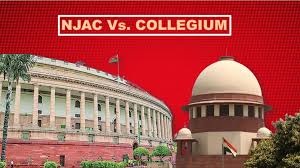
 A brewing judicial scandal involving allegations of cash payments influencing judicial appointments has thrust the National Judicial Appointments Commission (NJAC) back into the spotlight, prompting Vice President Jagdeep Dhankhar to call for an all-party meeting on March 25, 2025. The controversy has reignited debates over the judiciary’s accountability, with public sentiment reflecting growing distrust in the current collegium system. This article explores the recent incident, its context, public and political reactions, the Vice President’s call for action, a detailed history of judicial appointment abuses, and the path forward, while critically examining the establishment narrative on judicial independence.
Recent Incident: The Cash-for-Judges Scandal
On March 24, 2025, reports surfaced alleging that significant sums of money were exchanged to influence the appointment of judges to India’s higher judiciary, specifically targeting positions in High Courts. The allegations, first highlighted by The Wire, claim that intermediaries connected to senior judicial figures and political operatives facilitated these payments, raising questions about the integrity of the collegium system, which currently governs judicial appointments. While specific names and evidence remain under investigation, the scandal has sent shockwaves through India’s legal and political circles, with media outlets like NDTV reporting on the “judge cash row” as a potential tipping point for judicial reform.
The collegium system, where the Chief Justice of India (CJI) and a group of senior Supreme Court judges recommend appointments, has long been criticized for its opacity. This incident has amplified those concerns, with posts on X indicating that many believe the system enables favoritism and corruption. The timing is particularly sensitive, as the Supreme Court has been at odds with the government over delays in clearing collegium-recommended appointments, a tension that has persisted since the NJAC was struck down in 2015.
Context: The NJAC and Collegium Debate
The NJAC was introduced through the 99th Constitutional Amendment Act and the NJAC Act, both passed in 2014, to replace the collegium system with a more transparent body for judicial appointments. The NJAC would have comprised the CJI, two senior Supreme Court judges, the Law Minister, and two eminent persons nominated by a committee including the Prime Minister, the CJI, and the Leader of Opposition. Its aim was to balance judicial independence with accountability by involving the executive and civil society in the appointment process.
However, in October 2015, the Supreme Court, in a 4:1 ruling, struck down the NJAC, arguing that it compromised judicial independence—a cornerstone of the Constitution’s basic structure. The majority held that the NJAC’s structure, particularly the potential for executive dominance, could undermine the judiciary’s autonomy. Justice Jasti Chelameswar dissented, arguing that the NJAC could serve as a check on the collegium’s “unwholesome trade-offs” and “incestuous accommodations” with the executive. The ruling reinstated the collegium system, but the debate over its flaws—opacity, nepotism, and lack of accountability—has persisted.
The current scandal has reignited calls for the NJAC’s revival, with Vice President Jagdeep Dhankhar leading the charge. Dhankhar, a former Supreme Court advocate, has been vocal about the need for reform, having previously criticized the 2015 ruling as an “unprecedented encroachment” on parliamentary powers during his 2022 maiden speech in the Rajya Sabha. The government, led by Prime Minister Narendra Modi, has also signaled its intent to revisit the NJAC, with Law Minister Kiren Rijiju previously linking the collegium system to judicial vacancies and case pendency.
Public Emotion and Perspective Toward the Judiciary
The cash-for-judges scandal has significantly eroded public trust in the judiciary, an institution historically seen as the “watchdog of democracy.” Social media posts on X reflect widespread frustration, with users calling for accountability and transparency in judicial appointments. Many argue that the collegium system, which operates behind closed doors, fosters favoritism and corruption, as evidenced by this scandal. The public’s anger is compounded by long-standing issues like the staggering backlog of cases—over five crore pending across Indian courts as of 2022—and delays in filling judicial vacancies, which many attribute to the collegium’s inefficiencies.
At the same time, there’s a segment of the public and legal fraternity that remains wary of executive involvement in judicial appointments, fearing it could lead to political interference. The 2015 Supreme Court ruling striking down the NJAC was hailed by some activists, like Prashant Bhushan, for safeguarding judicial independence. However, the current scandal has shifted the narrative, with even some former supporters of the collegium system now questioning its viability. The judiciary’s lack of diversity—only 11 women judges in the Supreme Court since its inception and a predominance of upper-caste representation—further fuels public discontent, as does the perception of post-retirement appointments being used to influence judges.
Vice President’s Call for an All-Party Meeting
On March 25, 2025, Vice President Jagdeep Dhankhar called for an all-party meeting at 4:30 PM to address the judicial cash scandal and discuss the potential revival of the NJAC. Dhankhar’s move came after he publicly criticized the judiciary’s resistance to accountability, stating in a speech on March 22 that a law “reflecting the will of the people” had been “undone” by the Supreme Court in 2015. His remarks, reported by The Wire, were a clear reference to the NJAC’s striking down, and he reiterated this stance twice within four days, signaling a concerted push for reform.
The all-party meeting aims to build consensus on reintroducing the NJAC or a similar mechanism to ensure transparency in judicial appointments. Dhankhar emphasized the need for “accountability to be fixed,” arguing that the judiciary cannot remain above scrutiny. Posts on X indicate that some political figures, like BJP leader Sushil Kumar Modi, support this initiative, citing the near-unanimous parliamentary approval of the NJAC in 2014. However, opposition parties remain divided, with some wary of executive overreach, recalling historical instances of government interference during Indira Gandhi’s tenure.
Detailed Analysis: History of Judicial Appointment Abuses
The history of judicial appointment abuses in India reveals a long-standing tension between the judiciary and the executive, often exacerbated by the lack of a transparent appointment mechanism.
- Pre-Collegium Era (1950s–1980s): Initially, the Constitution under Articles 124 and 217 mandated that the President appoint judges in consultation with the CJI and other judges. During Jawaharlal Nehru’s tenure, the executive respected judicial independence, though Nehru foresaw conflicts over socialist reforms. His daughter, Indira Gandhi, took a more confrontational approach. After the 1973 Kesavananda Bharati case, where the Supreme Court established the basic structure doctrine, Gandhi’s government superseded three senior judges to appoint Justice A.N. Ray as CJI, a move widely seen as retaliation for the ruling. This led to the resignation of the superseded judges and set a precedent for executive interference, culminating in the 1975 Emergency, during which the government further curtailed judicial powers through constitutional amendments.
- Emergence of the Collegium (1990s): The collegium system evolved through three landmark Supreme Court judgments known as the Judges Cases. The First Judges Case (1981) gave the executive primacy, but the Second Judges Case (1993) reversed this, ruling that “consultation” with the CJI meant “concurrence,” establishing the collegium’s dominance. The Third Judges Case (1998) formalized the system, requiring the CJI to consult a group of senior judges. While intended to protect judicial independence, the collegium quickly drew criticism for its opacity. Notable instances of abuse include allegations of nepotism, such as the appointment of judges with familial ties to sitting judges, and favoritism, where merit was often overlooked for personal connections.
- Post-Collegium Controversies (2000s–Present): The collegium system has faced numerous allegations of misconduct. In 2018, four senior Supreme Court judges held a press conference, accusing then-CJI Dipak Misra of selectively assigning cases, highlighting internal dysfunction. More recently, in 2023, Justice Shekhar Kumar Yadav of the Allahabad High Court made controversial remarks against Muslims at a Vishwa Hindu Parishad event, raising concerns about judicial impartiality and the lack of accountability mechanisms. The collegium’s failure to address such incidents, coupled with delays in appointments—often due to government pushback—has fueled perceptions of inefficiency and corruption, culminating in the current cash-for-judges scandal.
Critical Examination of the Establishment Narrative
The establishment narrative, as articulated by the judiciary and its defenders, holds that the collegium system is essential to protect judicial independence from executive overreach. The 2015 Supreme Court ruling striking down the NJAC emphasized this, arguing that the NJAC’s structure—particularly the inclusion of the Law Minister and eminent persons—could allow political interference, undermining the Constitution’s basic structure. This narrative portrays the judiciary as the ultimate guardian of democracy, necessitating its autonomy in appointments.
However, this narrative is increasingly untenable. The cash-for-judges scandal exposes the collegium’s vulnerabilities, contradicting claims of impartiality. The system’s lack of transparency—meetings are not public, and records are selectively published—creates a breeding ground for corruption, as seen in the current allegations. The judiciary’s resistance to accountability, such as rejecting the NJAC, ignores the need for checks and balances, a principle it often champions in other contexts. Moreover, the narrative overlooks global practices: countries like the U.K. and South Africa use independent commissions with executive and civil society involvement to appoint judges, without compromising judicial independence. The judiciary’s insistence on self-regulation, despite evident abuses, suggests a reluctance to evolve, risking further erosion of public trust.
What Next: The Path Forward
The cash-for-judges scandal and the Vice President’s call for an all-party meeting signal a critical juncture for India’s judiciary. Several steps are necessary to address the crisis and restore public confidence:
- Revive the NJAC with Safeguards: The government should reintroduce the NJAC, but with modifications to address the Supreme Court’s 2015 concerns. The selection of eminent persons must be based on clear criteria, such as legal expertise or public standing, to prevent political appointees. A broader commission, as suggested by some experts, could include jurists, legal scholars, and retired judges to ensure balance.
- Enhance Transparency in the Collegium: If the collegium system persists, it must adopt transparent practices. All meetings should be recorded and made public, and a written manual outlining the appointment process should be established, as recommended by some legal scholars. The All India Judicial Service (AIJS), proposed as a centralized recruitment system, could also address vacancies and opacity.
- Strengthen Accountability Mechanisms: The Judges (Inquiry) Act, 1968, needs reform to create a more effective process for investigating judicial misconduct. An independent body, separate from both the judiciary and executive, should oversee complaints, ensuring impartiality without undermining judicial independence.
- Public and Legislative Dialogue: The all-party meeting must lead to broader consultations involving the judiciary, civil society, and bar associations. Any new appointment system should balance transparency, accountability, and independence, drawing lessons from global models like the U.K.’s Judicial Appointments Commission.
- Judicial Reforms Beyond Appointments: The government and judiciary must address systemic issues like case pendency, infrastructure deficits, and lack of diversity. Initiatives like the e-Courts project and Lok Adalats should be scaled up, while increasing the judiciary’s budget—currently a mere 0.09% of India’s GDP—could improve facilities and staffing.
Summary
The cash-for-judges scandal of March 2025 has exposed deep flaws in India’s collegium system, fueling public and political demands for the NJAC’s revival. Vice President Jagdeep Dhankhar’s all-party meeting on March 25 reflects a growing consensus that the judiciary cannot remain above scrutiny. While the establishment narrative champions judicial independence, the history of abuses—from Indira Gandhi’s supersessions to recent allegations of corruption—underscores the need for a more transparent and accountable appointment process. Reviving the NJAC with safeguards, enhancing collegium transparency, and implementing broader judicial reforms are critical to restoring public trust. As NZB News champions “technology for everyone, empowerment for all,” India’s judiciary must evolve to ensure justice is not just delivered but seen to be delivered fairly.
Excerpt: The cash-for-judges scandal has reignited calls for the NJAC, with Vice President Dhankhar leading the charge for accountability. As public trust wanes, India must balance judicial independence with transparency to reform a system marred by historical abuses.