Lara Zijl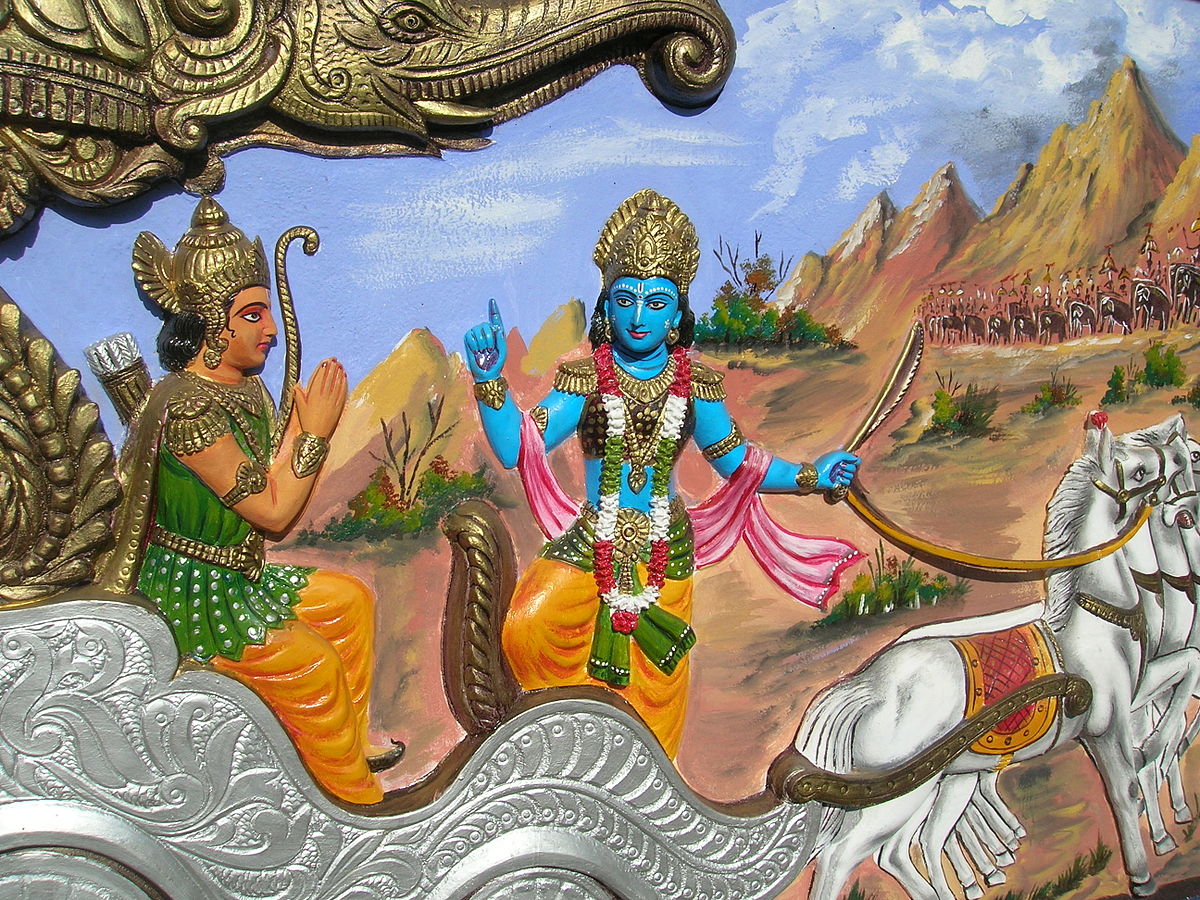
A Daily Exploration of Dharma, Jnana, and Relevance to Modernity
By Swami Gitananda
Published on New Zealand Bharat (NZB) News, March 22, 2025
Om Shri Krishnarpanamastu. With folded hands and a heart attuned to the divine vibration of Sanatana Dharma, we continue our sacred journey through the Bhagavad Gita, the Yoga-Shastra that illuminates the path from samsara (the cycle of birth and death) to moksha (liberation). Yesterday, we stood at the threshold with Dhritarashtra’s anxious query, his words steeped in moha (attachment) and avidya (ignorance). Today, we step forward into the response of Sanjaya, the seer blessed with divya-drishti (divine vision), as he begins to unveil the scene at Kurukshetra.
This series is a daily sadhana (spiritual practice), an offering of one shloka at a time, enriched with its direct meaning, a detailed explanation, insights from acharyas across sampradayas (spiritual traditions), and reflections on its relevance to the modern tapestry—whether through quantum science, leadership, or svasthya (wellbeing). Let us now immerse ourselves in the second shloka of the Gita, found in Adhyaya 1, Shloka 2, and witness the battlefield through Sanjaya’s eyes.
The Shloka
सञ्जय उवाच
दृष्ट्वा तु पाण्डवानीकं व्यूढं दुर्योधनस्तदा।
आचार्यमुपसङ्गम्य राजा वचनमब्रवीत्॥
Sanjaya uvacha
Drishtva tu pandavanikam vyudham duryodhanastada,
Acharyamupasangamya raja vachanamabravit.
Direct Meaning
Sanjaya said:
“Having seen the army of the Pandavas arrayed in formation, King Duryodhana then approached his teacher (acharya) and spoke these words.”
In this verse, Sanjaya begins his narration to Dhritarashtra, describing the initial actions of Duryodhana, the eldest of the Kaurava princes. Observing the Pandava army (pandavanikam) arranged in a strategic military formation (vyudham), Duryodhana, referred to here as raja (king), approaches his acharya, Dronacharya, the revered guru of both the Kauravas and Pandavas, to address him.
Explanation of the Shloka
This shloka shifts the perspective from Dhritarashtra’s inner turmoil to the external reality of Kurukshetra, as seen through Sanjaya’s divya-drishti. Though brief, it is pregnant with psychological, ethical, and spiritual undertones, setting the stage for the unfolding drama of war and wisdom. Let us explore its layers with viveka (discernment).
- Sanjaya’s Role as Sakshi (Witness)
Sanjaya’s opening words—“drishtva tu” (“having seen”)—establish him as the impartial observer, a sakshi who perceives without entanglement. His divya-drishti, bestowed by Vyasa, symbolizes the clarity of a mind purified by sattva (goodness) and detached from rajas (passion) and tamas (ignorance). This witnessing foreshadows Krishna’s later teaching in Adhyaya 5: “Naiva kinchit karomi”—“I do nothing at all”—urging us to cultivate sakshi-bhava (the state of being a witness) amidst life’s battles. - Pandavanikam Vyudham: The Power of Order
The phrase pandavanikam vyudham highlights the Pandavas’ disciplined formation, a testament to their unity and strategic prowess under the guidance of Arjuna and their commander, Dhrishtadyumna. Vyudham (arrayed) suggests not just military alignment but the harmony of dharma. In contrast to the Kauravas’ later-described chaos, this order reflects the Pandavas’ alignment with righteousness, a subtle hint at the Gita’s central theme: victory belongs to those who uphold dharma. - Duryodhana: The Restless Ego
Duryodhana, called raja here, embodies the ahamkara (ego) in motion. His approach to Dronacharya upon seeing the Pandavas’ strength reveals a flicker of unease beneath his bravado. This restlessness stems from krodha (anger) and lobha (greed), the arishadvargas (six enemies of the mind) that Krishna will later warn against. Duryodhana’s title of raja is ironic—he rules Hastinapura, yet lacks the rajasic virtues of a true king, such as justice and magnanimity. - Acharyamupasangamya: The Guru’s Presence
Duryodhana’s act of approaching Dronacharya (acharya) underscores the pivotal role of the guru in Sanatana Dharma. Drona, the master of archery and warfare, trained both sides, yet his allegiance lies with the Kauravas due to his obligations. This moment hints at the ethical complexity of dharma—a teacher caught between loyalty and righteousness. It also foreshadows Arjuna’s surrender to Krishna as Guru in Adhyaya 2, seeking shreyas (the ultimate good) over preyas (the pleasant).
This shloka, then, is a bridge between Dhritarashtra’s blindness and the battlefield’s reality, introducing Duryodhana’s character and the tension that will propel Arjuna’s vishada (despondency). It invites us to reflect: Are we, like Duryodhana, driven by ego, or can we align with the order of dharma?
Spiritual Wisdom from Authoritative Voices
The Bhagavad Gita shines through the prism of sampradayas, each offering a unique yet complementary lens. Let us draw from the bhashyas of great acharyas to illuminate this shloka.
- Adi Shankaracharya (Advaita Vedanta)
Shankaracharya sees Duryodhana’s approach to Dronacharya as a manifestation of samskara (impressions) rooted in avidya. The Pandavas’ formation represents the sattvic intellect, while Duryodhana’s reaction betrays rajasic agitation. For Advaita, this shloka subtly points to the need for viveka—discriminating between the transient (anitya) and eternal (nitya)—a discernment Krishna will later impart to Arjuna. - Ramanujacharya (Vishishtadvaita)
Ramanuja interprets the Pandavas’ vyudham as a symbol of their bhakti to Sri Krishna, the Sarathi (charioteer) of their cause. Duryodhana’s restlessness reflects a soul estranged from Narayana, seeking refuge in worldly power rather than divine grace. This shloka, for Ramanuja, underscores the futility of resisting dharma and the necessity of sharanagati (surrender) to the Supreme. - Madhvacharya (Dvaita)
In Madhvacharya’s dualistic view, the Pandavas embody Vishnu-tattva (the principle of righteousness), while Duryodhana represents asuric tendencies—pride and defiance. Sanjaya’s narration is a sattvic act of service to truth, contrasting with Duryodhana’s tamasic motives. The shloka highlights the eternal struggle between daiva (divine) and asura (demonic) forces, with Vishnu as the ultimate protector of dharma. - Swami Vivekananda (Neo-Vedanta)
Vivekananda views this shloka as a call to action. “The Gita begins where we stand—facing opposition,” he writes. Duryodhana’s approach to Drona mirrors humanity’s tendency to seek external validation in moments of doubt. The Pandavas’ formation, however, exemplifies shakti (strength) born of unity and purpose. Vivekananda urges us to harness this shakti in our own karmakshetra (field of action), rising above fear and division.
These voices, spanning centuries and philosophies, weave a tapestry of jnana (knowledge) and bhakti (devotion), revealing the Gita’s timeless depth.
Relevance to Today’s Context
The Bhagavad Gita is a jivan-shastra, alive with wisdom for our era. Let us explore how this shloka resonates with quantum science, leadership, and svasthya.
- Quantum Science and Cosmology
Sanjaya’s divya-drishti evokes the quantum observer, whose perception collapses infinite possibilities into a singular reality. The Pandavas’ vyudham mirrors the coherence of quantum systems—particles aligned in a unified state—while Duryodhana’s agitation suggests entropy, the disorder of an unaligned mind. This shloka invites us to consider: Can we, like Sanjaya, observe the cosmos with clarity, or do we, like Duryodhana, distort reality through ego? Modern cosmology’s quest for a unified theory echoes the Gita’s pursuit of ekatva (oneness) amidst multiplicity. - Leadership and Business
In the corporate Kurukshetra, the Pandavas’ formation offers a lesson in sangathan-shakti (organizational strength)—teams aligned with a shared vision triumph over fragmented efforts. Duryodhana’s approach to Drona reflects a leader rattled by competition, seeking reassurance rather than strategy. Krishna’s later teaching of nishkama karma (selfless action) applies here: effective leaders act with purpose, not panic. For today’s executives, this shloka is a reminder to cultivate drishti (vision) and sankalpa (resolve), guiding teams through challenges with equanimity. - Svasthya (Wellbeing)
Duryodhana’s unease mirrors the modern epidemic of anxiety—chitta-vikshepa (mental distraction)—driven by comparison and fear. The Pandavas’ vyudham symbolizes inner harmony, a state of samatva (balance) that Krishna will extol as yoga. Practices like pranayama (breath control) and dhyana (meditation), rooted in this shloka’s call for order, can steady the mind. Sanjaya’s detached observation inspires us to step back from emotional turmoil, fostering shanti (peace) in a chaotic world.
Conclusion: The Battlefield Within
This second shloka draws us deeper into Kurukshetra, revealing the contrast between order and unrest, witness and ego. Sanjaya’s vision and Duryodhana’s words set the stage for the Gita’s core question: How do we act amidst conflict? Each day, we peel back another layer of this divya-gita (divine song), seeking tattva (truth) and artha (meaning) for our lives.
Tomorrow, we will hear Duryodhana’s speech to Dronacharya, a cascade of pride and fear that primes Arjuna’s crisis. Let us approach this journey with shraddha (faith) and bhakti (devotion), chanting: “Yatra yogeshvarah Krishno yatra partho dhanurdharah” (Gita 18.78)—“Where Krishna, the Lord of Yoga, and Arjuna, the archer, are present, there is victory.” May we align our chitta (consciousness) with this eternal truth.
Hari Om Tat Sat.