





 Tracey Wilson
 By Tracey Wilson | NZB News
New Zealand’s road safety landscape has undergone a fundamental transformation with Waka Kotahi NZ Transport Agency completing the transfer of safety camera operations from NZ Police as of July 1, 2025. This historic shift represents the largest change in traffic enforcement operations since the introduction of speed cameras, with the transport agency now solely responsible for the operation of the safety camera network of around 150 cameras formerly operated by Police. The transition signals not just a change in institutional responsibility, but a complete reimagining of how New Zealand approaches road safety enforcement through technology.
The Scale of Transformation
The magnitude of this institutional shift cannot be understated. After a 12-month period of transition, as of today (1 July 2025) NZTA is solely responsible for the operation of the safety camera network of around 150 cameras formerly operated by Police. However, this represents just the beginning of an ambitious expansion programme that will see the camera network grow exponentially over the coming years.
Numbers of speed cameras are set to quadruple as NZ Transport Agency Waka Kotahi (NZTA) takes over their operations from police, the transport agency has said. The agency’s director of regional relationships Emma Speight revealed that whilst there were currently under 200 “safety” cameras on the roads, the agency was “looking at going to 800”, representing a fourfold increase in camera density across the country.
By the end of the decade, NZTA is looking to expand the camera fleet to 800. “This was where the optimal level of cameras for the investment was determined which would save roughly around 130 lives per year.” This projection underscores the government’s commitment to the Road to Zero strategy and its belief that technology-driven enforcement can significantly reduce New Zealand’s road toll.
Privatisation of Mobile Operations
Perhaps the most significant aspect of this transformation is the introduction of private contractors to operate mobile speed cameras for the first time in New Zealand’s history. Waka Kotahi has put out a tender to run the country’s mobile cameras from next year, marking a fundamental shift from police-operated enforcement to commercially-provided services.
A private company will run New Zealand’s 45 mobile speed cameras from 2025, with the successful contractor taking over operations that have traditionally been the exclusive domain of sworn police officers. This represents a philosophical shift towards treating speed enforcement as a technical service rather than a law enforcement activity.
The tender process has been carefully structured to address concerns about profit motives in enforcement. It said the provider that won the contract would not issue speeding tickets or get bonuses for pinging more drivers. Waka Kotahi would have responsibility for processing the images and issuing fines, as well as deciding where and when the cameras would be placed.
International Expertise and Technology Transfer
The privatisation approach reflects global best practices in mobile camera operations. “Internationally, it is a well-established practice for mobile camera operations on the roadside to be delivered by a third-party operator,” Waka Kotahi said. The agency has specifically targeted international expertise, with bidders required to have a track record in a comparable market such as Australia. Europe or the US, and be able to set up in New Zealand by next January.
The technical requirements reflect the sophisticated nature of modern speed enforcement technology. “A high degree of evidential accuracy and assurance is required” along with effective cybersecurity, the tender said. These requirements ensure that the privatised operations maintain the evidential standards necessary for legal proceedings whilst protecting sensitive data captured by the cameras.
Successful bidders must demonstrate capabilities beyond simple speed detection. Tickets issued by the mobile cameras look likely to expand beyond speed limit breaches. Bidders must show they have the potential to spot people without seatbelts on and drivers using cellphones. This multi-function capability reflects the evolution of camera technology from simple speed detection to comprehensive traffic violation monitoring.
Data Processing and Privacy Implications
The privatisation model raises significant questions about data handling and privacy protection. The footage captured will be sent to Sydney, to data centres run by Amazon Web Services and Microsoft, and be retained for 30 days while Waka Kotahi assesses it. This offshore data processing arrangement has sparked concerns about the sovereignty of New Zealand road user information and the implications of having sensitive enforcement data processed overseas.
The agency has been warned to manage the risks around “the public’s trust and confidence in the system”. A privacy impact assessment three months ago told Waka Kotahi to safeguard the personal data that cameras caught, and strike a balance between automation using artificial intelligence and human oversight in processing violations.
The privacy implications extend beyond simple data protection to encompass questions about algorithmic decision-making in enforcement. The integration of artificial intelligence in processing violations represents a significant shift towards automated enforcement, raising questions about accountability and appeal processes when technology makes enforcement decisions.
Economic and Employment Considerations
Interestingly, the tender process places minimal emphasis on domestic economic benefits. The tender is giving only a very small weighting – five percent – to a bid’s broader benefits, such as to job creation in New Zealand. This approach prioritises technical capability and cost-effectiveness over local employment considerations, reflecting a pragmatic approach to securing the best possible enforcement technology.
Waka Kotahi said neither it, nor the provider, would receive any funds from mobile cameras, with all fees going to the government consolidated fund. This revenue-neutral approach for the agency and contractor aims to address public concerns about enforcement being driven by financial incentives rather than safety considerations.
Expanding Technological Capabilities
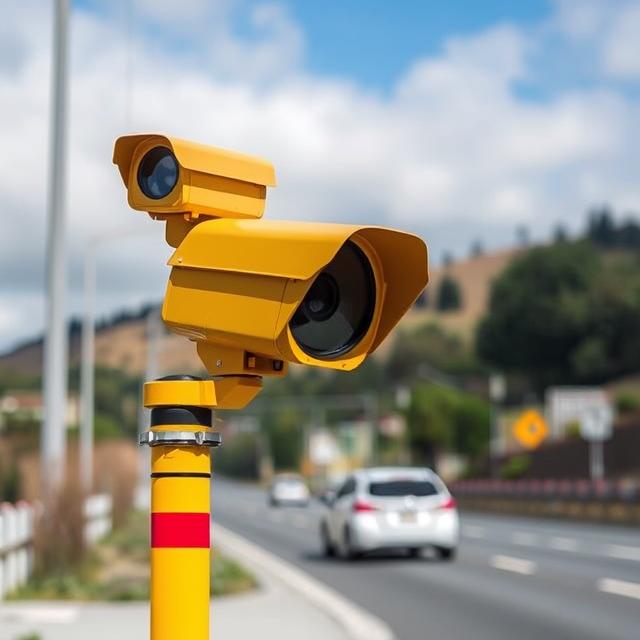
The camera network transformation encompasses multiple types of advanced enforcement technology. This is planned to expand to around 200 cameras by 2027, including fixed speed cameras, mobile speed cameras, red light cameras and average (point to point) speed cameras. This technological diversity reflects international best practices in comprehensive speed management.
Average speed cameras represent a particular innovation for New Zealand’s enforcement landscape. These safety cameras can calculate the average speed that a vehicle travels across a length of road between two cameras. Commonly used internationally, research shows that average speed safety cameras are more effective than single location cameras, and can reduce the number of people who are killed or seriously injured on roads by more than 50%.
With this legislation change Waka Kotahi is preparing to install 14 average speed safety cameras across seven road corridors in Aotearoa New Zealand, marking the introduction of this proven technology to New Zealand roads for the first time.
Road to Zero Strategy Integration
The camera network expansion forms a central component of New Zealand’s Road to Zero strategy, which aims to eliminate road deaths and serious injuries. Waka Kotahi NZ Transport Agency is committed to achieving Road to Zero, a vision for an Aotearoa New Zealand where no deaths or serious injuries occur on our roads.
Waka Kotahi’s ‘Road to Zero’ Strategy adopts a ‘Vision to Zero’ of New Zealand, where no one is killed or seriously injured in road crashes, and has a target for reducing annual deaths and serious injuries by 40 percent by 2030 (from 2018 levels). The camera network expansion represents a key mechanism for achieving these ambitious targets.
Revenue and Enforcement Projections
The scale of enforcement activity is expected to increase dramatically under the new system. The Transport Agency expects new speed cameras to triple the number of drivers caught, increasing from 1 million to 3 million offences a year. This tripling of enforcement activity reflects both the increased camera density and the enhanced capabilities of modern detection technology.
The agency has previously estimated the whole system upgrade will triple the number of camera-issued tickets to 3 million a year by 2030, and increase prosecutions to about 3300. These projections suggest a fundamental shift in the enforcement landscape, with technology-based detection becoming the primary mechanism for speed enforcement rather than officer-initiated stops.
Operational Model and Vehicle Deployment
The practical implementation of the new system involves significant changes to enforcement visibility and methodology. As part of the transfer of cameras from Police, NZTA is also now operating mobile speed cameras in SUVs, alongside Police officers being highly visible on our roads. This dual approach maintains police visibility whilst introducing new enforcement platforms.
New Zealand Transport Agency Waka Kotahi announced that from Tuesday, May 13, camera-equipped SUVs would park on sides of roads across Auckland to record speeding drivers. The SUVs would join camera-equipped vans traditionally used by police. The diversification of enforcement vehicles aims to maintain the “anytime, anywhere” deterrent effect that has proven effective in other enforcement areas.
By the end of the rollout, there would be 44 mobile cameras nationwide, with 35 operating at any given time. This operational model ensures continuous coverage whilst allowing for maintenance and redeployment flexibility.
International Comparative Context
New Zealand’s camera deployment has historically lagged behind international benchmarks for road safety enforcement. Sweden, with a much lower road toll rate, has about 11 safety cameras per 100,000 population while New Zealand in 2019 had 2.2. The planned expansion aims to bring New Zealand closer to international best practice levels of enforcement coverage.
New Zealand had the lowest number of safety cameras per capita, and was “in the bottom third of the OECD” for road deaths. This combination of low enforcement technology deployment and poor safety outcomes provides the policy rationale for the aggressive expansion programme.
Stakeholder Response and Public Communication
The transformation has been accompanied by a deliberate communication strategy to frame cameras as safety tools rather than enforcement mechanisms. NZTA is calling them “safety cameras” in a Cabinet-ordered attempt “to shift the public away from perceptions that safety cameras are an enforcement, revenue-gathering tool”.
Transport Minister Simeon Brown has emphasised the safety focus of the programme. When asked whether the move was, in fact, a revenue-generating exercise, Brown said the spots getting new cameras were “high risk, black spots”. “This is not a revenue-gathering tool. This is about making sure we are cracking down on speeding in areas where there are really high risks.”
Implementation Challenges and Risk Management
The transition has not been without challenges, particularly regarding safety of camera operators. In 2021, a police operator was badly hurt when a car was deliberately driven into a mobile camera van at about 150kph. WorkSafe originally charged police over the incident, then dropped the charge when police agreed last month to a suite of health and safety measures.
This incident highlights the risks associated with roadside enforcement operations and the importance of robust safety protocols for private contractors. Waka Kotahi said whoever won the tender would be monitored and audited, including in its responsibilities to keep its mobile camera operators safe.
Technology Integration and Future Capabilities
The new camera network incorporates advanced technology capabilities that extend beyond traditional speed detection. A six-month trial of mobile phone and seatbelt detection safety cameras was run across three locations in Tāmaki Makaurau Auckland last year. Data from the trial shows that of 12,870,563 vehicles, 199,515 mobile phone offences were recorded, and 43,444 seatbelt offences were detected.
However, the use of safety cameras to enforce mobile phone and seatbelt offences is currently not permitted under the Land Transport Act 1998, and the Te Manatū Waka Ministry of Transport is exploring options to enable their use. This suggests that the full technological capabilities of the new camera network are yet to be legally activated.
Regional Deployment Strategy
The rollout strategy prioritises high-risk corridors and areas with demonstrated safety problems. Currently we are deciding on the locations which will have the greatest impact, the number of cameras and mixture of camera types to use, to deliver the most effective outcomes in supporting people to travel safely.
Waka Kotahi considers a number of factors when installing a safety camera on a road location. These include: evidence which shows speeding and/or red-light running is an issue on that road · integrating with other speed management interventions eg speed limit changes, safety infrastructure and/or road policing.
Fixed Camera Expansion Programme
Alongside mobile camera privatisation, the fixed camera network is also expanding significantly. As part of the expansion, we’re progressing with initial expansion of nine safety cameras across local roads in Tāmaki Makaurau in partnership with Auckland Transport and NZ Police. This collaborative approach with local authorities ensures that camera deployment aligns with local safety priorities.
Nine new static speed safety cameras have been installed across local roads in Tāmaki Makaurau Auckland in partnership with Auckland Transport and NZ Police, representing the first phase of a comprehensive expansion programme targeting urban high-risk locations.
Partnership Model with Road Controlling Authorities
The new operational model recognises the importance of collaboration with local authorities in camera deployment decisions. For local roads, Waka Kotahi will take a partnership approach with local councils and Road Controlling Authorities (RCAs) on where safety cameras can support safety outcomes.
Waka Kotahi will also process offences for safety cameras operated by other road controlling authorities (RCAs). Police will retain and administer officer-issued infringements. This centralised processing approach aims to create consistency in enforcement procedures whilst maintaining local flexibility in deployment decisions.
Evidence-Based Site Selection
The scientific approach to camera placement reflects international best practices in evidence-based road safety interventions. Safety camera sites have been determined based on safety risk and considered alongside speed limit changes, safety infrastructure improvements, and NZ Police enforcement.
International research has shown that static speed safety cameras can reduce the number of people killed or seriously injured in road crashes by 15%. This evidence base provides the foundation for the substantial public investment in camera network expansion.
Future Technological Development
The camera network is designed to accommodate future technological developments in enforcement capability. Bidders must show they can meet future requirements, “which could include point-to-point mobile operations”, the tender said. This forward-looking approach ensures that private contractors can adapt to evolving enforcement technologies.
Waka Kotahi is trialling whether safety cameras can be used at road works or construction sites, to protect road user and road worker safety by encouraging people to travel at the correct speed. Such innovations demonstrate the potential for expanding enforcement technology beyond traditional highway applications.
Summary
The transfer of speed camera operations from Police to Waka Kotahi represents the most significant transformation in New Zealand’s road safety enforcement in decades. The introduction of private contractors to operate mobile cameras, combined with an ambitious expansion to 800 cameras by 2030, fundamentally reshapes how the country approaches traffic enforcement.
This transformation reflects international trends towards technology-driven enforcement and evidence-based road safety interventions. The integration of advanced detection capabilities, offshore data processing, and automated violation processing represents a substantial modernisation of enforcement infrastructure that positions New Zealand to achieve its Road to Zero targets.
However, the privatisation model raises important questions about accountability, data sovereignty, and the appropriate balance between automation and human oversight in enforcement decisions. The success of this transformation will ultimately be measured not just by the reduction in road deaths and serious injuries, but by the maintenance of public trust in fair and transparent enforcement processes.
The scale and ambition of this programme place New Zealand at the forefront of technology-driven road safety enforcement globally. The coming years will determine whether this approach can deliver the promised safety improvements whilst maintaining the social licence necessary for effective traffic enforcement. For road users, the message is clear: the era of comprehensive, technology-driven speed enforcement has arrived, fundamentally changing the risk calculation for those who choose to exceed speed limits on New Zealand roads.
As the system becomes fully operational, the true test will be whether this massive investment in enforcement technology translates into the cultural and behavioural changes necessary to achieve New Zealand’s vision of zero road deaths and serious injuries.