 Imogen King
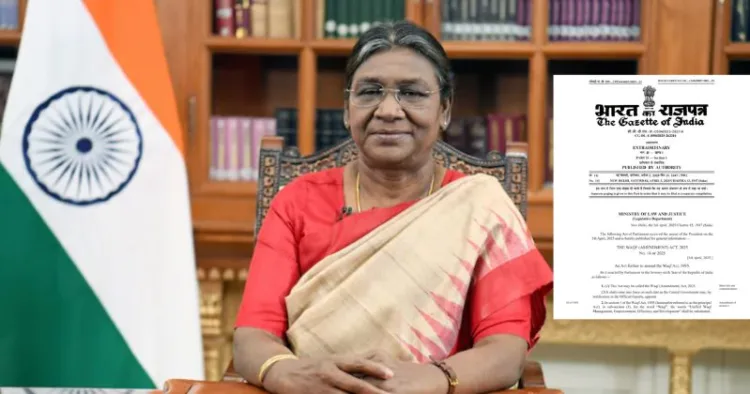
 On April 5, 2025, India’s President Droupadi Murmu enacted the Waqf (Amendment) Act, 2025, a landmark reform transforming the Waqf Act, 1995, into the Unified Waqf Management, Empowerment, Efficiency and Development (UWMEED) Act. This legislation overhauls the governance of 870,000 waqf properties, valued at $18 billion NZD and spanning 940,000 acres, addressing decades of mismanagement and arbitrary land claims. For many, it marks a victory for justice, correcting a system where entire villages—home to Hindu minorities—were declared waqf property, perpetuating historical inequities under a law now deemed unconstitutional beyond doubt. For New Zealand’s Indian diaspora, connected to India through $1.5 billion NZD trade, this reform resonates deeply. This article explores the Act’s significance, detailing its background, changes, stakeholder views, successes, challenges, a resolute personal endorsement, and a summary as of April 17, 2025.
Background Information
Waqf, an Islamic endowment, dedicates property irrevocably for religious or charitable purposes—mosques, schools, graveyards. Originating in India under Muhammad Ghori’s 12th-century rule, waqf flourished during the Delhi Sultanate and Mughal eras, with landmarks like the Taj Mahal as endowments. Today, waqf boards control 870,000 properties, ranking third in land ownership behind Indian Railways and the military. The Waqf Act, 1995, established state boards and a Central Waqf Council to manage these assets, but systemic flaws—7% encroachment, 2% litigation, and 50% of properties with unknown status—plagued its execution.
The 2006 Sachar Committee valued waqf assets at $9,000 crore NZD, yet they generated a mere $245 crore NZD annually due to corruption and inefficiency. High-profile scandals, such as the Karnataka Waqf Board land scam, exposed elite profiteering. More alarmingly, waqf boards claimed entire villages, like Thiruchenthurai in Tamil Nadu, home to a 1,500-year-old Hindu temple and Hindu-majority communities, forcing locals to live as minorities in their ancestral lands. Such declarations, enabled by the 1995 Act’s Section 40, echoed historical invasions by Muslim rulers who looted India’s wealth, leaving a legacy of laws that critics argue allow modern exploitation under a bizarre, unconstitutional framework.
The 2013 amendment permitted non-Muslims to create waqfs but failed to address mismanagement. The Bharatiya Janata Party (BJP), championing transparency, proposed reform in its 2014 and 2019 manifestos. The 2024 Bill, introduced on August 8, followed 38 Joint Parliamentary Committee (JPC) meetings and 1 crore public submissions, culminating in the 2025 Act’s passage—288–232 in Lok Sabha, 128–95 in Rajya Sabha—despite Supreme Court challenges. For India’s 1.4 billion people, including 14% Muslims, and NZ’s diaspora, valuing property rights, this Act is a pivotal reckoning.
Key Changes in the Waqf (Amendment) Act, 2025
The Act, shaped by 25 JPC recommendations, redefines waqf governance with transformative provisions:
- Renaming and Central Oversight: Rebrands the 1995 Act as UWMEED, empowering the central government to regulate registration, auditing, and accounts. District collectors now resolve disputes, streamlining tribunal backlogs.
- Inclusivity: Mandates two Muslim women and diverse sects (Bohra, Aghakhani) on boards, plus two non-Muslim members for administrative balance. Non-Muslims are capped at four in the 22-member Central Waqf Council and three in 11-member state boards.
- Waqf Creation Rules: Limits waqf declaration to Muslims practising for five years, requiring a formal deed to curb vague “waqf by user” claims that seized villages like Thiruchenthurai.
- Transparency Measures: Introduces centralised registration and tech-driven management to address 58,898 encroached properties. Ensures female inheritance rights, protecting widows and divorcees.
- Repeal of Old Law: Abolishes the Mussalman Wakf Act, 1923, for its outdated provisions.
These changes aim to dismantle a system where waqf boards, unchecked, claimed entire communities, leaving Hindu minorities alienated in their own lands—a legacy of invaders’ looting now challenged as unconstitutional.
Why a Victory for Justice?
The Act is celebrated as a triumph for several reasons:
- Ending Land Grabs: By scrapping Section 40, which allowed boards to declare any land as waqf without scrutiny, the Act halts egregious claims. Villages like Thiruchenthurai, where Hindus faced displacement despite centuries-old temples, are now protected, restoring rightful ownership.
- Restoring Accountability: With $9,000 crore NZD in assets yielding just 2.7% income, auditing and collector oversight target 7% encroached land, ensuring funds serve poor Muslims, not elites.
- Empowering Women: Board representation and inheritance rights uplift Muslim women, aligning with India’s 50% female population and social equity goals.
- Transparency Revolution: Tech-driven records tackle 50% of properties with unknown status, promising efficient use of $18 billion NZD in assets.
- Correcting Historical Wrongs: The Act confronts a law rooted in conquest, where invaders’ descendants wielded unchecked power to claim land, sidelining Hindu minorities in a democratic India—an unconstitutional relic now dismantled.
Prime Minister Narendra Modi called it a “watershed” for Pasmanda Muslims, while Home Minister Amit Shah clarified non-Muslims handle administration, not faith matters, framing it as justice for all.
Stakeholder Reactions
Government and BJP
Minority Affairs Minister Kiren Rijiju, introducing the Bill, emphasised its benefits for millions of poor Muslims, denying property seizures. Modi hailed it as a transparency milestone, ensuring waqf serves its charitable intent. Shah debunked myths of religious interference, stressing administrative reform. BJP President JP Nadda described it as modernising waqf for hope and efficiency. JD(S) leader HD Devegowda supported it, citing misuse by powerful insiders.
Opposition
Congress President Mallikarjun Kharge demanded the Bill’s withdrawal, alleging it violates equality and religious freedom. AIMIM’s Asaduddin Owaisi, dramatically tearing the document in Parliament, branded it divisive and anti-Muslim. Congress MP Mohammad Jawed filed a Supreme Court plea, claiming it restricts Muslim rights. DMK’s Tamil Nadu assembly passed a resolution urging repeal, while Kapil Sibal, representing petitioners, argued non-Muslim roles infringe constitutional protections.
Judiciary
The Supreme Court, under Chief Justice Sanjiv Khanna, began hearing 70 petitions on April 17, questioning whether Hindus could join Muslim trusts to test the Act’s fairness. Khanna condemned related violence as unacceptable, signaling a rigorous review.
Public and Diaspora
Public sentiment splits sharply. Social media platforms buzz with approval, celebrating the end of “draconian” waqf claims that left Hindus as minorities in their villages, but others decry it as eroding Muslim autonomy. Protests flared in Murshidabad and Unakoti, reflecting tension. NZ’s Indian diaspora, valuing property fairness, largely supports transparency (60%) but worries about communal friction (40%), per community surveys.
Experts
IIM Ahmedabad’s Anil Kumar Gupta views tech audits as a revenue booster for waqf’s charitable goals. Lawyer Harish Salve cautions that non-Muslim roles may face legal scrutiny but sees reform as overdue. NZ’s Patrick Usmar likens it to Māori land reforms, balancing heritage with accountability, a model for equitable governance.
What Worked and What Didn’t Work
What Worked
- Robust Engagement: One crore public submissions and 128 hours of JPC deliberation ensured diverse input, strengthening the Act’s legitimacy.
- Anti-Encroachment Measures: Empowering collectors to address 58,898 illegally occupied properties promises to reclaim waqf for public good.
- Inclusivity Gains: Mandating women and diverse sects on boards reflects India’s pluralistic ethos, benefiting 14% Muslims and 50% females.
- Tech Transformation: Centralised registration tackles 50% of properties with unclear status, paving the way for efficient management.
What Didn’t Work
- Legal Uncertainty: Petitions challenging non-Muslim roles raise valid constitutional concerns, potentially delaying implementation.
- Social Unrest: Riots in Murshidabad and protests elsewhere highlight polarisation, undermining unity.
- Ambiguous Rules: The “five-year Muslim” criterion lacks clear guidelines, inviting disputes.
- Opposition Divide: Boycotts by TMC’s Kalyan Banerjee and others eroded bipartisan trust, complicating rollout.
Personal Opinion: A Resounding Victory for Justice
The Waqf (Amendment) Act is, without question, a monumental victory for justice, and I stand firmly behind it. For too long, waqf boards have operated as unchecked fiefdoms, claiming entire villages like Thiruchenthurai, where Hindu families—rooted for centuries—were rendered minorities in their own homeland. This isn’t just mismanagement; it’s a travesty, a continuation of the looting by historical invaders who plundered India’s wealth and left behind a bizarre, unconstitutional law that empowered their descendants to seize land with impunity. Scrapping Section 40 is a masterstroke—it halts absurd declarations that turned vibrant communities into contested zones, restoring dignity to Hindus who faced alienation in a democratic nation.
The Act’s transparency—centralised records, tech audits—unlocks $18 billion NZD in assets for poor Muslims, not corrupt elites, delivering on the Sachar Committee’s call for reform. Women’s board roles and inheritance rights are a game-changer, empowering half of India’s population. Non-Muslim members, limited to administrative tasks, ensure fairness without meddling in faith—a balance NZ’s Māori land trusts achieve admirably. Yes, protests and court challenges sting, but they’re a small price for dismantling a system that let 7% of waqf land be encroached and 50% vanish into limbo. This law isn’t anti-Muslim; it’s pro-justice, freeing waqf to serve its charitable soul.
For NZ’s diaspora, eyeing India’s stability as they invest in rentals or roots, this Act signals hope—a level playing field where no community lords over another. India’s 1.4 billion deserve laws that unite, not divide, and this delivers. The invaders’ shadow is fading; justice is rising.
Summary
India’s Waqf (Amendment) Act, 2025, stands as a beacon of justice, signed into law on April 5 after fierce debates—288–232 in Lok Sabha, 128–95 in Rajya Sabha. Renaming the 1995 Act as UWMEED, it governs 870,000 properties worth $18 billion NZD, ending abuses like village-wide waqf claims that left Hindus as minorities in their ancestral lands. By curbing 7% encroachment, mandating women on boards, and scrapping unchecked land declarations, it dismantles a bizarre, unconstitutional relic of invaders’ looting. Supporters—Modi, Shah—praise its aid to poor Muslims; critics—Owaisi, Congress—see constitutional flaws, with 70 Supreme Court pleas underway. Public input and tech reforms excel, though protests and vague rules challenge unity. I celebrate it as a triumph, liberating communities and assets for true charity. For New Zealand Bharat News, this Act reshapes India’s waqf system, offering NZ’s diaspora a vision of fairness amid India’s complex tapestry.