 Tracey Wilson
 The Waitangi Tribunal is a cornerstone institution in Aotearoa New Zealand’s journey towards recognising and addressing historical injustices experienced by Māori under the Treaty of Waitangi. Established in 1975, the Tribunal plays a vital role in investigating breaches of the Treaty and recommending redress, shaping the nation’s approach to biculturalism, reconciliation, and the ongoing relationship between Māori and the Crown.
Origins and Historical Context
The Treaty of Waitangi was signed in 1840 between representatives of the British Crown and many Māori chiefs. While the Treaty promised protection of Māori rights and culture, Māori soon found that the Crown often failed to uphold its commitments. For generations, Māori raised concerns and lodged petitions about breaches of the Treaty, but these were largely ignored. By the 1970s, Māori protest about unresolved Treaty grievances had intensified, sometimes taking place outside the law.
In response to mounting pressure, the New Zealand Parliament passed the Treaty of Waitangi Act 1975, establishing the Waitangi Tribunal as a formal legal process to investigate Māori claims of Treaty breaches. The Tribunal was a direct response to the need for a mechanism that could address Māori grievances and contribute to reconciliation between Māori and the Crown.
Founding and Evolution
Establishment (1975):
The Waitangi Tribunal was created under the Treaty of Waitangi Act 1975 during the Third Labour Government led by Prime Minister Bill Rowling. Initially, the Tribunal’s powers were limited: it could only investigate claims about breaches that occurred after 1975, and its main role was to advise the government on whether proposed legislation or policies were inconsistent with Treaty principles.
1985 Amendment – Expanding Scope:
A major turning point came with the Treaty of Waitangi Amendment Act 1985, which extended the Tribunal’s jurisdiction to investigate historical claims dating back to 1840. This change dramatically increased the Tribunal’s workload and significance, leading to an influx of claims from iwi (tribes) and hapū (sub-tribes) across the country.
Further Developments:
- In 1999, to speed up settlements, Parliament allowed claimants to negotiate directly with the Office of Treaty Settlements, bypassing the Tribunal if they wished.
- The deadline for submitting historical claims was set at 1 September 2008, but contemporary claims (relating to recent or ongoing issues) can still be filed.
- The Tribunal’s powers have been adjusted over time, but it remains central to the Treaty settlement process.
Function and Role
Permanent Commission of Inquiry:
The Waitangi Tribunal is a standing commission of inquiry. Its core function is to investigate claims by Māori that the Crown has acted in breach of the Treaty of Waitangi/Te Tiriti o Waitangi. The Tribunal examines whether government actions, policies, or omissions have prejudicially affected Māori and are inconsistent with the principles of the Treaty.
Scope of Claims:
- Historical Claims: Relate to Crown actions or policies before 1992. These are now closed to new registrations but have shaped the bulk of the Tribunal’s work.
- Contemporary Claims: Relate to more recent or ongoing Crown actions, policies, or legislation.
Recommendations:
The Tribunal does not have the power to enforce its findings, but it can make recommendations to the government. These recommendations often form the basis for negotiations between Māori and the Crown, leading to Treaty settlements that may include financial compensation, return of land, cultural redress, or changes to laws and policies.
Influence:
Many Tribunal recommendations have been implemented, leading to significant changes in law and policy. Examples include the recognition of te reo Māori as an official language, the establishment of Māori radio and broadcasting agencies, and the creation of institutions like Te Aka Whai Ora (the Māori Health Authority).
How the Tribunal Operates
Claim Lodgement:
Any Māori individual or group can lodge a claim (known as a Wai claim) with the Tribunal, alleging that they have been prejudiced by Crown actions or omissions that breach the Treaty.
Research and Hearings:
- The Tribunal, claimants, and the Crown conduct research into the historical and factual background of each claim.
- Claims are often grouped into district inquiries, where all claims from a specific region are heard together to ensure a comprehensive approach.
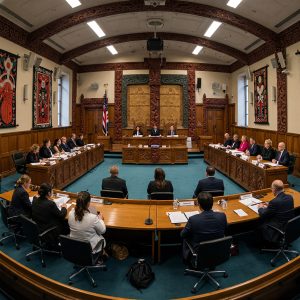
- Public hearings are held, where claimants, experts, and the Crown present evidence and arguments.
Reporting:
After considering all evidence, the Tribunal issues a report detailing its findings and recommendations. These reports are public and have become important documents in New Zealand’s legal, political, and social history.
Relationship with Settlements:
While the Tribunal’s findings are influential, Treaty settlements are negotiated directly between the Crown and mandated Māori groups (usually large iwi or natural groupings). The Tribunal’s reports often guide these negotiations, but settlements can also occur independently of the Tribunal process.
Key Achievements and Impact
Landmark Cases:
The Tribunal has investigated and reported on a wide range of issues, including land confiscations, fisheries, water rights, Māori language, health, and broadcasting. Notable cases include:
- The Ngāi Tahu claim, leading to significant compensation for loss of land in the South Island.
- The recognition of te reo Māori as an official language (1987).
- Environmental cases protecting tribal food sources and waterways.
Biculturalism and Reconciliation:
The Tribunal’s work has been central to New Zealand’s evolving commitment to biculturalism. Its reports have often prompted public debate, influenced legislation, and led to the creation of new institutions supporting Māori language, culture, and wellbeing.
Controversy and Criticism:
The Tribunal has sometimes been a political flashpoint, with debates over the scope of compensation, the pace of settlements, and the Tribunal’s influence on government policy. However, its existence is widely seen as essential to addressing historical grievances and maintaining social cohesion.
Current Status and Ongoing Work
The Tribunal continues to hear contemporary claims and issue reports on matters of national significance, such as water rights, health, and the application of Treaty principles in modern law. It remains a key forum for Māori to seek redress and for the Crown to be held accountable to its Treaty obligations.
Recent developments include the Tribunal’s scrutiny of proposed legislation affecting Māori rights, as seen in its interim report on the Regulatory Standards Bill, and its ongoing role in monitoring the Crown’s compliance with Treaty principles.
Summary
The Waitangi Tribunal is a unique and vital institution in New Zealand’s constitutional landscape. Established in 1975 to address Māori grievances under the Treaty of Waitangi, it has evolved into a powerful forum for investigating breaches, recommending redress, and shaping the relationship between Māori and the Crown. Through its inquiries, reports, and influence on settlements and policy, the Tribunal continues to play a central role in New Zealand’s journey towards justice, partnership, and reconciliation.