 Chintapally Suresh
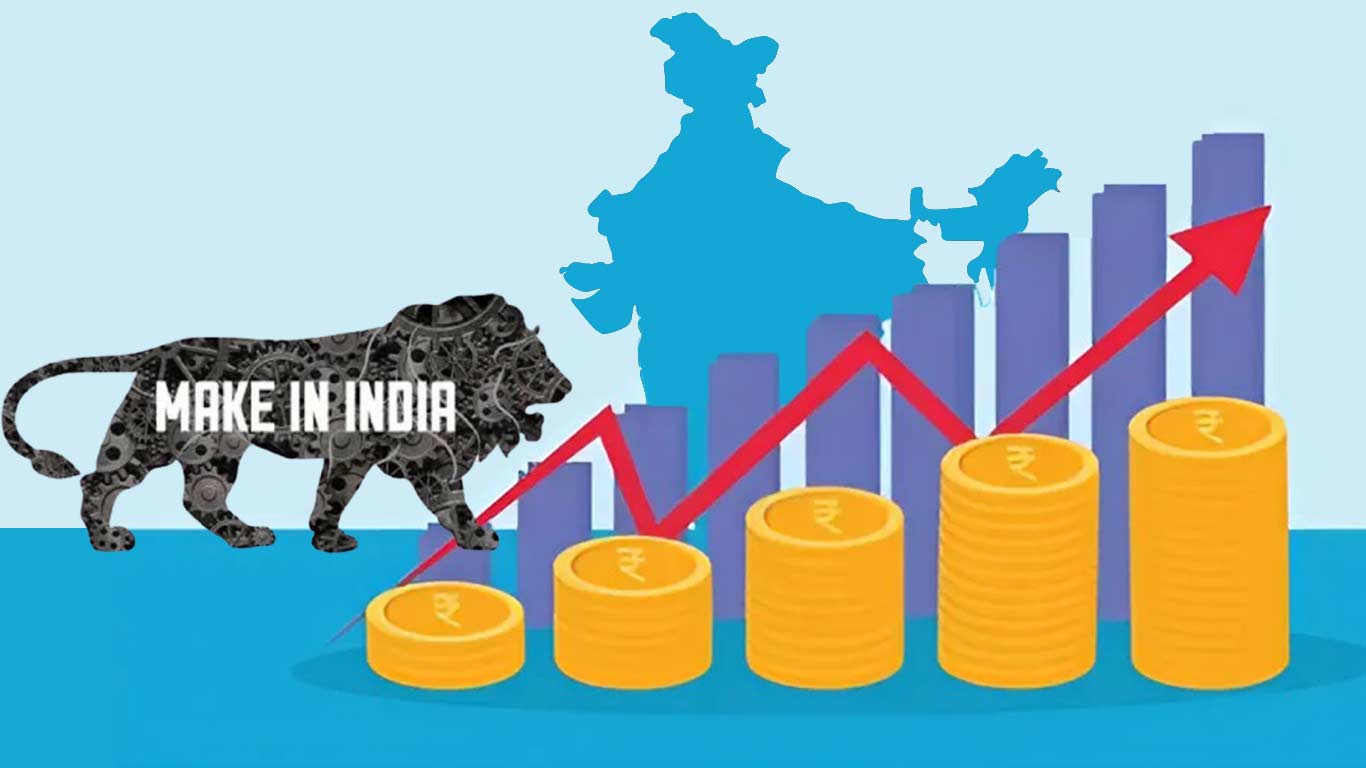
 Since its launch in 2014, Bharat’s (India’s) Make in India programme has stood as a bold experiment in economic transformation. Aimed at turning the country into a global manufacturing powerhouse, the initiative has sought to overhaul regulatory frameworks, attract foreign investment, foster innovation, and create millions of jobs. As the world’s fifth-largest economy in 2025, with a GDP projected at USD 4.27 trillion and poised to surpass Japan to become the fourth largest, India’s manufacturing ambitions are not just a matter of national pride-they are reshaping global supply chains and influencing the trajectory of the world economy.
This comprehensive analysis examines why Make in India is a disruptive force in manufacturing, the challenges it faces, the technological and policy innovations underpinning its progress, and its far-reaching implications for both Bharat and the global economic landscape.
The Vision Behind Make in India
The Make in India initiative was conceived to address chronic underperformance in the manufacturing sector, which, despite India’s vast population and growing consumer base, had long lagged behind services and agriculture. The government set an ambitious target: raise manufacturing’s share of GDP from 15% in 2014 to 25% by 2025. This vision was anchored in several key objectives:
- Attracting foreign direct investment (FDI) by opening up sectors such as defence, railways, and insurance.
- Streamlining regulations and reducing bureaucratic hurdles to improve the ease of doing business.
- Fostering innovation, skill development, and intellectual property protection.
- Building world-class infrastructure and logistics networks.
- Creating a facilitative government-industry partnership, moving away from a regulatory mindset to one of active facilitation.
Policy Innovations and Strategic Reforms
Production Linked Incentive (PLI) Schemes
One of the most significant policy levers has been the introduction of Production Linked Incentive (PLI) schemes. With an outlay of INR 1.9 trillion (USD 26 billion), these schemes target 14 key sectors-ranging from electronics and pharmaceuticals to automobiles and textiles. The PLI approach incentivises companies to scale up domestic manufacturing, reduce import dependence, and boost exports by offering financial rewards based on incremental production and sales.
National Manufacturing Mission
The 2025–26 Union Budget marked another major step forward with the establishment of a National Manufacturing Mission. This mission provides a comprehensive policy and governance framework to support small, medium, and large industries. It aims to enhance domestic production capabilities and transform the manufacturing landscape by fostering innovation, skill development, and technology adoption.
Infrastructure and Logistics Overhaul
Recognising that world-class manufacturing cannot thrive without robust infrastructure, the government has made unprecedented investments in logistics and connectivity. The 2023–24 capital investment allocation stood at INR 10 trillion, directed towards strengthening roads, ports, railways, and digital infrastructure. These investments have propelled India up the World Bank’s Logistics Performance Index, making it a more attractive hub for global supply chains.
Ease of Doing Business and Digital Governance
A major thrust of Make in India has been to dismantle obsolete and obstructive frameworks, replacing them with transparent, IT-driven processes. New application and tracking systems, streamlined licensing, and alignment with global best practices have significantly improved the ease of doing business. This has contributed to record FDI inflows and a surge in new manufacturing ventures.
Technological Disruption: The New Face of Indian Manufacturing
Smart Manufacturing and Industry 4.0
The digital transformation of Indian manufacturing is a cornerstone of its disruptive potential. The adoption of smart manufacturing-leveraging automation, robotics, cloud computing, and the Internet of Things (IoT)-has accelerated productivity and enabled Indian firms to serve both domestic and global markets with greater agility.
Artificial Intelligence and GenAI
Generative AI (GenAI) emerged as a major disruptor in 2024, revolutionising industry-specific processes and decision-making. AI models and robotics are now integral to Indian factories, delivering speed, precision, and the ability to predict and mitigate supply chain shocks. The integration of AI-driven analytics empowers human decision-makers, minimising information latency and enabling real-time optimisation of manufacturing and logistics operations.
Cloud-Enabled Supply Chains
Cloud-based solutions have removed the need for capital-intensive hardware investments, democratising access to advanced manufacturing technologies. Indian manufacturers can now scale operations more flexibly and integrate seamlessly with global supply chains, enhancing resilience and responsiveness to market shifts.
Economic Impact: Transforming Bharat and the World
Manufacturing’s Role in GDP and Employment
Despite the ambitious targets, manufacturing’s share of India’s GDP as of 2025 stands at just under 14%, slightly lower than in 2014. However, the value of electronics exports and other high-value manufacturing segments has increased significantly, indicating a qualitative shift towards more sophisticated production. The sector remains a critical engine of job creation, innovation, and export growth.
Export Growth and Global Supply Chains
India’s export performance has been robust, with the Make in India initiative and improved logistics positioning the country as a key player in global supply chains. The diversification of global sourcing away from China-driven by geopolitical tensions and the need for supply chain resilience-has further enhanced India’s attractiveness as a manufacturing hub.
GDP Growth and Global Rankings
India’s real GDP grew by 8.15% in 2023–24, driven by strong domestic consumption, government reforms, and infrastructure investments. With a projected GDP of USD 4.27 trillion in 2025 and annual growth rates of 6.2% for 2024–25 and 2025–26, India is on track to become the world’s third-largest economy by 2027. Rising consumption and both domestic and foreign investments are expected to sustain this momentum.
Foreign Direct Investment (FDI) Inflows
The opening up of key sectors and the improved business environment have led to record FDI inflows. Defence production, construction, and railway infrastructure have seen particularly dramatic increases in foreign investment, reflecting global confidence in India’s manufacturing future.
Challenges and Realities: A Balanced Perspective
Persistent Dependence on China
While Make in India sought to reduce dependence on China, the reality is more nuanced. India’s reliance has shifted from downstream finished goods to upstream inputs and components. This underscores the complexity of building self-sufficiency in high-tech manufacturing and the need for continued investment in domestic capabilities.
Skill Development and Labour Productivity
Although India boasts a large and youthful workforce, skill gaps remain a significant challenge. The transition to advanced manufacturing requires continuous upskilling and alignment with industry needs. AI and automation offer productivity gains, but human adaptability, creativity, and problem-solving remain irreplaceable assets.
Infrastructure Bottlenecks and Regulatory Hurdles
Despite improvements, infrastructure gaps and regulatory inconsistencies at the state level can still impede manufacturing growth. Continued focus on harmonising regulations and investing in logistics and connectivity is essential to sustain the momentum.
Per Capita Income and Inclusive Growth
India’s per capita income for 2025 stands at USD 2,880, substantially lower than other top GDP countries. While aggregate economic growth is impressive, ensuring that the benefits of industrialisation are widely shared remains a pressing policy priority.
The Global Context: Make in India’s Ripple Effects
Supply Chain Diversification
The COVID-19 pandemic and rising geopolitical tensions have exposed vulnerabilities in global supply chains. Multinational corporations are increasingly adopting a “China plus one” strategy, seeking alternative manufacturing bases to mitigate risk. India, with its large market, improving infrastructure, and policy incentives, is a prime beneficiary of this shift.
Technology and Innovation Ecosystem
India’s burgeoning innovation ecosystem-spanning startups, research institutions, and industry-academia collaborations-is driving the development of new manufacturing technologies and business models. The rise of service-based manufacturing, hyper-customisation, and rapid time-to-market capabilities are positioning India as a leader in the Fifth Industrial Revolution.
Environmental and Social Considerations
As manufacturing scales up, sustainability and responsible production are becoming central concerns. The government and industry are increasingly focused on green manufacturing, circular economy principles, and social inclusion, aligning India’s industrial growth with global sustainability goals.
The Road Ahead: Opportunities and Imperatives
Scaling Up and Moving Up the Value Chain
To fully realise the disruptive potential of Make in India, the country must continue to move up the value chain-shifting from low-cost assembly to high-value, innovation-driven manufacturing. This requires sustained investment in R&D, technology adoption, and skill development.
Building Resilient and Agile Supply Chains
The future of manufacturing is defined by resilience and agility. Indian manufacturers must invest in digital infrastructure, data analytics, and real-time supply chain visibility to navigate global uncertainties and capitalise on emerging opportunities.
Inclusive and Sustainable Growth
Ensuring that the gains from industrialisation are inclusive and sustainable will be critical. This involves not just job creation, but also improving working conditions, fostering entrepreneurship, and promoting environmentally responsible practices.
Conclusion
Bharat’s Make in India programme represents one of the most ambitious and disruptive transformations in the global manufacturing landscape. While challenges remain, the combination of bold policy reforms, technological innovation, and a dynamic business environment has positioned India as a key driver of global economic growth. As the world seeks new engines of industrial dynamism and supply chain resilience, Make in India stands as a testament to the power of vision, partnership, and relentless pursuit of progress.
The journey is far from over, but the impact is already being felt across industries and continents. For Bharat, and for the world, the Make in India story is one of transformation, opportunity, and promise for a new era of manufacturing-led prosperity.