



 Vincent Mathews
 As we reach the 38th chapter of our 100-part series, Quantum Leap, we’ve navigated cryptography’s expansive role—from the ancient codes of Article 1 to the transportation systems of Article 37 guiding our journeys. This odyssey has spanned finance, communication, governance, and more, revealing cryptography’s adaptability to human systems. Now, we turn to healthcare—the domain of life and healing—where patient data, medical devices, and genomic research demand unyielding security. By 2025, healthcare is a digital frontier, with telemedicine, wearable tech, and biobanks thriving, all reliant on cryptography to protect the pulse of life. Drawing on homomorphic encryption (Article 16), biological cryptography (Article 30), and quantum tools like QRNGs (Article 25), this article explores how cryptography safeguards health in a quantum-threatened world (Article 4). Join us as we secure the heartbeat of humanity.
Healthcare: A Cryptographic Lifeline
Healthcare is both intimate and vast—personal records, global research, and life-saving devices intertwine. By 2025, the global healthcare data market exceeds $50 billion, per Statista, with 80% digitized—EHRs (electronic health records), genomic sequences, and IoT wearables. This digitization saves lives but invites risks: a breached record could expose vulnerabilities, a hacked pacemaker could kill, a stolen genome could ruin futures.
Cryptography’s role is essential: confidentiality shields patient privacy, integrity ensures data and devices aren’t tampered with, and authenticity verifies medical sources. The quantum threat (Article 4) looms—quantum computers could decrypt health records—while biology (Article 30) ties in, securing life’s code. From transportation’s secure grids (Article 37) to time’s expanse (Article 32), cryptography beats as healthcare’s pulse.
Securing Patient Data
EHRs—storing diagnoses, prescriptions, and histories—are healthcare’s digital core. By 2025, 90% of U.S. hospitals use EHRs, encrypted with AES and RSA, per HHS. Quantum computers running Shor’s algorithm threaten RSA, risking exposure of decades of data. Post-quantum cryptography (Articles 5–14), like lattice-based Kyber (Article 5), encrypts records quantum-resistantly. A 2025 Mayo Clinic pilot secured 1 million records with Kyber, a resilience step (Article 28).
Homomorphic encryption (Article 16) transforms this. It allows analysis—say, cancer risk scoring—on encrypted EHRs without decryption. A 2025 NHS trial used this, optimized by AI (Article 29), to share data across trusts securely. Quantum key distribution (QKD, Article 15) encrypts EHR transfers, while space-based QKD (Article 27) links global hospitals. QRNGs (Article 25) seed keys, ensuring randomness foils quantum-AI attacks.
Genomic Privacy: Life’s Code Protected
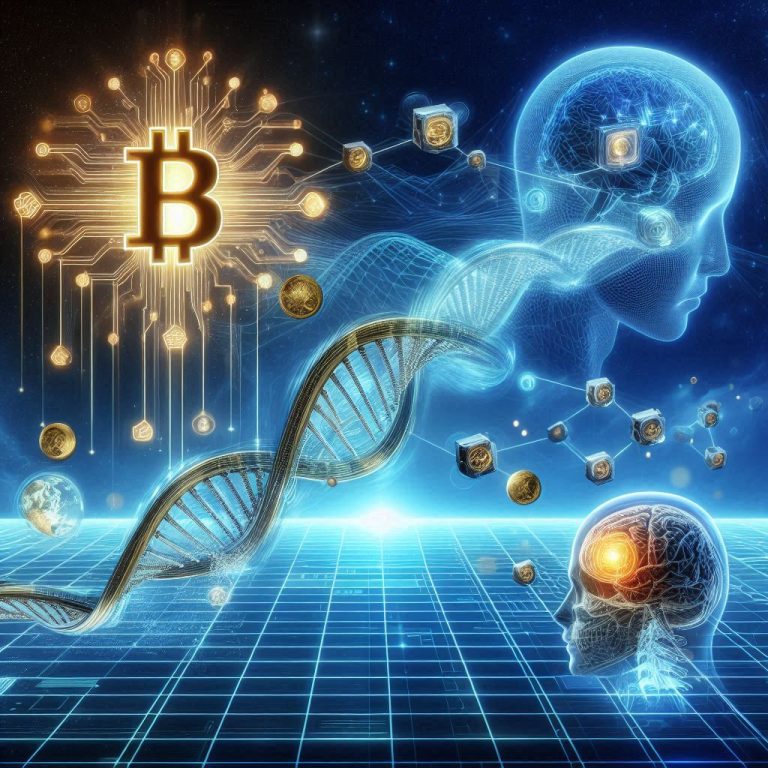
Genomics, explored in Article 30, is healthcare’s frontier—DNA sequencing guides treatments but reveals secrets. By 2025, 500 million genomes are sequenced, per the Global Alliance for Genomics and Health, stored with AES. Quantum threats could decrypt these, exposing health risks or ancestry. Post-quantum code-based systems (Article 6), like McEliece, secure biobanks, lightweight for cloud use. A 2025 23andMe upgrade adopted this, safeguarding life’s code.
Zero-knowledge proofs (Article 24) let researchers prove genomic insights—e.g., disease markers—without revealing sequences, a privacy win. Steganography (Article 20) hides sensitive markers in “junk” DNA, while hash-based signatures (Article 13) verify data integrity. QRNGs ensure key unpredictability, a quantum shield for biology’s secrets.
Medical Devices: The Beat of Security
Wearables—pacemakers, insulin pumps, fitness trackers—save lives via IoT. By 2025, 1 billion devices operate, per IoT Analytics, encrypted with AES. Quantum computers could hack these, altering dosages or stopping hearts. Post-quantum lattice systems (Article 5) secure device comms, while chaos-based ciphers (Article 23) scramble backups, a flexible fallback. A 2025 Medtronic trial used Kyber for 50,000 pacemakers, a resilience test.
QKD over 5G (Article 15) encrypts device-to-hospital links, detecting tampering instantly. Space-based QRNGs (Article 27) supply keys, ensuring randomness across regions. Digital signatures (Article 22) evolve to XMSS, verifying firmware—a quantum-secure heartbeat.
The Quantum-Healthcare Threatscape
Quantum computing endangers healthcare uniquely. Beyond decryption, it could simulate drug trials from cracked data, stealing patents, or optimize bioweapons from genomes. AI (Article 29) amplifies this, crafting quantum-driven attacks—fake EHRs or spoofed devices. Resilience (Article 28) counters with post-quantum ciphers, QKD, and redundancy—space-based keys restore terrestrial breaches.
Time (Article 32) haunts this. “Harvest now, decrypt later” threatens past records—2025 EHRs cracked in 2040 could expose lifetimes—while real-time devices need instant security. Forward secrecy (Article 32) and algorithm agility adapt, a temporal lifeline. Transportation (Article 37) ties in—secure comms move medical supplies.
Energy, Governance, and Healthcare: A Triad
Article 33’s energy powers healthcare—grids fuel hospitals, secured by cryptography. Governance (Article 34) regulates—e-voting on health policy needs encrypted channels (Article 35). Finance (Article 36) funds—encrypted payments link insurers and providers. The metaverse (Article 31) hosts virtual care—telemedicine thrives in VR. Biology (Article 30) is the root—genomics drives it all. Cryptography unites these, a resilient pulse.
Ethical Heartbeats: Privacy, Equity, Life
Article 26’s ethics resonate. Equity falters if quantum-secure healthcare—costly to deploy—leaves poorer regions on vulnerable AES, risking lives. A 2025 WHO report urged QKD access. Privacy teeters—encrypted EHRs protect, but firms might sell data, echoing finance (Article 36). Accountability asks who secures health: hospitals, governments, or tech giants?
Power shifts with cryptography. A quantum-empowered entity could hack devices or hoard genomes, a governance clash (Article 34). Resilience ensures healthcare heals, not harms, a life-or-death mandate.
Real-World Pulses: Healthcare Scenarios
Two cases beat strongly:
- The Quantum Breach: In 2026, a quantum computer decrypts a hospital’s RSA, exposing 10 million records. QKD-secured peers recover with post-quantum keys, others falter—a resilience divide.
- The Genomic Shield: A 2025 biobank uses QKD and zero-knowledge proofs to share cancer data. Quantum threats fail, proving life’s code stays safe.
These show healthcare’s cryptographic stakes, urgent and vital.
AI and Healthcare: A Healing Dance
AI (Article 29) reshapes healthcare security. It optimizes homomorphic encryption—cutting analysis time 30% in a 2025 Pfizer trial—or designs post-quantum ciphers for wearables. Secure multi-party computation (Article 18) lets AI train on encrypted EHRs, enhancing diagnostics. Yet, AI attacks—quantum-AI device spoofing—challenge this. QRNGs and chaos-based fallbacks thwart AI, a healing symbiosis.
The Future: A Quantum Health Horizon
By 2050, healthcare might be quantum-native. Space-based QKD (Article 27) could secure planetary biobanks, powered by fusion (Article 33). Bio-inspired ciphers (Article 30) might encrypt neural implants, while metaverse clinics (Article 31) heal in VR. Time-lock trials (Article 32) could guard drug patents. This series’ arc—from ancient cures to quantum care—finds rhythm in healthcare’s secure beat.
Conclusion: Securing Life’s Pulse
Cryptography and healthcare fuse to protect the pulse of life, blending quantum tools, AI ingenuity, and temporal resilience into a healing fortress. From records to devices, it’s security that sustains. As we close this 38th chapter, here’s an excerpt to reflect on: “In healthcare, cryptography is the quiet heartbeat, quantum-tuned to guard the essence of life.” Next, in Article 39—Quantum Leap: Cryptography and Education – Securing the Mind of Tomorrow—we’ll explore how cryptography protects learning and knowledge in a quantum age.