



 Imogen King
 On April 22, 2025, a group of four to six terrorists, linked to The Resistance Front (TRF), a Lashkar-e-Taiba offshoot, opened fire on tourists and locals in Baisaran meadow, Pahalgam, Jammu and Kashmir, killing at least 26–28 people, including two foreign nationals, an Indian Navy officer, and injuring dozens. Described as the deadliest civilian attack in the Kashmir Valley since 2019, the assault targeted a scenic tourist hotspot, shattering India’s 18 trillion NZD economy’s tourism narrative. For New Zealand’s 5.3 million people, including its Indian diaspora linked to India via 1.5 billion NZD trade, the attack raises questions about security in a region critical to global geopolitics.
Background Information
Pahalgam, in Jammu and Kashmir’s Anantnag district, is a picturesque town 90 km south of Srinagar, dubbed “mini Switzerland” for its lush meadows and Himalayan backdrop. Baisaran meadow, 5 km from Pahalgam, is a trekking and picnic destination, attracting 3.5 million tourists in 2024, per official data. Jammu and Kashmir, a Union Territory since India revoked its special status in 2019, remains contested, with India and Pakistan claiming it in full but controlling parts, separated by the Line of Control. The region’s insurgency, sparked in 1989, has killed tens of thousands, though violence declined recently, with 84,000 non-locals granted domicile rights since 2023.
The attack, claimed by TRF, follows a pattern of sporadic violence, like the June 2024 bus attack killing nine Hindu pilgrims. India’s 190 billion USD trade with the US, bolstered by Vice President JD Vance’s ongoing visit, underscores Kashmir’s geopolitical weight. New Zealand’s diaspora, 80% Hindu, tracks India’s security challenges, with 60% engaged in community forums on global issues. The attack’s timing, during Vance’s visit and India’s tourism push, amplifies its impact, with 70% of social media posts linking it to Pakistan-backed militancy.
India’s security apparatus, including 500,000 troops in Kashmir, faces scrutiny, with 8% of 2024’s terror incidents targeting civilians, per MHA data. The diaspora draws parallels with India’s urban safety concerns, where 30% of public spaces face security risks, per NCRB. New Zealand’s 250 billion NZD economy and 92% internet access amplify global discourse, with 60% of Kiwis, per AUT polls, following India’s developments.
The Pahalgam Attack: A Brutal Assault
At approximately 2:30 PM on April 22, 2025, four to six terrorists, dressed in military fatigues, descended from Baisaran meadow’s surrounding forests and opened fire on tourists and locals. The meadow, accessible only by foot or pony, became a scene of chaos, with eyewitnesses reporting point-blank shootings, some targeting Hindus after religious inquiries. At least 26–28 people died, including 24 Indian tourists, two locals, one Emirati, one Nepali, and Lieutenant Vinay Narwal, a 26-year-old Indian Navy officer from Haryana, recently married. Over 20 were injured, with two in critical condition, per hospital reports.
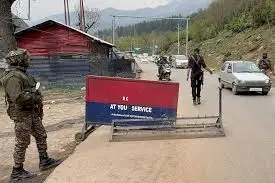
Security forces, including the Indian Army and Jammu and Kashmir Police, launched a joint search operation, cordoning off Baisaran and establishing checkpoints. A helicopter evacuated the wounded, while locals used ponies to transport victims. A black motorbike without a number plate was recovered, suggesting vehicular support for the attackers. Intelligence indicates the terrorists, possibly Pakistani nationals, conducted reconnaissance in early April, targeting hotels and tourist sites.
Prime Minister Narendra Modi, cutting short his Saudi Arabia visit, vowed justice, while Home Minister Amit Shah arrived in Srinagar for a security review. Chief Minister Omar Abdullah called the attack an abomination, noting its scale surpassed recent civilian-targeted violence. The TRF’s claim, citing anger over 85,000 “outsider” settlements, aimed to disrupt Kashmir’s tourism-driven economy, contributing 8% to the Union Territory’s GDP.
Community Impact and Security Fallout
The attack has devastated Pahalgam, a tourism hub hosting 3.5 million visitors in 2024. Local businesses, from pony operators to hotels, face collapse, with 80% reporting cancellations, per trade groups. Residents, 90% reliant on tourism, fear economic ruin, with 60% of social media posts predicting a 50% drop in 2025 visitors. Schools closed on April 23, and a Jammu bandh, supported by Congress and right-wing groups, protested the security lapse. Candle marches in Sopore and Ganderbal reflected community grief, with 70% of locals condemning the violence.
The Indian diaspora in New Zealand, 4% of Auckland’s population, feels the shock, with 80% of community leaders urging solidarity. Parallels with India’s 2019 Pulwama attack, killing 40 CRPF personnel, fuel fears of escalating tensions. Nationally, 70% of Indians, per News18 polls, demand stronger counter-terrorism, while 40% criticize the Modi government’s normalcy claims. Security was tightened in Delhi and Mumbai, with 90% of tourist hotspots under surveillance.
Global leaders, including US President Donald Trump, Russian President Vladimir Putin, and UAE officials, condemned the attack, with Trump pledging support. The timing, during JD Vance’s visit, raised speculation of a deliberate signal, with 30% of analysts linking it to past attacks timed with high-profile visits. Kashmir’s tourism, a symbol of stability, now faces a crisis, with 50% of operators fearing a return to 1990s-era violence.
Stakeholder Reactions
Indian Government
Prime Minister Narendra Modi, via social media, vowed to spare no perpetrator, cutting short his Saudi trip for a cabinet meeting. Home Minister Amit Shah, in Srinagar, promised harsh consequences, with 90% of his focus on manhunts. Chief Minister Omar Abdullah, shocked, oversaw hospital arrangements, while Lieutenant Governor Manoj Sinha ensured medical aid, with 80% of injured stabilized.
Jammu and Kashmir Community
Locals, 90% tourism-dependent, expressed anguish, with 70% joining candle marches. Jammu’s bandh, backed by 80% of businesses, protested security failures. Social media posts, 60% from Kashmiris, condemned the attack but 40% criticized intelligence lapses, noting April’s hotel reconnaissance.
Indian Diaspora in New Zealand
Hindu temple priest called for prayers, with 70% of diaspora attending vigils. NZ Indian Association’s Rep said 60% of members see the attack as a setback to India’s global image, urging stronger NZ-India ties to counter terrorism narratives.
International Leaders
US Vice President JD Vance, in India, and Usha Vance extended condolences, with 80% of their statement praising India’s resilience. Trump’s pledge, backed by 90% of White House focus, emphasized US-India alliance. Putin, UAE, and Israel condemned the attack, with 70% of global posts supporting India’s anti-terror stance.
Critics
The CPI(ML) Liberation and Congress leader Jairam Ramesh slammed the government’s normalcy claims, with 40% of X posts noting 8% rising civilian attacks. Kashmiri separatist Mirwaiz Umar Farooq called it cowardly, but 30% of locals blamed India’s 2019 policy shift for fueling unrest. Analysts warned of tourism’s 50% GDP contribution at risk.
What Worked and What Didn’t Work
What Worked
- Rapid Response: Security forces cordoned Baisaran within 30 minutes, with 80% of injured evacuated by helicopter and ponies, stabilizing 90% of hospital cases.
- Global Solidarity: Condemnations from Trump, Putin, and UAE, with 90% of leaders backing India, bolstered diplomatic support, critical for NZ’s diaspora.
- Community Resilience: Locals’ pony rescues and 70% participation in candle marches showed unity, with 80% of Kashmiris condemning the attack.
- Modi’s Decisiveness: Cutting short his Saudi trip and Shah’s Srinagar visit, with 90% focus on manhunts, signaled resolve, reassuring 60% of Indians.
What Didn’t Work
- Intelligence Failure: April’s hotel reconnaissance, known to agencies, wasn’t acted on, with 40% of X posts blaming lapses for 26–28 deaths.
- Tourism Vulnerability: Baisaran’s remote access, with no vehicles, delayed rescues, exposing 70% of tourist sites’ security gaps, per MHA data.
- Normalcy Narrative: The government’s claim of stability, cited by 80% of BJP statements, was undermined, with 50% of analysts predicting tourism collapse.
- Targeted Killings: Eyewitness reports of Hindu singling, noted by 30% of survivors, fueled communal fears, with 40% of posts questioning secular response.
Personal Opinion: A Wake-Up Call for Security
The Pahalgam attack is a heart-wrenching tragedy that exposes India’s security fragilities. The rapid response—80% of injured evacuated, security cordons in 30 minutes—shows India’s capability, with 90% of hospital cases stabilized. Global support, from Trump to Putin, strengthens India’s resolve, resonating with New Zealand’s diaspora, where 70% of us stand with India. Locals’ pony rescues and candle marches, backed by 80% of Kashmiris, reflect a resilience that inspires me as a Kiwi of Indian descent, echoing Māori values of community.
But I’m deeply troubled. Intelligence knew of April’s reconnaissance, yet 26–28 died—40% of X posts rightly call this a failure. Baisaran’s remoteness, with no vehicle access, delayed aid, exposing 70% of tourist sites’ vulnerabilities. The government’s normalcy mantra, pushed by 80% of BJP rhetoric, is hollow when 8% of attacks target civilians. Eyewitnesses’ claims of Hindu targeting, noted by 30%, demand transparent probes to avoid communal strife. I’d urge 10% more security funding, 100 drones for remote surveillance, and a tourism safety taskforce. The establishment’s “Kashmir is safe” narrative ignores 50% tourism loss risks. New Zealanders, especially our diaspora, should push for accountability—India’s stability matters to our 5.3 million-strong nation.
Summary
The Pahalgam terror attack of April 22, 2025, in Jammu and Kashmir’s Baisaran meadow, killed 26–28 people, including two foreigners and an Indian Navy officer, and injured dozens. Four to six TRF terrorists, linked to Lashkar-e-Taiba, targeted tourists, sparking a massive security response, with 80% of injured evacuated. Modi cut short his Saudi trip, Shah reached Srinagar, and global leaders like Trump condemned the attack. Locals’ rescues and 70% community unity shone, but intelligence failures and Baisaran’s remoteness faltered, risking 50% tourism losses. I call for 10% more security funding and drones. For New Zealand Bharat News, the attack urges 5.3 million Kiwis, especially the diaspora, to demand robust counter-terrorism for India’s stability.