Lara Zijl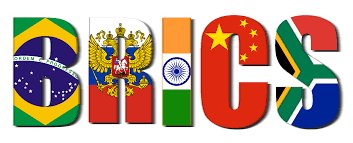
Rio de Janeiro, Brazil – India’s participation in the BRICS Sherpas Meeting, held in Rio de Janeiro, marked a pivotal step towards advancing multilateralism, sustainable development, and enhanced intra-BRICS cooperation. Secretary (ER) Dammu Ravi represented India during the discussions, reaffirming the country’s commitment to collaborative efforts within the bloc.
The Ministry of External Affairs (MEA) spokesperson, Randhir Jaiswal, shared updates on the meeting via X, noting that the event featured productive conversations on key issues. “BRICS Sherpa Secretary (ER) Dammu Ravi participated in the #BRICS Sherpas’ Meeting being held in Rio de Janeiro. The meeting featured constructive discussions on multilateralism, sustainable development and enhancing intra-BRICS cooperation,” Jaiswal stated.
BRICS Policy Planning Dialogue: A Precursor to the Sherpas Meeting
India’s active role in BRICS discussions extended to its participation in the 10th BRICS Policy Planning Dialogue, held on 24–25 March in Brasilia. The dialogue convened policy planners from the original BRICS members—Brazil, Russia, India, China, and South Africa—alongside representatives from the newly expanded membership, to address pressing global and regional issues.
Led by Raghuram S, Joint Secretary of Policy Planning and Research, the Indian delegation contributed to discussions on global health cooperation, climate action, artificial intelligence governance, international trade, and financial dynamics. The dialogue underscored BRICS’ institutional evolution, particularly after its recent expansion, and laid the foundation for the forthcoming BRICS Summit later this year.
Brazil, as the current BRICS President, demonstrated leadership in hosting the event, setting the stage for robust collaboration among member states to tackle contemporary challenges.
The Expanding Influence of BRICS
BRICS has become a significant force in global governance, uniting eleven emerging economies and representing approximately 49.5 per cent of the world’s population, 40 per cent of the global GDP, and 26 per cent of global trade. The bloc’s evolution reflects its growing influence in shaping international policy and addressing developmental priorities.
The origins of BRICS can be traced back to 2006, when Russia, India, and China held a meeting in St Petersburg on the margins of the G8 Outreach Summit. The grouping was formalised at the inaugural meeting of BRIC Foreign Ministers during the United Nations General Assembly later that year. In 2009, the first BRIC Summit convened in Yekaterinburg, Russia, where members charted a path for deeper cooperation.
South Africa joined the bloc in 2010, transitioning BRIC into BRICS, and attended its first summit in Sanya, China, in 2011. The year 2024 marked a historic expansion with Egypt, Ethiopia, Iran, and the UAE becoming full members, while Indonesia followed in January 2025. Additionally, Belarus, Bolivia, Kazakhstan, Cuba, Malaysia, Nigeria, Thailand, Uganda, and Uzbekistan were inducted as partner countries.
Strengthening Multilateral Cooperation
Discussions during the Rio de Janeiro Sherpas Meeting reinforced BRICS’ commitment to multilateral peace and security reforms, sustainable development goals, and advancing global health initiatives. Participants explored strategies to address global challenges, further cementing BRICS’ role as a platform for emerging economies to collectively shape the international landscape.
India’s active engagement underscores its leadership in advocating for collaborative solutions and supporting the bloc’s broader vision of economic growth, sustainable development, and technological innovation.
As BRICS continues to evolve and expand, its ability to foster unity among diverse nations positions it as a crucial player in navigating geopolitical complexities and championing global progress.